
Best Residential Areas to Buy Property in Navi Mumbai in 2026
The best residential areas to buy property in Navi Mumbai in 2026 are not the same for every buyer. For families and stable end users, Nerul, Kharghar, Seawoods, and parts of Vashi make the most sense. For selective long-term investors, Ulwe and Panvel can still work. For strict budget entry, parts of Taloja may fit, but only with caution. In simple words, the right buy now depends on your budget, holding period, risk tolerance, and whether the project is genuinely ready on the ground.
Navi Mumbai has changed. This is no longer a city where almost any node can be sold as a future growth story. The airport is already operational, the Atal Setu is already active, and Metro Line 1 is already shaping daily movement in the Belapur-Kharghar-Taloja belt. That means buyers now need more discipline, not more excitement. The early speculation phase is over. The 2026 market is more about choosing the right node at the right price than blindly chasing infrastructure headlines.
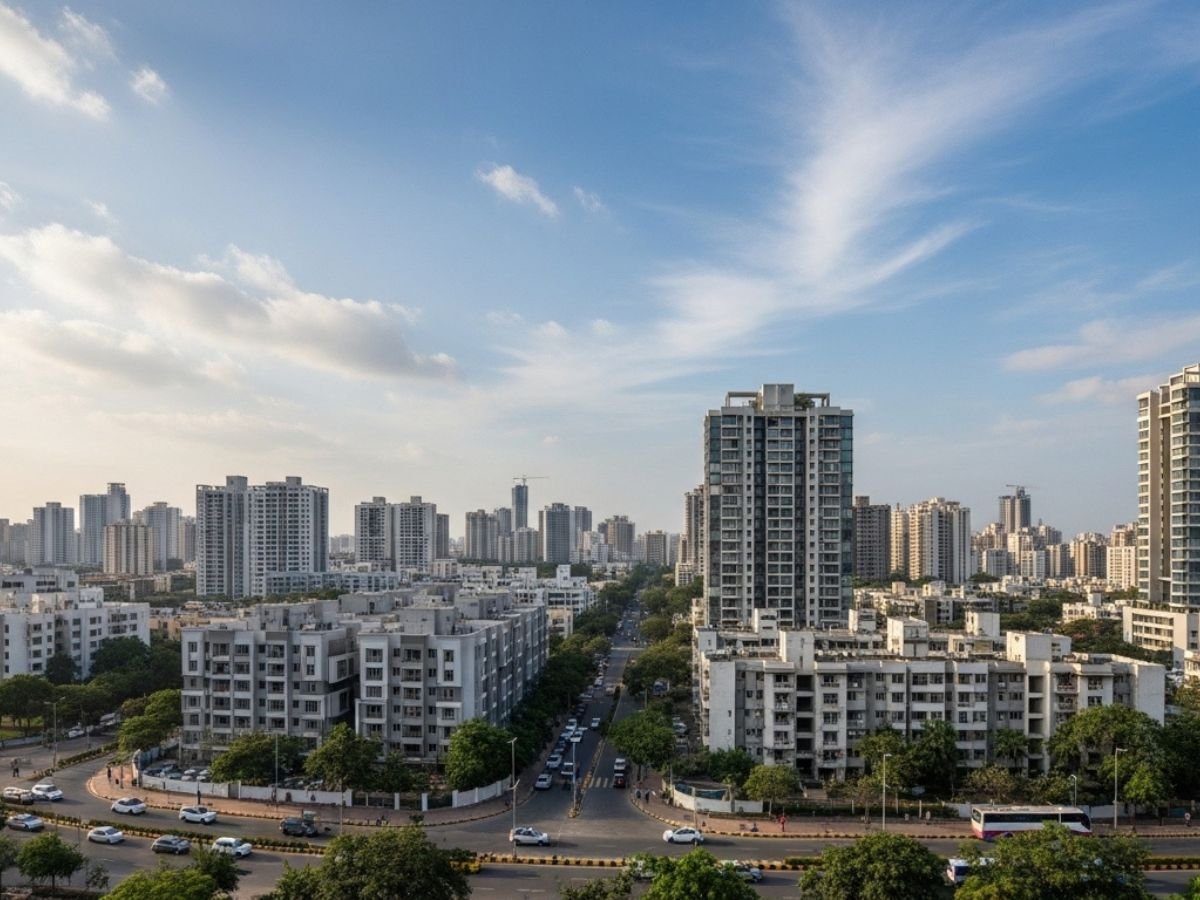
Which residential areas in Navi Mumbai actually make the most sense to buy in 2026?
The strongest buying areas in Navi Mumbai right now depend on what you are trying to solve. Some nodes are safer for long-term living. Some are stronger for premium lifestyle. Some still offer future upside, but only if you accept civic and execution risk.
| Buyer Profile | Recommended Areas | Why They Make Sense |
|---|---|---|
| Stability-seeking families | Nerul, Kharghar | Better daily liveability, established demand, strong self-use value |
| Premium lifestyle buyers | Seawoods, Vashi | Mature infrastructure, strong location prestige, lifestyle convenience |
| Value + commuter-led buyers | Panvel, Kamothe, Kalamboli | Lower entry than premium nodes, useful connectivity, practical communities |
| Long-term growth-focused investors | Ulwe, Panvel | Airport-region and connectivity-led demand, but timing and pricing matter |
| Strict budget buyers | Select parts of Taloja | Lowest entry, but hidden costs and project selection risk are high |
The biggest mistake buyers make is expecting every part of Navi Mumbai to behave like one market. It does not. Vashi and Seawoods are mature premium zones. Nerul and Kharghar are more balanced for self-use. Ulwe and Panvel are growth corridors. Taloja and Dronagiri are far more selective and can punish weak due diligence.
Is 2026 the right time to buy property in Navi Mumbai, or should some buyers wait?
Yes, 2026 can be the right time to buy property in Navi Mumbai, but mostly for buyers who are clear about self-use, long holding periods, and realistic pricing. It is not the best phase for careless speculation.
The reason is simple. The big catalysts that once drove excitement are no longer just promises. The Navi Mumbai International Airport began commercial operations on December 25, 2025. The Mumbai Trans Harbour Link is already functioning. Metro Line 1 has already changed access in the Kharghar-Taloja side. So prices in many nodes have already absorbed years of future expectations.
This changes the buying logic. Earlier, people bought the story. Now buyers need to buy the ground reality.
A stable RBI repo rate environment in early 2026 also helps. Borrowing conditions are more predictable than they were during the aggressive rate-hike phase. That makes this a better market for disciplined end users who want EMI visibility. But it also means buyers should not assume the next easy price jump is guaranteed just because the airport has opened.
A simple way to look at 2026 is this:
- Good time to buy for end users buying the right building in the right node
- Reasonable time to buy for long-term investors with 7 to 10 year patience
- Weak time to overpay in hyped under-construction pockets
- Bad time to buy illegal or poorly serviced inventory just because the rate looks cheap
How should buyers divide Navi Mumbai before choosing an area?
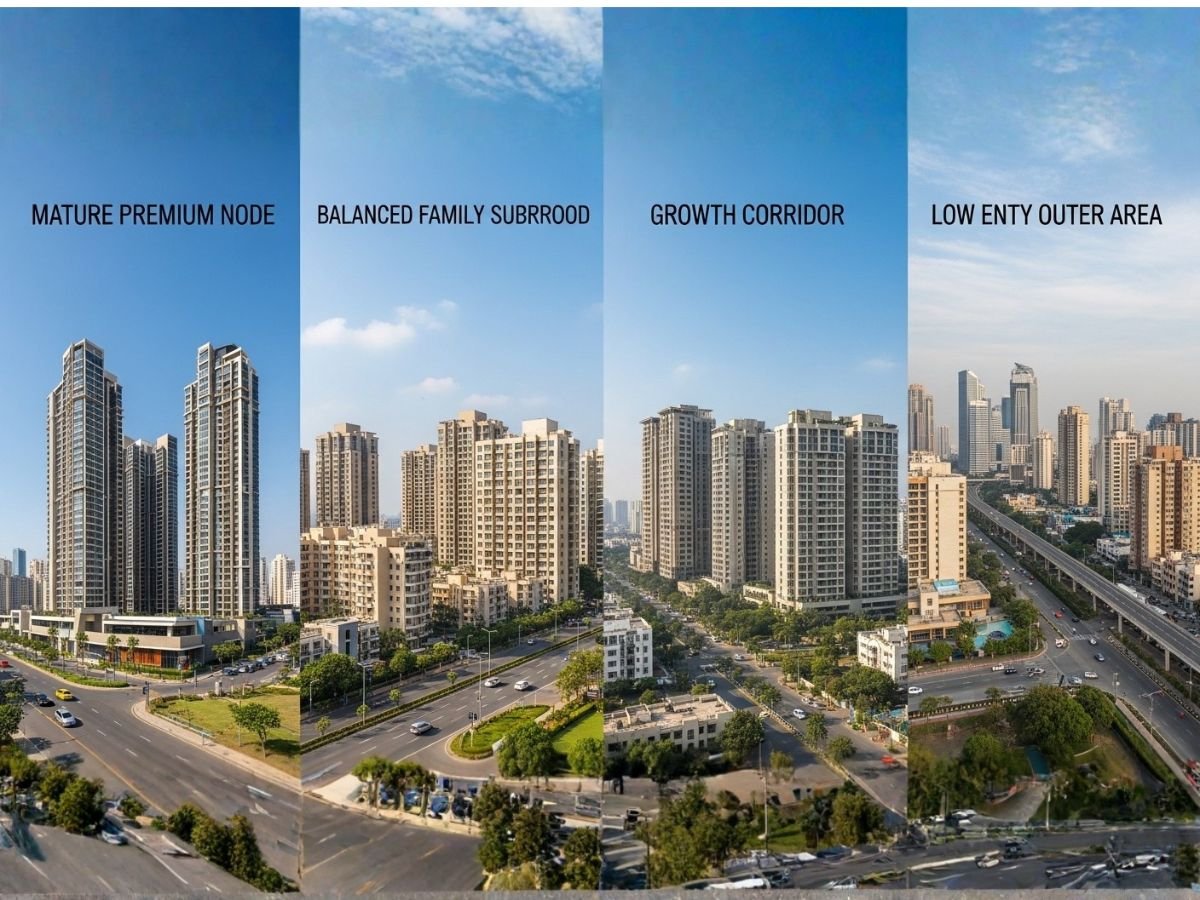
Before comparing names, buyers should divide Navi Mumbai into four practical market types. This makes the entire decision easier.
Mature premium nodes
These are places like Vashi, Seawoods, and CBD Belapur. They are expensive, socially developed, and easier to understand as end-user markets. Infrastructure is mature, daily life is smoother, and resale comfort is generally better.
Balanced end-user nodes
Kharghar and Nerul fit here best. They combine liveability, larger residential presence, and strong long-term self-use value. They are not cheap anymore, but they still make more practical sense for many families than ultra-premium nodes.
Growth corridors with future upside
Ulwe and Panvel fall into this category. These areas benefit directly from airport-region logic and larger connectivity shifts. But they are not equally safe everywhere. The right micro-location and the right price still matter a lot.
Areas where low entry price can hide higher risk
Taloja and Dronagiri are the clearest examples. These are not automatically bad areas. But they are much easier to buy wrongly. Water dependency, slower civic maturity, long holding periods, and project quality variation can turn a cheap buy into a frustrating one.
Which are the best residential areas in Navi Mumbai for families, end users, and long-term stability?
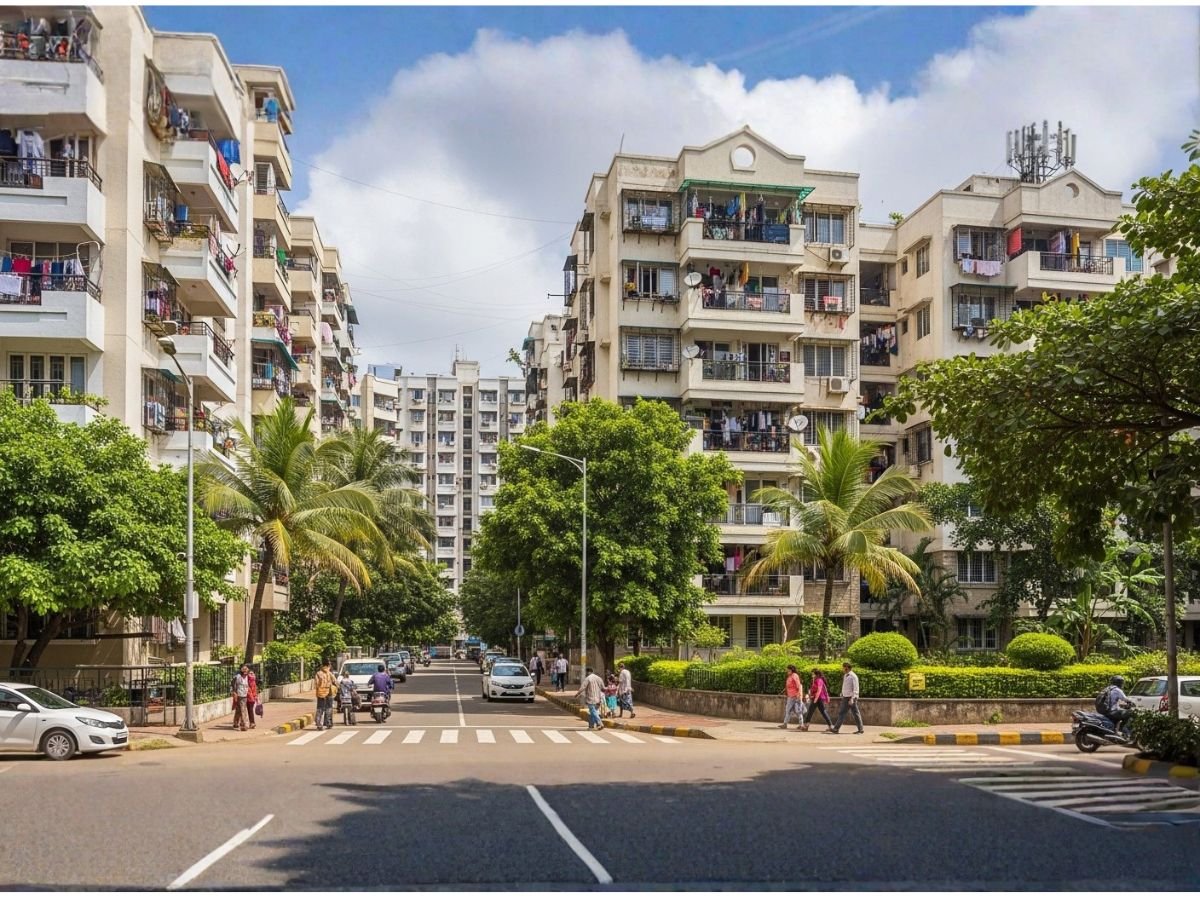
For families, the strongest answers are usually Nerul and Kharghar first, then Seawoods and some parts of Vashi depending on budget.
Nerul remains one of the most practical family choices in Navi Mumbai. It has established residential belts, mature social infrastructure, better daily comfort, and more predictable civic functioning under the NMMC side of the city. It suits buyers who want long-term stability more than builder hype. Older societies can also offer better usable layouts than many newer towers.
Kharghar is still one of the best all-round residential areas in Navi Mumbai, especially for buyers who want a modern township feel, wide roads, metro access, Central Park-side appeal, and strong long-term residential demand. But buyers should not romanticize it blindly. Kharghar may look premium, yet localized water-supply issues and tanker dependence in some pockets remain a real ground-level consideration because this side does not function exactly like the NMMC core belts.
Seawoods is excellent for buyers with stronger budgets who will genuinely use its station access, mall ecosystem, and premium residential comfort. But it is not value buying. It is premium buying. Families who choose Seawoods are buying convenience and status along with the flat.
Vashi works best for buyers who want a mature node with strong commercial relevance, strong connectivity, and established daily life. But entry prices are high, and not every family needs to pay Vashi pricing if their real priority is only residential comfort.
Which areas make more sense for budget-conscious buyers looking for future upside?
For budget-conscious buyers, Panvel, Kamothe, Kalamboli, Ulwe, and selective Taloja pockets matter most. But they are not interchangeable.
Panvel is one of the most practical choices in this category. It is not just an airport story. It is also a railway, highway, and regional movement hub. It gives more scale than many other growth nodes and can suit both end users and long-horizon investors. The key is to avoid confusing every Panvel-side project with the same quality or readiness level.
Kamothe and Kalamboli are often more grounded than flashy. They make sense for buyers who want usable communities, road access, and a practical location without paying Kharghar or Nerul-level entry. They may not feel as glamorous as Seawoods or as hype-heavy as Ulwe, but that can actually help disciplined buyers.
Ulwe still has real long-term logic because of NMIA and Atal Setu connectivity. But this is where many buyers can make timing mistakes. Ulwe can be good, but only when the price, project readiness, and rental logic make sense together.
Taloja is the lowest entry point among the commonly discussed nodes, but it needs the highest caution. A low rate per square foot can look attractive until buyers start dealing with long commute friction, industrial-side discomfort in some stretches, uneven local readiness, and tanker dependence.
Which Navi Mumbai areas are strong but easy to overpay in right now?
The easiest areas to overpay in today are Seawoods, some premium Kharghar pockets, and many under-construction airport-facing or airport-marketed projects in Ulwe.
Seawoods is strong, but it is already priced like a premium lifestyle market. That is acceptable if the buyer wants to live there and can comfortably hold the asset. It becomes risky when buyers assume every expensive flat there will automatically produce strong future upside from this level.
Ulwe is even more sensitive. The airport is now operational. That means the “future airport” premium is no longer a cheap early entry story. If standard under-construction pricing is already running ahead of the local secondary market, the buyer may be paying tomorrow’s price today. That kills a big part of the upside.
This is where many people get trapped by location language such as “10 minutes from NMIA” or “near Atal Setu.” Proximity is not the same as valuation discipline. The right question is not whether the project is near infrastructure. The right question is whether the current asking price still leaves room for sensible appreciation after taking risk into account.
What market signals should you watch before buying in any Navi Mumbai node?
This is the section most generic articles skip. But this is where serious buyers should spend the most time.
Price movement versus actual usability
If prices have already surged sharply but the area still lacks mature daily life, the buyer should slow down. A node must justify its pricing through actual usability, not just future talk.
Infrastructure that is helping now versus only promised
In 2026, the airport, Atal Setu, and Metro Line 1 are no longer abstract ideas. But not all nodes benefit equally from them. Some locations are directly transformed. Others are only indirectly helped.
Rental demand versus brochure demand
A strong area should show not just sale demand but also rental depth. If purchase pricing is stretching too far above what tenants are willing to pay, that is a warning signal, especially in emerging corridors.
Possession readiness and society liveability
A tower shown in a brochure is not the same thing as a fully functioning residential ecosystem. Buyers should check whether the project is actually occupied, whether surrounding towers are ready, and whether daily life has stabilized.
Resale liquidity and exit confidence
Mature nodes such as Vashi, Nerul, Kharghar, and parts of Seawoods usually offer better resale comfort. Peripheral or speculative areas can trap capital for years if the market mood changes.
How do major Navi Mumbai nodes compare for buyers right now?
| Node | Best For | Main Strength | Main Risk | Overall Buying Comfort |
|---|---|---|---|---|
| Nerul | Families, end users | Mature residential life, better civic stability | Higher entry than value nodes | High |
| Kharghar | Families, long-term buyers | Metro, township feel, broad demand base | Localized water and service stress in some pockets | High to Moderate |
| Seawoods | Premium end users | Station-mall-lifestyle combination | Easy to overpay | High if budget is strong |
| Vashi | Premium buyers, mature market seekers | Commercial relevance, connectivity, civic maturity | Premium pricing | High |
| Panvel | Value buyers, investors, commuters | Regional connectivity, airport-region relevance | Quality variation by micro-market | Moderate to High |
| Ulwe | Long-term investors, selective end users | NMIA and Atal Setu logic | Pricing hype, uneven maturity | Moderate |
| Kamothe | Practical mid-budget buyers | Established community and access advantage | Less premium perception | Moderate to High |
| Kalamboli | Budget-conscious commuters | Good access and practical entry | Not as refined residentially as mature nodes | Moderate |
| Taloja | Strict budget entry | Low entry price | Water, livability, project-quality risk | Low to Moderate |
| Dronagiri | Very long-horizon investors | Port-led and future-region potential | Long gestation, low holding comfort | Low |
Should you buy in a mature resale market or a newer project corridor?
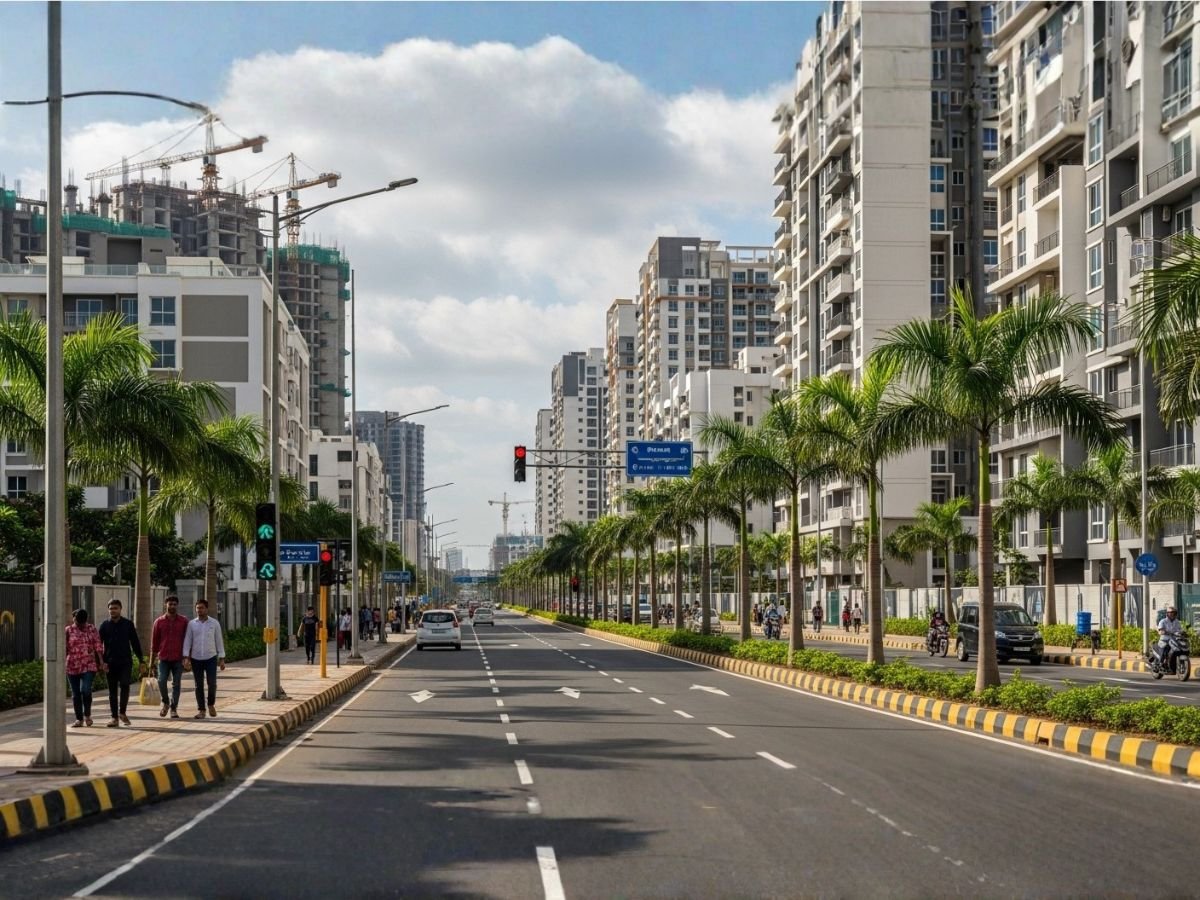
In 2026, mature resale markets are often the smarter choice for many real buyers. Newer project corridors still work, but they demand sharper judgment.
A ready resale flat in Nerul, Vashi, Belapur, or an established part of Kharghar gives you something very valuable: certainty. You can see the building, the residents, the maintenance quality, the real access road, the parking situation, and the actual neighborhood. That certainty is underrated.
This becomes even more important now because CIDCO’s approved freehold conversion direction has made the resale market structurally more attractive. Earlier, transfer-related complications and charges could make some resale decisions more cumbersome. Now the equation is improving, although buyers still need to check whether a specific society has actually completed the conversion process.
Newer corridors offer newer amenities, better branding, and sometimes stronger future upside. But in return, you take on execution risk, surrounding development risk, delayed ecosystem risk, and sometimes unrealistic pricing.
For many end users, the better answer is not “new project is better” or “resale is old.” The better answer is: if the resale property is legally clean, well-maintained, and in the right node, it may be the safer and more rational buy.
When should you buy now, negotiate hard, or wait in Navi Mumbai?
Here is the simplest practical framework.
Buy now if:
- you are an end user buying for at least 7 to 10 years
- the project or flat is legally clear and physically ready
- the EMI is comfortable, not stretched
- the node already suits your real daily life
- the price is sensible compared to nearby secondary market reality
Negotiate hard if:
- the project is in Ulwe, Panvel, or another supply-heavy corridor
- the builder is using airport excitement to justify an aggressive premium
- the tower is under construction and the local ecosystem is still incomplete
- hidden charges, transfer costs, water costs, or maintenance are unclear
Wait if:
- your budget only fits risky gaothan-type or unauthorized stock
- the building lacks clear Occupancy Certificate comfort
- the area has unresolved water and access problems that will affect daily life immediately
- you are buying only because of fear of missing out
What should you verify before finalising any property in Navi Mumbai?
This is where buyers protect themselves.
- Check the MahaRERA registration yourself. Do not rely only on brochure branding. See whether the project is active, lapsed, or has a worrying complaint history.
- Verify the Occupancy Certificate or actual possession status, especially in budget markets and gaothan-influenced pockets.
- Check the municipal boundary. NMMC and PMC-side realities differ in taxation, utility comfort, and civic stability.
- Confirm the water source and society dependence on tankers. This matters much more than most sales teams admit.
- Ask clearly whether the property or society has completed any relevant CIDCO freehold conversion process, where applicable.
- Compare the asking rate with the actual secondary market nearby, not just the builder’s own quoted logic.
- Check whether the surrounding area is genuinely livable today, not only promised for tomorrow.
A cheap flat without legal clarity is not a bargain. It is often a future problem sold at a discount.
Which area suits which buyer best? Final practical verdict
The best residential area to buy property in Navi Mumbai depends on what kind of buyer you are.
If you are a family or cautious first-time buyer, Nerul and Kharghar are usually the strongest choices. Nerul gives better mature stability. Kharghar gives a broader lifestyle-township appeal with some civic trade-offs depending on the pocket.
If you are a premium lifestyle buyer, Seawoods and Vashi stand out. These are strong areas, but only if you can comfortably pay for what they already are, not what you hope they may become.
If you are a value-led or commuter-led buyer, Panvel, Kamothe, and Kalamboli deserve serious attention. They do not always get the same prestige, but they often make more practical financial sense.
If you are a long-term investor willing to accept higher uncertainty, Ulwe can still work selectively. Dronagiri is even longer horizon and far less suitable for normal end users.
If your budget is very tight, Taloja may still be the entry point. But it should be approached as a strict due-diligence market, not a blind affordability win.
Conclusion
The best residential areas to buy property in Navi Mumbai in 2026 are Nerul, Kharghar, Seawoods, Vashi, Panvel, Kamothe, Kalamboli, and selective Ulwe pockets, but not for the same reasons and not for the same buyers. There is no single best node for everyone.
If you want safety and stability, move toward Nerul or Kharghar. If you want premium lifestyle, choose Seawoods or Vashi. If you want value with practical connectivity, study Panvel, Kamothe, and Kalamboli. If you want future upside and can handle risk, look at Ulwe carefully. If you want pure low-entry affordability, go to Taloja only with your eyes fully open.
In 2026, the smartest property buy in Navi Mumbai is not the area with the loudest story. It is the area where price, buyer purpose, legal clarity, civic reality, and holding comfort still align.
FAQs
Frequently Asked Questions