

Best Commercial Sectors and Office Pockets in CBD Belapur for Offices, Leasing and Investment
The best commercial sectors and office pockets in CBD Belapur are not equal. For mainstream office demand, Sector 11 and the station-adjoining belt usually work better because commute access is stronger and office use is more flexible. For advocates, CAs, compliance firms, and administrative consultants, Sector 15 is usually the better fit because court and civic proximity directly affects daily work. The right pocket depends on commute, parking, building quality, client movement, and whether you want to lease or buy.
That is the real answer. Not every office in “CBD Belapur” suits the same kind of business, and that is where most generic real estate pages get the topic wrong. They treat Belapur like one uniform commercial market. On the ground, it is much more segmented than that.
CBD Belapur still has weight because it remains a serious administrative and institutional node in Navi Mumbai. CIDCO, NMMC, Konkan Bhavan, the RBI regional presence, the CGO complex, and the Belapur District Court keep this area operationally important. But within that larger importance, the actual office decision still comes down to pocket-level logic.
For a broader understanding before comparing specific pockets, CBD Belapur Commercial Property Guide is worth reading first.
Which commercial sectors and office pockets in CBD Belapur are the strongest today?
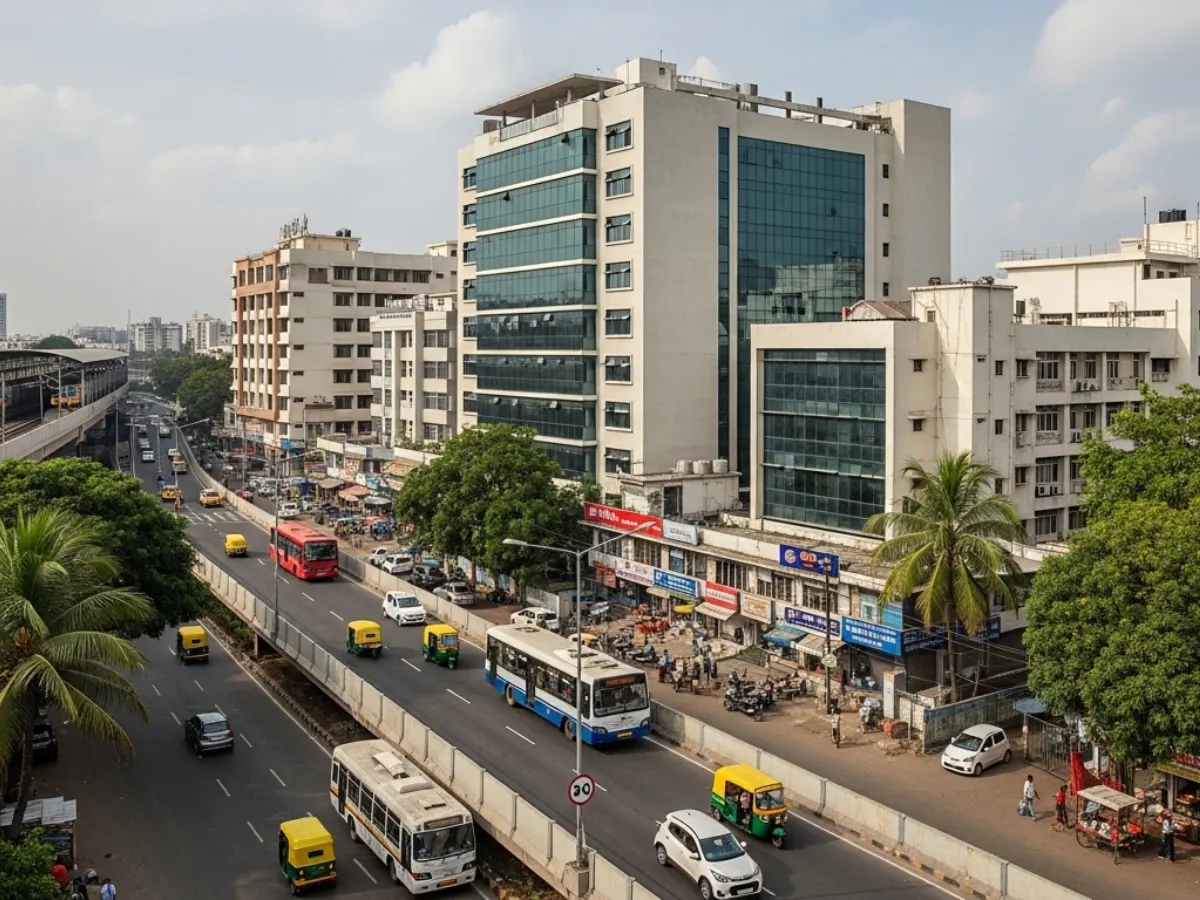
The strongest pockets today are Sector 11, Sector 15, and then a smaller group of peripheral newer commercial complexes that matter mainly for larger floor plate users. The problem is that “strongest” changes depending on who is asking.
If you want one simple frame, use this: Sector 11 is stronger for broad office demand, Sector 15 is stronger for legal and administrative demand, and newer peripheral complexes are more selective but sometimes better for scale.
Quick summary
| Sector / Pocket | Best Suited For | Main Strength | Main Weakness |
|---|---|---|---|
| Sector 11 near station | SME offices, branch offices, back-office teams, corporate support functions | Railway + Metro access, stronger daily movement, broader occupier appeal | Better-positioned units can be expensive, traffic and parking stress |
| Sector 15 near court and NMMC belt | Advocates, CAs, consultants, liaison firms, compliance offices | Court and civic ecosystem, strong professional clustering | Older strata stock, weak parking, maintenance inconsistency |
| Peripheral newer complexes | Larger teams, selective corporate occupiers, logistics back offices | Bigger contiguous floor plates, better structured parking in some cases | Less walkable, weaker transit spontaneity, more last-mile dependence |
Why CBD Belapur still matters as an office location in Navi Mumbai
CBD Belapur still matters because it offers something that newer office clusters often do not: institutional proximity. If your business deals with courts, civic authorities, planning offices, administrative approvals, banking compliance, or government-linked workflow, Belapur is still a practical location, not just a legacy one.
That is an important distinction. Belapur is not winning because it is the newest office market. It remains relevant because it is still the administrative and judicial anchor of Navi Mumbai. For many professional service businesses, that matters more than a modern façade.
This also explains why Belapur has held onto demand even as Airoli and the Thane-Belapur corridor pulled larger IT and campus-style office users. The demand here is more specialised. It is less about scale glamour and more about work that depends on being in the right ecosystem.
Which Belapur pockets work best if your office depends on station access and daily footfall?
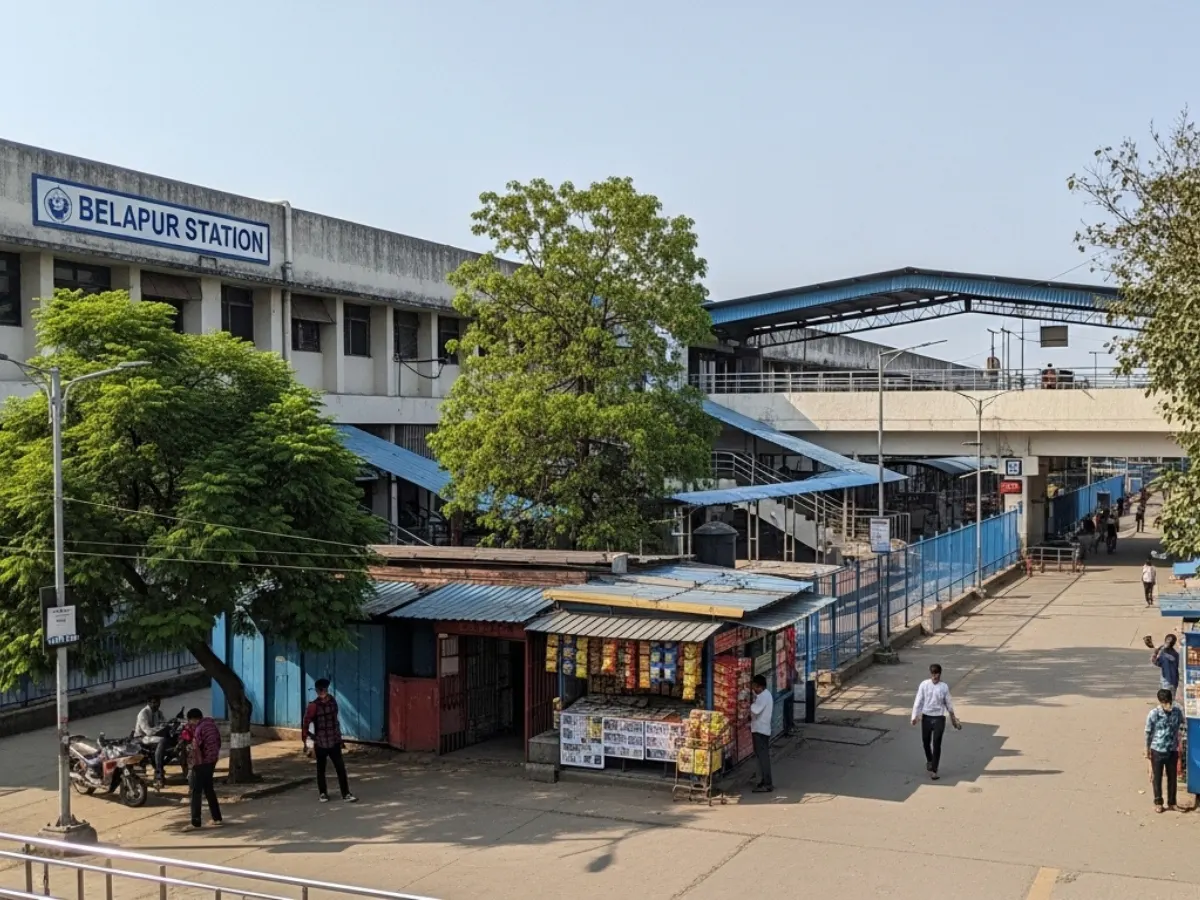
If your office depends heavily on staff commute convenience, visitor ease, and daily transit movement, Sector 11 is usually the strongest pocket in CBD Belapur.
That is because Sector 11 benefits directly from the Belapur railway station side and the Metro Line 1 connectivity. In a city like Navi Mumbai, that matters more than many businesses first realise. Staff do not judge office quality only by interiors. They judge it by how exhausting the commute feels every single day.
Pockets with the easiest station-linked practicality
The station-adjoining pocket in Sector 11 works best when your office has any of these traits:
- frequent client movement
- employees coming from multiple nodes
- branch-office style operations
- back-office teams where retention matters
- SMEs that cannot afford long daily commute friction
Listings in this area also reflect that premium. Approximate asking rates in Sector 11 have been observed around ₹30,450 per sq ft as a broad benchmark, but actual pricing varies sharply by building age, frontage, floor, and exact distance from transit. That number should be read as an active market signal, not a universal truth for every office.
Where client convenience matters more than building glamour
Many small businesses make one mistake here. They assume a broader road-facing or highway-visible office automatically performs better. In Belapur, that is often not true. For many users, a simple office five minutes from the station works better than a better-looking office that is harder to access.
This is especially true for businesses where the client is visiting for documents, meetings, compliance work, or repeat service interactions. Easy arrival beats empty prestige.
Which office pockets in CBD Belapur make more sense for consultants, advocates, CAs, and small professional firms?
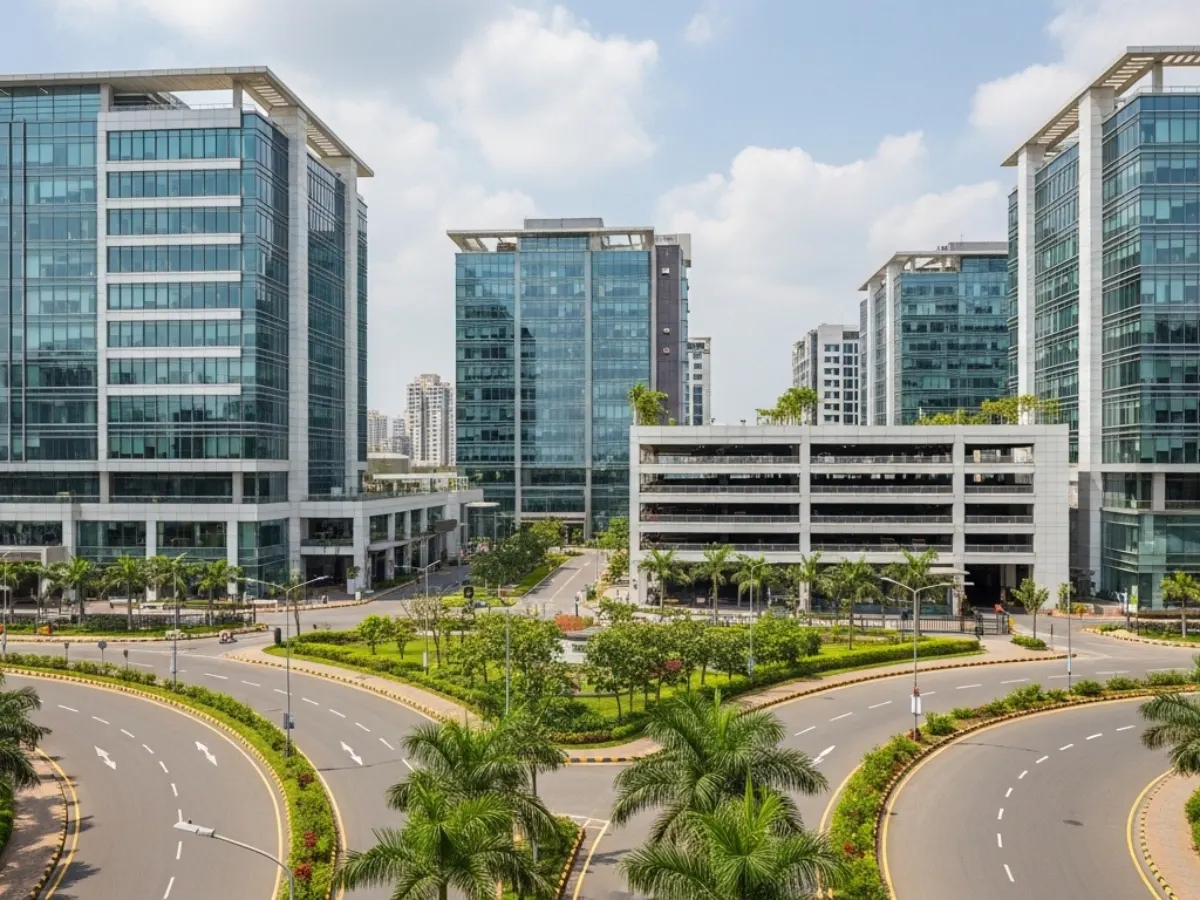
For this category, Sector 15 is usually the more natural and more efficient pocket.
This is where CBD Belapur’s legal and administrative ecosystem becomes very clear. The closer you are to the Belapur District Court and NMMC headquarters belt, the more natural the location becomes for advocates, chartered accountants, tax consultants, documentation firms, compliance advisors, and liaison professionals. In this part of Belapur, the ecosystem itself creates demand.
That network effect is powerful. A lawyer setting up in Sector 11 may get a cleaner office building, but still lose on daily relevance. A CA who regularly serves court-adjacent professionals, government-facing documentation work, or compliance clients may gain more from being in a modest 350 to 600 sq ft office in Sector 15 than from taking a visually better space elsewhere.
The usual practical size requirement here is also different. Sector 15 often works best for compact, subdivided units in the 300 to 800 sq ft range. This matches the way many professional practices actually operate.
Which parts of CBD Belapur are better for larger office users, corporate teams, or back-office setups?
For larger teams, the answer is more selective. Not every Belapur office building can support a serious corporate setup just because it is in a central area.
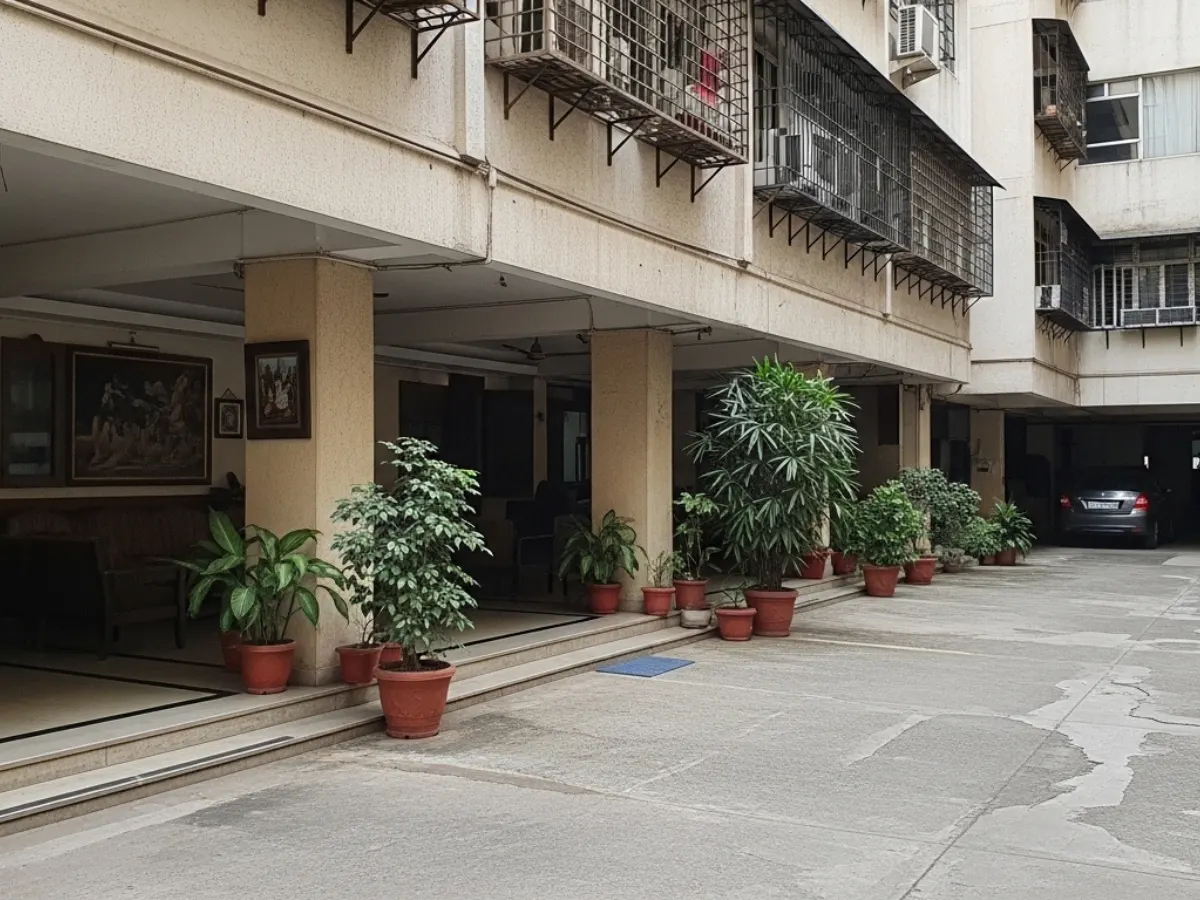
Older strata buildings dominate many parts of Belapur. That stock can work for small professional offices, but it often struggles when the requirement becomes 2,000 sq ft plus, let alone 5,000 sq ft and above. At that size, building systems begin to matter much more: HVAC, power load, lobby quality, parking, floor plate shape, lift handling, and facility management.
When larger floor plates matter
If your team needs a contiguous office with proper operational flow, newer commercial complexes or modern buildings become more relevant. Certain buildings in Belapur offer larger plates, and examples like V Times Square show the kind of stock that tries to serve larger back-office and scale-driven users.
But even here, be careful. A large floor plate in Belapur does not automatically mean it is equal to what corporate occupiers get in Airoli or Ghansoli. Belapur can work for selective larger users, but it is not the default answer for every corporate team.
When access and parking matter more than prestige
A mid-sized back-office may still choose Belapur if:
- staff commute relies on station access
- business does not need campus-grade amenities
- the company wants a more central Navi Mumbai position
- the office use is functional rather than image-led
But trying to stitch together a big corporate office by combining multiple small units in an older strata building is usually a bad idea. Layout problems, HVAC mismatch, multiple landlords, and society-level friction can become an operational headache very quickly.
Which pockets are better for buying an office, and which are safer mainly for leasing?
Buying and leasing are not the same decision in Belapur.
If you are a self-use professional buyer, especially in a field like legal, compliance, or consulting, buying a compact office in Sector 15 can make sense. It gives long-term location stability in the exact ecosystem where your work happens.
If you are a larger business or scaling team, leasing is often safer. It preserves capital, reduces exit friction, and protects you from being trapped in an aging commercial building if your needs change in three to five years.
Approximate market evidence in the node shows a wide capital range, from about ₹80 lakh for smaller 350 sq ft units in older stock to ₹3.5 crore or more for larger 2,000 sq ft well-positioned spaces. Rental patterns are also highly varied, from around ₹10,000 per month for tiny units to ₹40,000 to ₹80,000 per month for more standard 400 to 1,000 sq ft spaces, with premium larger spaces going much higher.
Historically, stabilised commercial assets in established Navi Mumbai nodes like Belapur have shown roughly 4% to 8% rental yields, but that should never be treated as a guaranteed outcome. Actual yield depends on tenant quality, vacancy time, maintenance drag, and building-level issues.
You should also read CBD Belapur Office Rents and Market Trend to see how demand and pricing are behaving across the node.
How much do building age, strata layout, and maintenance quality change the answer in Belapur?
A lot. In Belapur, this factor changes the answer more than many buyers expect.
A good location does not cancel out a bad building. This is one of the biggest truths in older CBD markets. A commercial building may sit in a strong pocket and still be a weak office decision because the lifts are poor, the lobby is tired, the washrooms are neglected, and the society is fragmented.
This is especially relevant in older strata buildings where dozens or even hundreds of individual owners make decision-making slow and messy. In such buildings, the land value may hold, but the functional value of the structure can keep declining.
Caution box: what many buyers get wrong in older Belapur stock
- They confuse a strong address with a strong office asset
- They believe “Grade A” because a listing says so
- They assume future redevelopment will solve everything
- They ignore how poor common areas damage client perception
- They underestimate maintenance levies and parking disputes
In Belapur, a central location can still lose practical value if the building experience feels tired, chaotic, or unreliable.
What ground realities should you check before choosing any commercial pocket in CBD Belapur?
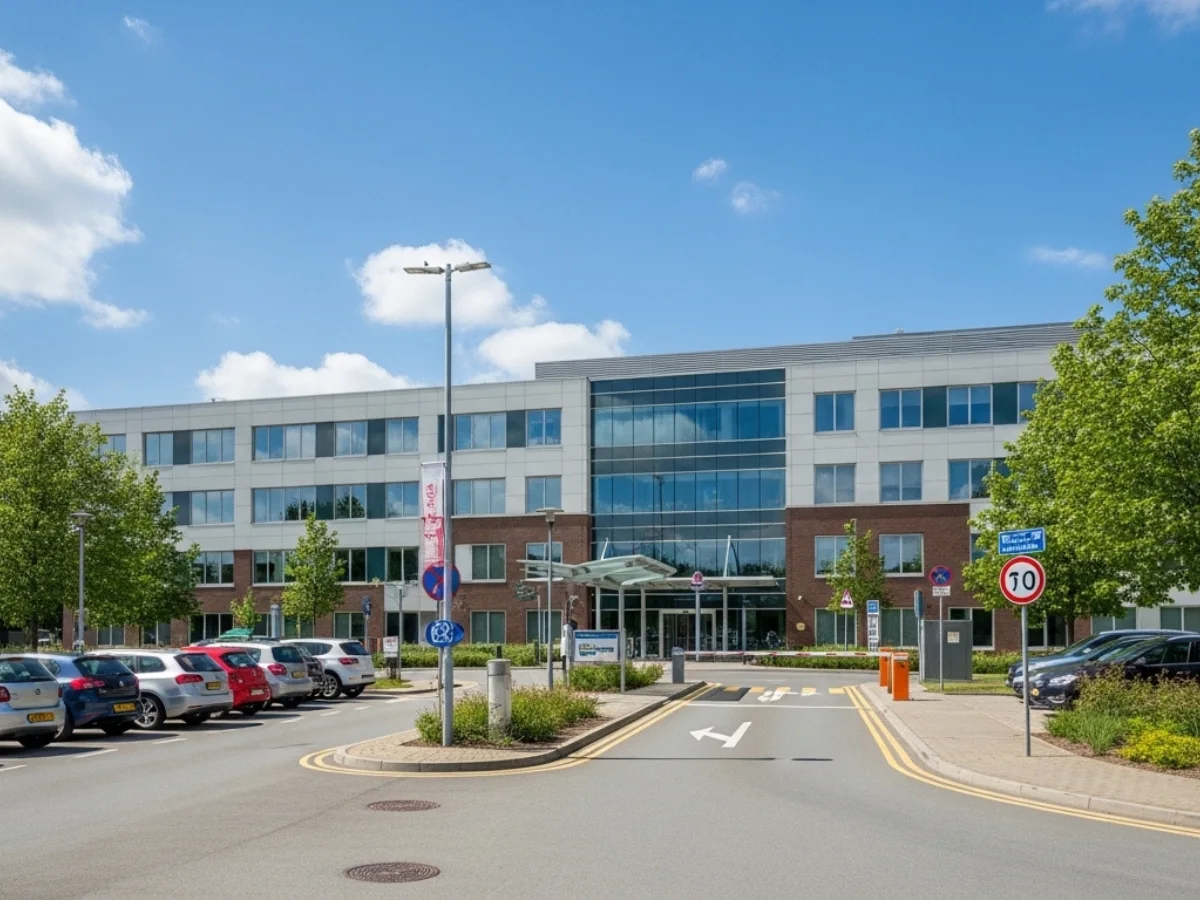
Before finalising any office here, the most important thing is to visit like an operator, not like a brochure reader.
Parking, access, building handling, and common-area condition matter as much as price. In fact, in many Belapur office decisions, they matter more.
Practical site checklist for CBD Belapur office inspections
- Do the 2:00 PM parking test
Visit during peak afternoon hours. If parking is already impossible and the building has no proper bays, client-facing work will suffer.
- Check the building, not just the unit
Lifts, staircases, common washrooms, lobby condition, and signage discipline tell you how the property is actually managed.
- Audit access roads and drop-off comfort
A good office with stressful vehicle movement can still become a bad daily choice.
- Ask for OC and CIDCO compliance trail
For buyers, insist on final Occupancy Certificate and check that the building’s CIDCO dues, lease-related compliance, and applicable premiums are not creating future legal risk.
- Review parking compliance under current NMMC rules
The 2025 parking policy changed the seriousness of this issue. Older buildings without integrated parking are now even more vulnerable operationally and financially.
This matters even more because Belapur has already seen parking-related frustration worsen, and even the municipal multi-level parking response in Sector 15 did not solve the problem in a stable way.
Which commercial pockets in CBD Belapur look attractive online but need extra caution on the ground?

Two types of listings need special caution.
The first is the old building marketed like premium stock. The second is the “high-yield” opportunity that sounds too smooth online.
Older units in strong pockets can still work, but only if the building is functioning properly. A deep discount is not automatically a good deal. Sometimes it hides pending repair exposure, weak tenant profile, defunct society handling, or serious maintenance decay.
The second caution is around fractional ownership or yield-led marketing. Retail investors should be extremely careful here. With tighter regulatory scrutiny in the sector and visible problems around platforms like Strata, unregulated or weakly structured commercial fractional products deserve far more caution than marketing pages usually suggest.
A small investor should clearly understand the difference between owning a registered physical commercial unit and owning a slice of a larger asset through a structure that may create liquidity or governance problems later.
When should a business choose CBD Belapur over Vashi, Nerul, or Airoli?
Choose CBD Belapur when the business depends on administrative proximity, court access, documentation workflow, or a central institutional ecosystem.
Choose Airoli or Ghansoli-side corridors when the requirement is larger IT-style or campus-style office use with better large-floor-plate logic.
Choose Vashi or premium mixed-use belts when consumer-facing visibility, stronger retail-commercial energy, and a more polished commercial experience matter more than court or civic proximity.
Choose Nerul selectively, not as a default replacement. Nerul can work for some office users, but it does not replace Belapur’s specialised legal-administrative ecosystem.
Best commercial sectors and office pockets in CBD Belapur by use case
| Use Case | Best Fit in CBD Belapur | Why |
|---|---|---|
| Client-facing office with frequent visits | Sector 11 near station | Easier access, broader visitor comfort, more practical arrival experience |
| Budget office | Older stock in Sector 11 or selected internal pockets | Lower entry, flexible size options, still usable if access is decent |
| Professional practice | Sector 15 | Court and civic ecosystem, peer clustering, network effect |
| Self-use office purchase | Compact office in Sector 15 | Strong long-term relevance for lawyers, CAs, consultants |
| Leasing stability | Better buildings in Sector 11 | Broader occupier pool, stronger mainstream office logic |
| Cautious investor | Pre-leased SME office or strong retail-commercial unit in established pocket | Better income visibility than speculative large office buying |
| Large back-office or scale team | Newer peripheral modern complex, not random old strata stock | Better floor plates and parking logic where available |
Conclusion
CBD Belapur is not one office market. It is a two-speed commercial node.
If you want a broad office location with stronger daily accessibility, Sector 11 is usually the smarter starting point. If you are a lawyer, CA, compliance consultant, or any professional whose work depends on court and civic movement, Sector 15 is usually the more useful pocket even if the buildings are older.
For buyers, the biggest lesson is simple: do not buy Belapur only for the address. Buy only if the exact pocket matches your use case, the building is still functionally healthy, and the legal and parking realities are acceptable. For tenants, especially larger ones, flexibility still matters. In many cases, leasing a better-positioned office is safer than owning the wrong one.
That is the practical Belapur answer. Not which sector sounds best, but which pocket works for the way your business actually runs.
FAQ's
Frequently Asked Questions