

Leased Commercial Property vs Vacant Unit in Navi Mumbai: Which Is Better for Investors?
For most investors in Navi Mumbai, a leased commercial property is the better choice when the goal is immediate income, lower vacancy stress, and smoother holding. A vacant unit becomes better only when the investor can absorb zero-rent months, fit-out costs, tenant search time, and more location risk in exchange for higher upside. In Navi Mumbai, that answer changes sharply by node: mature business belts like Airoli, CBD Belapur, and parts of Vashi usually favour leased income, while Panvel-side growth corridors, Ulwe, and some Taloja-linked pockets can justify a vacant bet only when infrastructure, approvals, and demand are genuinely visible.
Quick Summary
| Factor | Leased Commercial Property | Vacant Unit |
|---|---|---|
| Best for | Income-focused investors, NRIs, conservative buyers | Aggressive investors, operators, local buyers with patience |
| Cash flow | Starts from day one if lease is genuine | Starts only after tenant is found |
| Risk level | Lower, but depends on tenant quality and lease terms | Higher, because vacancy can stretch for months |
| Typical fit in Navi Mumbai | Airoli, CBD Belapur, select Vashi office/retail assets | Ulwe, Panvel-side belts, some Taloja and airport-linked speculative pockets |
| Main upside | Predictable rent, escalation, easier holding | Capital appreciation and repositioning flexibility |
| Main danger | Overpaying for a weak tenant or inflated “pre-leased” story | Dead capital, fit-out expense, slow leasing, approval delays |
| Best timing | When lease quality and title clarity are strong | Before a node becomes fully priced, but only with real regulatory and infrastructure visibility |
The real answer: what are you actually buying in each case?
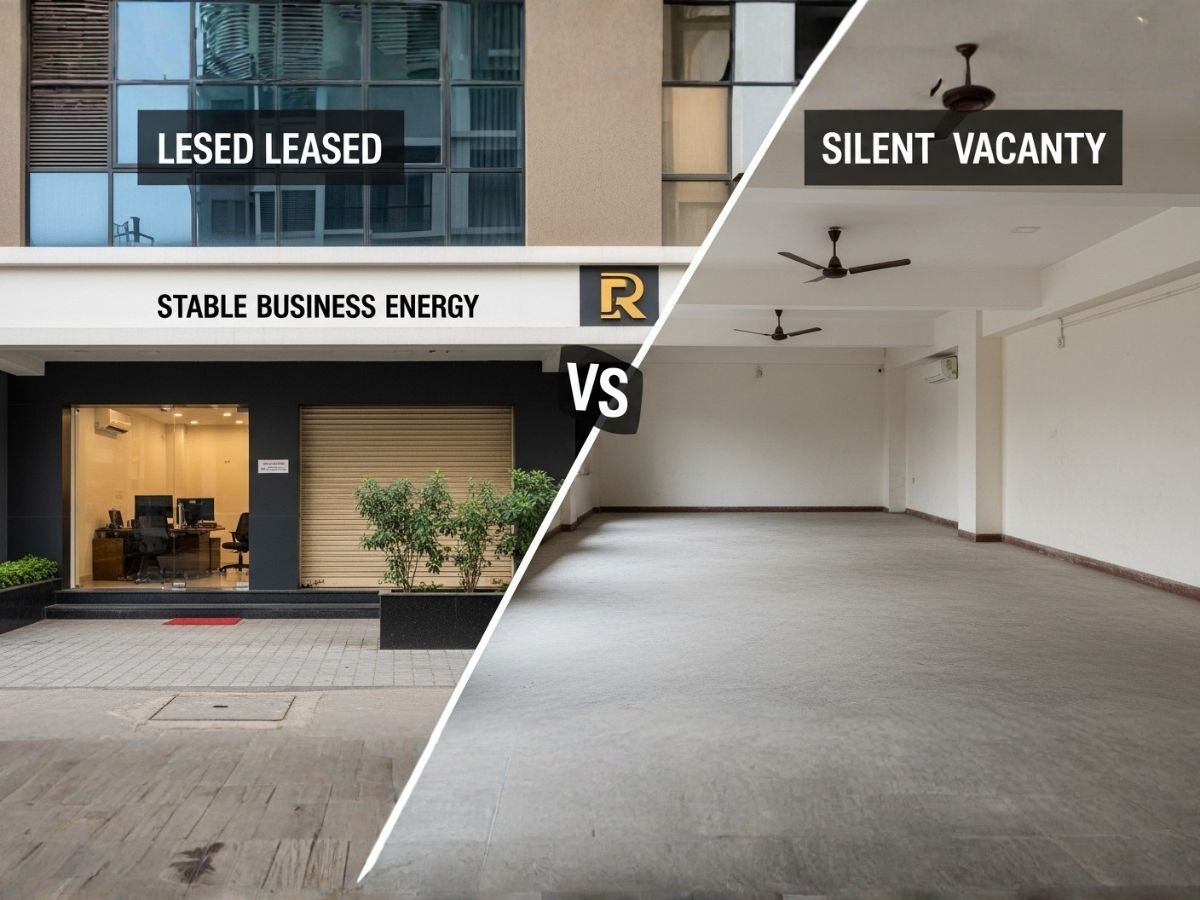
A leased commercial property is not just a shop or office with a tenant inside. In practical terms, you are buying a running income stream. The real asset is the lease covenant, the rent reliability, the lock-in strength, the escalation structure, and the property’s ability to stay occupied after the current tenant leaves. Commercial real estate generally offers better rental potential than residential property, and longer lease structures are a major reason many investors shift toward it.
A vacant unit is different. Here, you are not buying income. You are buying possibility. That possibility may be excellent in the right micro-market, but it is still a business problem you must solve later. You will need to handle marketing, brokerage, tenant fit-out expectations, commercial zoning practicality, maintenance carrying cost, and sometimes long silent periods where the unit earns nothing. That is why a vacant unit can look cheaper at entry and still become the weaker investment in real life.
What kind of investor are you, and why does that change the answer?

If you want monthly income with less headache
Then leased commercial property is usually the cleaner answer. This is especially true for investors who do not want to personally manage tenant hunting, interiors, and negotiation cycles. In Navi Mumbai’s more established commercial pockets, the attraction is simple: immediate rent plus better visibility on holding. Airoli and the Thane-Belapur belt continue to benefit from corporate demand, and recent market reports show this corridor remains a serious office absorption zone rather than just a brochure story.
If you want growth and can wait
Then a vacant unit may make sense, but only if you are mentally ready for delay. That delay can come from tenant search, fit-out, weak catchment, or project-level issues. In airport-influence and Panvel-side growth zones, the upside case is real because Navi Mumbai International Airport has already moved from promise to operation, and route expansion has continued into the 2026 summer schedule. But upside is not the same thing as instant usability.
If you are a first-time commercial investor
A leased asset is usually safer. Not because it is automatically better, but because it is easier to evaluate. You can test actual rent, lock-in, deposit, tenant profile, and building usage. A vacant unit demands stronger market judgement. A first-time investor often underestimates the time it takes to get the right tenant, especially in secondary commercial buildings or in areas where local footfall exists but corporate demand does not.
Which market signals matter more than general price talk?

Most investors start with rate per square foot. That is usually the wrong starting point.
In commercial property, the stronger signals are these: tenant quality, vacancy risk, surrounding business ecosystem, infrastructure usability, title clarity, and exit liquidity. A cheaper vacant unit in the wrong building can remain empty. A costlier leased asset in the right micro-market can quietly outperform because it stays occupied and easier to sell later.
Navi Mumbai’s office market has another useful signal. Recent reporting based on CRE Matrix said office rents in Navi Mumbai are still below the average of tier-I cities, which helps the region attract occupiers. That matters because occupier affordability supports leasing demand. On top of that, Thane-Belapur Road had a major share of Mumbai-region office absorption in 2025, which is highly relevant for investors looking at Airoli, Ghansoli, and connected business belts.
So the real question is not “Which unit is cheaper?” The real question is “Which unit has the stronger path to usable income or resale?”
Which Navi Mumbai nodes usually favour leased assets, and which ones can justify vacant bets?

The city does not behave as one commercial market. That is where many articles go wrong.
Airoli and the Thane-Belapur belt
This side usually favours leased office-led assets. The corridor has active business demand, improving institutional confidence, and visible data-centre and office ecosystem activity. Princeton Digital Group’s large Airoli lease and ESR’s Navi Mumbai data-centre investment direction both reinforce that the belt is not dependent on random retail footfall alone.
CBD Belapur
Belapur suits leased assets well, especially where office, banking, legal, professional, and administrative demand is already established. It is not the cheapest market, but that is exactly why buying a vacant unit here without a strong plan can be inefficient. A leased office or a truly working retail format usually makes more sense than a blind vacancy bet.
Vashi
Vashi is mixed. Good leased assets can work because the node is mature and commercially familiar. But a vacant unit here is not automatically attractive. If the property is expensive and the format is wrong, delay in leasing can compress returns quickly. High visibility does not always mean stable tenant quality.
Ulwe and Panvel-side belts
These markets are where vacant-unit investors usually become interested. The reason is obvious: airport-led and corridor-led growth expectations. But this is also where caution matters most. The airport is operational, which strengthens the long-term business case, yet not every nearby commercial unit will suddenly become a great investment. Micro-location, access road, catchment type, and project legality still decide the real outcome.
Taloja and some emerging industrial or logistics-influenced pockets
Vacant bets can work here for investors who are comfortable with a longer hold and operational uncertainty. But this is exactly where you must be stricter about approvals, RERA progress, utility readiness, and actual business demand. Taloja is not one uniform story. Some pockets feel linked to future utility; others still feel too early.
Are you buying on real connectivity, or only on excitement?

This is where a lot of money gets trapped.
The Mumbai Trans Harbour Link is no longer a future promise. MMRDA states that Atal Setu opened for traffic on 13 January 2024 and has already improved regional mobility between Mumbai and Navi Mumbai. That is real connectivity. Likewise, NMIA is no longer a distant story. It was inaugurated on 25 December 2025, and route expansion accelerated in the 2026 summer schedule. These are operational facts, not brochure timelines.
That matters because leased assets do best when connectivity is already usable. Vacant assets do best when infrastructure is becoming real but the market has not yet fully priced that benefit. The dangerous middle zone is where investors buy only because a map shows airport proximity, metro lines, or future growth language, but the tenant ecosystem is still weak on the ground.
The same logic applies to the Navi Mumbai Metro. The Belapur-Pendhar section is already operational, which is useful for certain residential-commercial interface pockets in Kharghar and Taloja, but metro presence alone does not rescue a weak commercial building or a bad format.
What do MahaRERA, CIDCO, and title checks tell you before choosing vacant over leased?

This is where the article stops being generic and becomes useful.
If you are buying a vacant under-construction commercial unit, your first real risk filter is not the brochure. It is MahaRERA. The official MahaRERA platform clearly shows project registrations, update modules, extension pathways, and abeyance or lapsed-project categories. It also maintains project lists for non-compliance of QPR and lapse of completion date. That is a major clue for timing and safety.
This matters even more because MahaRERA had issued notices to 10,773 lapsed projects for failure to update project status after completion dates, and the regulator’s own ecosystem continues to track lapsed, revoked, and abeyance categories. For a vacant or under-construction buy, that is not background noise. That is direct risk information.
Then comes CIDCO title reality. Navi Mumbai investors cannot ignore leasehold versus freehold status. CIDCO’s long leasehold history has affected transfer ease, modification comfort, and resale perception for years. The major shift came when CIDCO approved conversion of leasehold land to freehold in October 2024, and the Maharashtra government later issued a final notification in March 2025 for leasehold and occupancy Class II conversion upon payment of premium linked to ASR. That change matters for liquidity, financeability, and exit comfort.
One more practical layer: use IGR Maharashtra eASR as a baseline, not as a magic price truth. The official eASR platform gives government rate guidance for valuation and stamp-duty purposes. It helps anchor negotiations and spot when a commercial quote has become too story-driven. But it does not tell you what a tenant will actually pay, or whether the asset is worth its ask in rental terms.
So when does a leased commercial property clearly win?
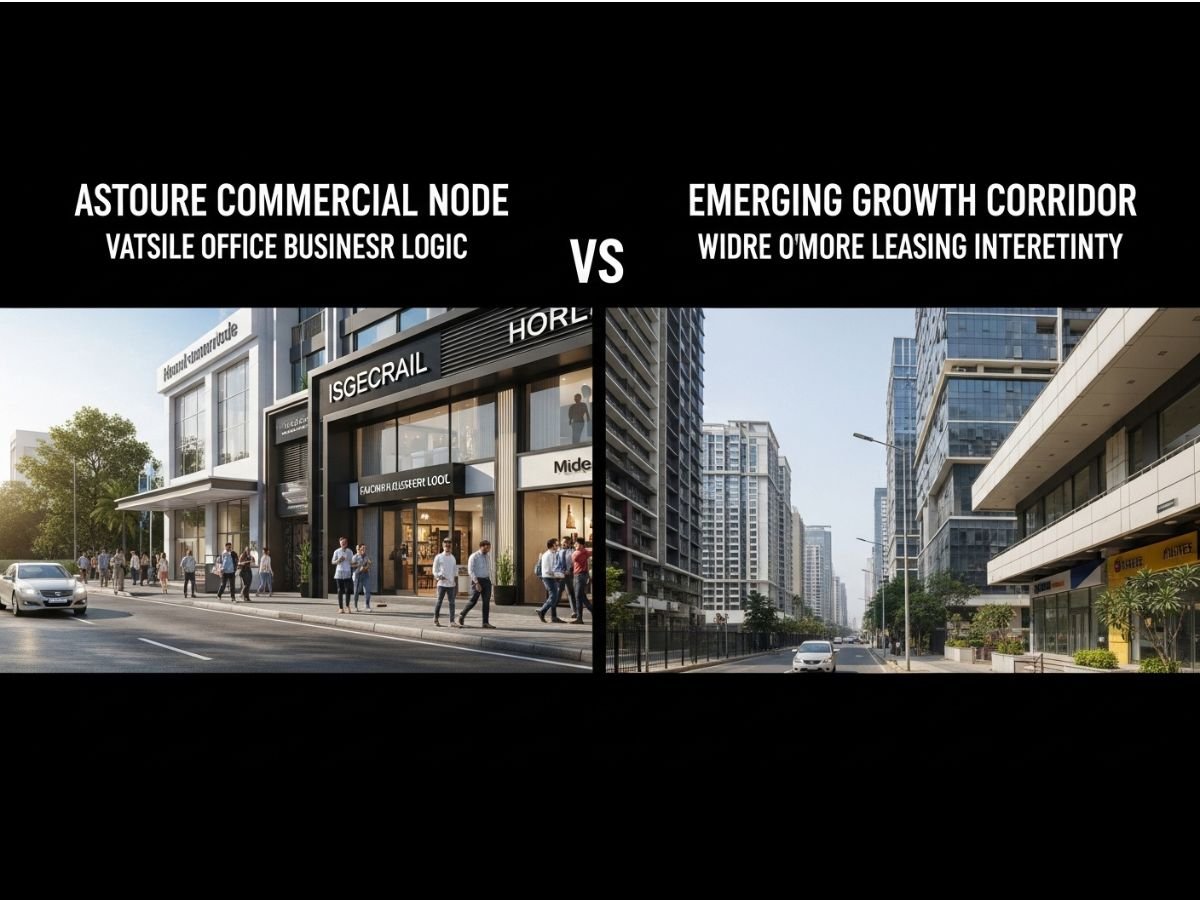
It usually wins when four things line up.
First, the node already has real business demand. Second, the tenant profile is credible. Third, the lease structure is sensible. Fourth, the title and transfer chain are clear.
In Navi Mumbai, that often points toward leased office or professionally used commercial stock in belts such as Airoli, CBD Belapur, and selective Vashi assets. These locations already benefit from operating connectivity, mature commercial familiarity, and more visible occupier logic than speculative fringe zones.
A leased asset also wins when the investor’s personal goal is boring, in the best sense of the word. Regular rent. Lower vacancy stress. Better sleep. Cleaner holding.

When can a vacant unit beat a leased one?
A vacant unit can win when the investor is early enough, disciplined enough, and local enough.
This usually means the investor understands the catchment, knows what tenant category the location can support, has cash to survive the non-income period, and is not depending on immediate rent to justify the purchase. In Navi Mumbai, that case becomes more believable in select airport-influence, Panvel-side, and future logistics-supporting belts, because the airport is operating and MTHL has already changed regional movement.
But the vacant strategy fails quickly when the building has weak parking, poor frontage, confused zoning, slow approvals, or a micro-location that sounds strategic on paper but does not yet pull stable tenants. In such cases, the investor has not bought a bargain. They have bought a problem.
Decision Matrix: Buy Now, Watch Closely, or Wait
| Situation | Better Choice | Practical Call |
|---|---|---|
| Mature office corridor with strong tenant and clear lease | Leased property | Buy Now |
| Mature node, but vacant unit with high entry price and unclear tenant fit | Vacant unit | Wait |
| Airport-linked or Panvel-side growth corridor with real access and clear approvals | Vacant unit | Watch Closely / Selective Buy |
| Under-construction project with weak RERA update pattern or extension history | Vacant unit | Wait |
| CIDCO-linked title where freehold status or transfer chain is unclear | Either | Do not proceed until title is decoded |
| Investor needs monthly income and low operational burden | Leased property | Buy Now if lease is genuine |
| Investor can hold 12 to 24 months without rent and has local execution ability | Vacant unit | Selective Buy only |
Common mistakes investors make in Navi Mumbai
The first mistake is buying a vacant unit just because the area is “future growth.” That phrase has destroyed a lot of patience and capital.
The second mistake is trusting the words pre-leased or assured return without reading the actual lease, lock-in, deposit, and tenant strength. A weak tenant in a pre-leased deal can make the property look safer than it really is.
The third mistake is ignoring the authority side. In Navi Mumbai, CIDCO status, commercial usage legality, transfer comfort, and RERA progress are not side issues. They directly affect liquidity and risk. The same goes for municipal dues. Before any secondary-market purchase, tax and dues should be checked through the local authority systems, including NMMC’s property-tax interface where relevant.
The fourth mistake is mixing up footfall with yield quality. A crowded local high street and a stable corporate-grade leased office are not the same investment product.
Final Verdict
For most investors in Navi Mumbai, leased commercial property is better because it is simpler to evaluate, easier to hold, and more dependable in real life. That is especially true in mature business belts where tenant demand already exists.
A vacant unit is better only for a narrower investor type: someone who understands local commercial demand, can wait through the non-income phase, and is entering a growth corridor before it becomes fully priced. In other words, leased property is usually the better investment for stability. Vacant property can be the better investment for upside, but only when the investor is buying the right location, at the right stage, with full awareness that vacancy is not a side risk. It is the main risk.
In Navi Mumbai, the smartest answer is not emotional. It is simple: buy leased for income, buy vacant only for strategy.
FAQs
Frequently Asked Questions