
Risks of Buying Property with Loan Pending in Navi Mumbai
Buying property with a loan pending is possible, but it is not automatically safe. Before paying token money, verify the bank loan, foreclosure amount, original documents, IGR records, CERSAI charge, land records, RERA status and local approvals. In Navi Mumbai, also check CIDCO, NAINA, gaothan, CRZ or zoning issues where relevant.
This is an educational guide. Verify the latest position with the relevant authority or a property lawyer before making a transaction.
Can You Buy Property With a Loan Pending?
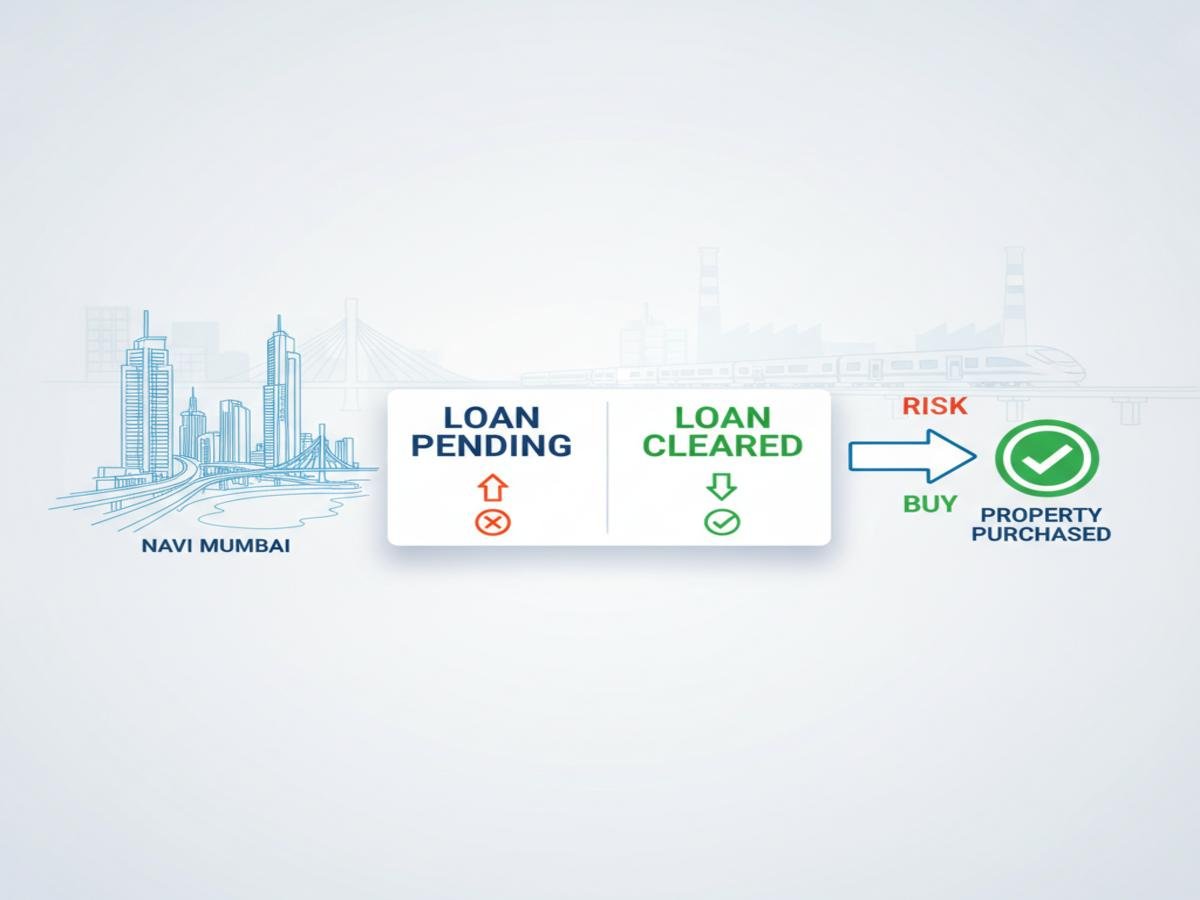
Yes, you can buy a property where the seller still has a home loan or mortgage. But the deal must be handled carefully.
The key question is not: “Is loan pending?”
The key question is: Can the bank’s charge be cleared safely before or during registration?
If the seller has mortgaged the property, the lender may be holding the original documents. The lender may also have a charge or security interest on the property. Until this is cleared, the buyer should not treat the property as financially clean.
A pending loan is not always a deal-breaker. But it is a strong signal that the transaction needs deeper checking.
Main Risks of Buying Property with Loan Pending
| Risk | Why it matters | Buyer action |
|---|---|---|
| Bank charge on property | The property may be security for the seller’s loan | Verify foreclosure letter and bank NOC |
| Original documents with bank | Seller may only have photocopies | Get document list from lender |
| Fake NOC | Scanned letters can be forged | Confirm directly with bank branch |
| Hidden loan or mortgage | Seller may not disclose all liabilities | Check IGR and CERSAI |
| Token money dispute | Seller may delay loan closure after taking money | Add refund and condition clauses |
| Local approval risk | Bank loan does not mean all approvals are clean | Check CIDCO, NAINA, RERA, CRZ or land records |
Important: A bank giving a loan earlier does not guarantee that the title, approvals, land use and society records are safe today.
What to Check Before Paying Token Money
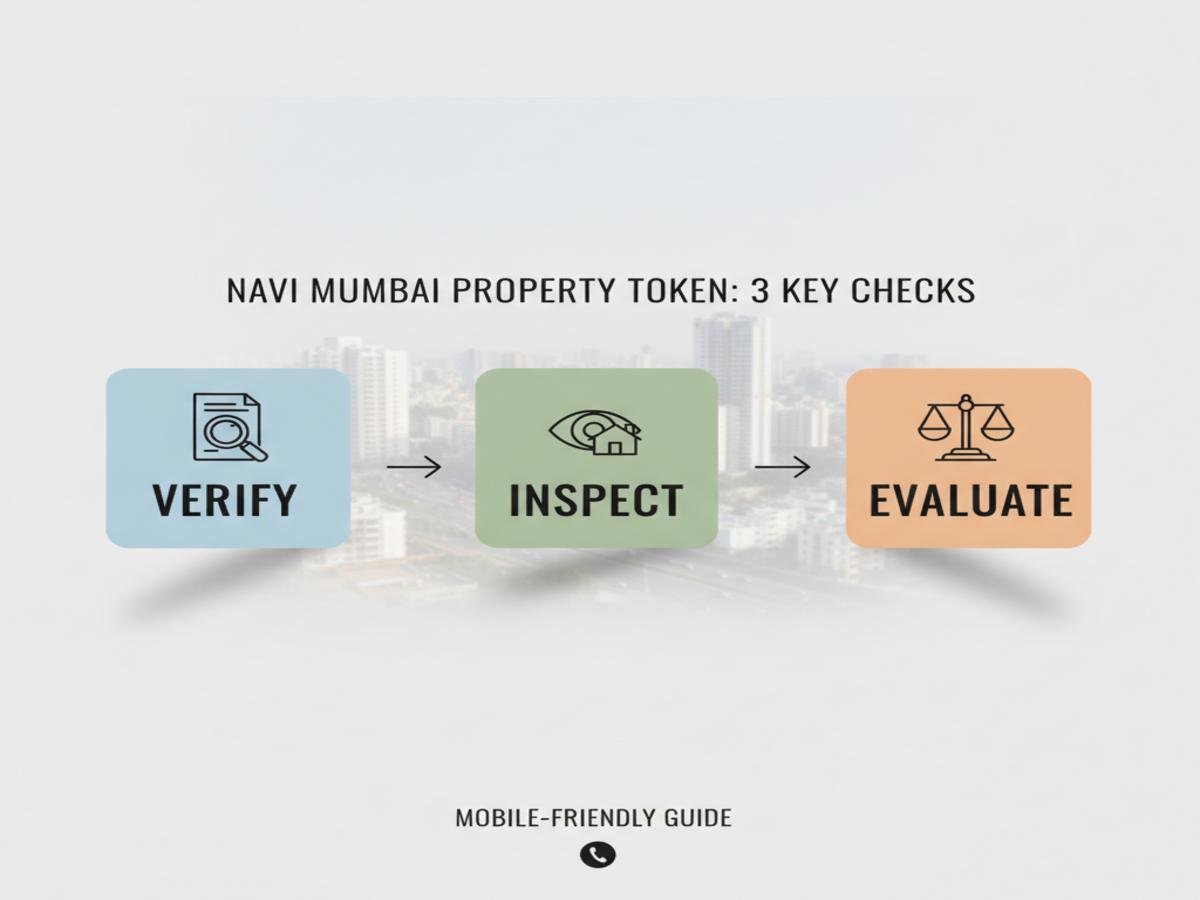
Do this before giving token, advance or “loan closure support” money.
1. Bank Loan Documents
Ask for:
- Latest loan outstanding statement
- Foreclosure letter
- Bank NOC or sale consent, if applicable
- Loan account details
- List of original documents held by the bank
- No-dues certificate after closure
- Loan closure letter
- Confirmation of when originals will be released
Do not rely only on WhatsApp photos. Ask the seller to arrange direct confirmation with the bank.
2. Property Registration Documents
Check:
- Sale deed
- Index II
- Previous agreements
- Chain of title
- Stamp duty and registration proof
- IGR Maharashtra eSearch records
- Notice of Intimation, if any mortgage by deposit of title deeds was registered
Index II is a short registration summary. It supports verification of registered transactions, but it does not by itself prove complete ownership.
3. Land Records, if Land or Plot Is Involved
For Panvel, NAINA, gaothan, Raigad-side plots, village properties or agricultural-to-NA land, check:
- 7/12 extract
- 8A extract
- Property card
- Mutation / Ferfar entries
- Survey number / gut number / CTS number
- Occupant class
- Land use
- Reservations, road markings or acquisition entries
In simple words:
- 7/12 extract shows village land details such as survey number, area, cultivator/holder and some land-use notes.
- 8A shows landholding/account details.
- Property card is commonly used for urban land/CTS records.
- Mutation or Ferfar means a change entry in revenue records.
These documents support verification. They should not be treated as final legal proof without title review.
4. Society and Flat Documents
For resale flats in Navi Mumbai, Kharghar, Ulwe, Vashi, Nerul, Seawoods, Airoli, Ghansoli or Panvel, check:
- Society NOC
- Share certificate
- Maintenance dues certificate
- Property tax receipt
- Electricity and water dues
- Occupancy Certificate
- Previous transfer records
- Any litigation or society dispute
5. CIDCO, NAINA and RERA Checks
If the property is connected with CIDCO, NAINA or an under-construction project, do not stop at bank verification.
Check:
- CIDCO allotment or lease documents
- CIDCO transfer permission, where applicable
- CIDCO dues or service charges
- NAINA Zone Confirmation Statement
- NAINA building permission / CC / OC, if applicable
- MahaRERA project and promoter details, if project-related
- MahaRERA complaints, orders or project status where relevant
For creek-side, coastal, mangrove-adjacent or Uran/Dronagiri/Ulwe/Nerul-side properties, check CRZ/CZMP status through the proper authority.
How to Verify the Loan and Title
Step 1: Get the seller’s loan details in writing
Ask for the lender name, branch, loan account reference and outstanding amount.
If the seller avoids this, pause.
Step 2: Confirm directly with the bank
The safest method is direct bank confirmation. The seller may need to authorise the bank to share details.
Confirm:
- Outstanding loan amount
- Foreclosure process
- Whether the bank will issue NOC
- Whether originals are with the bank
- Release timeline after repayment
- Whether bank-to-bank payment is possible
Step 3: Search IGR Maharashtra
Use IGR Maharashtra eSearch / Index II / document search to check registered transaction history.
Also ask your lawyer to check whether any mortgage notice, charge, prior agreement, release deed or suspicious transaction appears.
Step 4: Check CERSAI
CERSAI is used to check registered security interests. It can help identify whether a financial institution has recorded a charge on the property.
This is especially important where the seller claims, “Loan almost closed hai.”
Step 5: Check land records
For plots and land, match the seller’s name, area, survey number, gut number, CTS number and mutation entries with the actual property.
If there is any mismatch, verify with a lawyer and revenue office before transaction.
Step 6: Check local authority records
A bank loan does not clear CIDCO, NAINA, CRZ, gaothan, NA permission, development permission or zoning risk.
For NAINA and Panvel-side land, also check whether the 2025 Maharashtra land conversion changes actually apply to that case. Applicability can depend on development plan, regional plan, planning authority approval, land class and local facts. Verify before transaction.
Safe Payment Routes
| Payment route | Safety level | Notes |
|---|---|---|
| Seller closes loan before sale | High | Best for buyer if seller has funds |
| Buyer’s bank pays seller’s bank | High | Common in loan-funded resale deals |
| Same-bank loan transfer | Medium to high | Can be smoother, but still verify title |
| Buyer pays seller’s bank directly | Medium | Use only with written legal structure |
| Buyer pays seller directly to close loan | High risk | Avoid unless lawyer structures it safely |
The safest route is usually bank-to-bank payment or seller closing the loan before registration.
Avoid paying large money directly to the seller for loan closure without bank confirmation and lawyer-reviewed clauses.
Clauses to Add Before Token or Agreement
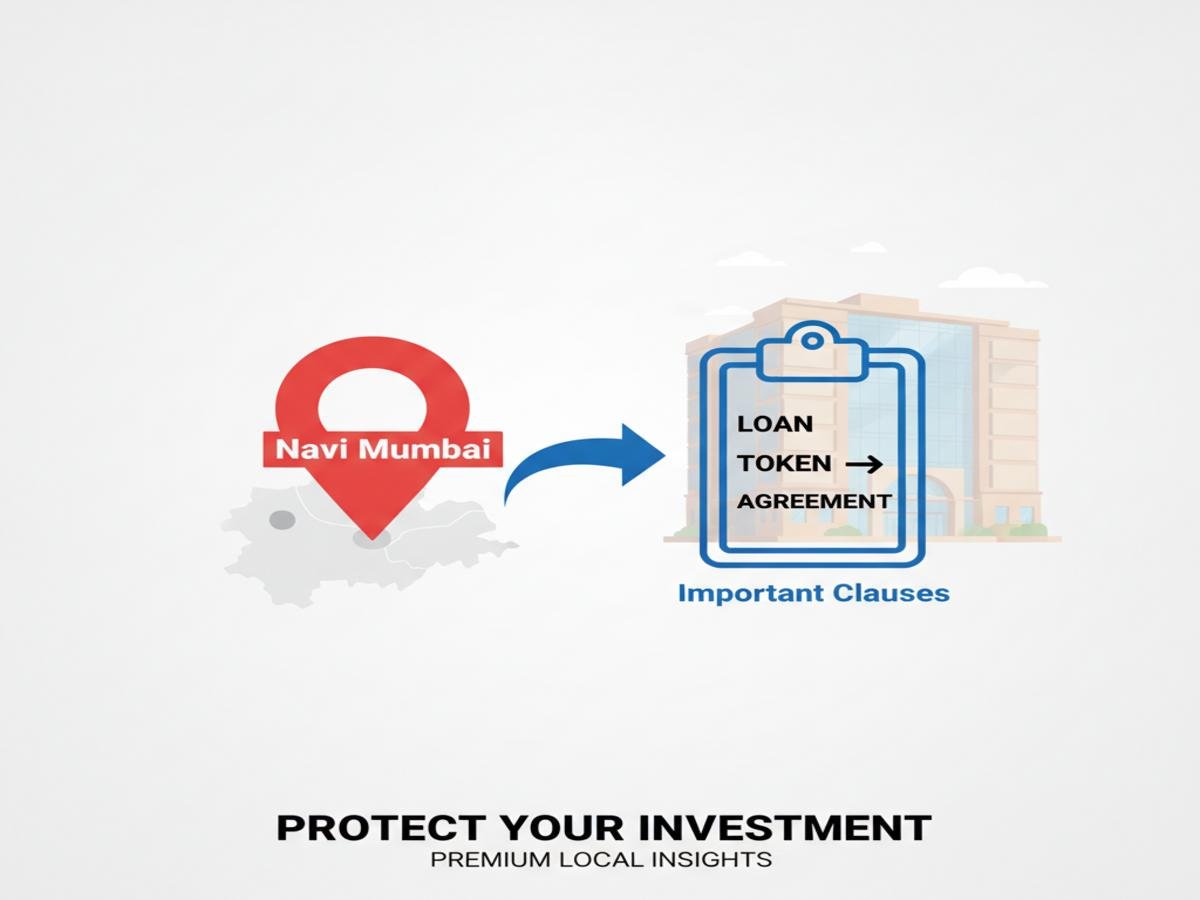
Ask your lawyer to include clauses for:
- Seller’s loan disclosure
- Foreclosure amount
- Bank NOC / consent condition
- Direct payment to lender, if required
- Refund if bank NOC is not issued
- Refund if title defect appears
- Original document release
- No hidden loan, lien, charge or litigation
- Indemnity from seller
- Registration timeline
Do not copy-paste legal clauses blindly. Get them drafted for your exact transaction.
Navi Mumbai Example
A buyer is considering a plot near Panvel. The seller says a loan is pending and asks for token plus money to close the loan. The broker says the plot is “NAINA clear” and “NA ho jayega.”
The buyer should not proceed on verbal claims.
Before paying token, the buyer should check:
- Foreclosure letter from lender
- Direct bank confirmation
- IGR eSearch and Index II
- CERSAI charge search
- 7/12, 8A and mutation entries
- Survey/gut number match
- NAINA ZCS
- NAINA building permission or layout approval, if development is claimed
- DP/RP zoning and reservation
- CIDCO or planning authority impact, if applicable
- CRZ or green-zone issue, if location suggests risk
If even one major record is unclear, pause and verify with a property lawyer, revenue office or planning authority.
Red Flags
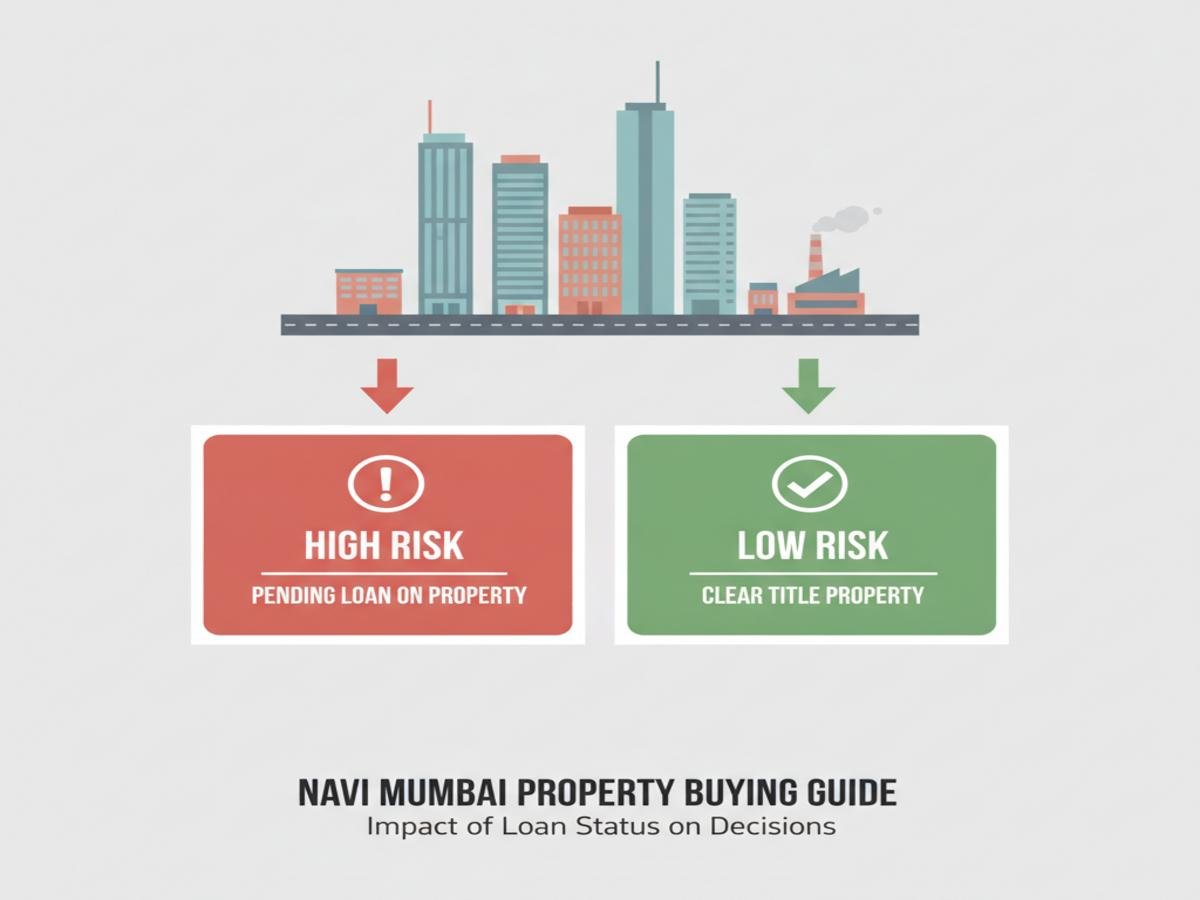
Stop and verify deeper if:
- Seller refuses direct bank verification
- Broker says “token first, documents later”
- Seller shows only photocopies
- NOC is only a WhatsApp image
- Seller asks for cash to close loan
- IGR or CERSAI shows a charge but seller denies it
- Original documents are missing
- Seller name does not match land records
- Mutation is pending or disputed
- CIDCO transfer permission is unclear
- NAINA approval is only verbal
- CRZ, creek, mangrove or green-zone doubt is ignored
Do not let urgency replace verification.
Common Mistakes Buyers Make
Mistake 1: Assuming bank loan means clean title
A bank may have checked documents earlier, but that does not guarantee there is no later dispute, unpaid due, mutation issue or local approval problem.
Mistake 2: Paying token before basic checks
Token money should come after basic loan and title verification, not before.
Mistake 3: Trusting broker explanation
A broker can explain the deal. A lawyer and official records verify the deal.
Mistake 4: Ignoring IGR and CERSAI
These are important checks for registered transactions and security interests.
Mistake 5: Checking only flat papers
In Navi Mumbai and Panvel-side areas, land record, CIDCO, NAINA, CRZ and planning authority checks can matter depending on the property type.
FAQs
Frequently Asked Questions