Best Sectors in Kharghar for Buying a Flat
The best sectors in Kharghar for buying a flat are not the same for every buyer. For premium self-use and long-term end use, Sectors 20 and 21 usually stand out. For stable family buying, Sectors 10, 11, and 12 are stronger. For metro convenience, Sectors 14, 15, and parts of 34 make more sense. For lower entry price and long-hold upside, Sectors 35 and 36 can work, but only if you accept real civic trade-offs.
Kharghar is no longer one simple market. Buying in Sector 11 is a very different decision from buying in Sector 35. The price, water situation, building age, social infrastructure, and commute pattern can change sharply from one belt to another.
That is why this guide does not treat Kharghar like a generic real estate portal page. The real question is not just which sector is “best.” The real question is: best for whom, for what budget, and for what kind of daily life?
Which sectors in Kharghar are actually best for buying a flat?
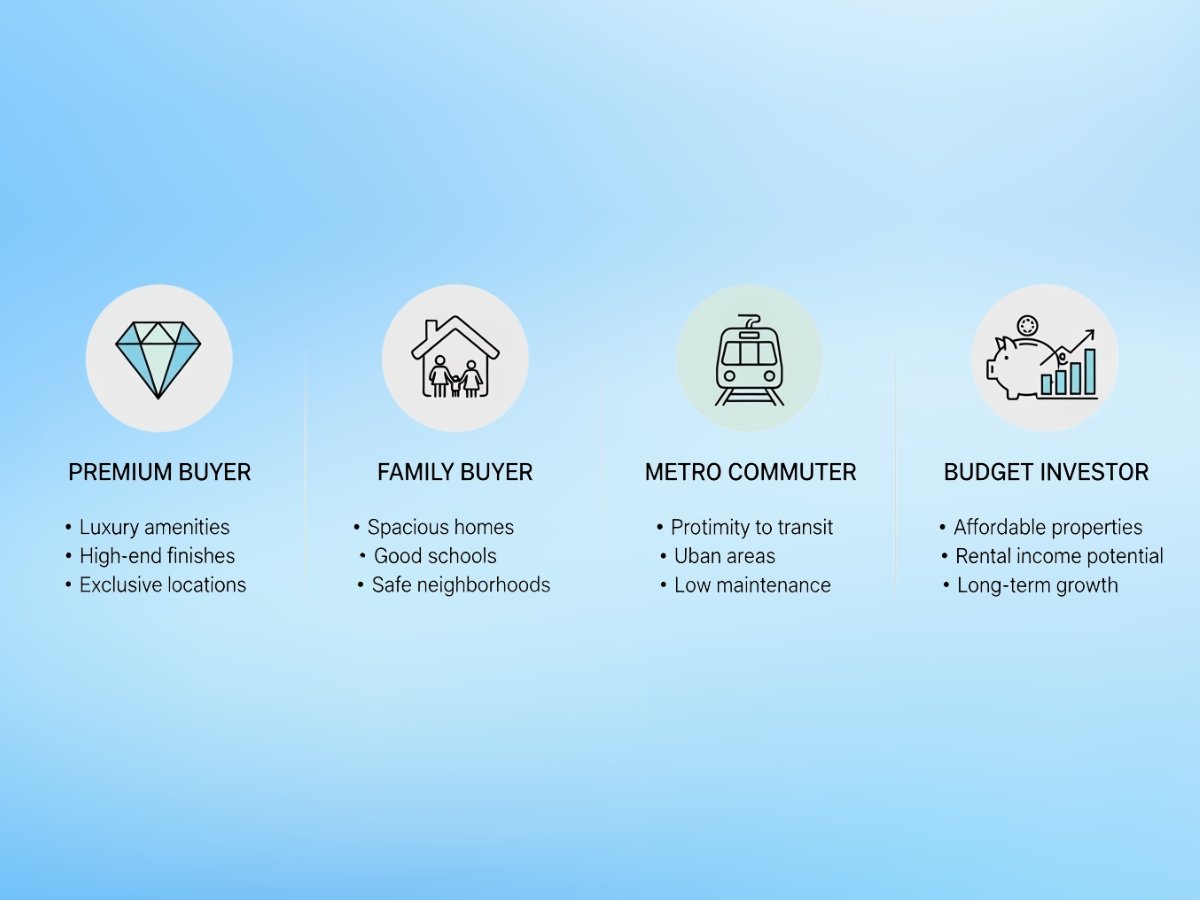
The direct answer is this: Kharghar has four broad buying buckets, and each suits a different kind of buyer.
| Buyer need / sector type | Sectors or belt that usually fit best | Why they work |
|---|---|---|
| Premium lifestyle and wealth preservation | Sectors 20, 21, parts of 22, Central Park and Golf Course side | Premium environment, park access, stronger self-use appeal, low vacancy |
| Practical family buying | Sectors 10, 11, 12 | Settled roads, schools, hospitals, older but more proven societies |
| Metro and daily commute convenience | Sectors 14, 15, parts of 34 | Better access to Metro Line 1 stations and easier daily movement |
| Lower-entry long-hold buying | Sectors 35, 36, selected parts of 34C | Lower price bands, newer stock, possible future upside, but weaker present-day livability |
This is the most important point to understand early: a premium sector is not automatically the best sector, and a cheaper sector is not automatically better value. In Kharghar, the answer changes based on whether you are buying for family life, commute comfort, lifestyle, rental demand, or patient long-term appreciation.
A second important point is that legacy Kharghar and metro-growth Kharghar behave differently. The old CIDCO-planned central belt, especially sectors from roughly 10 to 21, is more settled, more reliable for end users, and more expensive. The outer emerging belt, especially 34 to 36, has more new inventory and lower entry price, but it can come with ongoing construction, weaker civic maturity, and higher dependence on future improvement.
How should you choose a sector in Kharghar before choosing a building?
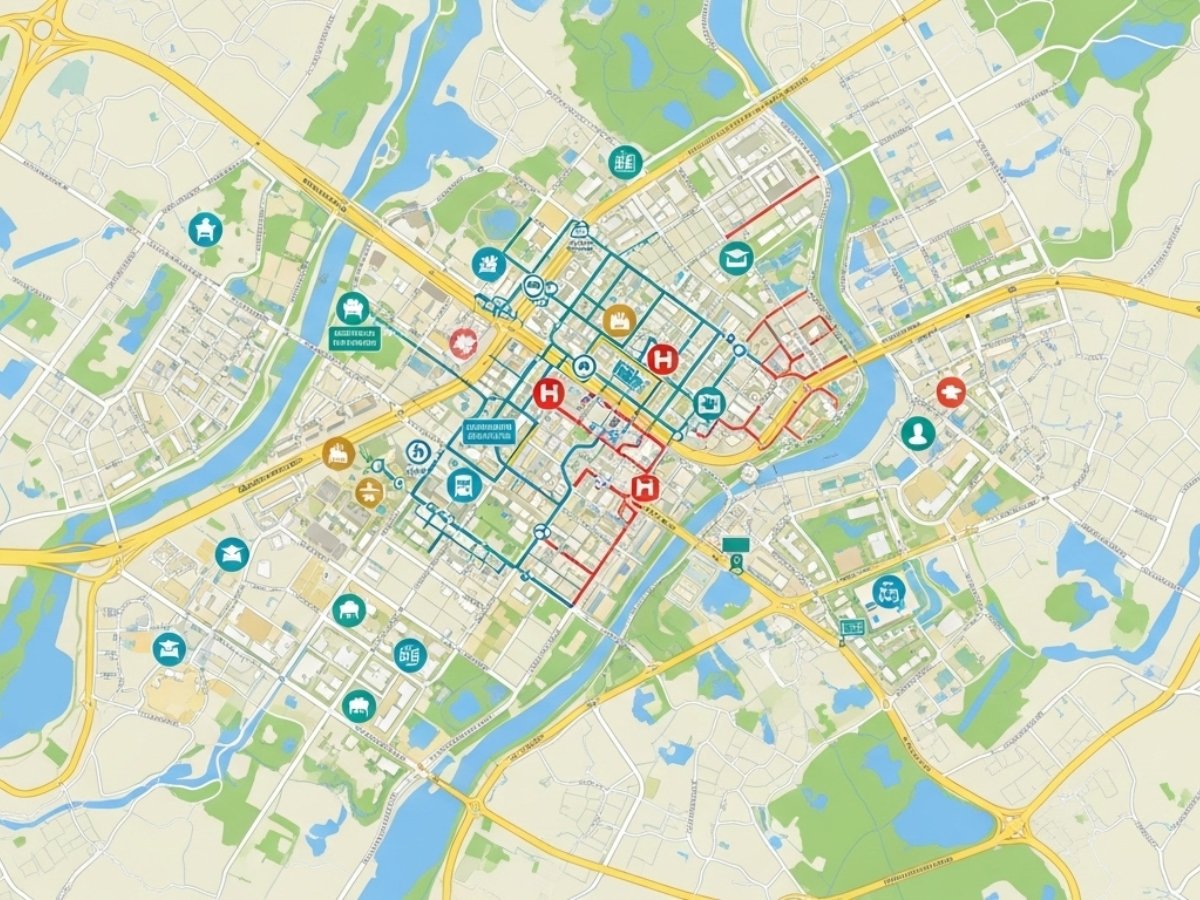
Choose the sector first, then the project. That order matters more than many buyers realise.
A very good-looking tower in the wrong sector can create more daily frustration than an older but well-managed society in a stronger location. In Kharghar, sector choice decides your road approach, school access, dependence on private water tankers, walkability, commute friction, and even the kind of resale market you will face later.
Before shortlisting any building, check these sector-level questions:
- Is the sector already settled or still heavily under development?
- Is water supply reasonably stable there, or do many societies depend heavily on tankers?
- Does the sector have direct practical access to metro, railway station routes, markets, schools, and clinics?
- Are the approach roads wide and usable in all seasons?
- Is the sector clearly inside the core Kharghar civic ecosystem, or is it part of a marketed edge location?
- Does the sector mainly have resale stock or under-construction inventory?
- Will your lifestyle actually match the sector’s current ground reality?
This matters especially in Kharghar because civic management is not as simple as many brochure pages suggest. CIDCO remains the town planner and controls important planning and water-related structure, while broader civic maintenance comes under Panvel Municipal Corporation in many day-to-day contexts. That overlap can create gaps between what a project promises and what the sector can actually deliver on the ground.
In practical terms, buyers should judge a sector by resilience, not marketing. Water, access, daily convenience, and actual livability matter more than clubhouse images.
Sector selection becomes much more practical when you compare it with actual Kharghar property rates, because not every part of Kharghar offers the same value at the same price point.
Which Kharghar sectors are best for premium buyers and long-term end users?
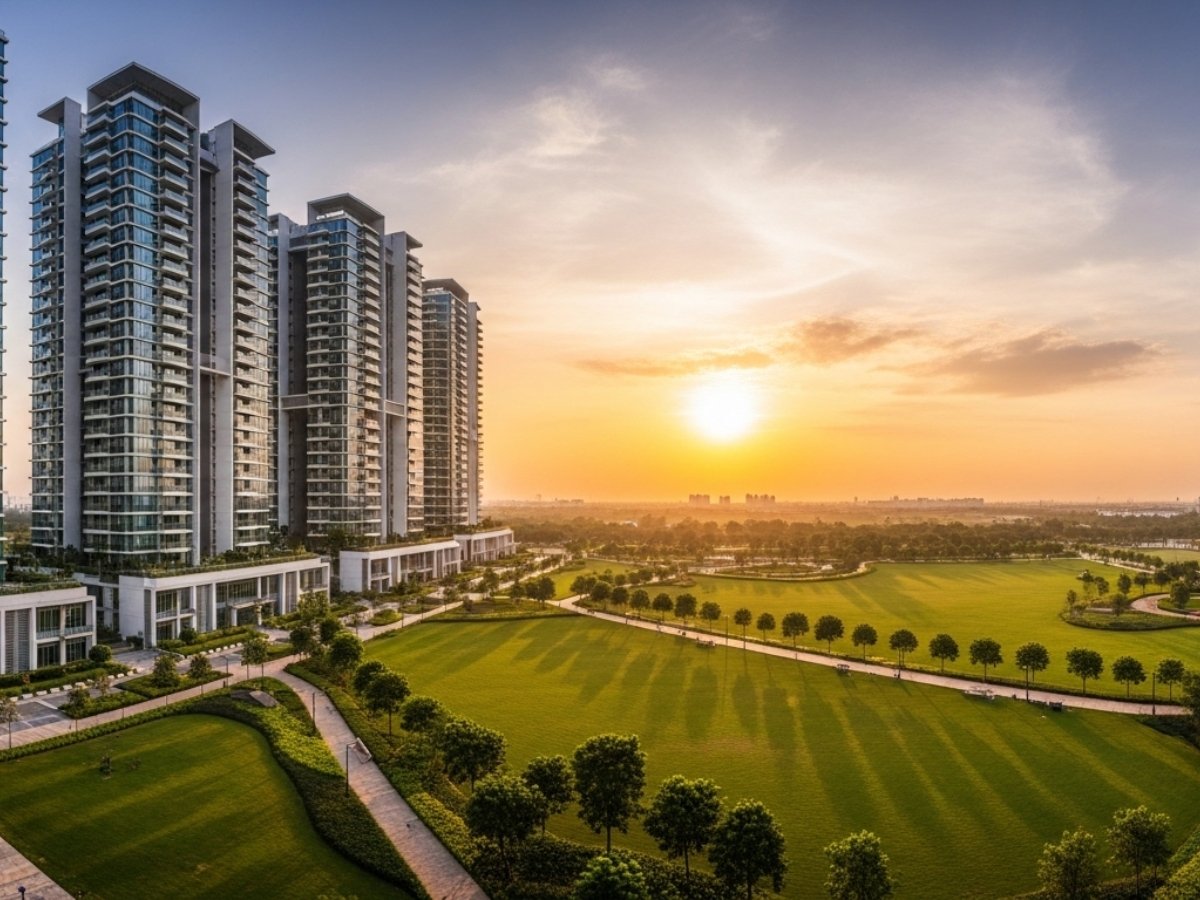
For premium buyers and long-term end users, Sectors 20 and 21 are usually the strongest picks in Kharghar.
These sectors sit in the belt that benefits most from the Central Park side, Golf Course side, better-known premium surroundings, and a stronger overall lifestyle identity. Approximate Q1 2026 market ranges here are around ₹14,000 to ₹20,000+ per sq. ft., depending on the exact building, view, layout, age, and project profile.
Sectors around Central Park, Golf Course Road, and better-known premium pockets
The appeal here is not just branding. These sectors carry real end-user advantages. The park adjacency, wider open feel, more established premium societies, and stronger environmental quality make them desirable for buyers who are planning to stay for years rather than chase quick upside.
Large-format homes are more common in this belt. Families wanting bigger 3 BHK or 4 BHK configurations, NRIs looking for stable self-use assets, and buyers who want a “finished Kharghar” experience rather than a still-developing one usually focus here first.
Why these sectors feel stronger for self-use
What makes Sectors 20 and 21 strong is not only price prestige. It is the combination of space, environment, and proven demand from end users. Vacancy tends to stay lower in such pockets because people buy here for actual living, not only for speculative inventory parking.
These sectors are better seen as wealth preservation zones than “cheap growth” zones. A buyer coming here should not expect bargain entry. The logic is different. You are paying for stronger self-use quality, a better-known urban character, and a more defensible long-term address within Kharghar.
That said, premium buyers should still not buy blindly. Even in a strong sector, building age, society maintenance, water storage capacity, legal clarity, and actual access matter. A good sector cannot rescue a weak building.
Which sectors in Kharghar are better for practical family buying?
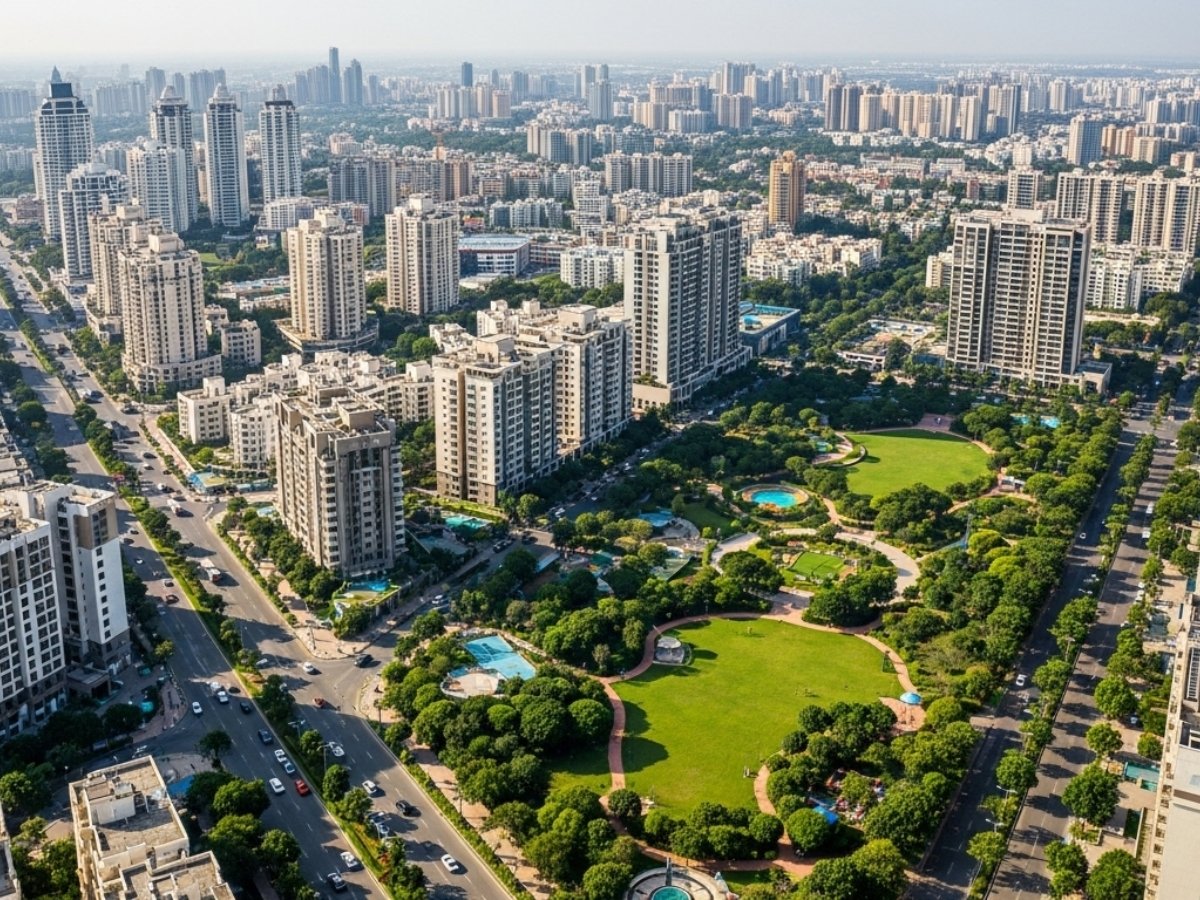
For practical family buying, Sectors 10, 11, and 12 usually make the most sense.
This is where Kharghar becomes easier to live in on a daily basis. These sectors are part of the more mature CIDCO-planned belt, with wider arterial roads, stronger school access, more established daily retail, and a more settled residential pattern. For families, that often matters far more than whether a tower is brand new.
Sector choice should also depend on your lifestyle clarity and holding confidence, which is why whether to rent or buy in Kharghar is an important step before taking a final call.
What families usually need beyond a modern tower
Families do not just need a gym, podium, or sky deck. They need day-to-day ease. That means easier access to schools, hospitals, groceries, chemists, transport links, and safer internal movement.
This is where many newer sectors lose on real utility. On paper, a fresh launch in an outer belt may look more modern. But if the area still feels half-formed, the roads are weaker, the commercial ecosystem is patchy, and water dependence is high, the daily quality of life can drop sharply.
In Sectors 10, 11, and 12, the surrounding ecosystem is usually stronger. Important educational institutions in the Kharghar belt, including schools and colleges, are clustered closer to the legacy sectors. Hospitals and established retail support are also easier to access.
Why settled sectors often beat brochure-heavy options
A 12-year-old society with stable municipal connections, working society systems, and walkable daily support can be a better family purchase than a stylish new tower in a weaker sector. This is especially true in Kharghar, where water supply and civic maturity are not equal across all belts.
Many buyers make the mistake of judging only by building age. But older settled sectors often come with better-tested infrastructure, stronger resident communities, and better-known maintenance realities. For a family with children or elderly parents, that matters more than a prettier brochure.
A simple example makes this clearer. A family choosing between a new launch on the outer side and an older but functional society in Sector 11 should ask a blunt question: what will daily life look like on a Tuesday morning, not just on possession day? In many cases, the settled option wins.
Which sectors make more sense for buyers who need metro or station convenience?
For buyers who care strongly about metro and daily travel efficiency, Sectors 14, 15, and parts of 34 usually deserve more attention.
The operational Navi Mumbai Metro Line 1 has changed Kharghar’s internal geography. Earlier, a lot of local movement depended on shared autos and fragmented feeder movement. That still exists, but metro-linked sectors now have a much stronger edge for daily commuters than they did a few years ago.
Stations such as Utsav Chowk, Kendriya Vihar, Kharghar Village, Pethpada, Amandoot, and Pendhar have made certain belts much more functional, especially for people who move across the node regularly or connect onward.
Metro-side advantage versus everyday livability
Metro convenience is a major plus, but it is not the whole answer. A buyer close to a station but inside a weak sector may still face road, retail, water, or dust issues. So the better question is not “Is the metro nearby?” but “Does metro access come with a usable residential setting?”
Sectors 14 and 15 are stronger in this respect because they balance better connectivity with a more usable residential base. Parts of 34 also benefit from metro-led convenience, but the sector experience can vary building to building and pocket to pocket.
When commuter convenience is worth paying extra for
Paying more for commute convenience usually makes sense when:
- at least one working family member travels frequently
- the household wants lower daily dependency on auto changes
- rental demand matters
- the buyer wants easier exit liquidity later
But not every metro-linked property is automatically a smart buy. For example, a flat within walking distance of Amandoot or Pethpada can be efficient, but a deeply recessed project in a still-developing belt may still create daily friction. Micro-commute matters. The route from building gate to station matters. Footpath quality matters. Shared-auto dependence still matters.
That is why Sectors 14 and 15 generally feel more practical for commuter buyers than deeper parts of emerging sectors.
Which Kharghar sectors are more suitable for budget-conscious buyers?
For budget-conscious buyers who still want a Kharghar address, selected parts of Sectors 34, 35, and 36 usually offer the lower entry point.
Approximate Q1 2026 market ranges in the emerging belt are around ₹9,500 to ₹13,600 per sq. ft., with some pockets in 35 and 36 often sitting in the lower part of that band depending on the project, exact location, and stage of development. Compared with the premium and settled sectors, this is clearly more accessible.
But this is not “cheap Kharghar” in a simple sense. It is a trade-off market.
Where value still exists
Value exists in these sectors mainly for buyers who:
- cannot enter the legacy premium belt
- are comfortable with a 3 to 5 year improvement cycle
- want newer inventory and modern layouts
- can tolerate temporary civic gaps for possible long-term upside
That is why these sectors can work for patient long-hold buyers, younger households with lower initial budgets, or investors who believe connectivity and future demand will deepen.
What trade-offs usually come with lower entry pricing
The lower entry price comes with real conditions. In the emerging belt, social infrastructure often matures after residential inventory. Water stress can be higher. Construction activity can stay intense. Dust, noise, incomplete retail support, and tanker dependence are more likely.
This is where buyers often get misled. A lower per-square-foot rate does not automatically mean lower cost of ownership. If a society depends heavily on tanker water, maintenance can rise. If local convenience is weak, daily travel cost rises. If the area takes longer to mature than expected, the “cheap deal” becomes a waiting game.
So yes, Sectors 35 and 36 can make sense. But mainly for buyers who understand that they are buying future potential, not finished comfort.
Which sectors are better for resale flats, and which are better for newer projects?
In Kharghar, resale and new-project logic is strongly sector-driven.
The central, legacy sectors, especially from around 10 to 21, are much more resale-heavy. These sectors have deeper established stock, more occupied societies, and clearer liveability proof. Outer sectors, especially 34 to 36, hold much more of the under-construction or newer-project inventory.
That difference matters because the financial structure of buying changes sharply.
| Factor | Resale-heavy sectors like 10, 11, 12, 20, 21 | Newer-project-heavy sectors like 34, 35, 36 |
|---|---|---|
| What you are buying | Existing society, proven building, immediate possession potential | Newer inventory, ongoing construction, future-ready promise |
| Main strength | Real livability is already visible | Lower entry price in some pockets, staggered payment pattern |
| Main risk | Higher upfront transaction cost | Delay risk, untested utilities, civic gaps |
| Water and civic proof | Easier to evaluate because society is already functioning | Harder to judge because full occupancy may not have happened |
| Cost shock to watch | CIDCO transfer fee, GST on fee, society transfer premium | Possession timing, project execution, future maintenance assumptions |
This point is especially important in Kharghar because resale is no longer just about negotiated flat price. CIDCO’s transfer fee hike effective April 2025 has materially changed resale math in leasehold nodes. For a typical residential flat, especially around common 2 BHK size, the transfer-related outflow can be significant, and buyers also need to add 18% GST on the CIDCO administrative fee.
On top of that, standard stamp duty and registration charges remain separate. Housing societies may also ask for transfer-related paperwork and a transfer premium, legally capped in cooperative contexts but often a point of confusion for buyers.
So the real resale decision is this: are you willing to pay more cash upfront for immediate possession and proven surroundings? Many end users should answer yes. But they should answer it with full budget visibility.
Which sectors in Kharghar should buyers approach carefully?
Buyers should be especially careful with edge locations sold using inflated Kharghar branding, and with any sector or project where marketing is stronger than present-day usability.
The biggest trap here is the “Upper Kharghar” story.
Good story, weak present-day usability
“Upper Kharghar” is not an official administrative node. It is a developer marketing construct often used for belts around Rohinjan, Dhansar, or the Taloja-side extension. These locations may be advertised using the Kharghar name, but their civic reality may be closer to border or extension zones with weaker infrastructure and very different governance conditions.
That does not mean every project there is bad. It means buyers must verify what they are really buying. Paying Kharghar-level emotional pricing for a location that behaves more like a Taloja-border stretch is a major mistake.
Overpaying for future promise
A second caution area is paying too much simply because a sector is linked to future narratives such as metro expansion, airport optimism, or broader Navi Mumbai demand growth. Infrastructure can support demand, but it does not automatically erase present-day weaknesses in water, roads, air quality, or market maturity.
Some belts closer to the Taloja industrial influence also raise quality-of-life concerns, especially if the exact location is too close to border zones affected by industrial spillover in terms of air quality or odour issues. Buyers looking for family end use should take such factors seriously.
> Caution Box: The “Upper Kharghar” check > > Before paying token amount or signing any booking document: > – verify the exact MahaRERA registered address > – verify the exact location on the Index II or title chain documents > – confirm whether the property is clearly within core Kharghar planning logic or in a border extension belt > – do not rely only on project branding, brochure map pins, or WhatsApp location shares
What matters more than the sector name when buying a flat in Kharghar?
The sector matters, but it is still only the first filter. After that, building quality, legal clarity, water security, society condition, and exact transaction cost matter even more.
A flat in a strong sector can still be a bad buy if the project has title issues, poor maintenance, weak water storage, or an unfavourable transaction structure. Likewise, a flat in a moderate sector can still work well if the society is stable, occupied, legally clean, and realistically priced.
Use this checklist before finalising anything:
Kharghar flat-buying checklist beyond sector name
- Check the project’s MahaRERA status if it is under construction or recently completed
- Review Quarterly Progress Reports if the project is still being executed
- Confirm whether the project has Occupancy Certificate where applicable
- Ask how the society currently manages water and whether tanker dependence is frequent
- Physically inspect underground reservoir capacity and not just brochure claims
- Check the building’s age, maintenance record, and visible wear
- For resale, calculate CIDCO transfer fee and 18% GST separately in your budget
- Check society transfer paperwork and any legally permitted transfer premium
- Review actual approach roads and walking comfort, not only Google Maps distance
- Confirm exact carpet area, not just saleable or super-built claims
- Verify whether the building’s environment matches your lifestyle, especially if you are buying for family use
This is also where trust matters. MahaRERA labels like lapsed or revoked are not minor clerical issues. They are serious warning signs. A buyer should not treat them casually.
Which sector in Kharghar is best for your buyer type?
If you want the shortest usable answer, this is it.
| Buyer type | Sectors that usually fit best | Why |
|---|---|---|
| Settled family buyer | 11, 12, 20 | Better schools, proven surroundings, more stable daily life |
| Premium lifestyle buyer | 20, 21, Golf Course / Central Park side | Stronger environment, prestige, larger homes, end-user appeal |
| Commuter buyer | 14, 15, selected parts of 34 | Better metro usefulness and daily travel efficiency |
| Cautious long-hold investor | 34, 35, 36 | Lower entry price and future upside, but only with patience |
| Rental-focused buyer | 15, 16 | Better relevance for education-linked and commuter-driven demand |
| First-time budget buyer | 34C, 35, selected 36 pockets | More accessible pricing, but must accept civic trade-offs |
A few real-world interpretations help:
A family with school-going children and a long holding period should usually prioritise Sectors 11 or 12 over newer outer options, even if the building is older. The daily quality of life is often better.
A premium buyer who wants Kharghar’s best-known lifestyle identity will usually be happiest in the 20 to 21 belt, especially if the budget allows comfortable entry without stretching.
A young buyer with moderate budget and strong patience may find 35 or 36 logical, but only if they are honest about present-day inconvenience. It is not wise to buy there expecting immediate sector maturity.
A commuter who travels often should give extra importance to 14 or 15, because saving daily friction over years has real value.
Conclusion
The best sectors in Kharghar for buying a flat depend on your real purpose, not on broad reputation.
If you want the safest overall family and end-use logic, Sectors 10, 11, and 12 remain among the strongest choices. If you want premium lifestyle and long-term address strength, Sectors 20 and 21 stand out. If commute efficiency matters most, look closely at 14 and 15. If your budget is tighter and your patience is higher, selected parts of 34, 35, and 36 can work, but you should enter with open eyes.
The smartest way to buy in Kharghar in 2026 is to stop asking, “Which sector is famous?” and start asking, “Which sector matches my daily life, budget, and risk tolerance?” That one shift alone can save a buyer from an expensive mistake.
FAQs
Frequently Asked Questions