

What Is a Letter of Allotment in Navi Mumbai and What Can You Do With It?
A Letter of Allotment in Navi Mumbai is usually the first formal paper that confirms a specific flat, plot, or unit has been allotted to you. It matters, but it is not final ownership proof. In practical terms, it confirms allocation, price, and early transaction terms. In legal terms, final title still depends on later registered documents like an Agreement for Sale, Sale Deed, or Lease Deed, depending on the case. In Navi Mumbai, the answer also changes a lot depending on who issued it: a private builder or CIDCO.
A lot of buyers feel relaxed the moment this document arrives. That reaction is understandable. The paper looks formal, often carries detailed terms, and makes the booking feel real. But this is exactly where confusion starts. A Letter of Allotment is a serious document in the property process, yet it sits before the final title stage, not at the end of it. In Navi Mumbai, where private MahaRERA projects and old CIDCO-rooted property histories both exist, that distinction becomes even more important.
Quick Summary: What This Document Really Does
Kalamboli to Navi Mumbai International Airport by Car
| Start Location | Destination | Total Distance | Estimated Travel Time | Main Route | Major Roads / Highway | Toll Road | Best For |
|---|---|---|---|---|---|---|---|
| Kalamboli, Panvel, Navi Mumbai | Navi Mumbai International Airport (Ulwe) | 16.8 km | 30–35 minutes | D-Mart Road → Kalamboli Link Road → Mumbai–Pune Highway → Sion–Panvel Highway → Sakaram Patil Marg → Palm Beach Road → NH348A → Ulwe | Mumbai–Pune Highway, Sion–Panvel Highway, Palm Beach Road, NH348A | Yes (NH348A) | Private Car, Taxi, Airport Drop |
What exactly is a Letter of Allotment in Navi Mumbai property matters?
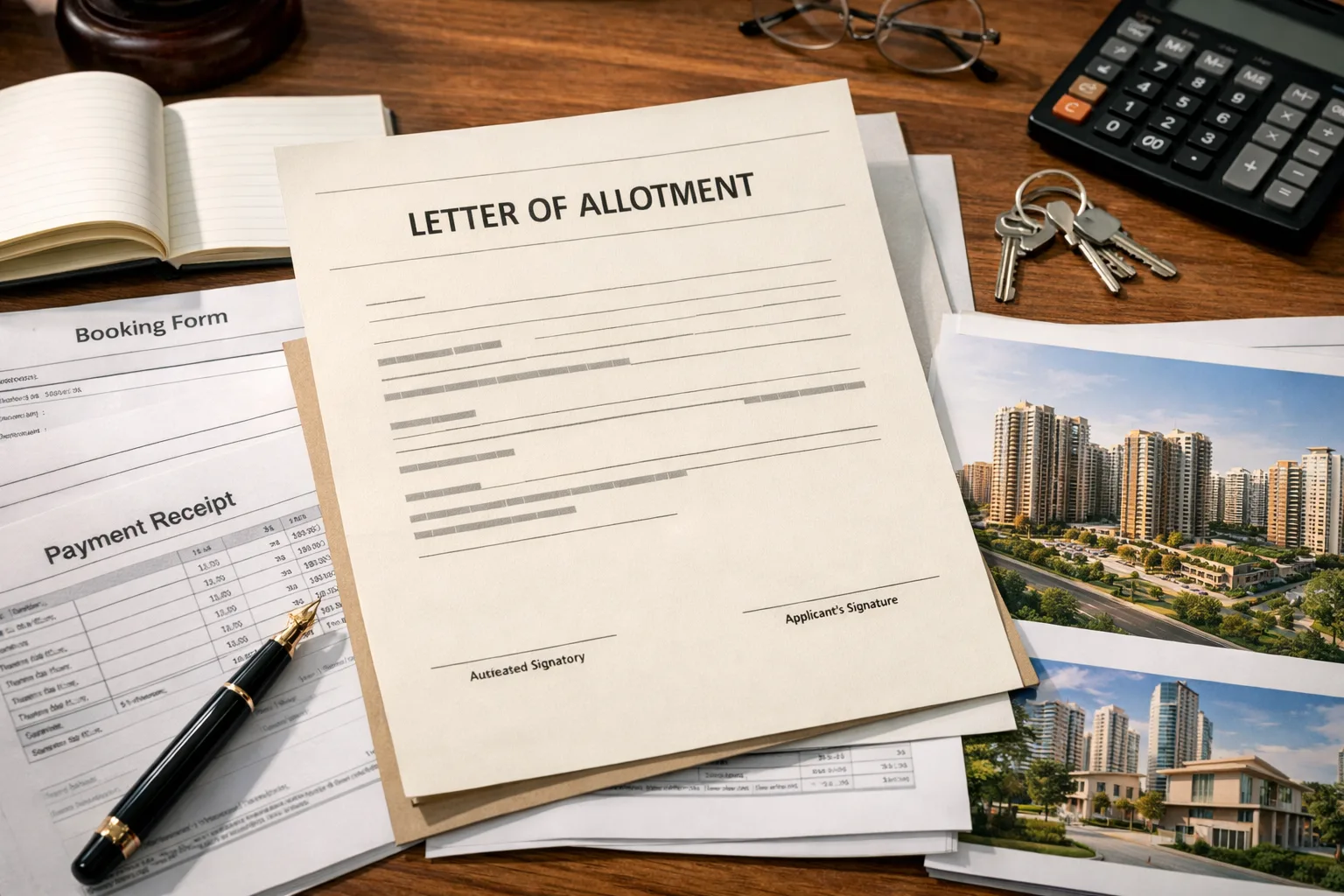
A Letter of Allotment is best understood as an allocation document. It tells you that a specific unit is being reserved or allotted to you on stated terms. In a private project, it usually records details such as the flat number, carpet area, price, payment schedule, project details, and basic cancellation clauses. MahaRERA’s public resources and promoter registration requirements both confirm that a model or proforma allotment letter is part of the regulated documentation ecosystem for registered projects.
In simple words, it takes the transaction beyond an informal booking conversation. It is the paper that says, “this is your unit, this is the commercial understanding, and this is the route ahead.” That is why it is stronger than a casual receipt or verbal promise. But it still does not do the job of a registered title document.
For Navi Mumbai readers, one more point matters. In places like Ulwe, Taloja, Pushpak Nagar, Dronagiri, and other newer growth corridors, buyers usually encounter the allotment letter in the context of under-construction builder projects. In older CIDCO-rooted nodes like Vashi, Nerul, Belapur, or some older Panvel-side files, the allotment letter may show up as part of a much older title story. Those are two very different situations, and they should not be read the same way.
Does a Letter of Allotment make you the owner of the property?
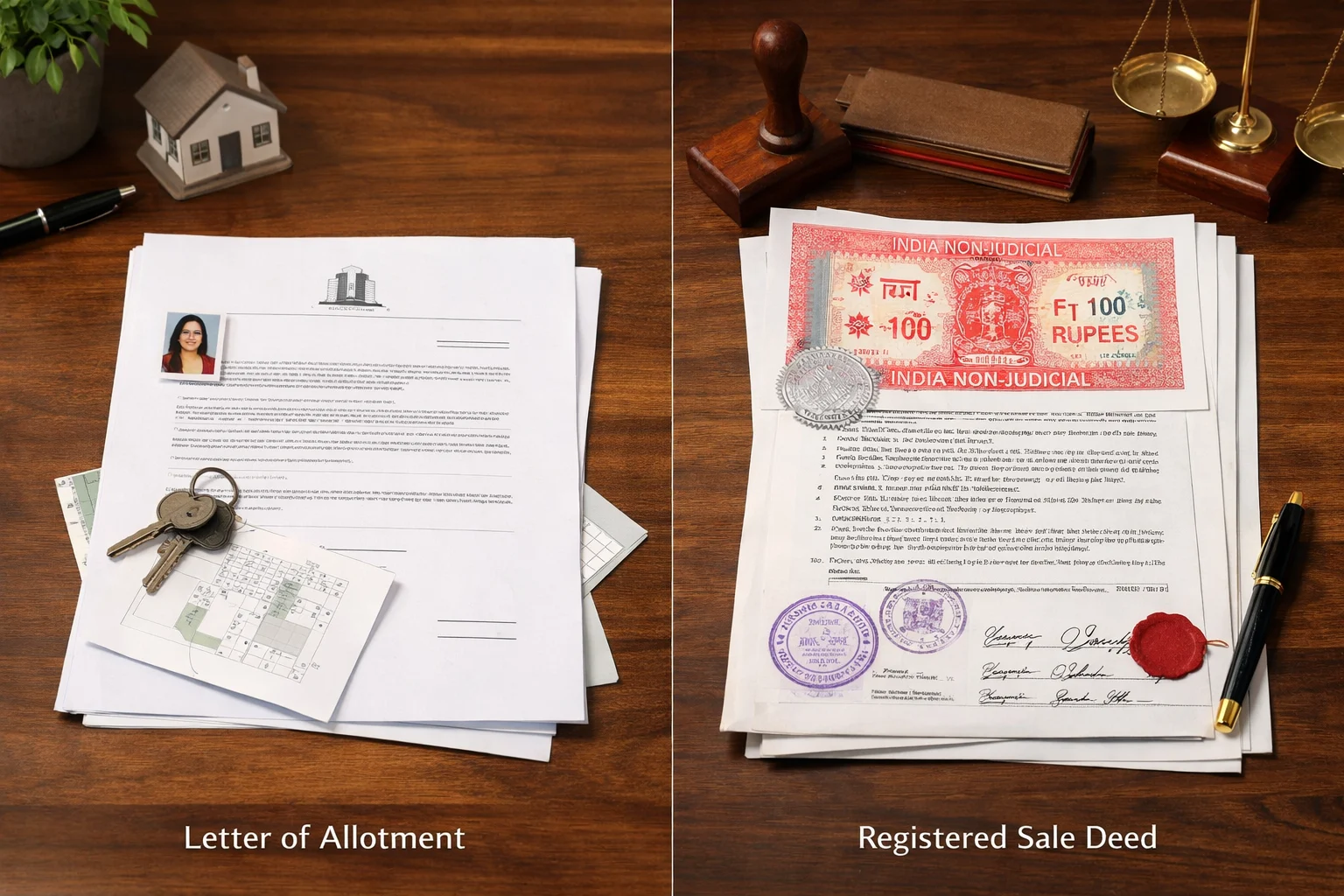
No. A Letter of Allotment does not by itself transfer legal ownership of immovable property. Final transfer of rights is tied to the later execution and registration of the proper transfer document, such as a Sale Deed or Lease Deed, depending on the property structure.
The easiest way to understand this is through three layers:
- Allocation right: the unit is reserved or allotted to you
- Contract right: detailed obligations and protections become stronger in the Agreement for Sale stage
- Registered ownership right: final title comes through the registered transfer document
That difference is not just legal theory. It changes what you can safely do. If a buyer assumes the allotment letter alone is enough, they may wrongly believe they can prove clean title, complete a safe resale, or ignore missing later papers. That is where serious risk begins.
> Caution: A Letter of Allotment confirms allocation and purchase intent. It does not, on its own, give you final title ownership.
Use it as an early booking and allotment record
This is its most direct role. It confirms that a specific unit has been allotted to you at a specific price on stated terms. In a busy market where brochures, sales conversations, and token receipts can all become vague later, this document gives the buyer a formal reference point.
Use it in loan or financing discussions, but only at the right stage
Banks and lenders commonly use the allotment letter as part of early home loan processing because it helps establish the unit details, price, and payment structure. But buyers should read this correctly. The letter can support loan processing, not guarantee loan approval. Banks still run independent legal, technical, project, and borrower checks before final lending decisions. That is why “the bank asked for the allotment letter” does not mean “the property is fully cleared.”
Use it to track unit details, payment terms, and promised allocation
This is one of the most useful real-world functions. The allotment letter gives you a benchmark. Later, when the Agreement for Sale is drafted, you can compare the flat number, carpet area, parking commitment, price structure, possession expectations, and payment schedule. If something quietly changes, the allotment letter helps you catch it early.
Use it as part of the document chain during due diligence
In legal scrutiny or lender scrutiny, the allotment letter helps explain how the transaction began and what was initially promised. It is not the final answer, but it is often an important supporting paper. In Navi Mumbai, where document chains can involve builder records, CIDCO-origin records, society records, and later registered transfers, this early paper can be very useful when seen in context.
Use it carefully for tax and society-related purposes
First, ITAT rulings have recognized allotment-based investment positions in Section 54F type capital-gains matters, though tax outcomes still depend on facts and should never be treated as automatic. Second, Maharashtra co-operative housing society bye-laws include a formal allotment-letter framework and also tie occupation rights in society context to the terms and conditions set out in the letter of allotment.
So yes, the document can matter beyond booking. It can matter for tax timing arguments, for society-related rights, and for practical due diligence. But all of those uses still sit below final title transfer.
What can you not do with it?
A Letter of Allotment cannot replace the documents that actually complete the property transaction.
You cannot safely use it alone as:
- final proof of ownership
- a substitute for a Sale Deed or Lease Deed
- a substitute for a Possession Letter or Occupancy-linked stage
- a complete title file in a resale deal
- proof that the entire chain is legally clean
This is especially important in resale. If a seller says, “I have the original allotment letter, so everything is fine,” that answer is incomplete unless the later registered chain is also available.
A letter of allotment is useful, but it is only one part of the full verification process, so buyers should also read this property buying checklist documents in Navi Mumbai guide before moving ahead.
Builder allotment letter vs CIDCO allotment letter: why this difference matters in Navi Mumbai

This is where a generic article usually fails, and where a Navi Mumbai article must do better.
When the issuer is a private builder
In a private MahaRERA-registered project, the allotment letter usually appears early in the transaction, after booking and before the later agreement stage fully matures. MahaRERA’s registration guidance says promoters must upload the proforma of the allotment letter and report deviations from the model copy. MahaRERA also keeps updated proforma links in the public domain.
MahaRERA’s framework is not cosmetic. The authority’s model allotment letter system and later 2024 updated proforma reflect that developers cannot treat this document as a free-form paper anymore. MahaRERA’s order archive also shows the updated proforma tied to parking, amenities, and related directions.
When the issuer is CIDCO or another public authority
CIDCO works differently. In CIDCO’s housing scheme process, successful applicants first receive a Letter of Intent (LOI). After document verification and the required confirmation amount or payment steps, the Allotment Letter comes later. CIDCO’s 2026 information booklet and earlier scheme booklet both show that the LOI and the Allotment Letter are separate stages, and the allotment letter follows later in the sequence.
That means a CIDCO allotment letter is not just a builder-style booking confirmation. In many cases, it reflects a more advanced stage of compliance within a public authority process. That is exactly why buyers in Navi Mumbai must stop treating “all allotment letters” as one identical category.
Why older Navi Mumbai files may still revolve around allotment-based records
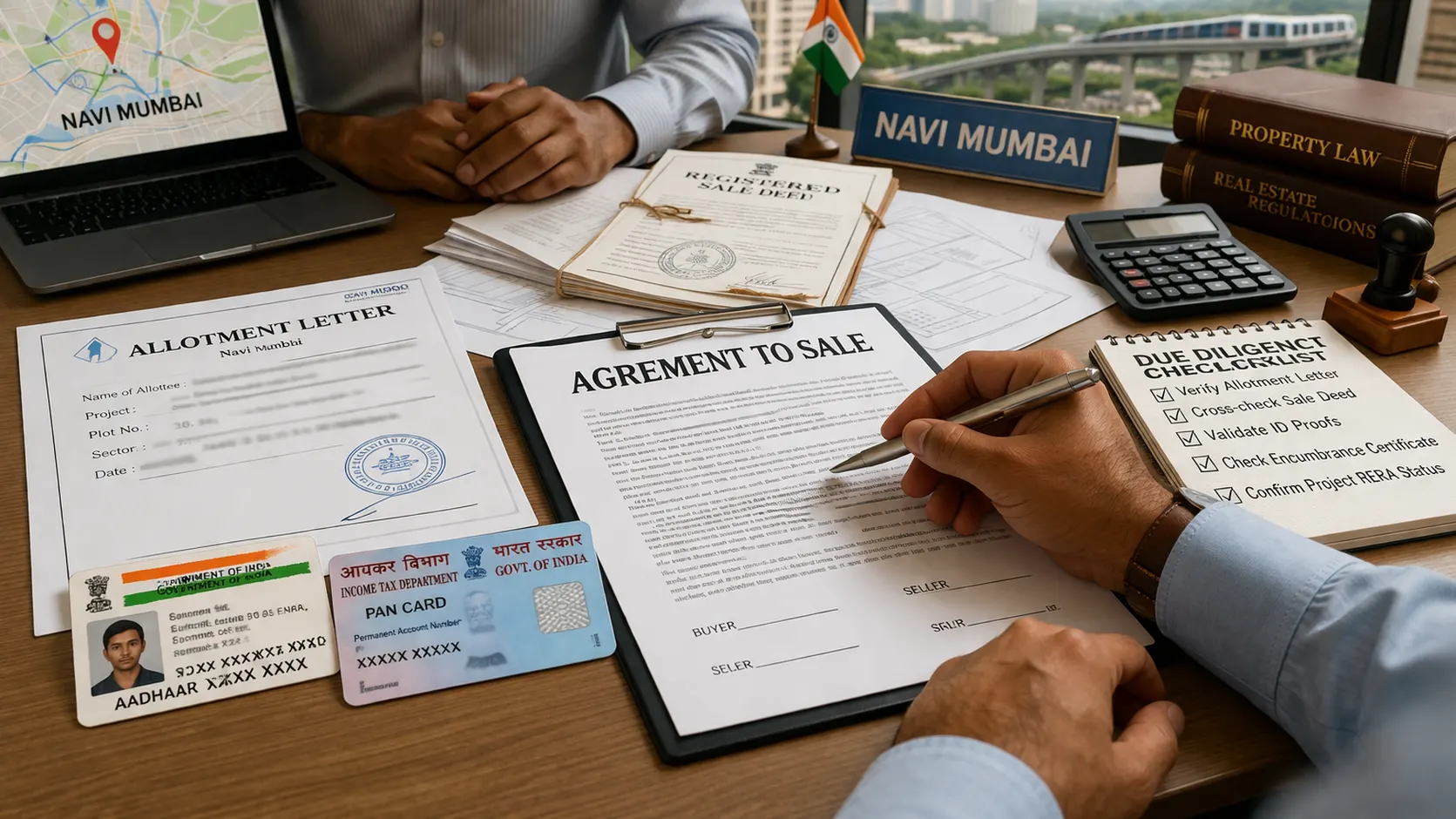
Because CIDCO shaped Navi Mumbai’s growth, many older residential chains still begin with allotment-based records. In those cases, the original CIDCO allotment letter can be a root paper in the chain. But the real question is never “do you have the old allotment letter?” The real question is “what came after it, and is the chain continuous?” If the lease deed, transfer approvals, society records, or later title papers are missing, the file is still risky.
Where does this document sit in the full property paper trail?
The easiest way to understand the document is to place it in sequence.
| Stage | What usually happens |
|---|---|
| Booking / application / token | Buyer shows interest and may pay an initial amount |
| Letter of Allotment | Unit is formally allotted and the basic commercial understanding is recorded |
| Agreement for Sale | Detailed contractual rights and obligations are documented more strongly |
| Payment trail | Installments and milestone-linked payments continue |
| Possession-related stage | Handover and occupation stage comes later |
| Registered Sale Deed / Lease Deed | Final title transfer happens here |
In CIDCO cases, the sequence can differ because the LOI comes before the Allotment Letter. That one detail alone changes how the paper should be interpreted in Navi Mumbai.
Letter of Allotment vs Agreement for Sale vs Sale Deed vs Possession Letter
| Document | Main purpose | Stage | Ownership status |
|---|---|---|---|
| Letter of Allotment | Confirms allocation and early terms | Early stage | Does not by itself transfer ownership |
| Agreement for Sale | Records detailed contractual terms and obligations | Mid stage | Stronger legal position, but still not final title |
| Sale Deed / Lease Deed | Transfers final ownership or leasehold rights | Final stage | Main title document |
| Possession Letter | Records physical handover stage | Handover stage | Does not replace title documents |
This table matters because many buyers emotionally overvalue the allotment letter and undervalue the later chain. The legal strength rises as the document trail progresses.
After understanding the allotment stage, it also helps to compare Agreement to Sale vs Sale Deed in Navi Mumbai so you know how the paperwork evolves toward actual legal ownership.
In which Navi Mumbai situations does this paper become especially important?

The first is under-construction flat booking. In newer nodes and growth belts, the allotment letter may be the first serious paper that the buyer receives. That makes it the first solid checkpoint for price, unit identity, area, and later comparison against the Agreement for Sale.
The second is CIDCO housing and lottery systems. Here, the LOI vs Allotment Letter distinction matters a lot. CIDCO’s own scheme documents make the sequence clear. Buyers who confuse the two can misunderstand their exact stage in the process.
The third is resale in older nodes. Imagine a resale file in Vashi or Belapur where the seller produces a decades-old CIDCO allotment letter but struggles to show the later lease deed and society share certificate. A careful buyer should not feel reassured by the age of the paper. They should feel alerted by the missing chain.
The fourth is tax planning and society rights. ITAT rulings have helped buyers in allotment-based investment situations for capital-gains purposes, and the co-operative housing bye-laws still give allotment-related operational importance in society context. Those are real uses, and they add practical value to the document beyond simple booking proof.
What should buyers check inside a Letter of Allotment before trusting it?
Use this as your practical checklist:
- exact flat number, wing, floor, and project name
- carpet area and whether it aligns with public project disclosures
- price and payment schedule
- issuer name and whether it matches promoter / authority details
- date of issue and signatures
- cancellation language and refund deductions
- parking details and annexures, especially in current MahaRERA-regulated projects
- whether later documents repeat the same unit details without silent changes
This parking point deserves special attention. MahaRERA’s 2024 order trail and updated forms show that new proformas were issued in relation to parking, amenities, and related disclosures. In a dense urban market like Navi Mumbai, vague promises about parking should not be casually accepted anymore.
What are the danger signs if someone relies on this paper too much?
The biggest red flag is a broken later chain. If the allotment letter exists but the Agreement for Sale, Sale Deed or Lease Deed, society papers, or transfer permissions are missing, the file is not complete.
The second danger sign is mismatch. If the carpet area, parking commitment, price structure, or even unit identity changes later, and the buyer never compares the documents, the allotment letter loses much of its protective value.
The third danger sign is false comfort from old paperwork. A 20-year-old or 30-year-old allotment letter is not automatically a strong paper. In fact, in resale, it may be the very paper that exposes how incomplete the later chain is.
The fourth danger sign is fraud or false authority. Formal-looking letterheads and stamps can impress buyers. They should not replace independent verification.
What should a Navi Mumbai buyer do next if this is the only paper available?
If this is a new booking, preserve the allotment letter properly and compare every later document against it, especially the Agreement for Sale.
If this is a resale matter, do not move ahead on the basis of the allotment letter alone. Ask for the registered Agreement for Sale, Sale Deed or Lease Deed, society share certificate where relevant, and any CIDCO-linked approvals or transfer records.
If the seller says the original document is lost, do not treat that casually. A proper duplicate-document process should be followed with the issuing authority or entity before the transaction moves forward.
If the file involves older unregistered or irregular records, note that Maharashtra’s stamp duty amnesty scheme mentioned in the dossier was extended up to August 2025, but that was a time-bound policy and such schemes are always subject to change, extension, or closure. So readers dealing with old files should verify the current status before relying on past deadlines.
conclusion
A Letter of Allotment in Navi Mumbai is a useful and often important property document, but it is not the document that finishes the ownership story. It confirms allocation, supports early loan and verification stages, helps build the transaction trail, and can matter in tax and society contexts. But it still needs the later registered chain to make the property legally safe and complete.
The smartest way to read it is this: do not ignore it, and do not overtrust it. Check who issued it. Check whether the terms match the later papers. And in Navi Mumbai especially, always ask one extra question before you relax: is this a private-builder allotment letter, or is it part of a CIDCO-origin property chain? That single distinction often changes the entire meaning of the document.
FAQs
Frequently Asked Questions