

How to choose the right real estate developer in Navi Mumbai
The right real estate developer is not always the most famous one. It is the one whose delivery record, legal visibility, project quality, pricing clarity, and buyer experience hold up when you actually verify them. In Navi Mumbai, that decision becomes even more practical because node differences, CIDCO context, authority approvals, and on-ground execution can change the answer. A buyer should trust proof, not just branding, brochure design, or sales confidence.
Quick Summary
| What to check | Why it matters | Simple buyer action |
|---|---|---|
| Past delivery record | A builder’s history usually tells you more than its ads | Check older projects, delays, and buyer feedback |
| Current project quality | A good brand can still have a weak project | Visit the site and compare promise vs reality |
| Legal visibility | Registration alone is not enough | Check MahaRERA details, approvals, and agreement terms |
| Pricing clarity | Hidden costs can damage your budget later | Ask for a full itemised cost sheet before token money |
| Reviews and complaints | One review means little, patterns mean more | Read reviews carefully and look for repeated issues |
| Local fit | Navi Mumbai does not behave like one single market | Judge the builder in the context of the exact node |
| Final shortlist logic | Booking decisions should be comparison-based | Compare at least two builders side by side |
Start by looking at the builder’s past record
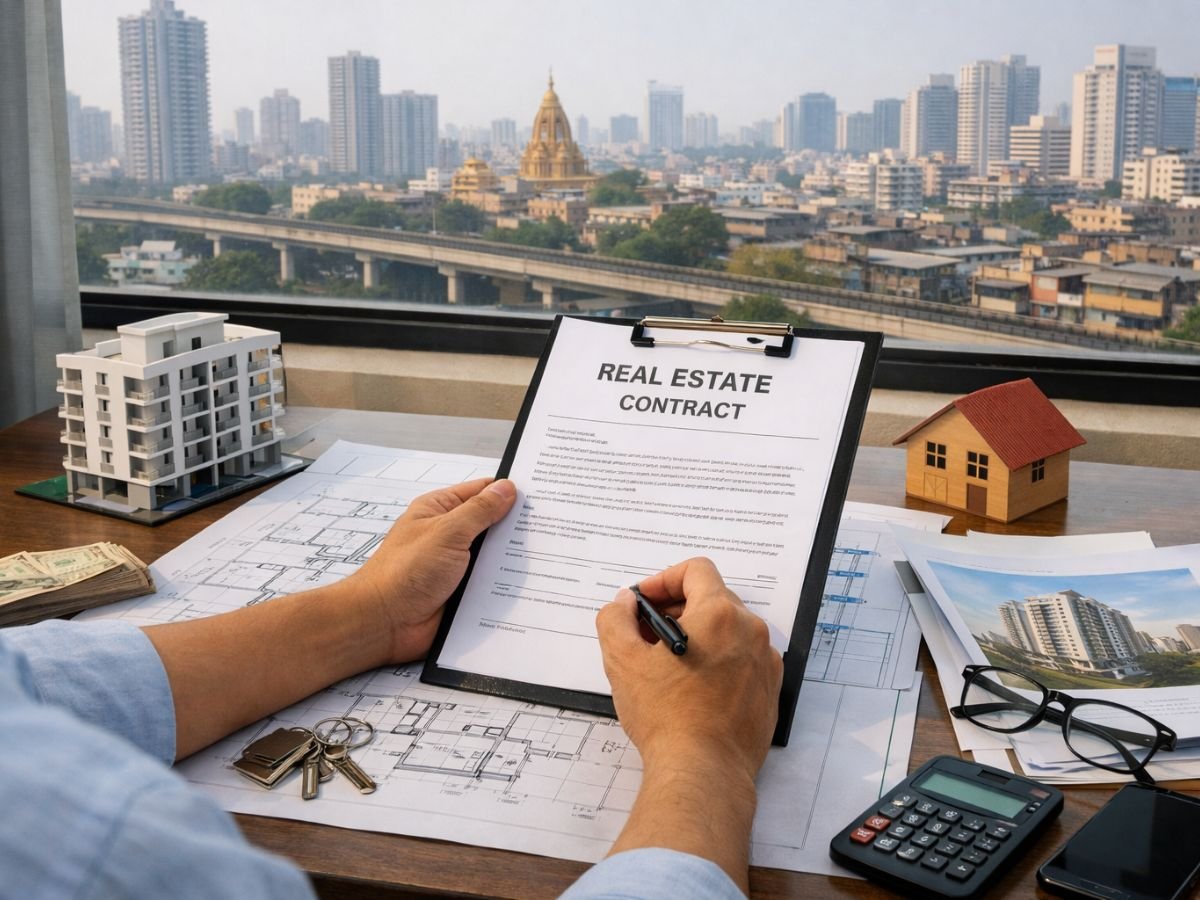
A builder’s past record is still one of the strongest starting points. Not because old success guarantees future performance, but because repeated delivery across multiple projects usually shows whether the company has operational discipline or only strong marketing.
See how many projects were actually delivered
Do not get impressed only by the number of launches. Many developers highlight every past announcement, but the real question is simpler: how many projects were actually completed and handed over in a reasonably clean way?
Look beyond the website. Check whether older projects exist in the way they were promised. A builder with fewer but properly completed projects can be safer than one with a longer list of launches and vague delivery history.
Check whether delays have been common
Occasional delay is not unusual in real estate. But repeated delay across several projects is not a small issue. It usually points to weak planning, funding stress, approval trouble, or poor execution control.
You do not need to become a lawyer to judge this. Just look for a pattern. If buyers repeatedly mention possession slippage, changing dates, or unfinished common areas, that matters.
Notice whether buyers still trust the builder
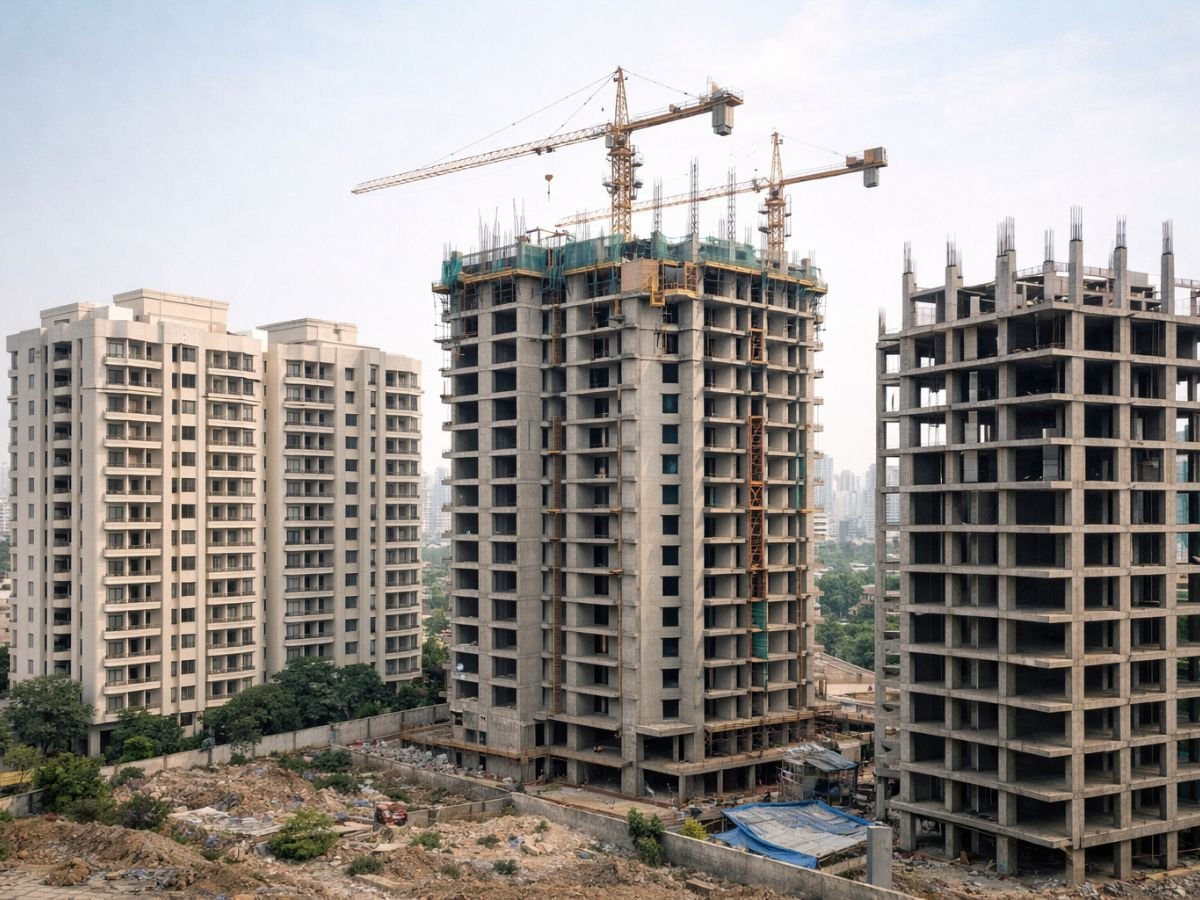
Past buyers tell you something that marketing material never will. The question is not whether every resident is happy. That never happens. The real question is whether people still speak about the builder with basic confidence or with frustration.
A practical sign is this: if residents say the builder handled defects, documentation, or post-possession issues without endless follow-up, that is useful. If every conversation becomes about chasing, arguing, or fixing basic promised work, that is a warning.
Do not judge the builder only by the brand name
Big brand names create comfort. But comfort is not the same thing as low risk. A known name may help, but it cannot replace project-level checking.
Look at the quality of the current project
A builder may have done well elsewhere and still underperform in the project you are considering. That is why buyers should focus on the exact project, not just the company name.
Check the site condition, construction pace, layout practicality, podium and basement quality, and how clearly the team answers questions. A polished office does not prove a well-executed building.
Check what possession looks like in reality
Possession quality matters as much as launch quality. Some projects look attractive during sales but feel incomplete at handover stage. The apartment may be ready, but the common areas, approach road, water system, parking discipline, or society readiness may still feel unfinished.
This is why older handovers matter. They tell you how the builder behaves when the glamour of launch is over.
Focus on actual execution on the ground
Execution is where many buyer assumptions break. The real site tells you more than the brochure. Is work moving steadily? Does the structure look organized? Is there a visible sense of process, or does everything feel like a sales-heavy project trying to look bigger than it is?
For Navi Mumbai buyers, this becomes even more important in faster-growing areas where projects are launched aggressively but local infrastructure and surrounding development are still catching up.
Look for the signs that usually point to a reliable developer
Good developers usually leave practical signs behind. These signs are not emotional. They are structural.
The paperwork should be clear
Clear paperwork does not mean giving you one glossy folder. It means being willing to show what matters without drama or delay. If a builder becomes evasive when you ask for approvals, draft agreement terms, or basic project status, that itself tells you something.
Reliable developers usually do not act offended when buyers verify. They expect verification.
The payment plan should feel fair
A fair payment plan feels connected to progress, not to sales urgency. The buyer should understand what they are paying for, when they are paying it, and what triggers each demand.
If the schedule feels front-loaded, confusing, or too dependent on verbal promises, slow down. A clean project should not need confusing money logic.
Construction quality should hold up beyond the sample flat
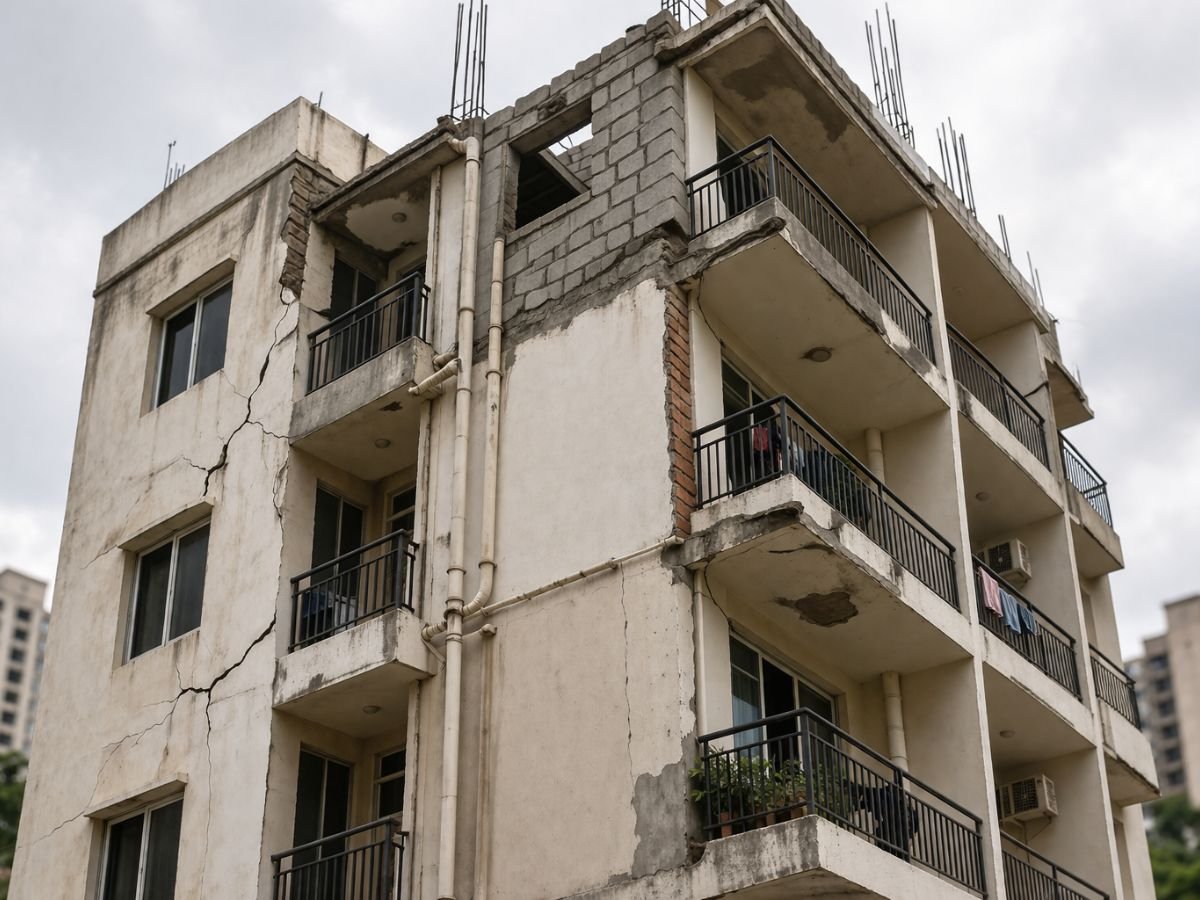
Good construction is not only about polished tiles or nice lighting. It is about how the building holds up after rain, usage, and time. Waterproofing, finish consistency, service areas, lifts, basement condition, and terrace performance matter more than showroom presentation.
A simple buyer rule works well here: if the sample flat looks premium but the builder’s older projects look tired too early, believe the older projects.
After-sales support should also be dependable
Some builders are very responsive before booking and very slow after payment. That gap matters. A buyer is not only purchasing a flat. They are entering a process that includes communication, corrections, defect handling, and eventually possession-related coordination.
After-sales support is not a soft factor. It is one of the most practical signs of how the builder treats buyers once the sales target is complete.
At the same time, do not ignore the warning signs
Positive signs matter, but red flags matter even more because they protect you from avoidable mistakes.
Vague promises should make you cautious
If the team keeps saying “don’t worry” without showing documents, timelines, or written clarity, slow down. Vague confidence is not proof.
The same applies to infrastructure claims around future growth. In Navi Mumbai, many projects talk about upcoming connectivity or area transformation. That may happen, but the buyer should separate civic reality from builder optimism.
Hidden charges are never a good sign
The base price is rarely the full story. Buyers should expect to review the full cost structure carefully. If the team avoids giving an itemised sheet or keeps saying “that we will explain later,” it is not a healthy sign.
Real estate decisions become messy when costs emerge in layers after the emotional decision has already been made.
Repeated complaints usually mean something
One angry review proves very little. Repeated complaints about the same issue are different. Delay, seepage, missing promised features, poor handover support, or aggressive sales behaviour become meaningful when they appear again and again.
Look for patterns, not noise.
Too much sales pressure should slow you down
Pressure is one of the most common traps. “Book today,” “last unit,” “special price only now,” or “token first, documents later” should make you more careful, not more excited.
A strong project should still stand after one or two days of independent checking.
Visit older projects before you make up your mind
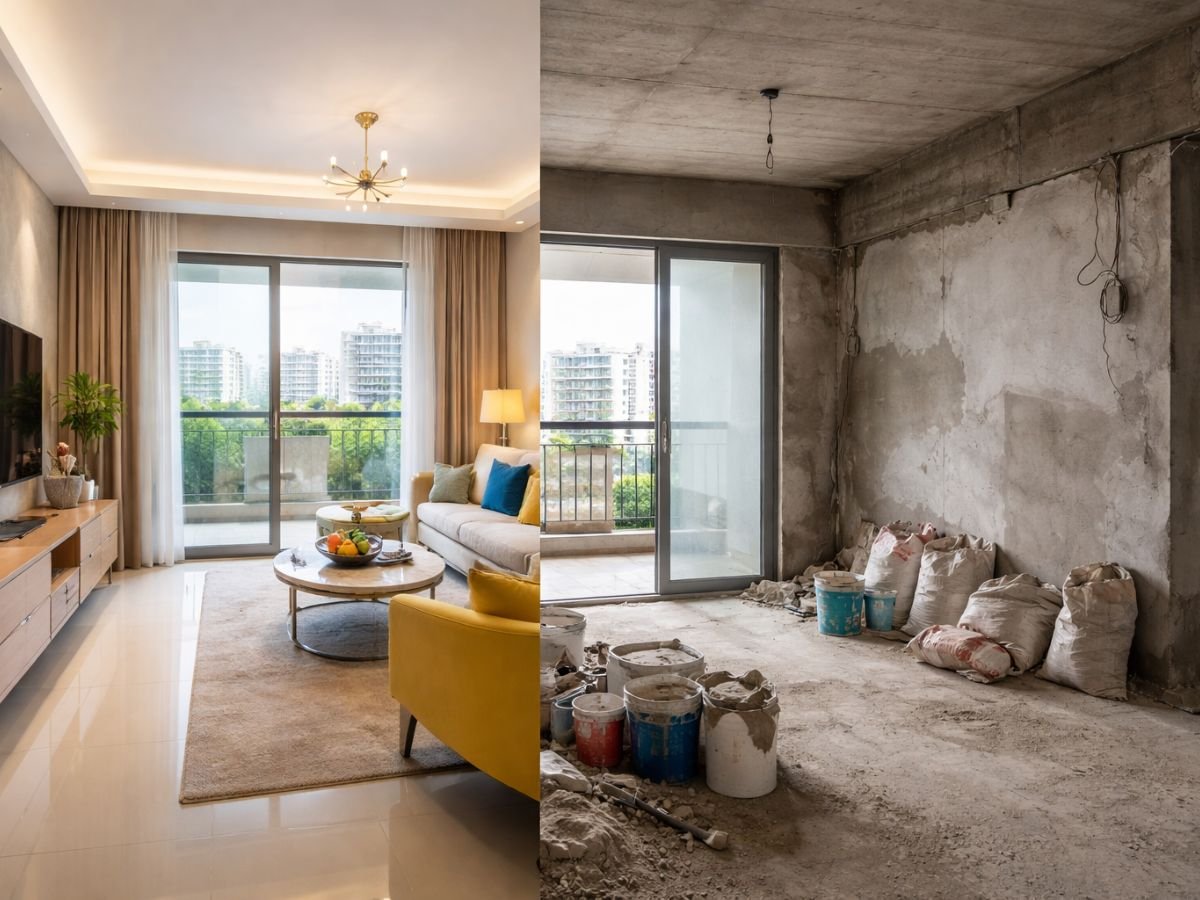
This is one of the most underused buyer checks. Older projects show truth better than any sales presentation.
Check how the common areas look today
Do not only look at apartment interiors. Check lobbies, parking floors, lift areas, staircases, fire escapes, terraces, and basements. These spaces reveal how the building is ageing.
If common areas already look neglected too early, the issue may be deeper than maintenance style.
Notice the maintenance quality
Maintenance tells you whether the project was handed over in a practical way and whether the building functions properly in daily life. Stains, peeling paint, seepage patches, damaged fixtures, and chaotic parking are not small visual details. They often reveal the quality of the original work.
In Navi Mumbai’s monsoon and coastal conditions, this matters even more. Buildings that look fine in a brochure can age very differently on the ground.
Speak to people already living there
Residents usually give better answers than sales teams. Ask simple questions. Was possession smooth? Were promised features delivered? Did the builder respond when defects appeared? Were documents and society transition handled properly?
You do not need ten opinions. Even two or three grounded conversations can give you a much clearer picture.
Never trust the brochure alone
Brochures are designed to sell possibility. Buyers need to judge deliverability.
The sample flat may not match the final handover
Sample flats are built to impress. Lighting, furniture scale, mirrors, styling, and camera-friendly layout tricks can change how space feels.
That is why buyers should always return to the sanctioned plan, carpet area, and actual unit layout. Attractive presentation should never become the main basis of trust.
Sales talk and site reality are often different
The sales story may promise smooth access, premium surroundings, strong future value, or world-class amenities. The site may tell a more mixed story. Approach road quality, surrounding construction dust, traffic friction, service readiness, and local livability all affect the real experience.
In a city like Navi Mumbai, micro-location matters a lot. Two projects in the same broad node can feel very different in daily use.
Make sure the legal side is properly verified
This is where many buyers become either too casual or too fearful. The smarter path is simple: verify the essentials properly.
Check the MahaRERA details carefully
MahaRERA is one of the first places a Maharashtra buyer should check. It helps buyers research a project, check project progress, access complaint-related pathways, and view orders or judgments. It also shows that project registration is a legal baseline, not the final proof that everything is perfect.
Use it as a verification tool, not as a blind trust badge.
Review approvals and key documents
The buyer should understand what stage the project is at and what the builder is actually approved to do. Sanctioned plans, layout visibility, commencement status, and occupancy-related progress all matter.
Do not pretend to understand every legal term if you do not. But do insist on clarity and independent review where needed.
Read the agreement terms with attention
Many buyers spend time on price negotiation and very little time on agreement language. That is backward. Agreement terms decide what happens when timelines shift, specifications vary, or defects appear.
If something important is only being said verbally, ask for written clarity.
Understand the money side before you commit
A real estate purchase can go wrong even when the project itself is acceptable, simply because the buyer did not fully understand the money structure.
Do not look only at the base price
The base rate is only one part of the picture. What matters is the total landed cost and the timing of payments.
A buyer should ask early: what is included, what is extra, what is mandatory, and what may rise later?
Check for hidden costs from the start
Costs become dangerous when they appear late. Parking, floor rise, preferential location charges, club-related charges, maintenance deposits, taxes, and registration-side expenses should be understood before token money is paid.
Clarity here protects both budget and peace of mind.
Make sure the payment schedule is practical
A practical schedule should feel understandable and defensible. If it feels like the buyer is being pushed to pay faster than progress justifies, take a pause.
Finance stress can make even a decent project feel like a bad decision.
Reviews can help, but only if you read them carefully

Reviews are useful, but only when read with judgment.
Try to identify genuine buyer feedback
Specific reviews are more useful than emotional extremes. Look for mentions of possession, quality, communication, maintenance, repairs, paperwork, or delays. These usually tell you more than generic praise or generic abuse.
Look for patterns in complaints
Patterns matter. If several buyers mention the same issue, pay attention. If complaints are scattered and unrelated, they may be individual experiences rather than a builder-wide signal.
Repeated issues usually matter more than one bad review
A single bad review may come from one dispute. Repeated complaints around the same theme should affect your confidence level. The same principle applies in reverse. A wave of shallow praise should also be read carefully.
Do not assume a big builder is always the safer option
Size helps in some ways, but it does not eliminate risk.
In some cases, a big brand does help
Larger developers may have better capital access, stronger systems, and more standardized processes. This can help in communication, financing confidence, and project visibility.
In other cases, a smaller builder may do a better job
A smaller but experienced local developer can still outperform a big name in a specific node. Local familiarity, better execution control, and sharper understanding of area realities can matter a lot.
The better question is not “big or small?” It is “who is more dependable for this project, in this location, at this stage?”
In Navi Mumbai, the location can change the answer
This is where generic builder advice usually becomes weak. Navi Mumbai does not work like one uniform market.
A builder may not perform equally well in every node
A builder may look strong in one belt and average in another. The demands of Kharghar, Ulwe, Panvel, Taloja, Nerul, Vashi, or Dronagiri are not identical. Node maturity, buyer profile, infrastructure readiness, and project scale all change the execution challenge.
That is why local track record matters.
Connectivity and access can affect the real value of the project
Station access, internal road quality, approach convenience, surrounding development, and everyday movement affect how a project feels after purchase. A builder cannot control every external factor, but the exact location still changes how good or weak the same project may feel in real life.
Local authority and area context also matter
Navi Mumbai buyers should also be aware that authority context can change the process. Depending on the area, CIDCO, NMMC, or Panvel-side approvals and local realities may become relevant. That does not mean every buyer must become an expert. It simply means you should not assume all locations work under the same practical conditions.
Before booking, make one final shortlist
Never make the final decision only on emotion. Put your top options side by side.
Compare two builders side by side
A simple comparison often removes confusion. Once you compare delivery history, project quality, legal visibility, pricing clarity, and complaint pattern together, one option usually starts looking stronger.
Decide what should matter most before paying token money
Not every buyer values the same thing. An end user may prioritise livability and possession confidence. An investor may focus more on location fit, price discipline, and execution timing. But in both cases, the decision should still be proof-based.
| Comparison point | Builder A | Builder B |
|---|---|---|
| Older projects look stronger | ||
| Delay pattern feels lower | ||
| Current site execution inspires more confidence | ||
| Paperwork and agreement feel clearer | ||
| Cost sheet is more transparent | ||
| Reviews and complaints look cleaner | ||
| Better fit for this exact Navi Mumbai node | ||
| More confidence before token money |
FAQs
Another popular style with a title and description.
How do I choose the right real estate developer in Navi Mumbai?
Is a famous builder always a safe choice?
What should I check before booking a property?
How important is MahaRERA in verifying a project?
Why is it important to visit older projects of a builder?
What are common red flags when dealing with a builder?
Should I trust online reviews about developers?
Conclusion
Choose proof, not promises
Choosing the right real estate developer is really about reducing avoidable risk. The safest shortcut is not a famous name, a glossy brochure, or a confident sales pitch. It is a builder whose past record, current execution, legal visibility, pricing clarity, and local fit stand up when you check them properly.
For Navi Mumbai buyers, this matters even more because the city is not one single market. Node maturity, authority context, access quality, and on-ground execution can change the answer quickly. So before you book, compare properly, verify patiently, and choose proof over promises.