
How Infrastructure Projects Impact Property Prices in Navi Mumbai
Infrastructure projects do affect property prices in Navi Mumbai, but not in a simple straight line. Prices usually rise when a project improves real connectivity, cuts travel time, increases jobs, or makes an area easier to live in. But the impact is not equal across every node, every sector, or every stage of the project. In Navi Mumbai, actual usability matters more than launch headlines.
That is why this topic matters so much here. Navi Mumbai is not one single market. Ulwe behaves differently from Nerul. Panvel reacts differently from Seawoods. Kharghar does not move the same way as the airport-side belt. A new bridge, airport, metro line, rail station, or road corridor can push demand, but only when that benefit reaches the property in a real and visible way.
Quick Summary
| Question | Short Answer |
|---|---|
| Do infrastructure projects raise property prices in Navi Mumbai? | Yes, often they do, but not evenly and not immediately. |
| Which projects matter most? | Airport, Atal Setu, metro connectivity, rail access, and major road links. |
| Which areas react first? | Usually emerging growth corridors and locations with clear access improvement. |
| Is announcement alone enough? | No. Construction progress and actual use matter much more. |
| What should buyers watch? | Connectivity to the exact property, supply levels, and whether end-use demand is real. |
Do infrastructure projects really raise property prices in Navi Mumbai?
Yes, but only when the project changes the property’s real value, not just its marketing value.
A bridge that cuts travel time, an airport that brings jobs and commercial demand, a metro that improves daily movement, or a rail link that makes an area less isolated can all increase buyer interest. That usually improves demand, resale speed, rental interest, and overall visibility. In Navi Mumbai, this effect is stronger because many local buying decisions are still driven by one basic question: how quickly can a person reach work, Mumbai, the station, or a future business hub?
Still, there is one ground reality many buyers ignore. A project may help one micro-location strongly and another only a little. Two properties in the same broad node can react very differently based on road access, station distance, social infrastructure, and supply.
Why infrastructure changes property prices in Navi Mumbai faster than in many other cities

Navi Mumbai is a planned city, but it is also an unfinished growth story. That combination makes infrastructure unusually powerful here.
In older cities, some roads, stations, and job centres are already built into the market. In Navi Mumbai, new infrastructure can still unlock fresh land, change commute logic, improve investor confidence, and turn peripheral pockets into liveable addresses. This is why announcements around connectivity often create early excitement.
But the deeper reason is more practical. Navi Mumbai property buyers are extremely connectivity-sensitive. A 15 to 25 minute improvement in daily travel can genuinely change where people are willing to buy. The Mumbai Trans Harbour Link, officially Atal Setu, was designed to provide faster connectivity between Mumbai, Navi Mumbai, the upcoming airport, JNPT, and major highways.
That is also why infrastructure-led price movement here often happens in waves: 1. First comes attention. 2. Then broker-driven hype. 3. Then selective real demand. 4. Then stronger price support once the project becomes operational or clearly usable.
Which infrastructure projects matter most right now
Navi Mumbai International Airport and the airport influence belt
The airport is the single biggest long-term value trigger in the region. Phase 1 of Navi Mumbai International Airport was inaugurated in October 2025, and it has been positioned as the second international airport for the Mumbai Metropolitan Region.
Why does an airport matter for property prices?
Because an airport does more than move passengers. It pulls logistics, hospitality, warehousing, offices, mobility services, and support jobs. It also changes how investors look at nearby land and housing. That is why airport-linked areas such as Ulwe, Pushpak Nagar, parts of Panvel, Uran-side pockets, and the broader NAINA belt have stayed in long-term growth discussions.
NAINA itself exists as a planned airport-influence development zone under CIDCO, and its very purpose is to channel future growth around the airport instead of letting it become unplanned sprawl.
Still, buyers should stay careful. “Near airport” is not enough. Some pockets benefit from access. Others suffer from oversupply, weak social infrastructure, or poor immediate liveability.
Atal Setu, metro links, and better road connectivity
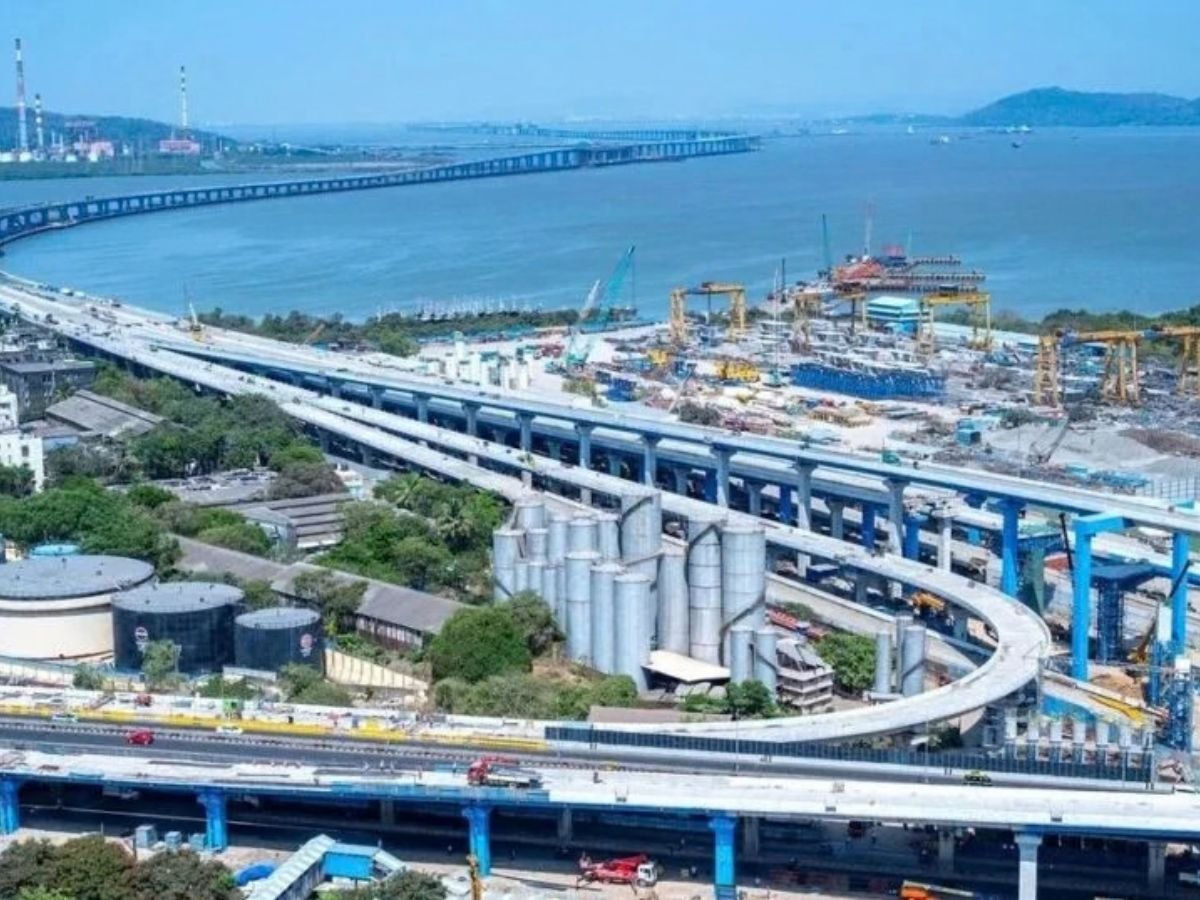
Atal Setu changed the psychological map of the region. It did not make every property suddenly expensive, but it reduced the mental distance between Mumbai and Navi Mumbai. Official project material highlights faster connectivity to NMIA, JNPT, the Mumbai-Pune Expressway, and the Mumbai-Goa Highway.
That matters most for:
- Ulwe and the Nhava Sheva side
- Panvel-linked growth corridors
- Logistics and business movement
- Buyers who value direct road access toward Mumbai
Then comes metro connectivity. Navi Mumbai Metro Line 1 has already made the Belapur-Kharghar-Taloja corridor more structured from a mobility point of view, with the operational stretch improving daily movement in that belt. Even where metro has not fully transformed prices yet, it has strengthened the long-term case for locations on the corridor.
And rail still matters. The Belapur-Nerul-Uran corridor got a boost with two new stations, including Targhar near the airport side, and more services were added, improving last-mile logic for the Uran belt.
Which areas usually benefit first when a big project comes up
Ulwe, Panvel, and airport-side growth areas
These areas usually react first because they sit closer to future expansion stories. Ulwe in particular has been one of the clearest examples of infrastructure-led buyer interest in Navi Mumbai. It has benefited from airport proximity, trans-harbour connectivity logic, and long-running belief in future upside.
Panvel benefits differently. It is not only an airport story. It also gains from being a wider junction point for road, rail, and regional movement. That makes its property market broader and less dependent on one single trigger.
The airport-side belt often sees stronger speculative movement first. That can create sharp price discussions, but it can also create supply pressure. So price movement there is often faster in headlines than in actual end-user stability.
Kharghar, Seawoods, Nerul, and better-connected established nodes
Established nodes benefit in a more stable way. They may not always see the most dramatic “future growth” pitch, but they often gain from infrastructure through better demand quality, faster resale, stronger rental support, and improved buyer confidence.
Kharghar is a good example. Metro support, road connectivity, educational institutions, and its position between old Navi Mumbai and the Panvel side make it more resilient than pure speculative belts.
Nerul and Seawoods benefit because infrastructure in Navi Mumbai is not just about expansion. It is also about making already strong nodes even more convenient. That often improves their staying power rather than causing sudden jumps.
How property prices actually move?
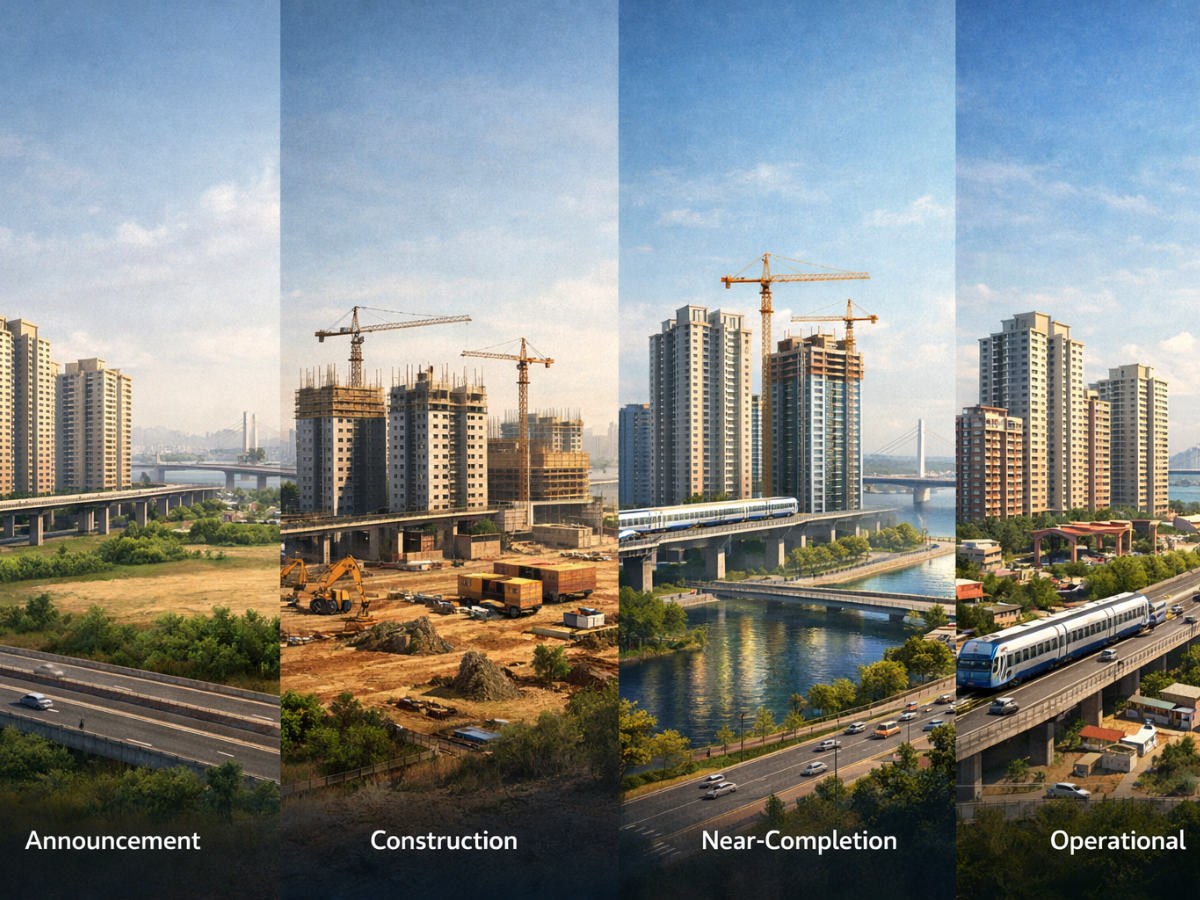
This is where most buyers get confused. Prices rarely move in one clean jump.
| Project Stage | What Usually Happens in the Property Market | Buyer Risk |
|---|---|---|
| Announcement stage | Attention rises, marketing becomes aggressive, early investor chatter increases | High risk of overpaying for future promises |
| Construction stage | Selective price movement starts in visible locations | Mixed risk depending on execution progress |
| Near-completion stage | Serious demand improves as confidence rises | Better clarity, but prices may already have moved |
| After operations start | Real end-user demand, rental demand, and resale quality become clearer | Lower uncertainty, but not always cheapest entry point |
In simple words, the highest noise often comes early, but the strongest pricing support usually comes later.
That is why some buyers make money by entering early, while others get trapped in long holding periods. The difference is not luck alone. It is usually about buying the right micro-location, at the right stage, for the right reason.
When infrastructure does not raise prices as much as people expect
This is very common in Navi Mumbai, especially in growth-corridor markets.
Infrastructure may fail to push prices strongly when:
- there is too much new supply
- the project is delayed
- the property is technically “near” the project but badly connected to it
- schools, markets, hospitals, and daily essentials are still weak
- the area gets investor demand but not enough end-user demand
- the project improves regional movement but not local liveability
This is why some sectors in emerging belts stay stagnant for long periods even when the headline story sounds strong.
A property does not become better only because a big project exists somewhere nearby. It becomes better when that project improves daily life, access, business relevance, or the demand base of that exact catchment.
What buyers and investors should check before buying near a “future growth” project

Buyer Checklist
- Is the project already operational, under construction, or still mostly on paper?
- How far is the property from the actual usable access point, not just the project boundary?
- Does the area have current liveability or only future promise?
- Is supply in this micro-market too high?
- Who will actually buy or rent here later?
- Does this location benefit from the project directly or only indirectly?
- Is the price already inflated because of marketing hype?
- Would this property still make sense if price appreciation takes longer than expected?
That last question matters a lot. In Navi Mumbai, the safest infrastructure-led buys are usually the ones that still make sense for self-use, rental, or long holding even without aggressive short-term appreciation.
[Internal Link: Best Nodes to Buy Property in Navi Mumbai] [Internal Link: Ready Reckoner Rate in Navi Mumbai] [Internal Link: Short-Term vs Long-Term Property Investment in Navi Mumbai] [Internal Link: Freehold vs Leasehold in Navi Mumbai]
Conclusion
Infrastructure projects absolutely shape property prices in Navi Mumbai. The airport, Atal Setu, metro connectivity, rail expansion, and planned growth zones are not small developments. They change access, confidence, mobility, and long-term economic direction.
But buyers should not make the mistake of treating every project as a guaranteed price booster. The real winners are usually locations where infrastructure creates usable connectivity, better demand quality, and stronger end-user logic. In other words, the project matters, but the exact property matters more.
FAQs
Frequently Asked Questions