
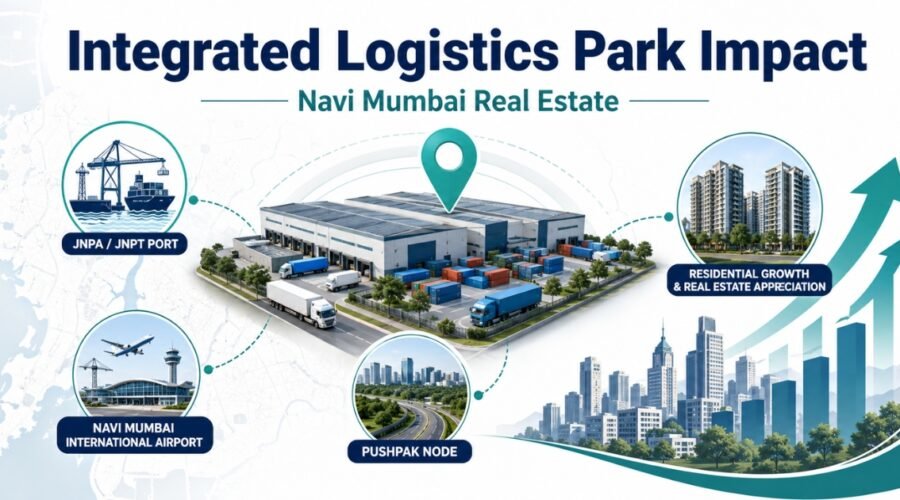
Integrated Logistics Park Impact on Navi Mumbai Real Estate
The Integrated Logistics Park Impact on Navi Mumbai real estate will be strongest around Pushpak Node, Ulwe, Dronagiri, Uran, Panvel, and JNPA-linked corridors. It can increase demand for housing, rentals, warehouses, commercial spaces, and land. But buyers should not invest only because “logistics park aa raha hai.” Check title, zoning, CIDCO/NAINA status, CRZ risk, road access, and approvals before paying token money.
This is an educational guide. Verify the latest position with the relevant authority or a property lawyer before making a transaction.
What Is the Integrated Logistics Park in Navi Mumbai?
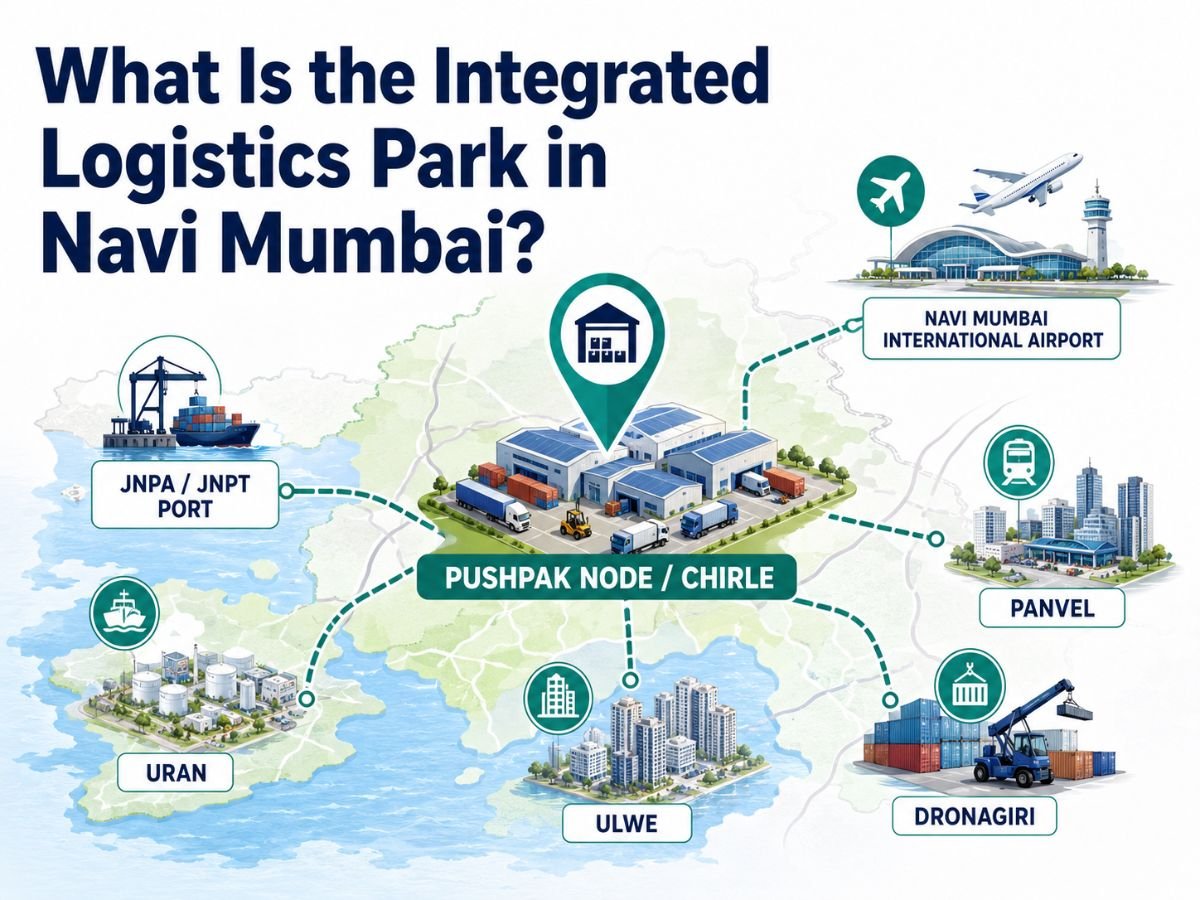
The Integrated Logistics Park is a planned logistics infrastructure project in Navi Mumbai’s Pushpak Node area, near Chirle village. As reported, CIDCO has planned a large logistics park of around 374 hectares, or roughly 924 to 925 acres, with Phase 1 covering around 72 hectares.
The project is expected to support logistics activities such as:
- Warehousing
- Container freight stations
- Inland container depots
- Light industrial units
- Cargo movement
- Supply-chain operations
- Transport and storage businesses
The location is important because it sits close to major growth drivers: Navi Mumbai International Airport, JNPA/JNPT, Atal Setu, the Western Dedicated Freight Corridor, Uran, Dronagiri, Ulwe, and Panvel.
This is why the project is not just a logistics story. It is also a real estate story.
Why This Project Matters for Real Estate
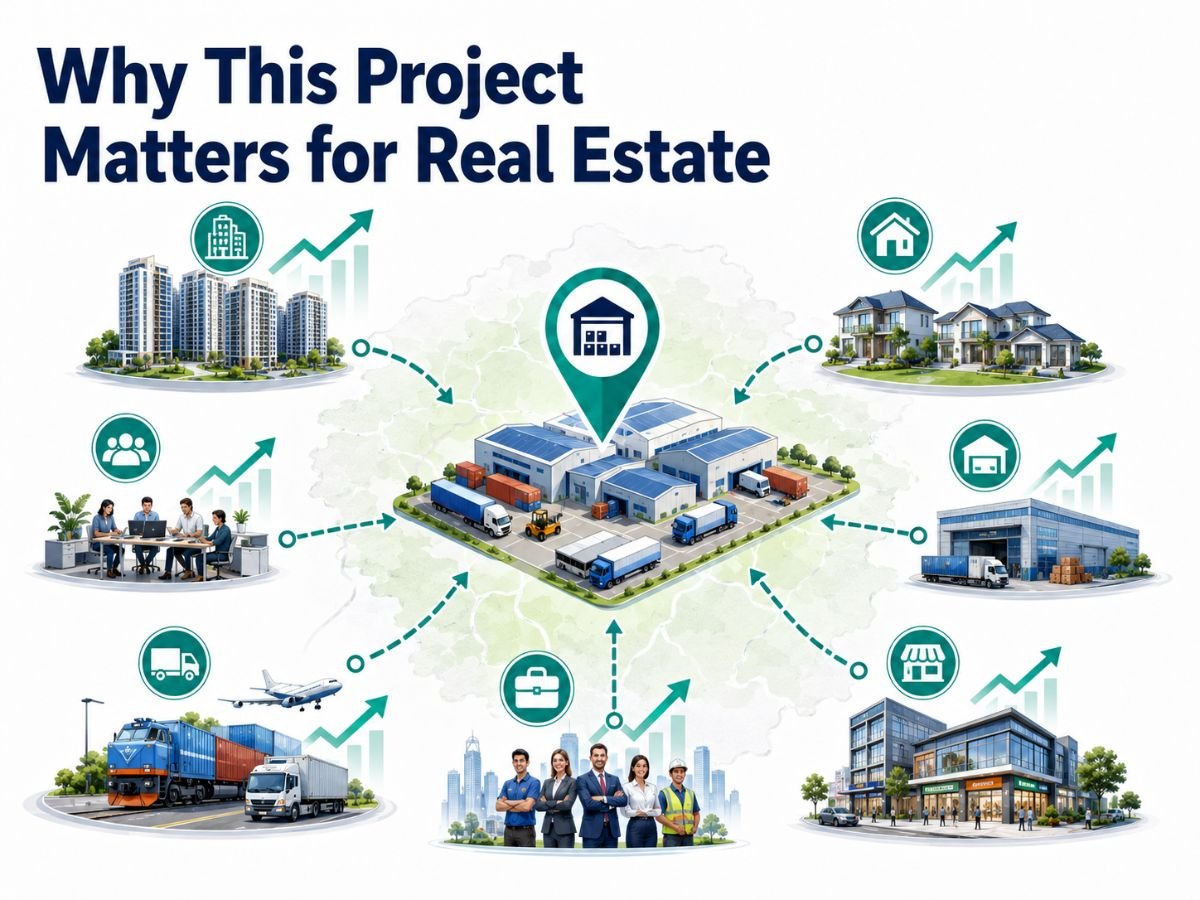
Logistics parks create property demand in a different way compared to IT parks or corporate offices.
An IT park usually creates demand from white-collar employees. A logistics park creates a mixed demand from warehouse workers, supervisors, transport operators, cargo managers, small business owners, drivers, facility staff, security teams, and supply-chain companies.
That means the impact is wider, but also more uneven.
A flat near a good residential node may benefit from rental demand. A warehouse plot may benefit from business demand. A village-side land parcel may benefit only if its title, zoning, access road, and approvals are clean.
This is where many buyers make mistakes. They hear “near logistics park” and assume every nearby plot will appreciate. That is not how Navi Mumbai works.
In Navi Mumbai, location is only one part of the decision. The real value comes from a combination of:
| Factor | Why It Matters |
|---|---|
| Legal title | Weak title can block resale, loan, or development |
| Planning authority | CIDCO, NAINA, PMC, NMMC, or revenue jurisdiction changes the process |
| Road access | Logistics value depends heavily on usable road connectivity |
| Zoning | Agricultural, residential, industrial, commercial, CRZ, and green-zone rules differ |
| Livability | Families need schools, hospitals, shops, water, and transport |
| Employment base | Rental demand improves only when jobs actually become active |
Areas That May Benefit Most
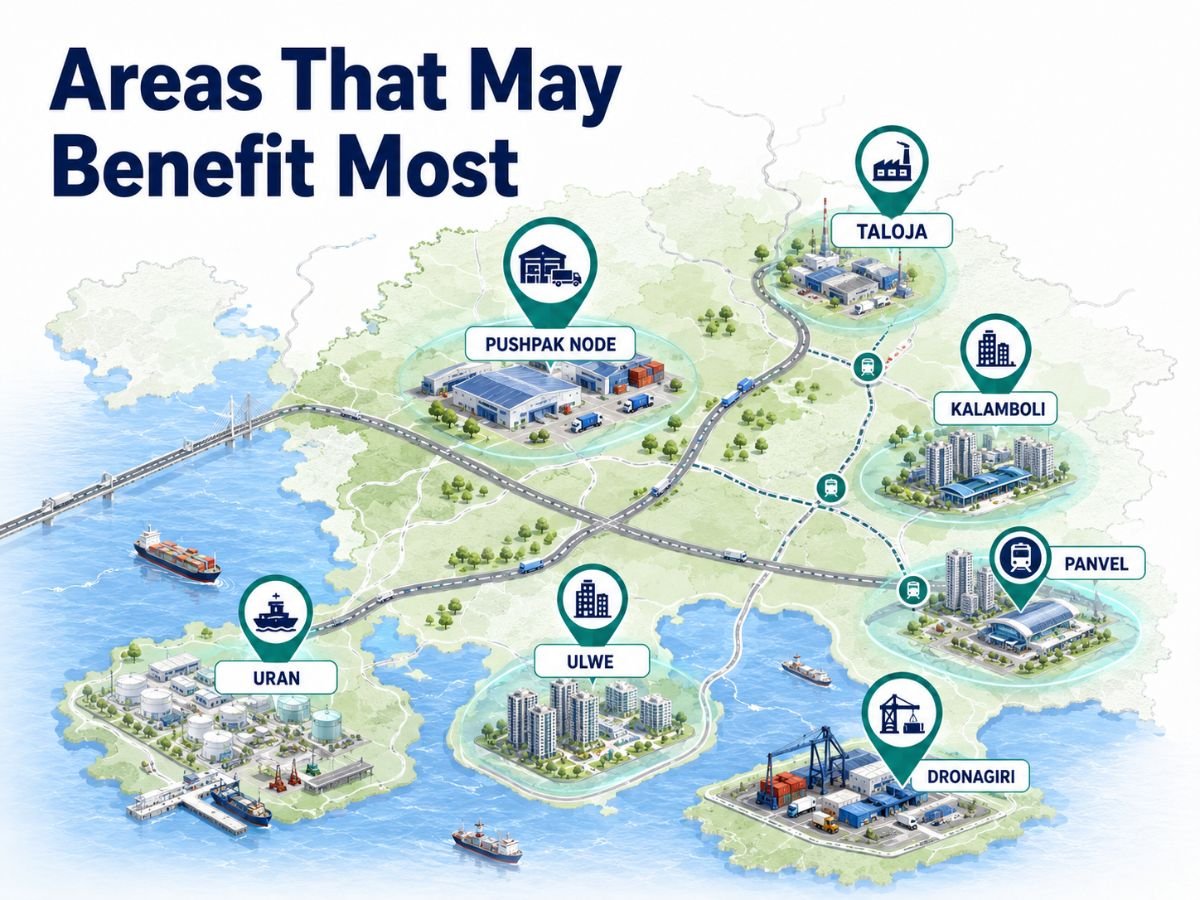
Pushpak Node
Pushpak Node is the closest and most direct beneficiary because the logistics park is planned in this influence zone.
It may attract long-term demand from investors, logistics companies, warehouse operators, transport businesses, and workers connected to the airport and port economy.
For residential buyers, Pushpak may become more relevant as airport-side and logistics-side employment improves. But buyers must check sector-level access, project approvals, builder track record, water supply, and actual possession timeline.
Do not buy only on future hype. Buy only after checking the ground reality.
Ulwe
Ulwe can benefit from the airport and logistics economy because it is already a known residential node with improving connectivity. It may attract employees working around NMIA, Pushpak, JNPA, and nearby commercial zones.
For end-users, Ulwe is generally easier to understand than raw land near village belts. But better sectors may already have higher pricing, so the investment decision should be based on rental potential, access, and project quality.
Dronagiri
Dronagiri has long-term relevance because of its proximity to JNPA, Uran, and port-linked activity. Logistics growth can support both residential and commercial demand here.
But Dronagiri is not uniform. Some pockets are more developed, while others still need stronger social infrastructure. Buyers should also be careful about coastal, creek-side, mangrove, and CRZ-related checks where applicable.
Uran
Uran may see stronger demand from port, logistics, transport, and warehouse-related activity. It is important for land and commercial investors.
But land buying in Uran needs serious due diligence. Do not depend only on broker maps or verbal claims. Check 7/12, mutation entries, old sale deeds, IGR records, NA status, road access, CRZ/CZMP applicability, and any acquisition or reservation risk.
Panvel
Panvel can benefit indirectly because it is a major residential and transport base for the airport, NAINA, logistics corridors, and Mumbai-Pune connectivity.
Panvel is suitable for families, investors, and long-term buyers. But village-side land and plotted developments must be checked carefully. NAINA influence does not automatically make every land parcel approved or safe.
Taloja and Kalamboli
Taloja and Kalamboli may benefit from industrial and logistics spillover. These areas already have links with MIDC, trucking, warehousing, and affordable housing demand.
The main checks here are livability, pollution, truck traffic, road condition, commute time, and project legality.
Area-Wise Real Estate Impact
| Area | Likely Impact | Suitable For | Main Risk |
|---|---|---|---|
| Pushpak Node | High long-term logistics and airport-linked impact | Investors, early buyers | Future pricing may already be included |
| Ulwe | Residential rental and end-user demand | Families, investors | Premium pricing in better sectors |
| Dronagiri | Port and logistics-linked growth | Long-term investors | Slow social infrastructure in some pockets |
| Uran | Land and commercial demand | Plot and warehouse investors | Title, CRZ, access road, zoning |
| Panvel | Wider housing and NAINA-linked demand | Families, investors | Village land and approval checks |
| Taloja | Budget workforce housing | Rental investors | Industrial pollution and commute |
| Kalamboli | Transport and logistics support | Commercial and rental buyers | Congestion and heavy vehicle movement |
What to Check Before Paying Token Money
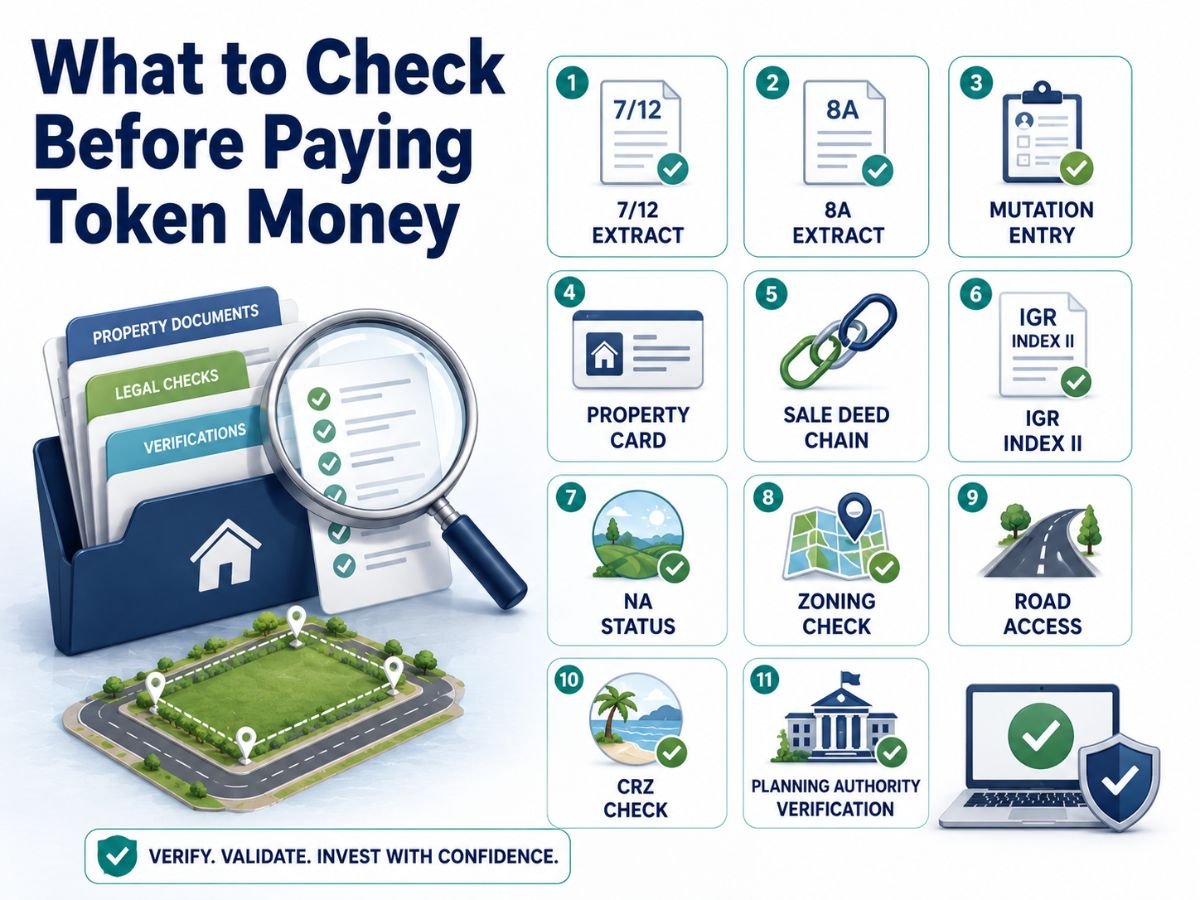
Before paying token money for any flat, plot, land, warehouse, or commercial unit near the logistics growth corridor, complete these checks.
For Flat Buyers
Check:
- MahaRERA registration
- Approved building plan
- Commencement Certificate
- Occupancy Certificate, if ready possession
- Agreement for Sale
- Builder title report
- Land ownership or leasehold status
- CIDCO transfer or allotment documents, if applicable
- Society formation status
- Pending litigation or complaints
MahaRERA registration does not guarantee that everything is risk-free. It supports verification. Buyers should still check approvals, possession status, and documents.
For Land or Plot Buyers
Check:
- 7/12 extract
- 8A extract
- Mutation or Ferfar entries
- Property card, where applicable
- Old sale deed chain
- IGR Index II records
- NA or land-use status
- Zoning certificate
- Road access proof
- Survey number, gut number, hissa number, and village name
- Acquisition or reservation status
- CRZ or CZMP applicability near coastal or creek-side areas
- CIDCO, NAINA, PMC, NMMC, or revenue authority jurisdiction
In Maharashtra, 7/12 is called Satbara Utara. It gives land details such as survey number, area, holder name, crop details, and some rights or liabilities. But it should not be treated as the only proof for purchase. It is one verification document, not a complete title certificate.
Never pay token money only after seeing 7/12.
Red Flags Near Logistics Growth Corridors
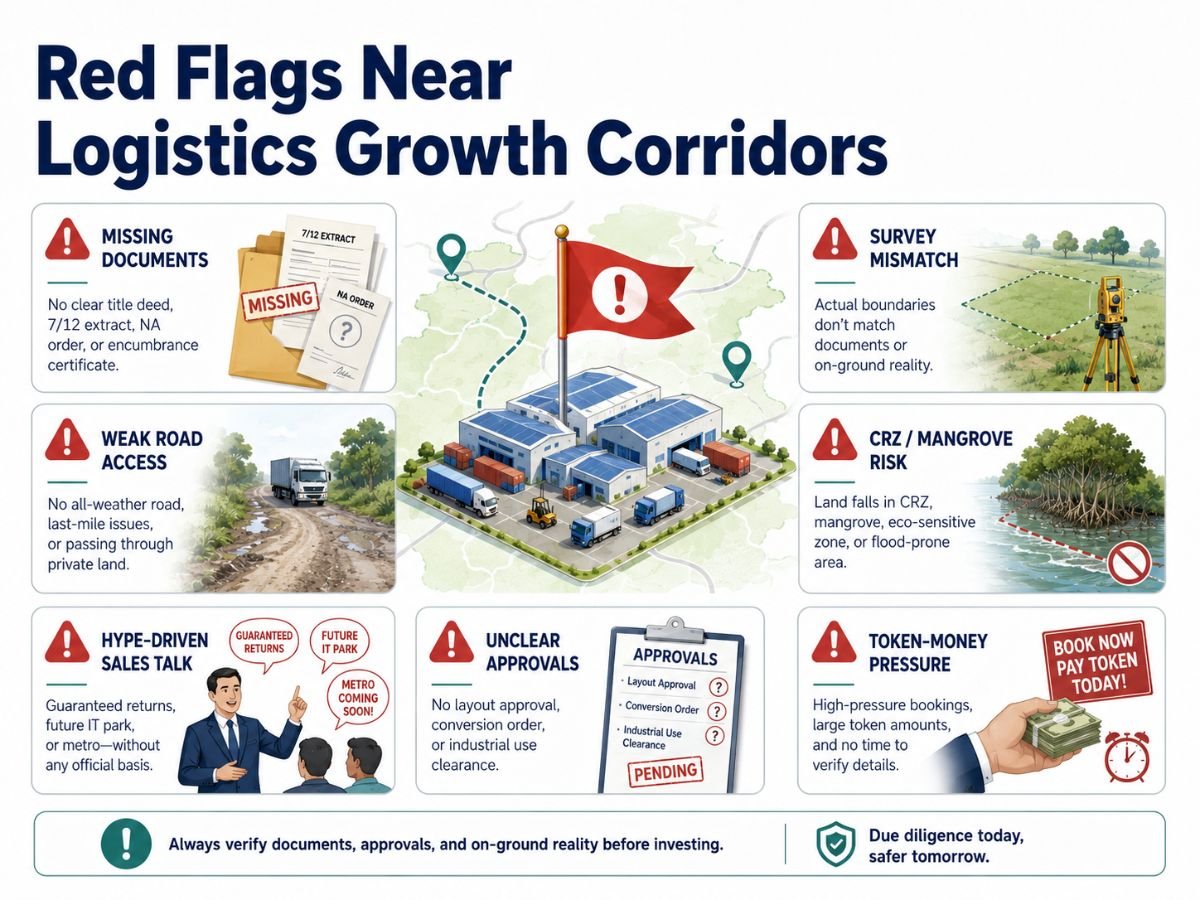
Be careful if you see these signs:
- Broker says “logistics park ke side mein hai, double ho jayega”
- Seller refuses document verification
- Only 7/12 is shown, but sale deed chain is missing
- Mutation entry is not updated
- Land is agricultural but marketed as clear NA plot
- Road shown on Google Maps but not in official records
- CRZ or mangrove-side land is sold without environmental verification
- Project is advertised before approvals
- Builder says OC is “in process” for ready possession
- NAINA or CIDCO status is unclear
- Token receipt has vague property details
- Seller pushes urgency without allowing lawyer review
A real opportunity will survive verification. A risky deal usually depends on pressure.
Common Mistakes Buyers Make
Mistake 1: Buying only because the logistics park is nearby
Nearness is useful, but it is not enough. The property must have clean title, legal access, correct zoning, and realistic demand.
Mistake 2: Confusing commercial growth with family livability
A logistics corridor can create jobs, but it can also bring truck movement, dust, noise, and traffic. This matters if you are buying for family living.
Mistake 3: Ignoring CRZ and mangrove checks
Dronagiri, Uran, creek-side belts, and coastal pockets need careful CRZ/CZMP verification. Do not depend on verbal assurance.
Mistake 4: Assuming all NAINA land is safe
NAINA is a planning influence area. It does not automatically mean every private land parcel is approved for plotting, construction, or resale.
Mistake 5: Trusting future promises more than documents
Future infrastructure can improve demand. But your ownership, loan eligibility, resale, and safety depend on documents.
Example Scenario: Pushpak-Dronagiri Buyer
A buyer is shown a plot near the Pushpak-Chirle side. The broker says the Integrated Logistics Park will bring huge appreciation.
Before paying token money, the buyer checks the 7/12, 8A, mutation entries, old sale deeds, IGR records, NA status, road access, planning authority status, and CRZ/CZMP applicability.
The buyer finds that the access road is not properly recorded and the land-use status is unclear.
In this case, the logistics park story may be real. But that specific plot is still risky.
That is the main lesson. A good location cannot fix weak paperwork.
FAQs
Frequently Asked Questions