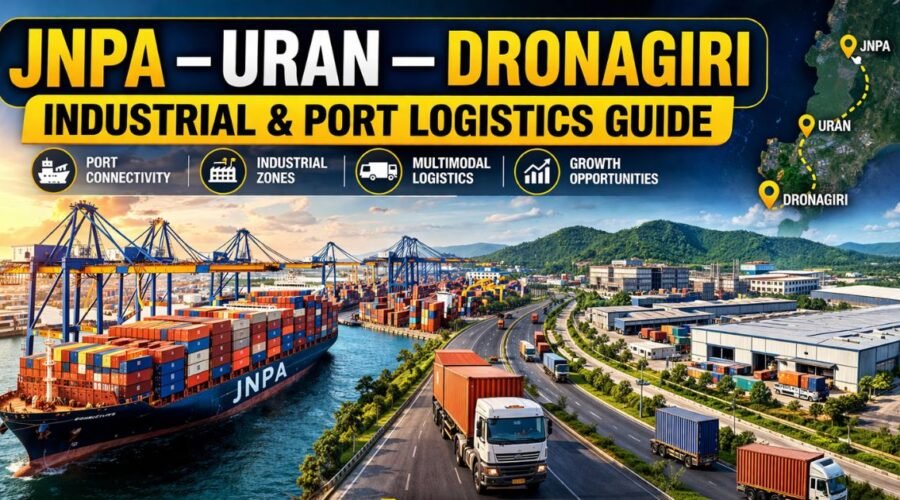
JNPA–Uran–Dronagiri Industrial and Port Logistics Guide: Best Fit, Areas, Access and Risks
JNPA–Uran–Dronagiri is the right corridor when your business depends on port access, container movement, customs-linked handling, export manufacturing, FTWZ logic, or marine support. It is usually the wrong corridor for ordinary regional warehousing or city-facing distribution. In this belt, being “near JNPA” is not enough. The real decision depends on pocket choice, approach roads, and whether the land sits under the right authority structure.
That difference matters because this is not a normal industrial strip. JNPA is India’s premier container handling port, connected to over 200 global ports, with around 50% share of the containerised cargo handled by India’s major ports. In calendar year 2025, it handled 7.94 million TEUs. Alongside it, JNPA SEZ operates as India’s first port-based operational multi-product SEZ, with 277.38 hectares of total land, about 163 hectares of leasable area, and 60-year lease allotments.
JNPA–Uran–Dronagiri in one answer: who this corridor fits and who should skip it
| Business type | Fit in JNPA–Uran–Dronagiri | Why | Better entry style |
|---|---|---|---|
| Export-oriented manufacturing | High | Terminal access, SEZ structure, customs-linked logic | JNPA SEZ lease |
| CFS and container-linked yards | High | Trailer movement and customs handling need port proximity | Dronagiri industrial plot / lease |
| FTWZ and bonded warehousing | High | Port-side customs synergy | SEZ / specialised lease |
| Port-linked 3PL operators | High | Frequent container movement justifies location cost | Built-to-suit lease |
| Marine and freight-support services | High | Daily dependence on terminal ecosystem | Dronagiri / Uran-side industrial-commercial space |
| Regional consumption warehousing | Low | Port premium is often wasted | Kalamboli / Taloja / Panvel-side |
| Small domestic distribution | Low | Traffic, tolls, and last-mile friction reduce efficiency | Panvel / Turbhe / inner logistics belts |
What exactly counts as the JNPA–Uran–Dronagiri belt in practical terms
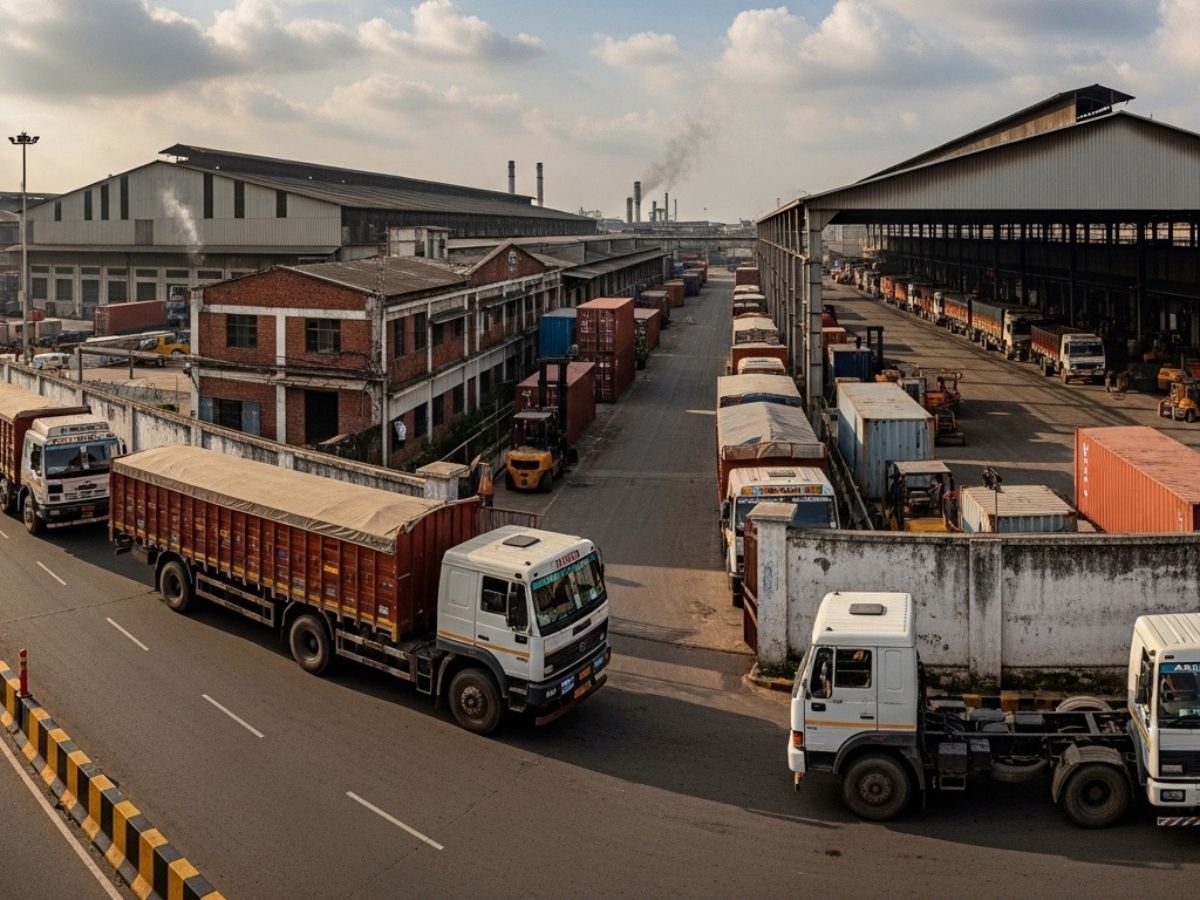
The name sounds like one corridor, but on the ground it is a three-part system. That is why many buyers, occupiers, and investors get confused. They hear one growth story, but the land, approvals, road logic, and use-case suitability can change sharply from one pocket to another.
The JNPA port side
This is the live terminal ecosystem. JNPA currently operates with five container terminals, including NSFT, NSICT, GTI, NSIGT, and BMCT. This is the core of India’s west-coast container movement, and the entire surrounding industrial logic exists because these terminals are active every day, not because of future plans alone.
Private ownership here is not the normal story. This side is about terminal operations, port-led services, concessions, and directly linked logistics activity.
The JNPA SEZ side
This is the most structured and institutionally organised part of the corridor. The SEZ is operational, has its own planning and approval framework, offers 60-year lease allotments through e-tender cum e-auction, and sits right next to the port-side ecosystem. NH 348A abuts the SEZ, NH 348 connects it to the Sion-Panvel corridor and Mumbai–Pune Expressway side, and the MTHL Chirle interchange is around 2 km away.
For serious export-oriented units, that matters a lot. This is where the article stops being about “industrial land” and starts becoming about operational design.
Dronagiri’s industrial-facing pockets
Dronagiri is where many private logistics and industrial decisions actually play out. It is a CIDCO-planned node, and in practical market terms it works as the main container support and warehousing side of the corridor. This is also where you need to stop thinking in one average number. Some sectors are far more usable for heavy vehicle movement than others. Road-touch access, turning radius, trailer staging, and direct interface with container movement are what decide usability here.
This is also where CIDCO transfer rules, lease structure, and 12.5% plot caution become important. A site can look attractive on a map and still become a legal headache if its transfer chain is not clean.
Uran-side support locations and movement logic
Uran is not the polished face of the corridor, but it remains part of its daily operating reality. Labour housing, food, transport businesses, empty yard activity, and service ecosystems often lean on Uran-side settlement patterns more than outsiders expect.
For some support businesses, older Uran-side locations still work. But they do not all deserve premium valuation. Some are functional support zones, not premium logistics assets.
Why this belt matters for port-led industry and logistics, not just for generic warehousing
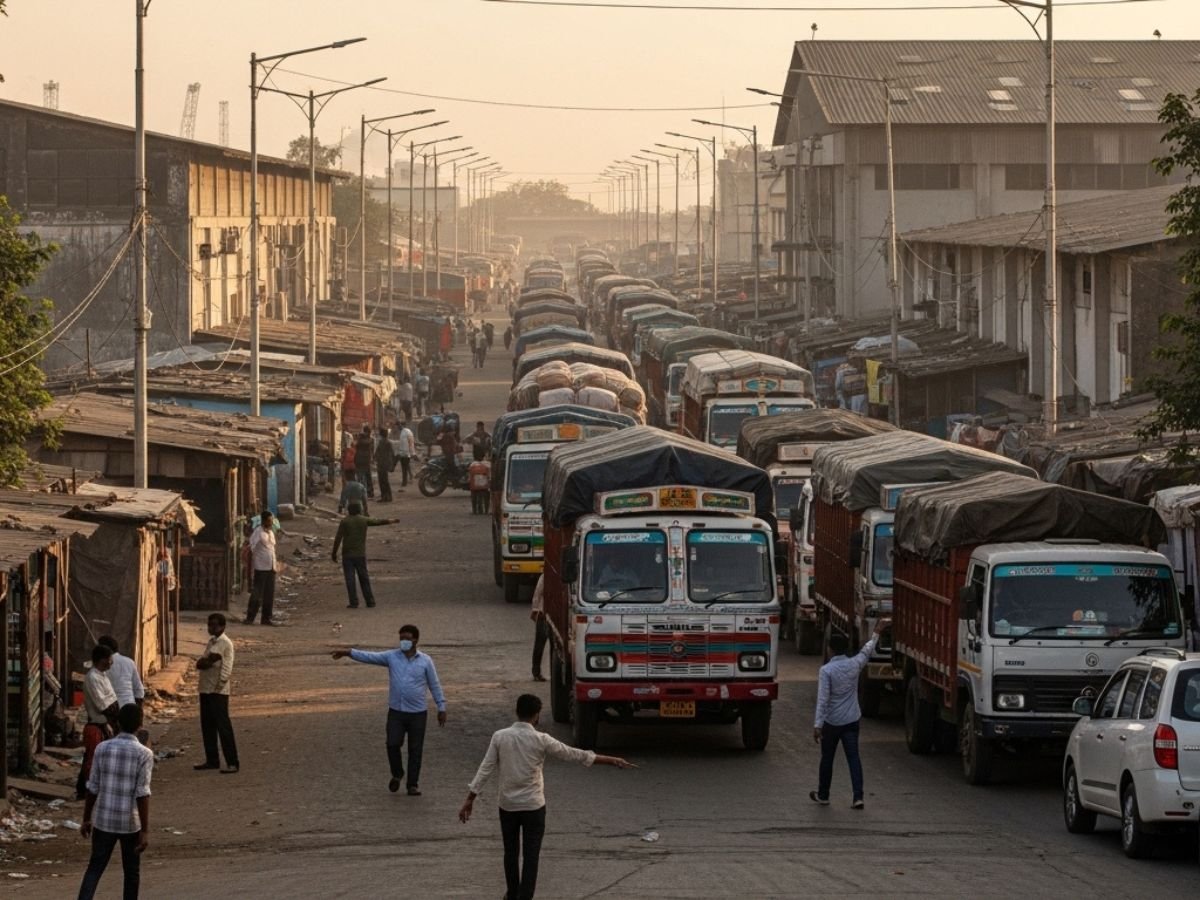
This corridor matters because it is tied to one of the biggest port ecosystems in the country. But that same strength is also why it must be used carefully.
JNPA’s port ecosystem and terminal scale
JNPA is not a symbolic port anchor. It is an actual trade engine. It handles around half of the containerised cargo across India’s major ports, is connected to over 200 ports globally, and recorded 7.94 million TEUs in calendar year 2025. That throughput creates genuine demand for cargo evacuation, bonded logistics, CFS activity, customs-facing warehousing, and export-linked industrial occupancy.
This is why the corridor keeps attracting serious operators. Not because the belt sounds futuristic, but because cargo already moves here at national scale.
Why JNPA SEZ changes the equation
JNPA SEZ changes the discussion because it is not just another industrial estate. It is India’s first operational port-based multi-product SEZ. It has 277.38 hectares in total, about 163 hectares of leasable land, operates through long lease allotments, and offers a single-window environment with its own Development Control and Promotion Regulations.
For an exporter, manufacturer, or FTWZ user, this is a major operational advantage. It reduces friction in approvals, utilities, and customs-linked planning. For a purely domestic user, though, these strengths may not justify the land cost.
What MTHL and Chirle improve, and what they do not solve
Atal Setu has clearly improved regional connectivity. MMRDA states that the bridge opened for traffic on 13 January 2024, and the Navi Mumbai side includes Shivaji Nagar and Chirle interchanges. For the JNPA–Uran–Dronagiri corridor, this has improved managerial and passenger-side access more than before.
But this is where many people overread the story. MTHL does not magically solve heavy container movement. It does not remove gate queues. It does not fix weak last-mile roads inside poor pockets. It improves access to the corridor. It does not make every plot inside the corridor efficient.
Which businesses are a natural fit here and which are forcing the wrong location choice
This is the most important part of the decision.
CFS, container-linked yards and customs-facing logistics
These are natural fits. Container Freight Stations, empty container yards, customs-linked handling units, and trailer-intensive operations need to be close to terminal movement. In such businesses, dead mileage is real money. Being 10 or 15 kilometres farther can affect turnaround, fuel, staffing, and trailer utilisation.
For these users, Dronagiri-side industrial pockets and closely linked port-facing logistics land make operational sense.
Export-oriented manufacturing and SEZ users
This belt also fits manufacturers who import inputs and export finished goods. Here, JNPA SEZ becomes the strongest part of the story. The single-window structure, lease model, utilities, and customs-linked positioning are not marketing lines. They can materially change project execution quality.
If the business is genuinely export-led, the corridor can be a strategic base. If it is mainly domestic sales with occasional port usage, the same location may become overkill.
Marine, transport and freight-support businesses
Marine engineering support, freight forwarding support, transport operators, repair-linked businesses, and logistics service players often benefit from being near the port ecosystem even when they do not occupy premium SEZ land. For these users, practical Dronagiri and Uran-side locations can work well if the approach, yard use, and staffing logic are sound.
General warehousing users who may be better off elsewhere
This is where the market often gets misread. A domestic warehouse serving Mumbai, Thane, Navi Mumbai retail, or regional consumption does not automatically benefit from JNPA-side presence. In fact, it may suffer from trailer-heavy traffic, higher land cost, and a port premium that has no real link to its customer base.
For such users, Kalamboli, Taloja, or even Panvel-side logistics nodes can be more practical.
When Kalamboli, Taloja or Panvel-side logistics makes more sense than JNPA–Uran–Dronagiri
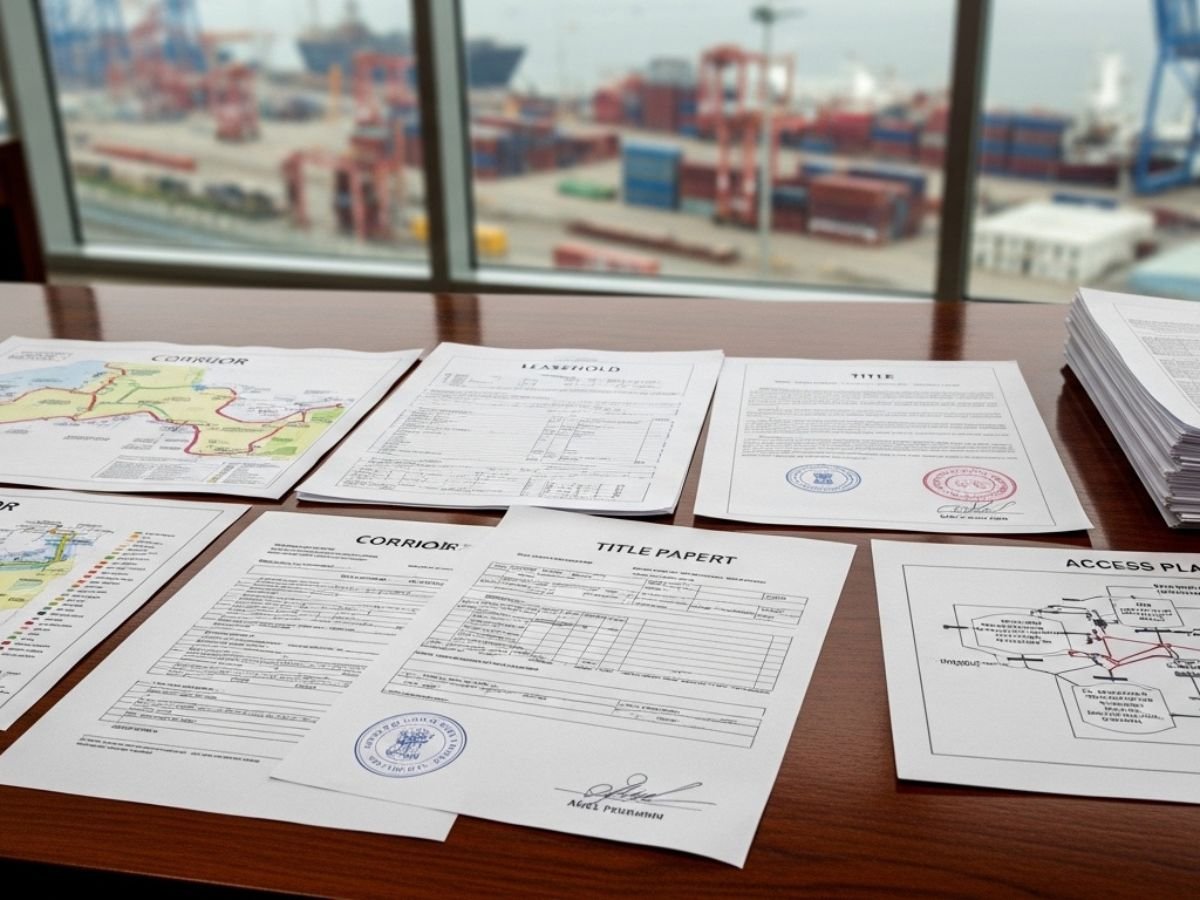
If JNPA–Uran–Dronagiri is a customs-facing corridor, Kalamboli and Taloja are more domestic-friendly working belts.
Kalamboli usually works better for highway-led freight, steel and commodity handling, and regional truck movement where port adjacency is not the core value. Taloja works better when the business needs an industrial backbone, regional distribution, or manufacturing support without paying the full port-side premium. Panvel-side logistics becomes more relevant when the operation needs broader highway reach and future airport-facing flexibility rather than direct port logic.
So the decision should not be “which place is better?” It should be “better for what?” That one question saves a lot of money.
How pocket choice changes the answer inside this corridor
A good corridor can still contain bad pockets.
Port-adjacent and SEZ-adjacent logic
Plots with strong interface to NH 348A, the SEZ edge, or efficient heavy-vehicle routes naturally command better operational value. These are the places where high-frequency cargo users can actually capture the advantage of being near the port.
Dronagiri sectors that are more operationally practical
Some Dronagiri sectors are simply easier to work from because of road width, turning movement, and industrial continuity. Others look close to the action but are awkward for trailers or inefficient for staff operations. In this belt, two sites within the same node can behave like completely different assets.
Uran-side locations that work better as support zones than premium logistics stock
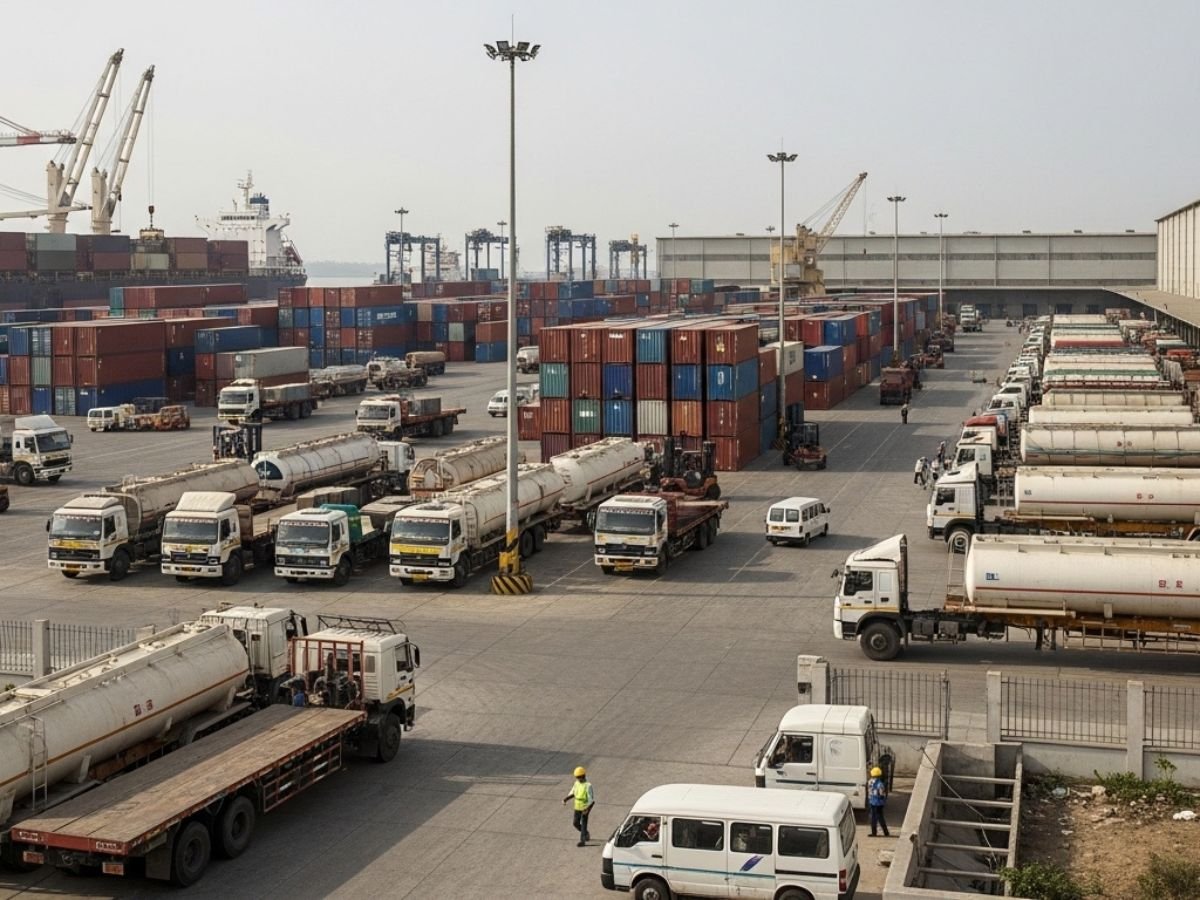
Some Uran-side pockets work as lower-cost support locations, empty storage, or auxiliary transport ecosystems. That does not automatically make them premium logistics destinations. Buyers should be careful not to pay Dronagiri-like prices for support-zone functionality.
Places that look close on the map but underperform on ground
This is a classic trap. A property can be two or three kilometres from a terminal road and still perform badly because of narrow internal stretches, poor junction design, or queue spillovers. In industrial real estate, straight-line distance is one of the least useful measurements.
What access checks matter before taking land, a shed or a warehouse here
Before committing, the site should be tested like an operating asset, not admired like a brochure image.
Truck route and queue logic matter first. A trailer should be able to enter, turn, wait, and exit without paralysing the site or the road outside. If a property needs public-road spillover for staging, it is already weaker than it looks.
Highway linkage matters next. JNPA SEZ benefits from direct reference points such as NH 348A, NH 348, and Chirle-side access. But what matters is not just the highway itself. It is the final few kilometres from the highway to the gate. :contentReference[oaicite:8]{index=8}
Staff movement is the hidden third pillar. Workers, drivers, supervisors, customs agents, and support staff all need the site to function daily. A technically good location can become expensive if labour transport, canteen access, late-shift movement, and housing support are weak.
Which authority, lease and approval questions can change the deal completely
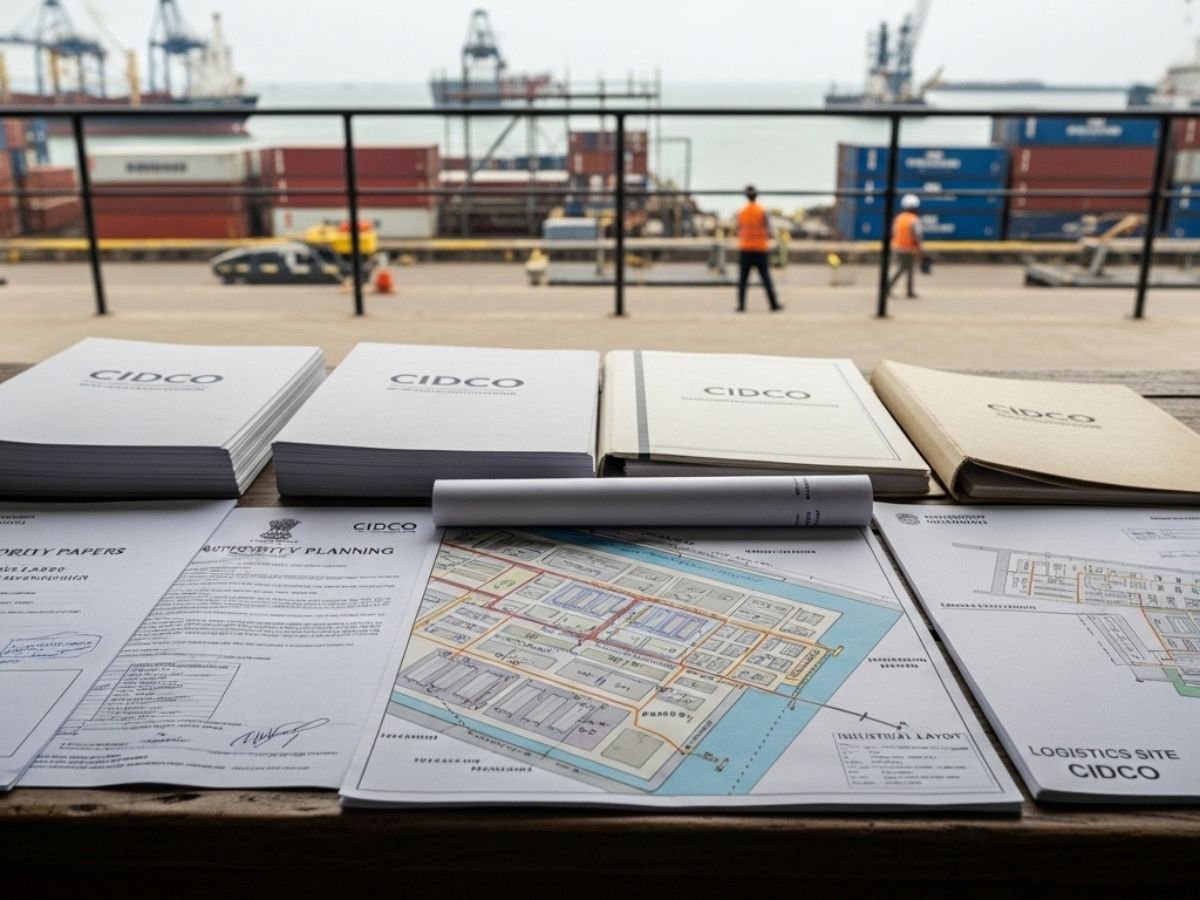
This section is where many buyers become too casual.
JNPA SEZ land and lease model
Inside the SEZ, the structure is clear. JNPA allots land on a 60-year lease through e-tender cum e-auction, and the zone functions under its own planning and approval framework. That is one reason serious occupiers value it. The utilities and planning environment are more structured than in many ordinary industrial markets.
But SEZ suitability still depends on the business model. Not every domestic operator belongs there.
CIDCO land, transfers and 12.5% plot caution
On the Dronagiri side, CIDCO logic becomes important. CIDCO’s 12.5% scheme exists to return developed land equivalent to 12.5% of acquired land to project-affected persons, with part of that entitlement reserved for social infrastructure. That alone does not make such land bad. But it does mean the title, final order position, transfer chain, and development structure must be checked far more carefully.
This is especially important when buyers are entering through resale, developer aggregation, or village-linked land stories. A practical investor should never assume that “plot available” means “title clean and transfer-simple”.
Approvals, utilities and operating permissions that must be checked
This corridor is too expensive for lazy due diligence. The business should verify sanctioned use, power availability, water position, fire compliance, vehicle access, and whether the actual use matches the authority’s permitted use. Industrial, warehousing, bonded, service, and logistics use do not always travel smoothly across every authority structure.
What buyers and occupiers usually underestimate in this corridor
The biggest mistakes here are not dramatic legal disasters. They are operational misreads.
The first is paying a near-port premium without capturing near-port efficiency. A site that looks expensive but still loses time every day in gate movement, trailer queuing, or poor yard design is not premium. It is just costly.
The second is over-believing big infrastructure headlines. Yes, MTHL has improved access to the region. Yes, NH-linked movement matters. But none of that guarantees good performance from a weak last-mile pocket.
The third is ignoring labour and social infrastructure. Dronagiri is still not Vashi. It is not Nerul. It is not an easy white-collar node by default. If your operation needs staff comfort, executive access, late-shift continuity, and daily services, those costs must be calculated honestly.
Buy, lease or stay flexible in JNPA–Uran–Dronagiri?
Buying makes sense when the business is deeply tied to the port and expects to stay committed for years. CFS operators, FTWZ-linked users, major export manufacturers, and old logistics families with long-term operational roots may justify buying leasehold rights or securing long-control land positions.
Leasing is usually smarter for 3PL operators, freight forwarders, client-specific contract players, and businesses testing port-side logic without committing huge capital. In this corridor, flexibility is not weakness. It is often the more intelligent first step.
A pilot entry can be the smartest option of all. Using shared bonded space, third-party warehousing, or a smaller leased base allows a company to test turnaround times, staffing comfort, and route efficiency before betting heavily on land.
A 10-point site visit and due diligence checklist for this corridor
1. Check the authority first Confirm whether the asset falls under JNPA SEZ, CIDCO leasehold structure, or another local arrangement.
2. Verify the legal chain, not just the brochure On CIDCO-side land, check final order status, transfer position, and whether any 12.5% complications exist.
3. Physically test the approach road Do not rely on a map. See whether a 40-foot trailer can comfortably enter and turn.
4. Measure gate-to-highway reality The last few kilometres matter more than the headline highway.
5. Test peak-hour movement Visit during operational hours, not on a quiet Sunday morning.
6. Check utility readiness Power, water, drainage, and fire readiness should be confirmed in writing.
7. Audit site flood behaviour Coastal and tide-linked risk should not be ignored in this belt.
8. Check worker ecosystem practicality Ask where staff will live, eat, travel from, and handle late shifts.
9. Match land use with business use Do not assume industrial land automatically suits every warehousing or logistics function.
10. Calculate real turnaround time The useful metric is not distance to JNPA. It is actual time from site to working terminal interface.
Conclusion
JNPA–Uran–Dronagiri is one of the most important industrial and port logistics corridors in the Navi Mumbai region, but only for the right kind of user. If your operation lives on port access, customs handling, export movement, bonded logic, or container ecosystems, this belt can be hard to replace. If your operation is mainly domestic, van-led, city-facing, or regional-distribution driven, this corridor can become an expensive mismatch.
So the correct decision is not “JNPA side is best.” The correct decision is sharper than that. Choose JNPA–Uran–Dronagiri when the port is part of your business model, not just part of your sales pitch.
FAQs
Frequently Asked Questions