

Nerul Property Rates and Market Trend
Nerul is one of Navi Mumbai’s costlier but more stable property markets in 2026. Prices here are supported less by hype and more by livability, rail and road connectivity, established schools and hospitals, and strong resale demand. But Nerul is not one single-rate market. Palm Beach Road-facing pockets, better sectors, and stronger societies command a clear premium, while older or less-updated stock can behave very differently.
A lot of generic pages make Nerul look simple. It is not. The real question is not just what the average price is. The real question is whether the rate you are seeing matches the sector, the building age, the society quality, and the kind of buyer Nerul suits today.
Quick rate snapshot: what buyers usually see in Nerul today
Public portal data already shows why buyers should not trust one flat average. Some platforms show Nerul’s average residential price around ₹18,652 per sq ft, while others show average flat transaction rates around ₹21,640 per sq ft. That gap itself tells you the market has very different sub-pockets, stock types, and negotiation outcomes.
| Segment in Nerul | Typical market pattern in 2026 | Who usually looks here | What drives pricing |
|---|---|---|---|
| Older resale societies | Usually lower entry price than premium towers, but strong sectors still hold value | Families, end users, renovation-led buyers | Sector quality, room sizes, station access, society reputation |
| Standard mid-market apartments | Balanced pricing, common in practical family pockets | Working families, local upgraders | Daily-life convenience, school access, road and rail logic |
| Premium towers and newer stock | Clear premium, sometimes aggressive asking prices | HNIs, upper mid-income buyers, status-focused end users | Palm Beach influence, views, amenities, newer construction |
| East-West differentiated pockets | West-side premium can be stronger in some belts, but East has its own stable demand | Buyers comparing lifestyle vs practicality | Palm Beach proximity, station-side demand, sector mix |
A few sector-level examples make the picture clearer. Current portal data shows average prices of around ₹21,623 per sq ft in Sector 6, ₹20,707 in Sector 18A, and ₹13,339 in Sector 20. On some market snapshots, Nerul West averages roughly ₹25,300 per sq ft, while Nerul East averages roughly ₹26,650 per sq ft. That is exactly why Nerul should be read as a micro-market, not a single number.
Why Nerul remains one of Navi Mumbai’s more expensive residential markets
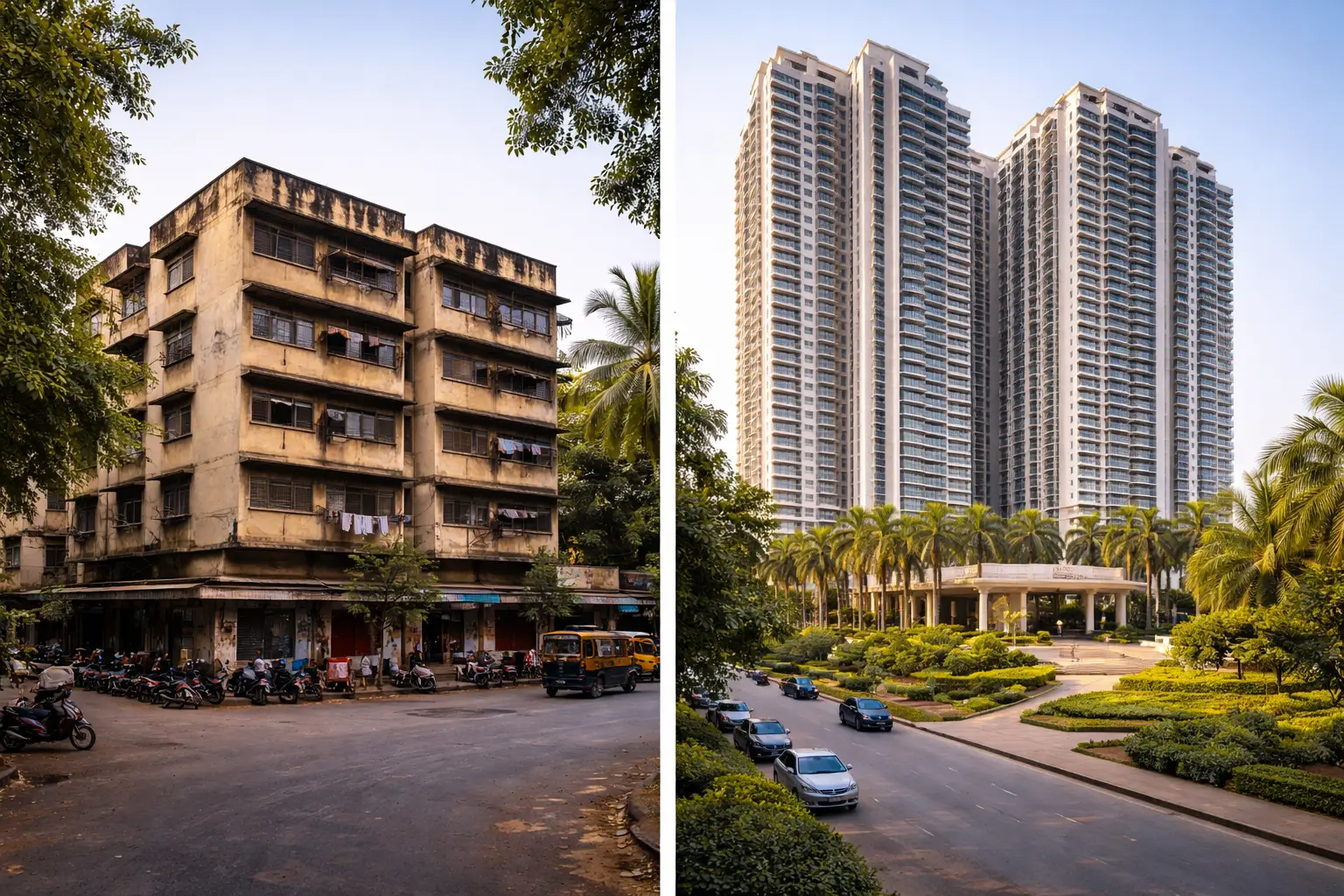
Nerul stays expensive because it solves more daily-life problems than many cheaper nodes. It sits on strong road and rail logic, has direct relevance to Palm Beach Road, and benefits from broader improvement in Navi Mumbai’s regional connectivity after Atal Setu and wider corridor upgrades changed travel patterns.
Connectivity that holds value better than hype-driven locations
Nerul is not a future promise market in the way some outer nodes still are. Its advantage is that the commute logic is already usable. The trans-harbour link, local rail connectivity, Palm Beach Road access, and regional road movement keep it relevant for office-goers and families alike.
Even the metro story matters indirectly here. But Nerul’s core value still comes more from its mature connectivity base than from a direct metro station advantage. That is an important distinction. Buyers are paying for something already functioning, not only for an upcoming promise.
Why families and long-term residents keep demand steady
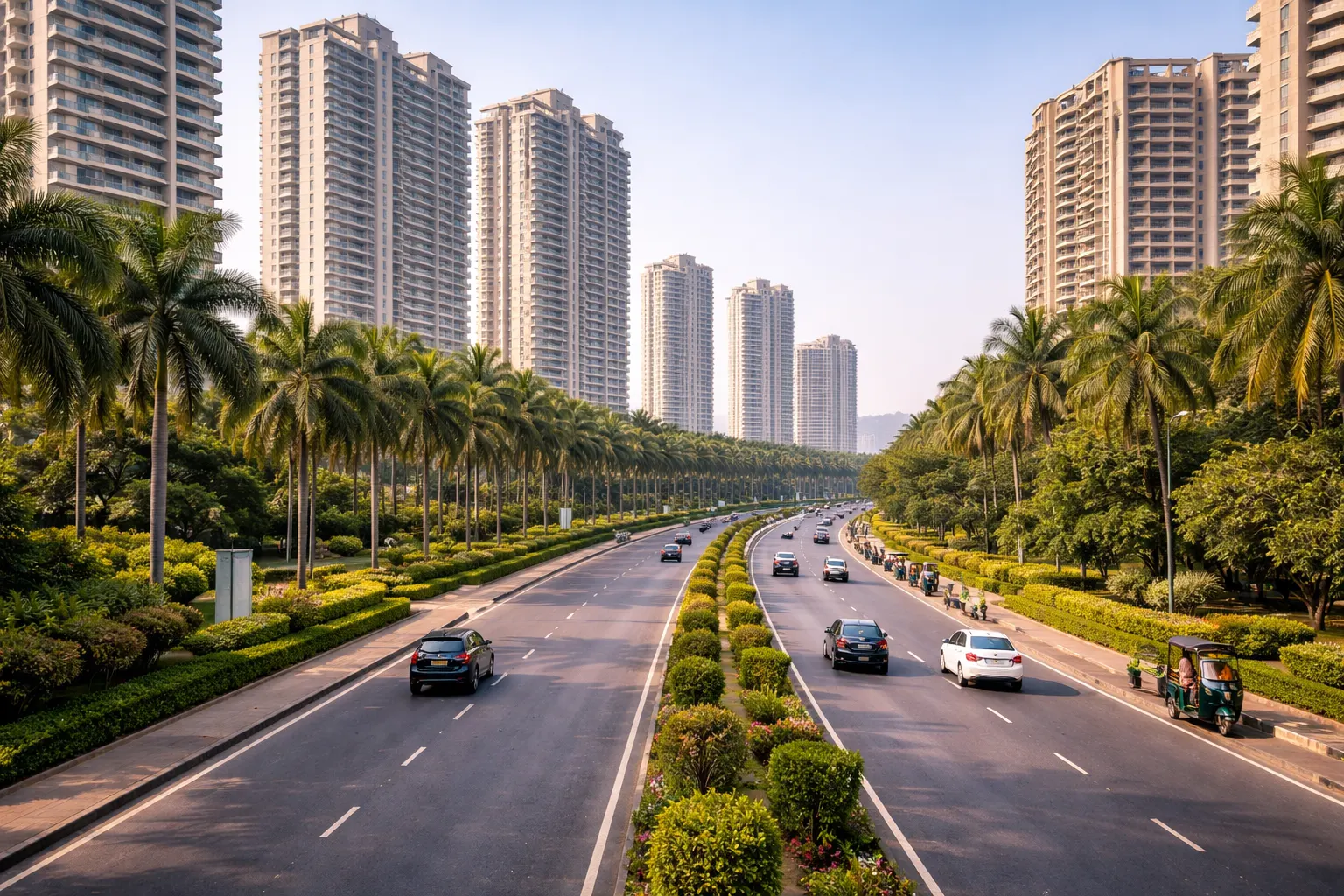
This is one of the biggest reasons Nerul behaves differently from speculative markets. Mature schools, hospital access, larger established societies, older but liveable pockets, and a more settled social environment keep end-user demand steady.
That kind of demand does not always create explosive appreciation, but it does support price stability. In practical terms, that makes Nerul more dependable for self-use buyers than many flashy, future-led locations.
How mature social infrastructure protects pricing
Buyers in Nerul often pay extra for less friction in daily life. They are paying for a neighbourhood that already functions. Good access to schools, hospitals, local markets, sports grounds, railway links, and road movement gives Nerul a level of everyday comfort that keeps it relevant even when cheaper nodes try to compete on price.
Which parts of Nerul usually command a premium, and why
The strongest premium in Nerul usually comes from a mix of address value, Palm Beach Road influence, better society stock, and strong internal livability.
Palm Beach Road side and premium address effect
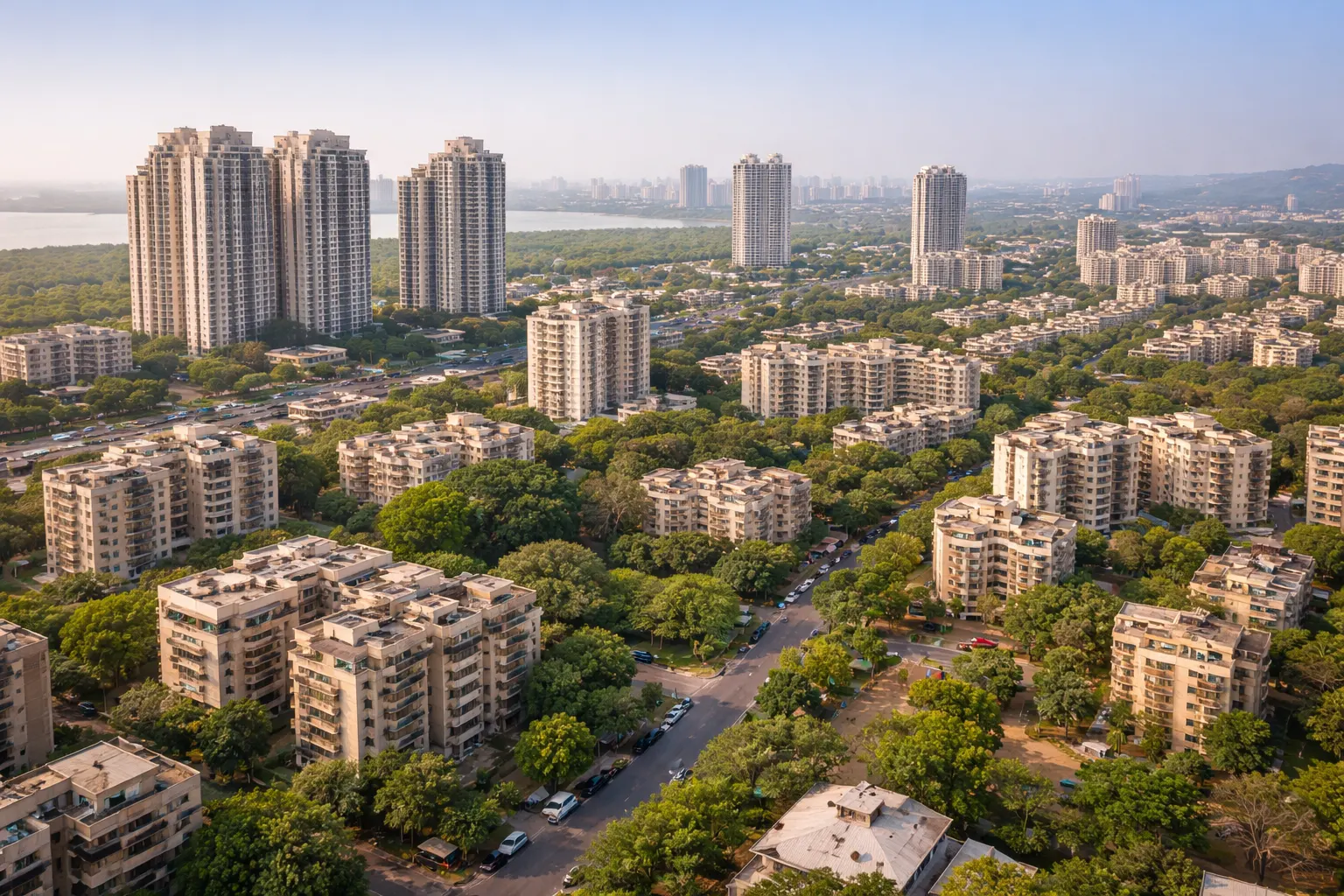
Properties with Palm Beach Road relevance, wider road access, better skyline or creek-side positioning, and premium gated inventory usually command the top end of the market. This is where asking prices can run much hotter than practical deal values, especially in lifestyle-led towers.
Station-convenient sectors and daily-life pricing
Sectors that combine station convenience with usable residential surroundings keep attracting practical buyers. These are not always the most glamorous addresses, but they remain liquid because everyday life is easier. That is why some older buildings in good sectors still sell at strong rates despite their age.
Sectors where older stock still sells because the location is hard to replace
Sector-level data shows how location can hold value even when stock is not brand new. Sectors like 6 and 18A remain materially stronger than more affordable sectors like 20 on many current market pages. That does not automatically mean Sector 20 is weak. It means the market is rewarding quality, access, and buyer confidence differently across sectors.
| Nerul pocket type | Typical market character | What buyers are really paying for |
|---|---|---|
| Premium Palm Beach / prestige side | Higher-ticket, lifestyle-driven | Address value, views, amenities, faster social signalling |
| Balanced family sectors | Strong end-user demand | Schools, roads, local convenience, daily comfort |
| Older practical sectors | Value if society and building condition are acceptable | Bigger usable layouts, location retention, resale liquidity |
Nerul East vs Nerul West pricing: what usually changes on the ground

This comparison should not be oversimplified. On some portals, Nerul East is currently showing a higher average than Nerul West, which tells you that West is always costlier is not a safe shortcut. The exact spread depends on what is being listed, which societies are active, and whether the sample has more luxury stock, premium towers, or older practical apartments.
In simple terms, Nerul West tends to pull stronger lifestyle and Palm Beach-linked attention in select belts. Nerul East often holds stable family demand, practical access appeal, and established residential comfort. For many self-use buyers, the better side is not the one with the flashier headline, but the one with the stronger building, better society management, and more workable daily route.
Resale flats, older societies, and premium towers do not follow the same pricing logic in Nerul
This is where many buyers make mistakes. A 20-year-old flat in a very strong Nerul sector may still be a smarter purchase than an expensive newer tower in a weaker internal location.
Why older resale stock can still stay expensive in good sectors
Because layout efficiency, road access, established residents, and long-tested livability still matter. In Nerul, older stock is not automatically inferior. In some societies, larger room sizes and better practical layouts still attract families who care more about use than brochure language.
Where premium towers command a justified markup
A justified premium usually comes when the buyer is getting a real upgrade: stronger society infrastructure, better maintenance standards, better parking comfort, cleaner title chain, stronger visual appeal, and real location advantage. When the premium is only for branding, the value becomes much more debatable.
When newer inventory becomes more about aspiration than value

This is especially true where asking prices are ambitious. Nerul has a broad supply mix, from older practical apartments to very expensive lifestyle stock. A buyer should not assume every premium quote reflects final deal reality.
What the market trend in Nerul actually looks like right now
The Nerul market trend in 2026 is better described as selective strength than as a blanket surge. Some sectors and projects continue to show strong pricing support, while others are moving more slowly or correcting where old stock and aggressive quotes are colliding.
That matters because mature markets often behave this way. They do not move like early-cycle growth nodes. They reward stronger stock, better sectors, better societies, and cleaner usability. The market is not dead. But the easy upside is gone in many pockets.
There is another practical reality: asking prices and actual transaction prices are not the same thing. In Nerul’s mid-market and premium segments, sellers often list at aspirational levels. Buyers who study recent registrations, society history, and bank valuation comfort usually negotiate better than buyers who treat the listed rate as final truth.
Is Nerul still a good buy, or has it become too expensive for practical buyers?
Nerul is still a good buy for the right buyer. It is just no longer a cheap buy.
When the Nerul premium is worth paying
The premium usually makes sense if your goal is stable self-use, established social infrastructure, lower livability risk, better resale comfort than a more speculative node, and a more balanced lifestyle than a purely growth-led location.
When buyers may get better value elsewhere
If your main goal is maximum upside from a lower entry ticket, Nerul may feel too mature and too expensive. In that case, buyers often compare it with Kharghar or other nodes where future appreciation arguments are stronger, even if daily-life certainty is lower.
Who should avoid stretching too much for Nerul
A pure budget buyer should be careful here. Nerul can punish over-stretching because the entry ticket, stamp duty cost, registration cost, and resale transaction layers can add up fast. This is especially true in resale-driven transactions involving CIDCO-linked transfer processes.
What kind of buyer Nerul suits best in this market cycle
| Buyer type | Does Nerul suit them in 2026? | Practical reason |
|---|---|---|
| End-user family | Yes, often strongly | Mature schools, hospitals, stable neighbourhoods, daily-life comfort |
| Commuter professional | Yes, if budget allows | Strong rail-road logic and better regional access |
| Rental-income buyer | Yes, selectively | Stable rental demand in practical pockets, not automatic everywhere |
| Long-term capital preservation buyer | Yes | Mature market, lower drama, stronger holding quality |
| Aggressive appreciation seeker | Only selectively | Upside exists, but it is not an easy early-entry story now |
| Tight budget buyer | Often no | Nerul premium can become financially uncomfortable |
What buyers should check before trusting quoted rates in Nerul
Before paying a Nerul premium, the buyer should check whether the asset actually deserves it. This is especially important in resale flats.
Quick buyer checklist for Nerul resale deals

- Check whether the building has proper Occupation Certificate, wherever applicable
- Review the society’s document position and whether conveyance or deemed conveyance is in place
- Check the full chain of ownership and past agreements
- Confirm whether there are any pending CIDCO dues or transfer issues
- Compare the quote with recent registration logic, not only portal asks
- Inspect building age, lift condition, water reliability, parking reality, and maintenance quality
- Be extra careful if the seller is using PoA-based selling
- If under-construction stock is involved, verify MahaRERA details and builder progress disclosures
CIDCO-related costs are also more relevant now than many buyers realise. Recent CIDCO transfer fee revisions have increased the cost burden in many resale situations, especially for flats in registered housing societies. That means the buyer should calculate the full acquisition cost, not just the flat price.
On the government value side, ready reckoner rates, stamp duty, and registration cost can materially affect the all-in number. So always calculate based on the applicable financial year and transaction date rather than relying on old assumptions.
Nerul vs other Navi Mumbai nodes: where it stands on price, livability, and risk
Against nearby nodes, Nerul sits in an interesting position. It is usually more mature and more settled than many fast-growth markets. It does not always give the glamour-led pull of select Seawoods towers, and it does not always give the affordability-led appeal of outer nodes either. What it offers is balance.
Compared with Seawoods, Nerul often feels more rooted and mixed in its housing stock. Compared with Kharghar, it is usually a more settled but less future-upside story. Compared with Vashi, it stays strongly relevant for family living and practical self-use, especially for buyers who prefer a less commercial everyday feel.
Conclusion
Nerul is stronger as a quality-of-life and stability market than as a cheap upside play
Nerul property rates in 2026 are strong because the node has already proved itself. This is not a future brochure location. It is an established market where buyers pay for convenience, maturity, and lower livability risk. But the market trend is not uniform. Better sectors, stronger societies, and more practical pockets continue to hold power, while weaker or overquoted stock can still be negotiated.
So, should you buy in Nerul?
Buy in Nerul if you want a stable self-use market, dependable family living, and a property that is easier to understand in real-life terms than a purely speculative bet. Be more cautious if you are entering only for fast appreciation, or if the premium is forcing you to stretch beyond comfort.
FAQ's
Frequently Asked Questions