
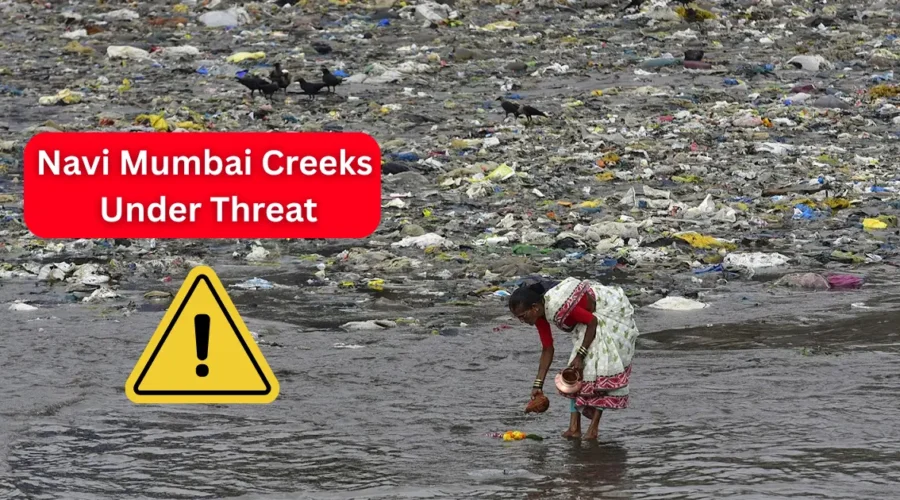
Koli Community vs MPCB Navi Mumbai’s Creek Pollution Battle Reaches Court
Published 12 Sep 2025, 2:14 PM IST
Key Points
- What: Navi Mumbai’s traditional Koli fishing community is preparing a Public Interest Litigation (PIL) in the Bombay High Court, alleging the Maharashtra Pollution Control Board (MPCB) has failed to act against industries releasing toxic waste into creeks.
- Evidence: Fishermen report “jet black” water in Diwale creek, a steep fall in fish populations, and their own lab tests contradicting MPCB findings. The Panvel Municipal Corporation (PMC) also confirmed receiving complaints and said its tests found the water highly acidic.
- Accusation: The community and environmentalists blame chemical, dye, and pharmaceutical units in Taloja MIDC and nearby areas for destroying marine life. They accuse the MPCB of negligence or collusion, pointing to a March 2025 MPCB report that claimed pollution levels were “within permissible limits.”
What it means for Navi Mumbai
The case pits a small fishing community against powerful industries and the state regulator. It raises questions about Navi Mumbai’s future, where rapid industrial growth is erasing the centuries-old life of its original residents. For the Kolis, creek pollution is not just an environmental issue but a cultural and economic disaster, wiping out their main livelihood.
The fight has now turned into a “battle of lab reports.” The MPCB claims industries are compliant, while fishermen, backed by the PMC, present scientific evidence of severe contamination. What began as complaints has become a direct clash over data, exposing failures in environmental governance. With regulators unwilling or unable to act, citizens are left with no option but the courts.
Conclusion
For years, Navi Mumbai’s Koli community has seen its creeks, once the heart of its fishing economy, become toxic drains. After endless complaints brought no results, they are now moving to the Bombay High Court with evidence in hand.
Fishermen describe Diwale creek’s water as “jet black” and say fish stocks have collapsed, destroying their income. To prove it, the community raised funds to commission independent lab tests, which confirmed dangerous levels of industrial pollution. Their case gained further support when the PMC admitted its own water tests showed high acidity.
This directly contradicts the MPCB’s March 2025 report that declared pollution “within permissible limits.” The Kolis argue that the MPCB, instead of protecting the environment, is shielding polluting units in Taloja MIDC.
At the core of the lawsuit is this clash between official and independent data. The community believes the MPCB’s inaction amounts to negligence or deliberate cover-up. With livelihoods at stake and no trust in regulators, they see the High Court as their final chance to hold polluters accountable and save Navi Mumbai’s dying creeks.
