
Rabale vs Mahape vs Pawane: Which TTC Pocket Fits Which Business?
Mahape is usually the first shortlist for IT, R&D, office-linked and client-facing businesses. Rabale usually fits serious engineering, fabrication and utility-conscious industrial occupiers better. Pawane often makes more sense for warehousing, chemical-processing, cold-chain and value-led operational users. That is the short answer. But inside TTC MIDC, the right choice finally depends on staff commute, truck movement, floor loading, power, drainage reality, and the exact building format, not just the pocket name.
A lot of people search TTC MIDC as if it is one single industrial market. It is not. Mahape, Rabale and Pawane sit inside the same broader belt, but they do not behave the same on the ground. The planning rules, building formats, access patterns, business clustering and operating comfort vary enough that choosing the wrong pocket can create daily friction even if the initial rate looks attractive.
Rabale vs Mahape vs Pawane: the short answer by business type
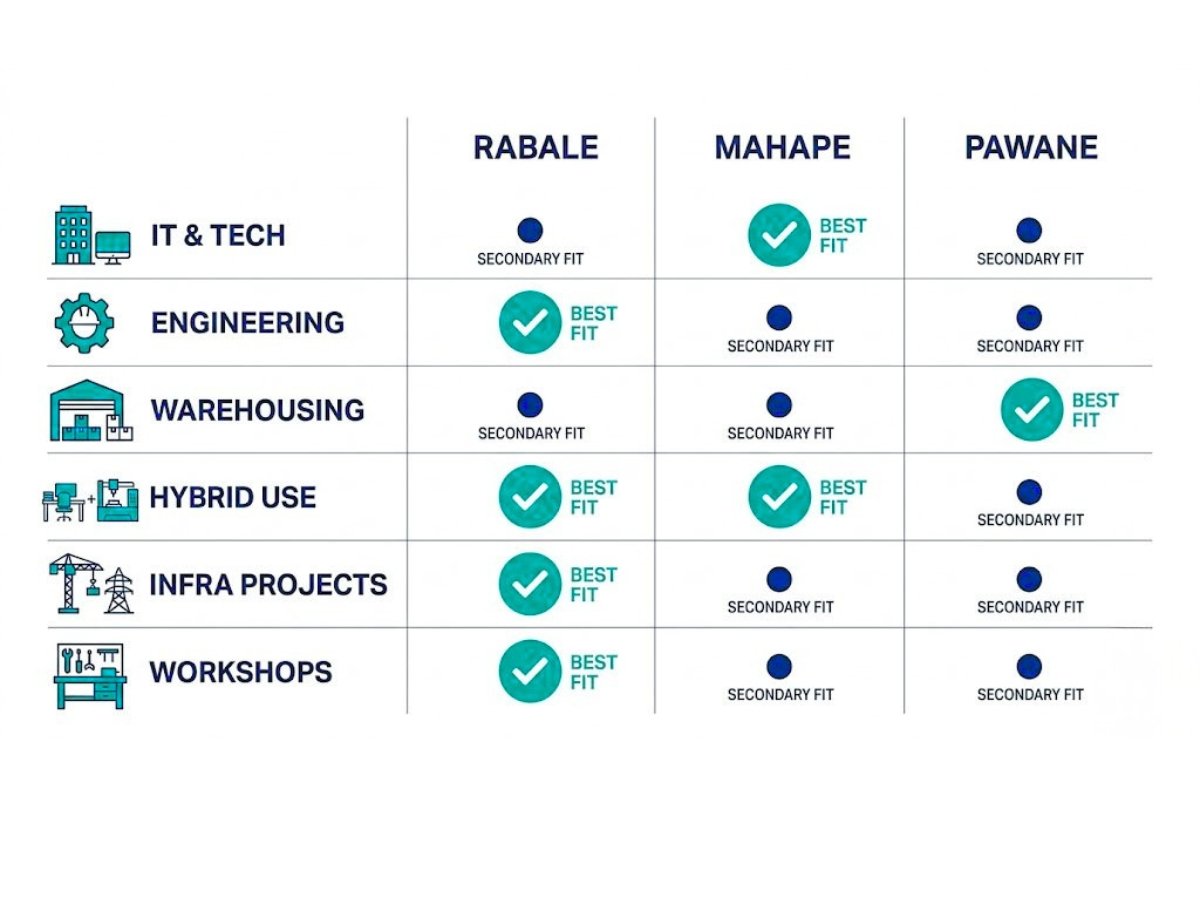
| Business type | Best first shortlist | Strong second option | Why | Main caution |
|---|---|---|---|---|
| IT, ITES, R&D, back office, client-facing hybrid businesses | Mahape | Rabale | Better office ecosystem, stronger corporate recall, easier talent-facing setup | Do not assume every Mahape unit is equally suitable for industrial discharge or truck-heavy movement |
| Heavy engineering, fabrication, machine-linked operations | Rabale | Pawane | More natural fit for function-first industrial operations | Older stock still needs slab, loading and access checks |
| Warehousing, 3PL, cold storage, movement-heavy users | Pawane | Rabale | Practical logistics orientation and flatter operational logic | Internal congestion and building format must be checked physically |
| Clean hybrid industrial + office users | Mahape | Rabale | Better for teams needing both ops space and office presentation | Premium pocket tag can make weak buildings look overpriced |
| Infra-support, utility-sensitive occupiers | Rabale | Mahape | Stronger industrial comfort and practical operating base | Verify actual sanctioned power and building readiness, not just local reputation |
| Value-led workshops and service industrial users | Pawane | Rabale | Function-first environment without paying for office halo | Emission, access and road-side conditions vary a lot building to building |
What actually changes from one TTC pocket to another before you compare rates?
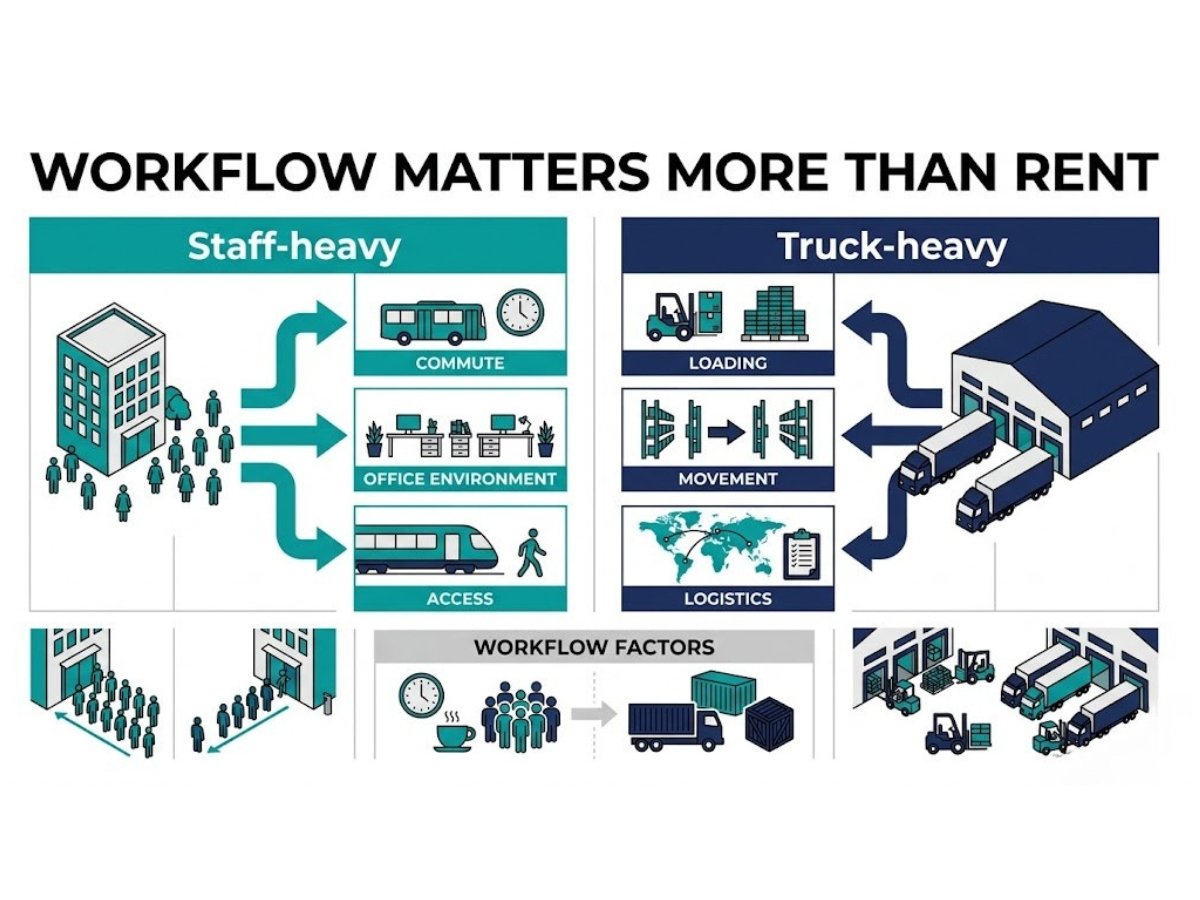
The biggest mistake in TTC is comparing only rent or capital value. Before rates, you have to compare workflow. A staff-heavy business asks different questions from a truck-heavy business. A client-facing operation cares about office arrival experience and commuter convenience. A fabrication unit cares about floor loading, clear height, movement width and utility comfort.
Staff-heavy businesses vs truck-heavy businesses
If your business depends on daily employee movement, interview traffic, vendor meetings or corporate presentation, Mahape usually starts stronger. The MBP ecosystem pulls the answer in that direction because the area is already read by the market as office-linked and tech-friendly, not just as a generic industrial patch.
If your business depends on forklifts, raw material inflow, dispatch timing, trailer maneuvering or machine placement, Rabale and Pawane usually become stronger. On ground, these users often benefit more from practical industrial stock than from a “better-looking” location.
Office-linked buildings vs functional industrial stock
The same 10,000 sq ft number means different things in different TTC pockets. In Mahape, that size may sit inside a more office-oriented or hybrid setup. In Rabale, it may sit inside a tougher industrial format. In Pawane, it may sit inside a flatter, more movement-friendly operational setup. That is why “same size, lower rent” is not automatically better value.
Power, drainage, loading and access reality
This is where weak competitor pages usually fail. Planning rules in MIDC link permissible FSI to road width, so frontage and access are not cosmetic details. They directly affect what can be developed, expanded or used efficiently. In practice, this means a cheaper plot on a narrower or functionally blocked road may be far less useful than it first appears.
Utility reality also changes by pocket. Older MPCB documentation on the Navi Mumbai industrial cluster noted that while much of TTC had CETP-linked drainage, certain elevated parts around Mahape, Digha and Airoli faced topographical disconnection from the gravity-led drainage network. This does not mean Mahape has no drainage. It means you should never assume uniform effluent comfort across every Mahape plot or road, especially for discharge-sensitive operations.
Is Mahape the better fit for IT, R&D, office-linked and client-facing businesses?
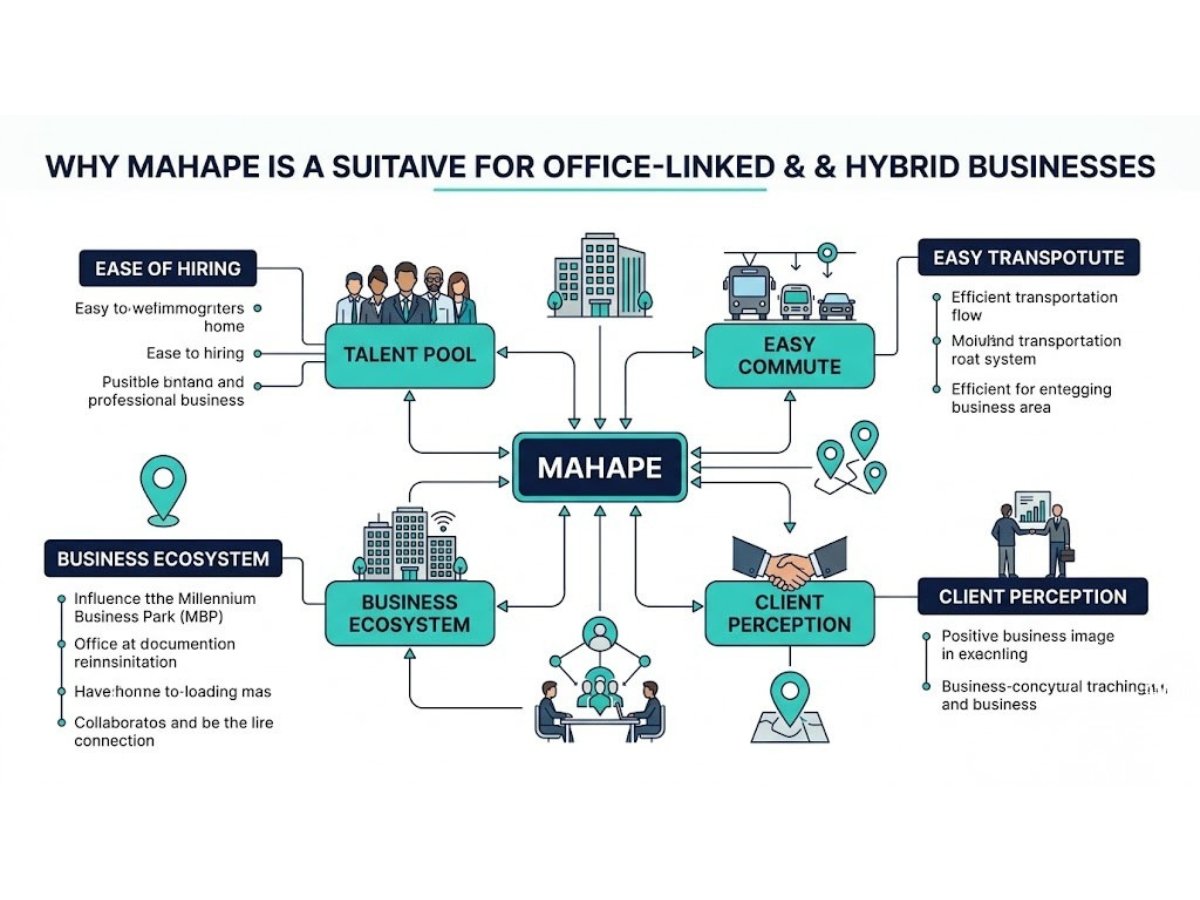
Usually, yes.
Mahape works best when your business needs an industrial-scale address but not a gritty industrial feel. This is why IT, ITES, back offices, R&D teams, data-linked occupiers and cleaner hybrid users usually shortlist Mahape first. The MBP pull matters here. It affects local recall, hiring comfort, vendor confidence and how the property is read in the market.
Where the MBP and office ecosystem change the answer
In practice, Mahape is easier to justify when your team is staff-heavy and your business has regular office movement. The Ghansoli-Kopar Khairane-Mahape side is already part of a known commuter pattern. That matters more than broker language like “prime location.” It helps with recruitment, shifts, daily arrival friction and the general comfort level of white-collar teams.
A simple example: a 250-person support office with a small hardware lab may perform better in Mahape even if Rabale gives a cheaper industrial unit. Why? Because the total business cost is not just rent. It is also daily staff movement, client impression, vendor arrival, and the ability to operate in an office-like environment without explaining why your team is working out of a hardcore industrial belt.
Why Mahape suits cleaner hybrid users better than many heavy operators
Mahape is usually stronger where the operation is clean, technical, electronic, back-end, server-linked or hybrid. It is less naturally suited to heavy water-polluting or movement-heavy users that need effortless trailer handling and process-heavy effluent comfort. The older MPCB topography note is the warning sign here. Certain parts of Mahape should be verified much more carefully if the operation is effluent-sensitive.
When Mahape becomes the wrong choice
Mahape becomes the wrong choice when the business is paying for office halo but actually needs industrial ruggedness.
That usually happens in four cases:
- heavy fabrication or structural engineering
- truck-heavy warehousing
- water-intensive processing
- occupiers assuming “near MBP” automatically means “best for every business”
If your operation needs rugged RCC stock, frequent goods movement, larger turning comfort or heavy floor loading, Rabale or Pawane often make more operational sense.
Is Rabale the strongest all-round industrial pocket in this comparison?
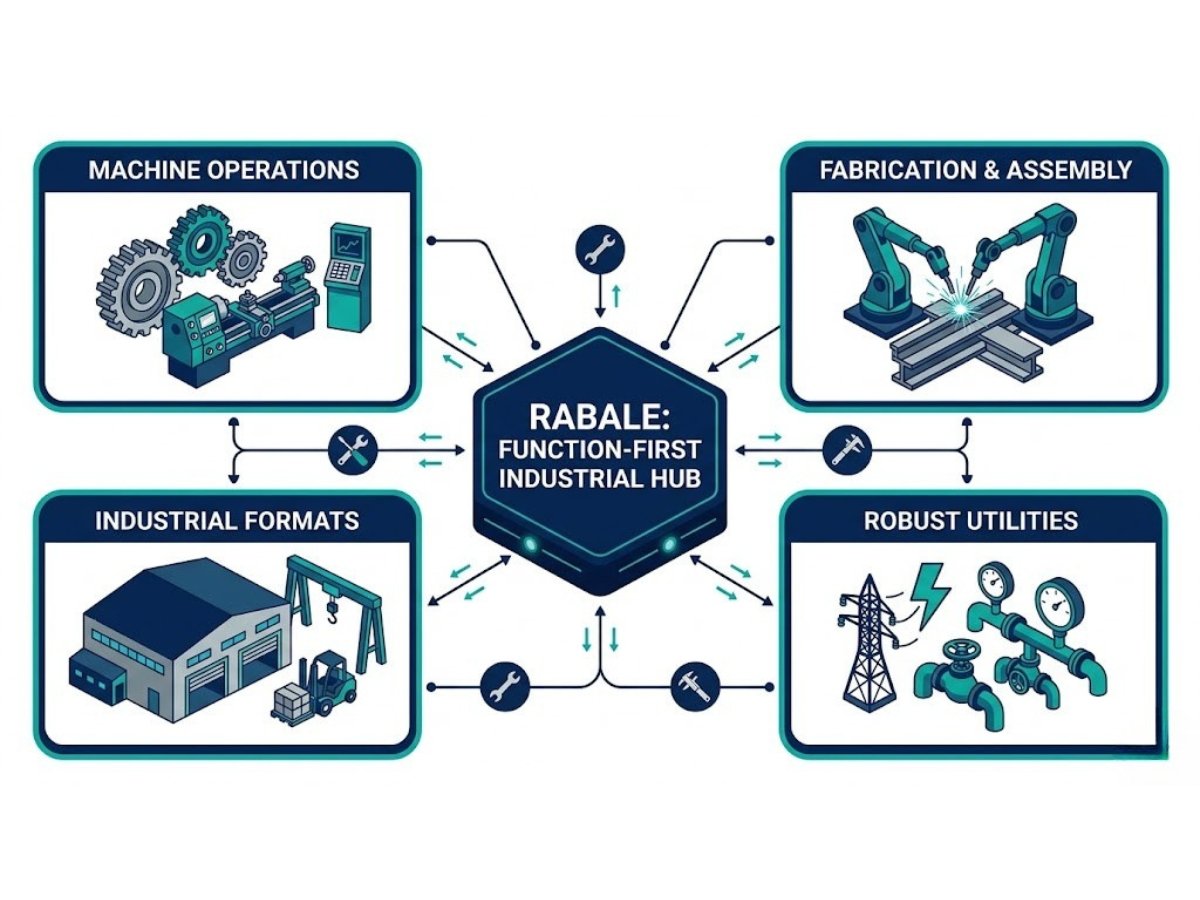
For many serious industrial occupiers, yes.
Rabale feels like the workhorse pocket in this comparison. It is usually the safer answer for engineering, machine-linked processes, fabrication-led operations and occupiers who care more about usable industrial infrastructure than facade polish. It also carries a stronger function-first industrial identity than Mahape.
Why Rabale often works for engineering, infra-heavy and utility-conscious occupiers
Rabale suits businesses that want a serious industrial base without drifting too far into a purely logistics-led environment. It tends to work better for occupiers who need:
- more practical industrial building formats
- stronger heavy-use comfort
- easier justification for machine-linked operations
- less dependence on office ecosystem prestige
A steel fabrication user, machine-component player, utility contractor or infra-support company will often feel more naturally placed in Rabale than in Mahape.
Why Rabale can also attract industrial-tech and support users
Rabale is not only for old-school manufacturing. Some industrial-tech, infra-support, testing, equipment-servicing and technical backend users may also prefer it because it gives industrial usability without forcing them into a more chemically intense or movement-saturated environment.
What can still go wrong if you overpay just for the location tag
Not every Rabale building is automatically crane-ready, high-load or future-proof. This is where freshers and even experienced buyers make mistakes. They hear “Rabale industrial” and stop checking the unit.
An older gala may look big but still fail on:
- slab strength
- upper-floor loading comfort
- trailer maneuverability
- ramp design
- parking and loading conflict
So yes, Rabale is often the strongest all-round industrial answer here. But only when the specific building actually matches the workflow.
When does Pawane make more sense than Mahape or Rabale?
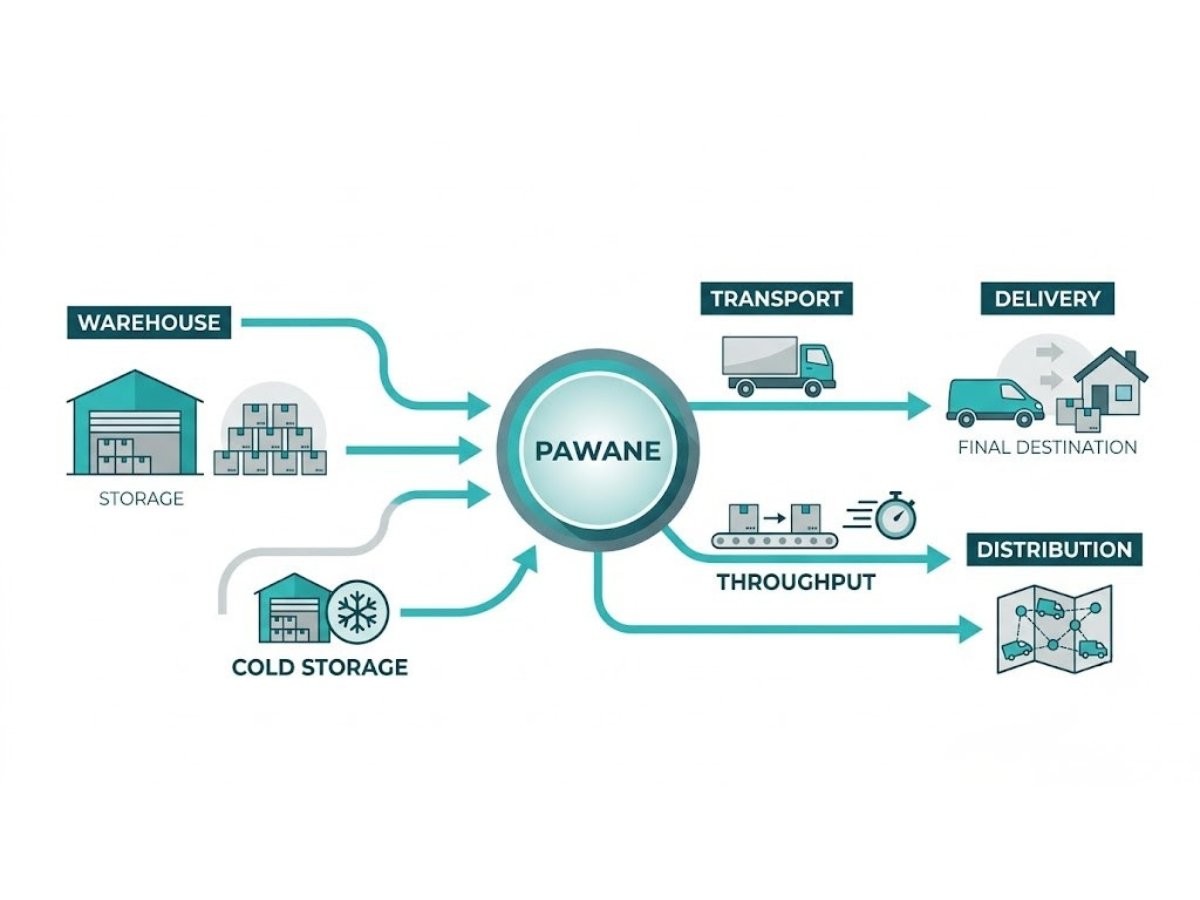
Pawane makes more sense when the business is brutally practical.
If the real priority is movement, storage, throughput, workshop logic, colder chain movement, processing or value-led occupancy, Pawane often beats Mahape and can even beat Rabale. It is less about image and more about getting work done.
Better fit for fabrication, warehousing, service workshops and value-led users
Pawane is often a better fit for:
- warehousing and 3PL users
- cold-chain and food-linked users
- chemical or processing-linked occupiers
- service workshops
- value-led light industrial users
This is especially true when the business prefers flatter, more utilitarian stock over office-oriented or more vertical formats.
Why some occupiers prefer Pawane’s practicality over polish
Pawane is usually chosen by people who do not want to overpay for a cleaner business address when their operation does not benefit from it. A distribution business moving goods through Turbhe-side routes and highway-linked corridors may simply have no reason to pay Mahape-style premiums.
That said, Pawane is not easy mode. It carries its own friction. Movement-heavy roads, local bottlenecks and stricter scrutiny for some red/orange-category operations can make building-level verification essential.
Who should be careful in Pawane
Pawane may be the wrong first choice for:
- businesses heavily dependent on white-collar hiring comfort
- client-facing companies
- occupiers who need office prestige
- businesses assuming every large shed is automatically compliance-ready
Pawane is usually strongest when the business respects the pocket for what it is: a function-first operating environment.
Which pocket fits your exact business model best?
| Use case | Mahape | Rabale | Pawane | Best fit verdict |
|---|---|---|---|---|
| Manufacturing and engineering | Possible for lighter, cleaner and hybrid formats | Strongest natural fit | Good for some value-led and workshop formats | Rabale first |
| Warehousing, 3PL and movement-heavy users | Usually not first choice | Good second option | Usually strongest fit | Pawane first |
| IT, back office, R&D and hybrid office-industrial users | Usually strongest fit | Good second option where office is secondary | Usually not first choice | Mahape first |
| Data-center support, infra-support, technical backend | Strong for power-linked and office-linked logic | Strong where industrial support matters | Case-specific | Mahape or Rabale depending on building and utility fit |
| Small owner-user | Works if business needs office image | Good where industrial function is core | Good where budget and practicality matter | Depends on workflow, not brand tag |
| Institutional or long-horizon industrial occupier | Only if use is clean and team-heavy | Strong | Strong in logistics/process cases | Rabale or Pawane usually win |
The simplest rule is this: if your business mainly moves people, Mahape rises. If it mainly moves machines, Rabale rises. If it mainly moves goods, Pawane rises.
Which pocket usually works better for buying and which for leasing?
Leasing usually makes more sense when the workflow may change in three to five years. Buying usually makes more sense when the operation is going to lock money into the building itself.
When buying makes more sense
Buying, or more accurately taking an assignment of MIDC leasehold rights, becomes more logical when the business will invest heavily into the premises through cranes, reinforced flooring, cold-chain fit-outs, process equipment, effluent systems or highly customized industrial layouts. This is why serious engineering users in Rabale and some processing or logistics users in Pawane often prefer longer-term control.
When leasing is smarter
Leasing is usually smarter in Mahape for IT, office-linked and headcount-variable businesses. These occupiers benefit from flexibility more than from asset lock-in. If a back office grows, shrinks or shifts its team structure, it can move. That flexibility has real value.
Why the same business may lease in one pocket and buy in another
A business may lease in Mahape but buy in Rabale. That is not a contradiction. It just reflects workflow.
A clean technical company may lease office-like space in Mahape for staff operations and still own an industrial asset elsewhere if its production side needs long-term hard infrastructure.
One legal point matters here. MIDC property is not a normal freehold apartment-style transaction. Transfer, assignment, subletting and use are governed by MIDC rules and permissions.
What should you verify before finalising a unit in Rabale, Mahape or Pawane?
This is the part most people skip. It is also the part that saves the most money.
Non-negotiable due diligence checklist
- Verify the exact MIDC status of the plot or unit. Do not treat it like standard freehold property.
- Check whether the transfer is an MIDC leasehold assignment and what permissions are required.
- Ask whether the plot has any historical ULC exposure. Transfer charges on older exempted plots can materially change deal economics.
- Do not assume GST applies the way brokers casually state it. Recent court relief on leasehold-right assignment does not remove stamp duty, registration or MIDC-side charges.
- Check sanctioned use and whether your exact business activity fits the building and the node.
- Check floor loading, clear height and whether the slab suits racking, forklifts, machines or server infrastructure.
- Check road width on paper and on the ground. Legal width and usable width are not always the same.
- For Mahape, verify plot-specific drainage and effluent comfort if your process is water- or discharge-sensitive.
- For Pawane and heavy-processing locations, check MPCB compliance expectations, air-emission controls and stack or scrubber requirements.
- Check staff commute at your real shift time, not at noon during a broker visit.
Common broker shortcuts and wrong assumptions inside TTC
“All TTC pockets are the same”
They are not. That single sentence causes a lot of bad decisions.
Mahape, Rabale and Pawane may all sit inside the TTC industrial belt, but they do not behave the same operationally. Their real difference shows up in who travels there, what kind of building stock dominates, what kind of operations feel natural there, and how much compliance or movement friction the business will face.
“Closer to MBP means better for every business”
This is only true for businesses that actually benefit from the MBP halo. A software support office may benefit. A truck-heavy warehouse usually does not. A fabrication unit definitely should not choose its location on prestige alone.
“Cheaper rent means better value”
No. Lower rent can become expensive if:
- the slab cannot take your load
- trailers cannot enter properly
- drainage or emissions become a compliance issue
- staff hate the commute
- the layout forces higher operating cost every month
A weak unit in the right pocket is still a weak unit. And a cheaper unit in the wrong pocket can become a costly operational mistake.
Conclusion
If your business mainly runs on people, office rhythm, hiring comfort and client movement, start with Mahape.
If your business runs on machines, structural work, engineering utility and industrial seriousness, start with Rabale.
If your business runs on goods flow, storage, workshop practicality, chemical or processing logic and value-led occupancy, start with Pawane.
That is the real answer.
Not which pocket sounds bigger. Not which broker says “best location.” Not which listing looks cheapest.
Inside TTC MIDC, workflow beats location label.
FAQs
Frequently Asked Questions