
Vashi Property Rates and Market Trend: Complete Guide
Vashi remains one of Navi Mumbai’s costliest and most stable residential markets, but it is no longer a “cheap upside” story. In 2026, asking-price datasets across major portals place Vashi broadly in the upper tier of Navi Mumbai, with locality averages varying sharply by sector, building age, flat type, redevelopment potential, and whether the property is closer to established residential pockets, commercial belts, or premium society stock.
Right at the start, that is the key reality: Vashi is not mainly about speculative entry anymore. It is about centrality, mature infrastructure, strong daily convenience, and relatively dependable end-user demand. Buyers usually come here for livability, status, connectivity, and liquidity. Investors look at it more for wealth preservation, selective appreciation, and rental stability than for explosive low-base growth.
Quick Summary: Vashi Property Market at a Glance
| Factor | Practical Reading for 2026 |
|---|---|
| Market position | Mature, high-demand, established Navi Mumbai node |
| Broad asking-price band | Rates vary widely by portal and stock type, but Vashi generally sits in the premium tier of Navi Mumbai |
| Reported locality average | Around ₹20,477/sq ft on Housing, ₹27.1K/sq ft on Square Yards, and ₹31,450/sq ft on 99acres for Vashi-level averages |
| Buyer profile | End-users, upgrade buyers, business families, professionals, some investors |
| Best known strengths | Railway access, Palm Beach connectivity, social infrastructure, commercial ecosystem |
| Main caution | Old building stock, redevelopment uncertainty in some pockets, huge sector-to-sector variation |
| Good for | Buyers prioritising convenience, central location, and resale confidence |
| Less suitable for | Buyers chasing budget entry or aggressive appreciation from a low base |
Why Vashi still matters in Navi Mumbai’s property map
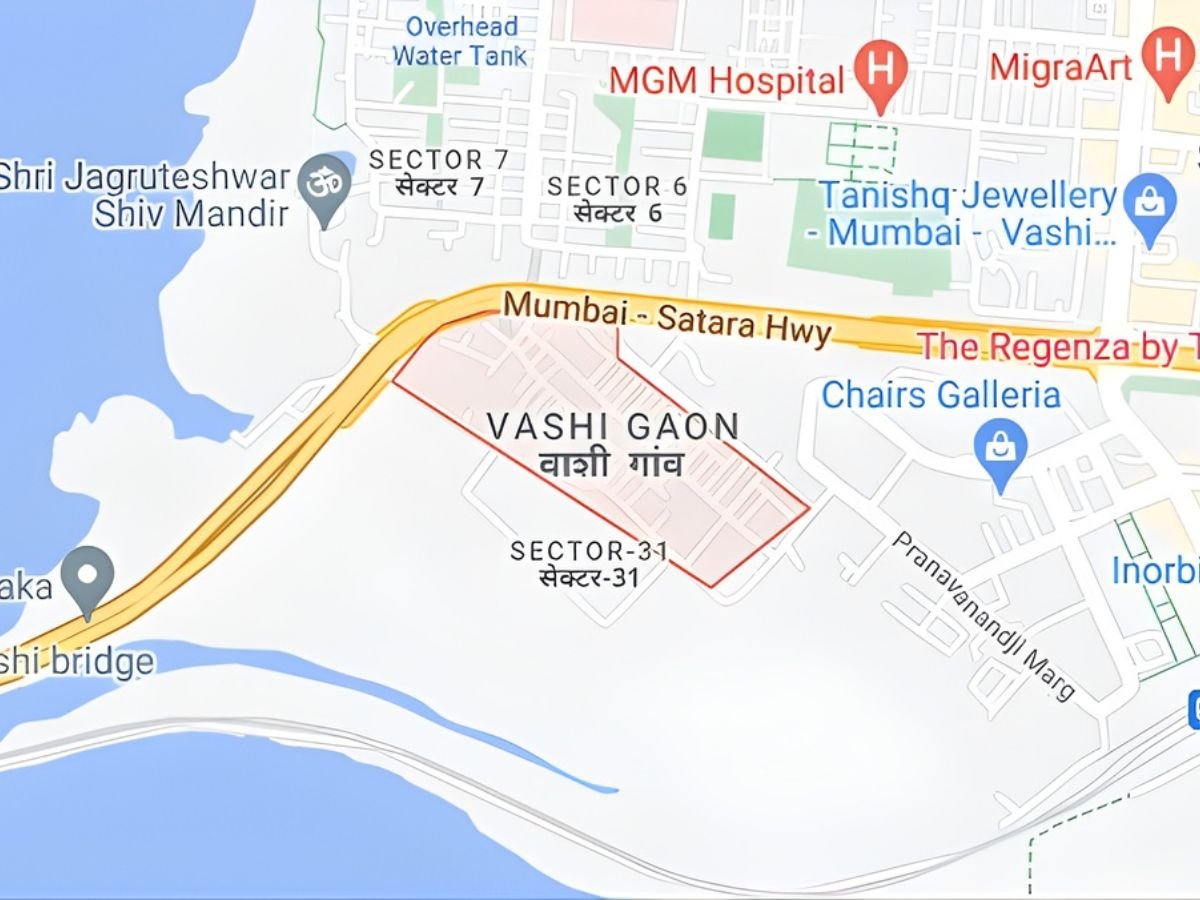
Vashi matters because it is one of the few Navi Mumbai nodes where the city actually feels fully formed. That sounds simple, but in property terms it changes everything. In many developing nodes, buyers are still betting on future roads, future metros, future retail depth, or future demand. In Vashi, much of the everyday ecosystem already exists.
This is why Vashi continues to attract a very different kind of buyer from places like Taloja, Pushpak Nagar, or outer Panvel-side growth corridors. The purchase decision here is often less about “what if” and more about “how well does this location work right now?”
Its value comes from a combination of factors:
- strong suburban rail access
- proximity to commercial and office activity
- established schools, hospitals, retail, and markets
- better social familiarity for families
- stronger resale confidence than many emerging nodes
That maturity is one major reason why Vashi sits above the Navi Mumbai average on several listing platforms. Square Yards places Vashi at about ₹27.1K/sq ft versus a lower Navi Mumbai average, while Housing and 99acres also show Vashi in a clearly higher price bracket than many other Navi Mumbai localities.
What Vashi property rates look like in 2026
The first thing buyers should understand is that “Vashi rate” is not one number. It is a spread.
Across major portals, the reported average price for Vashi differs materially:
- 99acres shows an average flat rate of about ₹31,450 per sq ft
- Housing shows an average of about ₹20,477 per sq ft, with a very wide range in listings
- Square Yards places the average around ₹27.1K per sq ft for Vashi overall
This difference does not automatically mean one platform is wrong. It usually reflects differences in listing mix, premium stock concentration, tower age, configuration, and whether the data is asking-price heavy or closer to transaction-style tendencies.
A practical way to read these numbers
For real decision-making, it is better to treat Vashi as a layered market:
| Vashi segment | Broad practical reading |
|---|---|
| Older buildings / value pockets | Lower entry, but condition, lift, parking, society quality, and redevelopment potential matter a lot |
| Standard end-user societies | Strong demand from families and working professionals; pricing usually reflects daily convenience |
| Better-located sectors / premium stock | Commands a sharper premium due to location, road access, and perception |
| Larger homes / prime society assets | Can jump far above area averages and distort headline rate numbers |
That is why you should not compare Vashi only by “average per sq ft.” A well-maintained, better-positioned apartment in a desirable Vashi sector can price very differently from an old flat in a weaker or less updated pocket, even if both carry the same locality name.
Sector-level variation in Vashi is real, not cosmetic
One of the biggest mistakes buyers make is assuming all Vashi sectors behave similarly. They do not.
Public portal snapshots already show meaningful differences. Square Yards lists examples such as around ₹37,350/sq ft for Vashi Sector 9, around ₹26,000/sq ft for Sector 17, around ₹25,850/sq ft for Sector 14, and a much lower figure for Sector 18 in its overview dataset. 99acres and Housing also show notable differences in sector-level pages, including much lower average figures in some micro-pockets such as Sector 1, Sector 26, and Sector 28 pages, which reinforces the point that Vashi must be read sector by sector, not just node by node.
Why sectors behave differently
The price gap usually comes from a mix of:
- building age and maintenance quality
- size of plots and society layout
- road width and internal access
- proximity to station, markets, schools, and business areas
- redevelopment possibility
- stock scarcity in better pockets
- premium attached to larger, better-planned homes
In a place like Vashi, these factors are not minor. They are often the whole game.
What is driving Vashi’s market trend now
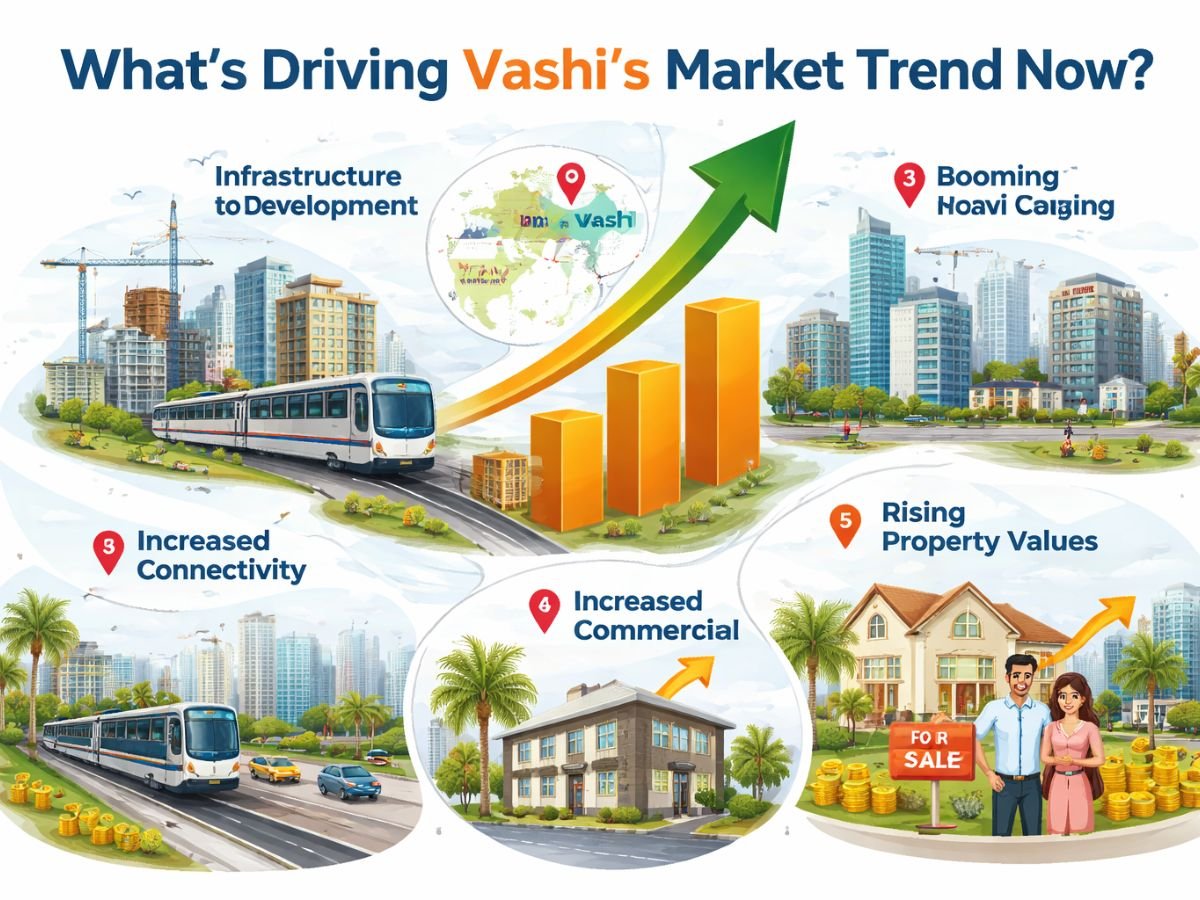
Vashi’s market trend is upward, but not in the same way as early-stage growth nodes.
This is a mature market. So the drivers are less about speculative launch momentum and more about holding power, central location value, and demand from buyers who want a ready urban ecosystem. At the wider market level, Mumbai-region housing has remained firm, with Knight Frank-reported citywide average residential prices rising in 2025 and Reuters’ 2026 poll pointing to continued home-price growth in India’s major markets over the next few years.
For Vashi specifically, the trend is supported by four practical forces.
1. Mature connectivity still commands a premium
Vashi benefits from being one of Navi Mumbai’s best-known, best-connected nodes. Railway connectivity, road access, and business movement all support value retention. Buyers who work across Mumbai, Thane, and Navi Mumbai still see Vashi as an efficient base.
2. End-user demand is deeper than in speculative nodes
In many outer nodes, investor activity can create bursts and pauses. Vashi has a deeper end-user layer. That matters because genuine residential demand usually makes a market more stable.
3. Limited premium-ready stock supports pricing
A mature node does not always have unlimited fresh supply in the right format. Good societies, larger flats, better-maintained buildings, and premium-positioned units can stay expensive because buyers do not see many clean substitutes nearby.
4. Commercial ecosystem strengthens housing demand
Vashi is not only residential. It also sits inside a broader commercial and business ecosystem. That does not mean every property here will surge, but it does support long-term relevance. Wider market reporting also indicates strong office and business demand in Mumbai-region markets, which generally helps established mixed-use nodes remain attractive.
Is Vashi still a good place to buy, or has it become too expensive?
The honest answer is yes, Vashi can still make sense, but only for the right buyer profile.
If you are buying for self-use, value in Vashi is not just the carpet area you purchase. It is also the daily life friction you avoid. Better commute options, social infrastructure, established retail, and stronger resale confidence all matter. That is why some buyers willingly pay more here than in cheaper but less settled nodes.
But if your entire thesis is “buy now because prices will double quickly,” Vashi is not the easiest fit. Much of the premium is already built into current pricing.
Vashi works best for:
- end-users who want a mature location
- families upgrading from smaller or less central nodes
- buyers who value stability over high-risk upside
- investors seeking stronger liquidity and established demand
Vashi is less ideal for:
- tight-budget buyers needing maximum area at minimum cost
- pure appreciation hunters looking for early-stage entry
- buyers unwilling to deal with old-building due diligence
- investors expecting low-maintenance, low-cost acquisition
The biggest reality check: old stock versus premium stock
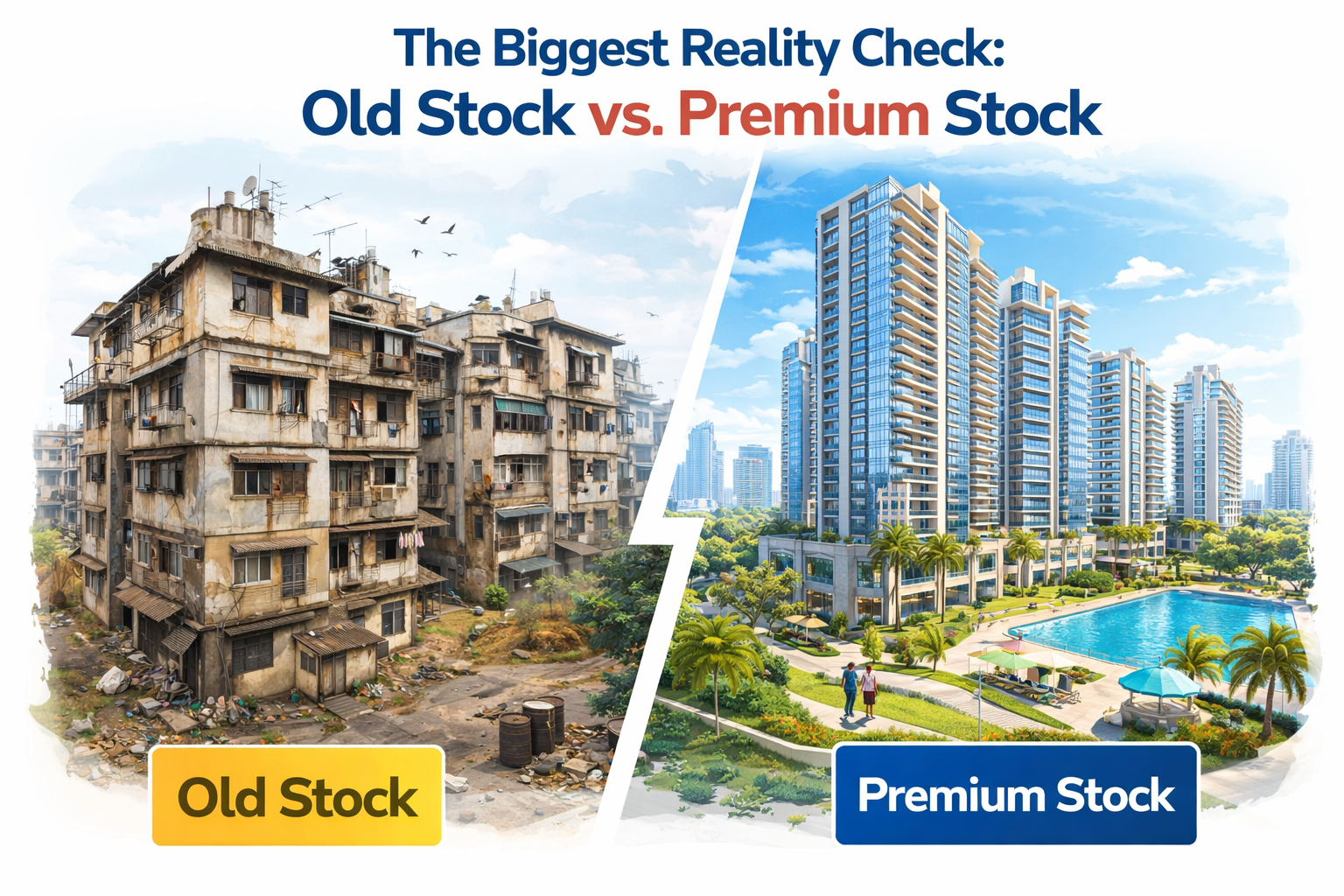
This is where many Vashi articles stay shallow. The real market trend is not only “rates are rising.” The real question is: which Vashi stock is being rewarded, and which stock is being discounted?
In practice, buyers usually pay up for:
- better-maintained societies
- cleaner title and smoother documentation
- better parking and building services
- more efficient layouts
- stronger sector reputation
- properties with better redevelopment possibility or lower functional obsolescence
Older stock can still sell well in Vashi, but the discount is often there for a reason. Sometimes it is only cosmetic. Sometimes it is structural, society-related, or legal-process-related. In Navi Mumbai, that distinction matters a lot.
Vashi versus newer Navi Mumbai nodes
Vashi is usually not the place where you get the cheapest entry. It is the place where you buy into a finished urban habit.
| Parameter | Vashi | Emerging nodes like Taloja / outer Panvel-side belts |
|---|---|---|
| Entry price | Higher | Lower |
| Infrastructure maturity | Strong | Uneven, still developing in many pockets |
| End-user comfort | High | Varies widely |
| Speculative upside potential | Moderate, selective | Often higher, but riskier |
| Daily convenience | Strong | Depends on micro-location |
| Resale confidence | Generally better | More project- and pocket-dependent |
| Buyer profile | Settled families, upgraders, stability-seekers | Budget buyers, early investors, long-hold bet makers |
That is why Vashi should usually be compared not only by square foot rate, but by certainty and usability.
What homebuyers should check before trusting a Vashi rate quote
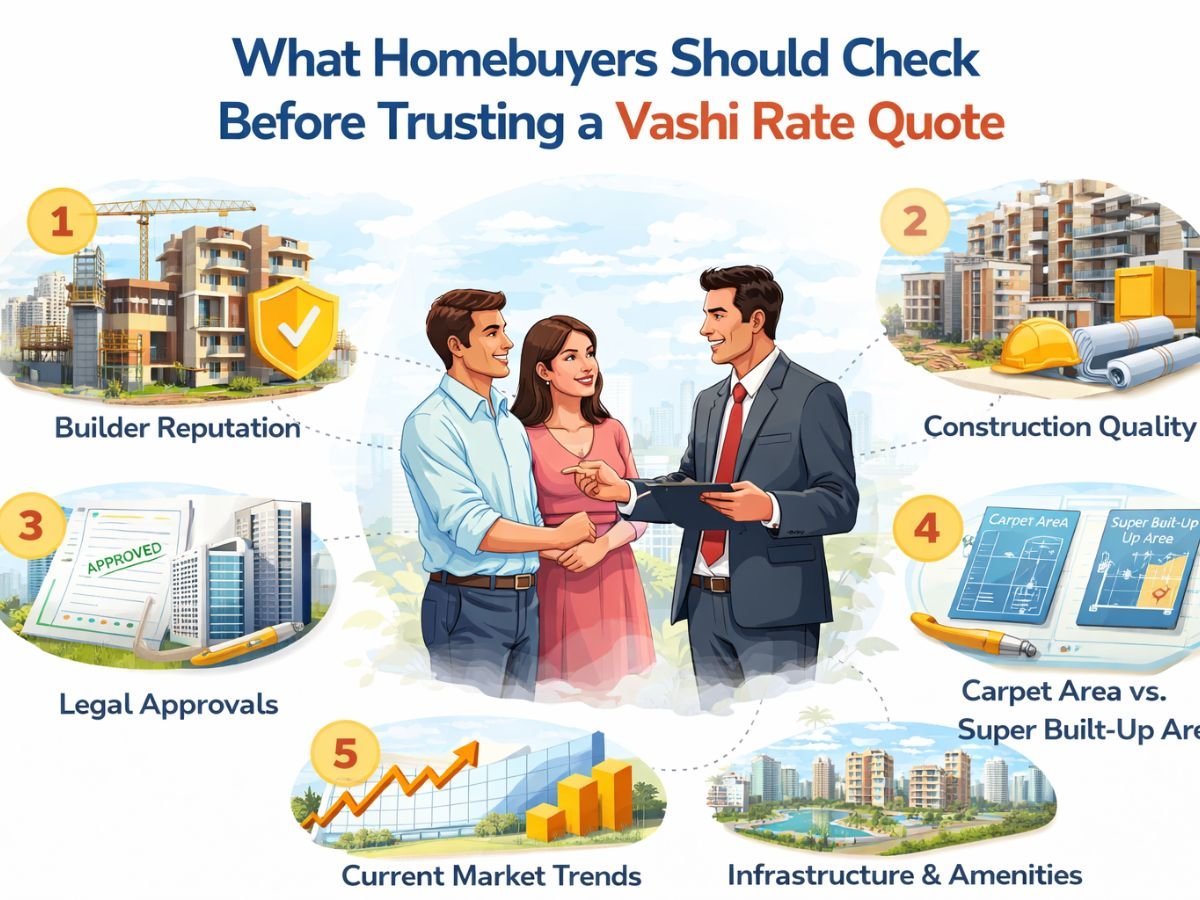
Do not buy Vashi property based only on a headline “market rate” shared by a broker, owner, or listing.
Use this quick checklist:
Vashi buyer checklist
- Compare the rate with at least two or three live portal references
- Check whether the quoted area is carpet, built-up, or super built-up
- Verify the exact sector, not just “Vashi”
- Ask building age and major renovation status
- Check parking availability and lift condition
- Review society maintenance burden
- Verify title, share certificate or society records where relevant
- Check whether the building has redevelopment buzz but no real progress
- Compare actual usable condition, not only location prestige
- Price the property against similar stock in the same micro-pocket, not the whole node
This matters even more in Vashi because the difference between an average flat and a very desirable flat can be much wider than it first appears.
A realistic Vashi buying scenario

Take two buyers with the same budget.
One buys an older, larger apartment in a weaker-maintained Vashi pocket because the size looks attractive. The other buys a slightly smaller but better-kept flat in a stronger sector with cleaner society functioning and better daily access.
On paper, the first buyer may feel they “got more square feet.” In real life, the second buyer may get better resale, better tenant response, less friction, and more peace of mind. In Vashi, this happens often. That is why quality-adjusted buying matters more than locality-label buying.
Is Vashi more of a self-use market or an investor market?
Today, Vashi leans more convincingly toward self-use and conservative investment than aggressive speculation.
That does not mean investors should ignore it. It means the investment logic is different:
- wealth parking in a mature node
- lower uncertainty than fringe growth corridors
- selective rental and resale potential
- defensive value because the location is already proven
Housing portal data also shows a broad range of supply and price points in Vashi, suggesting that demand is not restricted to one narrow segment alone. At the same time, the wider housing market backdrop remains supportive of continued pricing strength rather than a sudden collapse.
Final verdict
Vashi property rates are high because Vashi has already crossed the uncertainty stage that many Navi Mumbai locations are still navigating. It offers what buyers usually trust most: familiarity, connectivity, social infrastructure, and a finished urban ecosystem. That is why the market stays relevant.
But this is not a locality where you should buy lazily. Vashi rewards careful selection. Sector, building age, society quality, layout efficiency, and documentation can change value dramatically. So the right conclusion is not “Vashi is expensive” or “Vashi is always worth it.” The better conclusion is this: Vashi is worth serious consideration in 2026 for buyers who want a mature Navi Mumbai address, but the correct property selection matters far more here than the headline locality name alone.