
Who Should Buy or Lease in Panvel Industrial Belt? Practical 2026 Decision Guide
If you want the direct answer, here it is: leasing usually makes more sense in the Panvel Industrial Belt for logistics users, fast-scaling businesses, distributors, and companies that need speed, flexibility, and lower capital lock-in. Buying usually makes more sense for long-horizon owner-users, heavy manufacturers, and businesses that need permanent control over layout, power, compliance, and future expansion. In Panvel, the right choice depends more on operational fit than on property excitement.
Panvel is not one simple industrial market anymore. It is now part logistics gateway, part manufacturing support zone, part airport-led growth corridor, and part land-risk story. That is why generic advice like “buy if you can afford it” or “lease if you want flexibility” is not enough here.
The real question is this: what kind of business are you running, how certain are you about location, and how much friction can you absorb? In Panvel Industrial Belt, that friction can come from CIDCO transfer costs, leasehold title complications, heavy-vehicle movement restrictions, zoning reality, and the difference between an operational warehouse and a piece of land that still needs years of work.
Who Should Buy or Lease in Panvel Industrial Belt? The Short Answer First
Lease vs Buy: Industrial Decision by Business Profile (2026)
| Profile | Lease Usually Makes More Sense | Buy Usually Makes More Sense |
|---|---|---|
| Fast-scaling logistics / 3PL | Yes | Rarely |
| E-commerce distribution / quick replenishment users | Yes | Rarely |
| Small and mid-sized distributors (testing Panvel) | Yes | Rarely |
| Heavy manufacturers needing customized setup | Sometimes | Yes |
| Chemical / pharma / process-led operators | Sometimes | Yes |
| Owner-users certain about 10–20 year utility | Sometimes | Yes |
| Speculative investors expecting easy upside | Usually no | Usually no |
| Businesses with weak capital buffer | Yes (but carefully) | No |
| Businesses needing deep machine foundations / heavy customization | No | Yes |
Which Types of Users Usually Do Better With Leasing in Panvel Industrial Belt?
Leasing is increasingly the smarter route in Panvel for businesses that treat property as an operating tool, not as a trophy asset. This is especially true now because the region is becoming more logistics-driven, more infrastructure-led, and more expensive to get wrong.
Fast-scaling logistics and warehousing users
This is the clearest leasing fit.
A 3PL operator, e-commerce fulfillment business, regional distributor, or EXIM-linked warehousing user usually benefits more from leasing a ready facility than from buying land and building from scratch. The reason is practical. These businesses care about launch speed, clear height, dock infrastructure, fire compliance, and truck access much more than they care about owning the soil below the building.
That logic becomes stronger in Panvel because Grade A warehousing in pockets like Palaspe Phata and the wider highway-linked corridor already offers what modern logistics needs: better clear heights, stronger flooring, better dock planning, and faster occupancy. If the market is moving toward automation-ready warehousing and air-cargo-linked movement because of the NMIA ecosystem, many operators are better off leasing the right box now instead of spending years trying to create one.
Businesses still testing location or size requirement
This is where many buyers make mistakes.
A business may say, “We know we need Panvel,” but that does not mean it knows exactly where in Panvel it should be. There is a huge difference between needing highway-led logistics access, needing a local city-serving distribution base, and needing a compliance-heavy industrial plot inside a proper industrial ecosystem.
If your throughput, customer cluster, truck movement pattern, or future space requirement is still evolving, leasing is safer. It gives you room to learn the micro-market before locking crores into the wrong location.
Companies that want lower upfront capital lock-in
Buying industrial property in this belt is not just about the quoted asset value. It can also involve stamp duty, registration, possible GST in some cases, title review, financing friction, and in leasehold cases, significant transfer-related complications. In the Panvel-side market, this is a serious issue, not a footnote.
So if your business needs working capital for inventory, fleet, machinery, manpower, or client acquisition, leasing may protect the actual business better than buying. A company with strained liquidity should usually not become “land rich and cash poor” just because the belt feels promising.
Which Types of Users Usually Do Better With Buying in Panvel Industrial Belt?
Buying still has a strong place in Panvel Industrial Belt. But it is not for everyone. It usually fits businesses that are operationally stable, geographically confident, and structurally dependent on a fixed industrial base.
Long-horizon owner-users
If your business already knows that this belt works for it and expects to stay in the same operational geography for 10 to 20 years, buying starts to make sense. Over a long enough period, repeated lease escalations can become a major cost burden.
That matters more for businesses whose location logic is stable. A company serving a fixed route, fixed supplier ecosystem, or fixed manufacturing chain can often justify ownership better than a business still experimenting with its network.
Businesses needing layout control and future customization
This is a major buying trigger.
If the operation needs deep customization, such as machine foundations, heavy electrical infrastructure, specialized piping, structural changes, hazardous handling measures, or future plant expansion, leasing can become a poor fit very quickly. Even if a leased space looks cheaper at the start, the economics can break once you factor in retrofit cost, landlord limitations, renewal uncertainty, and the risk of relocation after heavy fit-out.
That is why serious owner-user manufacturers and process-led businesses often need ownership or at least a much stronger long-term land control model.
Operators who are sure the location works for years
Buying is strongest when the user is not just sure about Panvel as a broad region, but sure about the exact kind of Panvel-side pocket it needs.
For example, a process-led manufacturer requiring proper industrial zoning and long-term compliance certainty is a very different buyer from a regional warehouse user chasing cargo speed. The first may be justified in buying within a suitable industrial ecosystem. The second may be better off leasing institutional warehousing instead.
When Leasing Is Smarter Even If You Can Afford to Buy
This is one of the most important truths in this market.
Being able to buy does not automatically mean you should buy. In a corridor changing this fast, flexibility has its own value. Panvel is not static. Airport influence, freight flows, highway logic, municipal traffic friction, and land development patterns are still reshaping how different pockets perform.
So even a well-funded company may be smarter to lease if:
- it is still testing how close it needs to JNPT, NMIA, or specific highway movement
- its contract pipeline is still uncertain
- its throughput can rise or fall sharply in the next two to three years
- it is unsure whether a smaller city-edge location or a larger highway-led location will perform better
- it does not want to get trapped by title-transfer friction or administrative cost shocks in the resale market
This is where many businesses confuse financial capacity with strategic clarity. They are not the same thing.
A company can easily afford land, but still be operationally too early to own. In Panvel, that mistake becomes costly because the market is fragmented and the wrong pocket can remain under-usable even if the asset itself looks attractive on paper.
> Caution: Cheap land is not always usable land. In Panvel-side peripheral zones, low headline pricing can hide long timelines, NA conversion friction, town-planning uncertainty, road-access issues, or simple operational mismatch.
When Buying Makes Sense Even If Leasing Looks Easier
Now the other side.
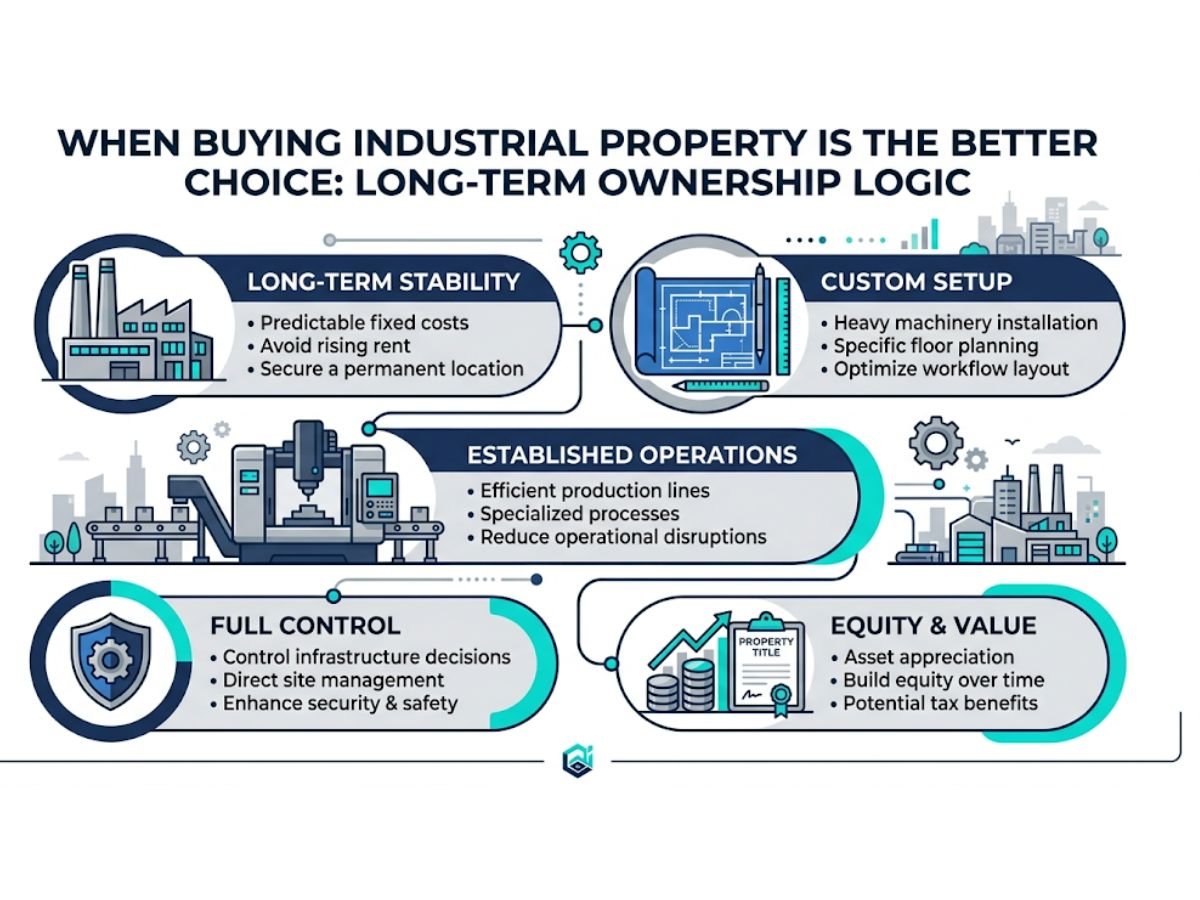
Sometimes leasing looks convenient, but buying is still the more sensible route. This usually happens when the business is not just renting space, but building a long-term operating base that cannot be easily shifted.
A manufacturer with heavy capex in machinery, a cold-chain operator needing permanent infrastructure, or a compliance-sensitive industrial user may suffer more from lease uncertainty than from acquisition cost. A landlord-led rent escalation every few years can become a serious operational threat if the facility is already deeply integrated with the business.
Buying also starts to make sense when the business wants protection against long-term rent inflation. In many commercial and warehouse leases, escalations are a standard reality. Over 15 to 20 years, that cumulative burden can become far heavier than it first appears.
So yes, leasing may look easier at the beginning. But if your operation is stable, highly customized, and not realistically movable, buying may actually be the lower-risk decision over time.
Panvel Industrial Belt Is Not One Uniform Market, So Who Should Buy or Lease Changes by Pocket
This is where weak articles usually fail. They talk about “Panvel” as if one answer fits the entire belt. It does not.
Different parts of the Panvel Industrial Belt serve different business types. That changes the buy-versus-lease answer.
Access-led pockets for smaller and faster local movement
Old Panvel and city-edge pockets can work for small local distributors, low-intensity storage users, and businesses serving nearby markets. But these are not ideal heavy industrial zones. Density, civic friction, and truck movement limits matter a lot here.
For many small users, leasing a modest shed in an access-led local pocket may work. Buying in such areas for long-term industrial use can be risky if the location faces growing urban pressure and trucking becomes harder over time.
Larger logistics-oriented belts where scale matters more
Highway-linked locations such as Palaspe Phata and surrounding logistics corridors are far better suited to modern warehousing and regional freight movement. These pockets support the lease-first model more naturally because they align with large-format logistics use, quicker truck deployment, and institutional warehouse development.
This is where a 3PL, e-commerce operator, or air-cargo-linked distribution business is more likely to benefit from leasing a ready Grade A or well-planned warehouse rather than buying land and trying to create the same outcome slowly.
Areas that look cheap but create operational friction
This is where readers need to be careful.
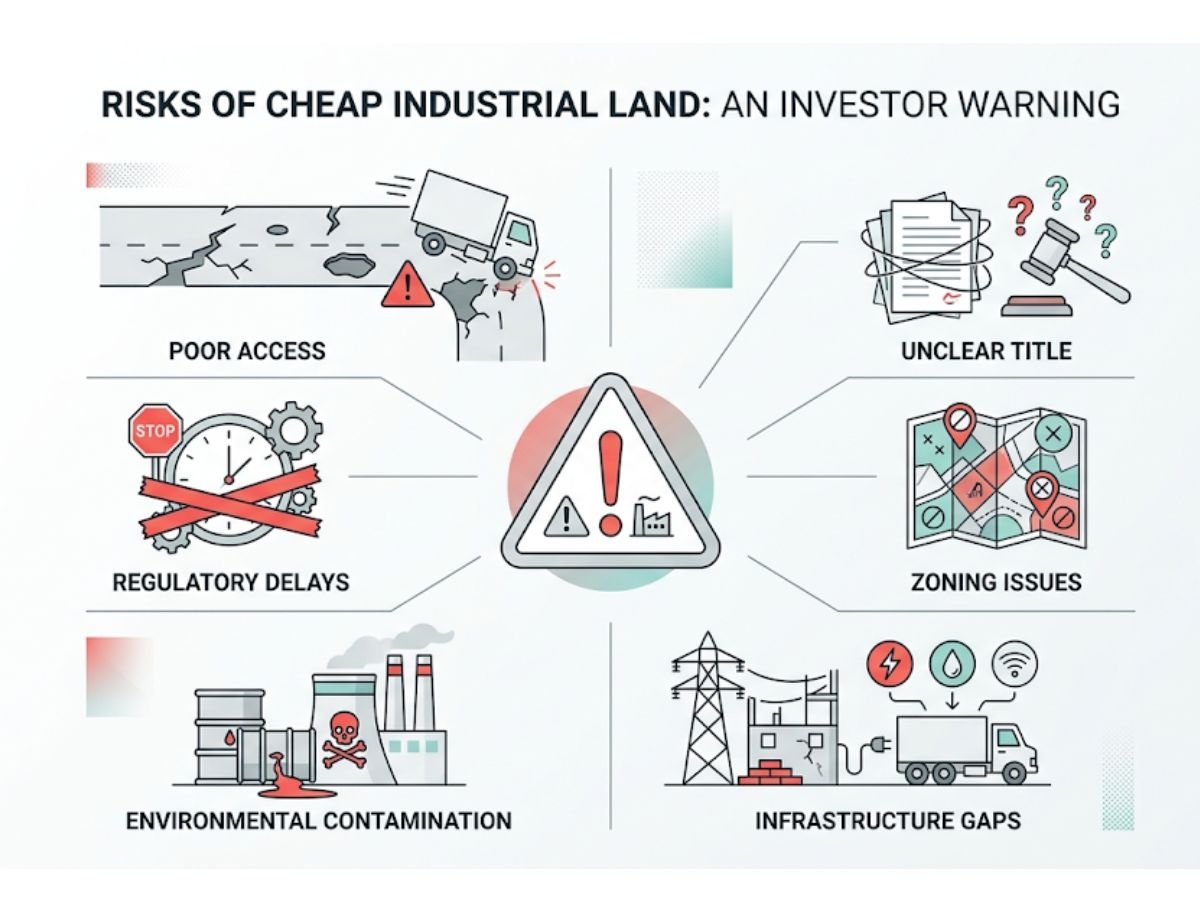
Not every lower-priced plot or shed is a real opportunity. Some assets are cheaper because the access is weak, the utility readiness is poor, the title structure is complicated, the zoning is wrong, or the location simply does not support efficient truck movement.
That is why Panvel Industrial Belt should always be read pocket by pocket, not by generic rate talk.
What Should You Buy or Lease in Panvel: Land, Shed, or Ready Warehouse?

Industrial Asset Types: What Fits Which Business (2026)
| Asset Type | Best Fit | Main Strength | Main Risk |
|---|---|---|---|
| Raw land | Long-horizon owner-user, large developer, land-banker | Maximum future control | Slow approvals, conversion friction, delayed utilities, planning risk |
| PEB shed / basic industrial shed | Mid-sized manufacturer, storage user, defined owner-use | Faster deployment than raw land | Quality variation, compliance gaps, layout limitations |
| Ready Grade A warehouse | 3PL, e-commerce, distribution, regional storage | Fast start, better operational standards | Ongoing rent burden, lease dependency |
What Capital, Risk, and Flexibility Questions Should You Answer Before Choosing Buy or Lease?
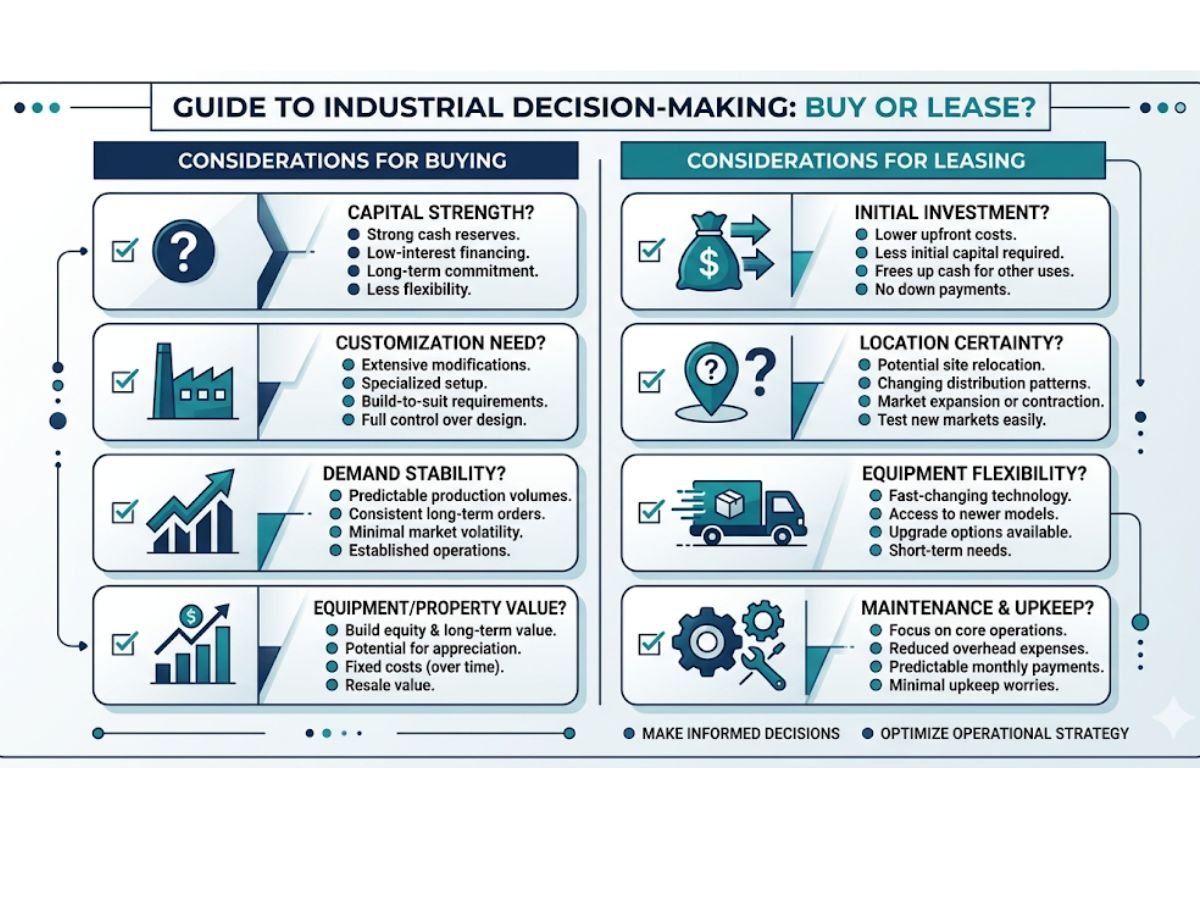
Before deciding anything, ask the following questions honestly:
- Is your business cash-rich enough to absorb acquisition cost without hurting operations?
- Are you sure about the exact pocket, not just the broad Panvel name?
- Do you need heavy customization or just a functional, compliant operating box?
- Can your business tolerate lease escalation over the next 10 to 15 years?
- Can it tolerate the capital lock-in and exit friction of ownership?
- Is your demand stable enough to justify a permanent base?
- Are your trucks dependent on smooth highway access and curfew avoidance?
- Are you buying because the operation needs it, or because ownership feels emotionally safer?
This matters because many wrong decisions happen for the wrong reason. Some people buy because they fear rent. Others lease because they fear paperwork. Neither is enough. The decision should come from business structure, not from instinct alone.
What Legal and Ground Checks Matter Before You Commit in Panvel Industrial Belt?
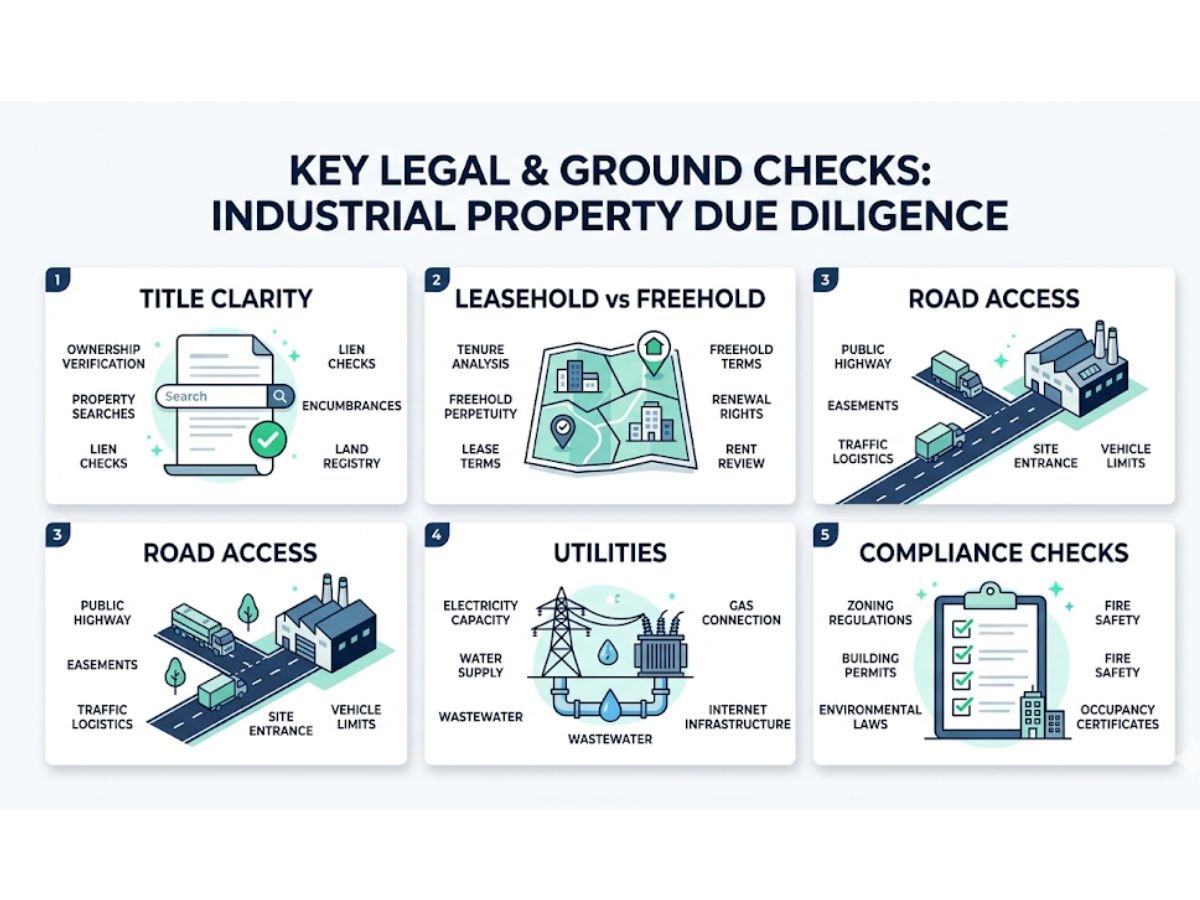
In Navi Mumbai and Panvel-side industrial property, legal clarity is not a side issue. It is part of the deal itself.
Title, tenure, and transfer clarity
A lot of industrial and commercial land in this broader region does not behave like simple freehold property. Leasehold structures, authority conditions, transfer permissions, and premium payments can materially affect the true cost of acquisition.
That is why buyers must not rely only on broker language or seller comfort. They need to verify whether the asset is leasehold, whether any transfer approval is required, whether the title chain is clean, and what current administrative charges may apply.
This is especially important after the 2025 CIDCO transfer fee changes, which significantly increased financial friction in the secondary market. That one issue alone can change the viability of a resale purchase.
Also, be careful with the freehold confusion. The 2025 CIDCO leasehold-to-freehold conversion scheme was framed for residential categories, not as a blanket industrial rescue route. Industrial and commercial buyers should not assume that transfer-fee pain disappears just because they saw a headline about freehold conversion.
Road approach, truck turning, loading, and drainage
An industrial asset is only as useful as its real movement conditions.
Before buying or leasing, check the approach road width, turning radius, loading practicality, drainage, truck waiting space, and whether daily heavy movement is actually workable. A shed that looks fine in a brochure can become frustrating if trucks struggle to enter, reverse, load, or exit.
This is even more important now because freight movement in the wider Mumbai and Thane region is affected by timing restrictions and heavy-vehicle controls. So highway-linked practicality matters far more than a simple map pin.
Utility and operational readiness
Check actual power readiness, water availability, fire setup, floor strength, and operational fit. For manufacturing, this becomes even more important. For logistics, dock planning and floor performance matter more than cosmetic appearance.
If the asset is part of an under-construction park or structured project, verify whether MahaRERA registration applies and whether the promoter details, approvals, and layouts align with what is being promised. If you are estimating registration cost or valuation exposure, use IGR Maharashtra Ready Reckoner rates as a reference anchor, but do not confuse them with final market truth.
Who Should Avoid Buying in Panvel Industrial Belt Right Now?
Some readers should stay away from buying for now. That advice is not negative. It is practical.
You should usually avoid buying if:
- your business demand is unstable
- your capital buffer is weak
- you are still unclear about the right micro-location
- you are buying mainly because of the airport growth story
- you do not fully understand title and transfer cost implications
- you are a speculative buyer without real operational logic
- you are looking at peripheral cheap land without clear use permission or infrastructure readiness
This is not the easiest market for casual industrial buying. Panvel’s growth story is real, but so is its execution complexity. If you buy a wrong asset in a wrong pocket with wrong assumptions, the asset can become illiquid, underused, or operationally disappointing.
Who Should Avoid Leasing in Panvel Industrial Belt Right Now?
Leasing is not automatically safe either.
You should be careful about leasing if your business requires permanent heavy customization, long-term environmental or process compliance, or deep structural changes that a landlord-controlled setup may not support well. You should also be cautious if your margins are so thin that normal periodic rent escalations can hurt business sustainability.
The wrong lease can also be a trap if you take a low-grade shed only because it looks cheaper. A ₹5 per sq ft saving can disappear quickly if the facility slows truck turnaround, cannot support racking properly, fails compliance checks, or creates daily movement inefficiency.
So the real question is not whether leasing is cheaper today. The real question is whether the leased space supports your operation properly tomorrow.
A Simple Buy-vs-Lease Decision Framework for Panvel Industrial Users
If you are still confused, use this simple decision framework.
You are probably a better fit for leasing if:
- you need to start fast
- you want flexibility in size or location
- your business model is still evolving
- you want to protect working capital
- you are a 3PL, distributor, e-commerce, or cargo-linked operator
- you prefer ready infrastructure over long development timelines
You are probably a better fit for buying if:
- you are sure about long-term geographic utility
- your operation needs permanent customization
- you are a serious owner-user, not a speculative buyer
- your business can absorb acquisition friction without stress
- your operation depends on stable, long-duration industrial control
- you are working in a zone-sensitive manufacturing or process category
You should pause both buying and leasing if:
- you have not yet identified the right pocket
- you do not understand truck movement reality
- you are relying only on marketing language
- you have not checked title, transfer, or compliance conditions
- you are choosing by price before checking usability
conclusion
Who should buy or lease in Panvel Industrial Belt? Lease if you need speed, flexibility, and operational efficiency without locking up too much capital. Buy if you are a serious long-term owner-user who needs control, customization, and location certainty.
But the most important point is this: do not decide based on “Panvel growth” alone. Decide based on business type, pocket fit, truck usability, compliance clarity, and capital strength. In this belt, the right property is not the one that sounds promising. It is the one that actually works for your operation.
FAQs
Frequently Asked Questions