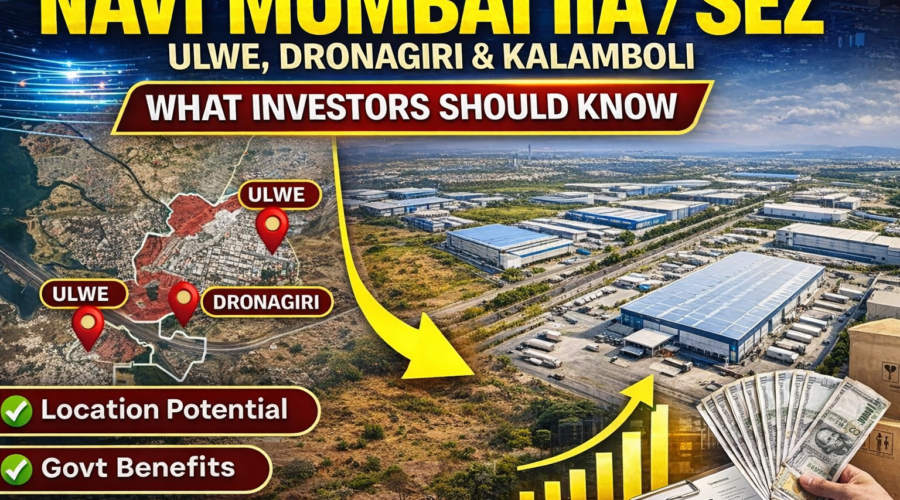
Navi Mumbai IIA / SEZ in Ulwe, Dronagiri and Kalamboli: What Industrial Investors Should Know
Ulwe, Dronagiri, and Kalamboli are not one uniform industrial story, and that is the first thing an investor should understand. In practical terms, Dronagiri is the stronger port-and-logistics logic bet, Kalamboli is usually the more execution-friendly industrial location, and Ulwe needs the hardest filtering because airport-led excitement can easily get mistaken for usable industrial value. If you are buying here, do not buy the old SEZ label first. Buy present-day land-use clarity, authority clarity, access logic, and real occupier demand.
What this article must settle immediately about Ulwe, Dronagiri and Kalamboli
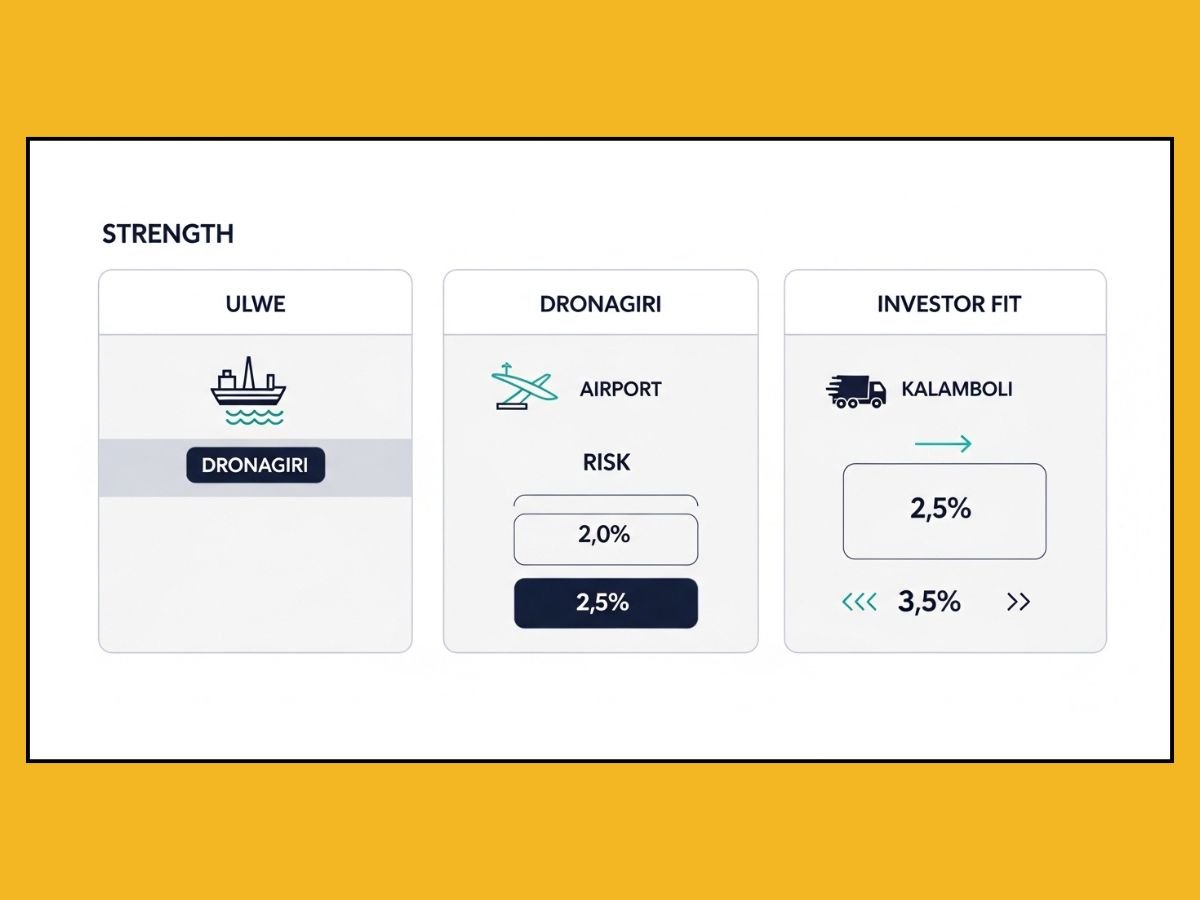
| Node | Core Strength | The Common Misconception | Practical Verdict |
|---|---|---|---|
| Dronagiri | Port-linked, logistics-led industrial logic | Assuming every plot gets a premium due to JNPA story | Needs Legal/Access Checks |
| Ulwe | Airport-led narrative & future optionality | Buying "Near Airport" without checking industrial usability | Highest Filtering Required |
| Kalamboli | Warehousing & transport-linked use | Ignoring micro-location because the node feels "familiar" | Easier to Read/Execute |
Is this still an SEZ story, an IIA story, or both and why that difference matters to investors
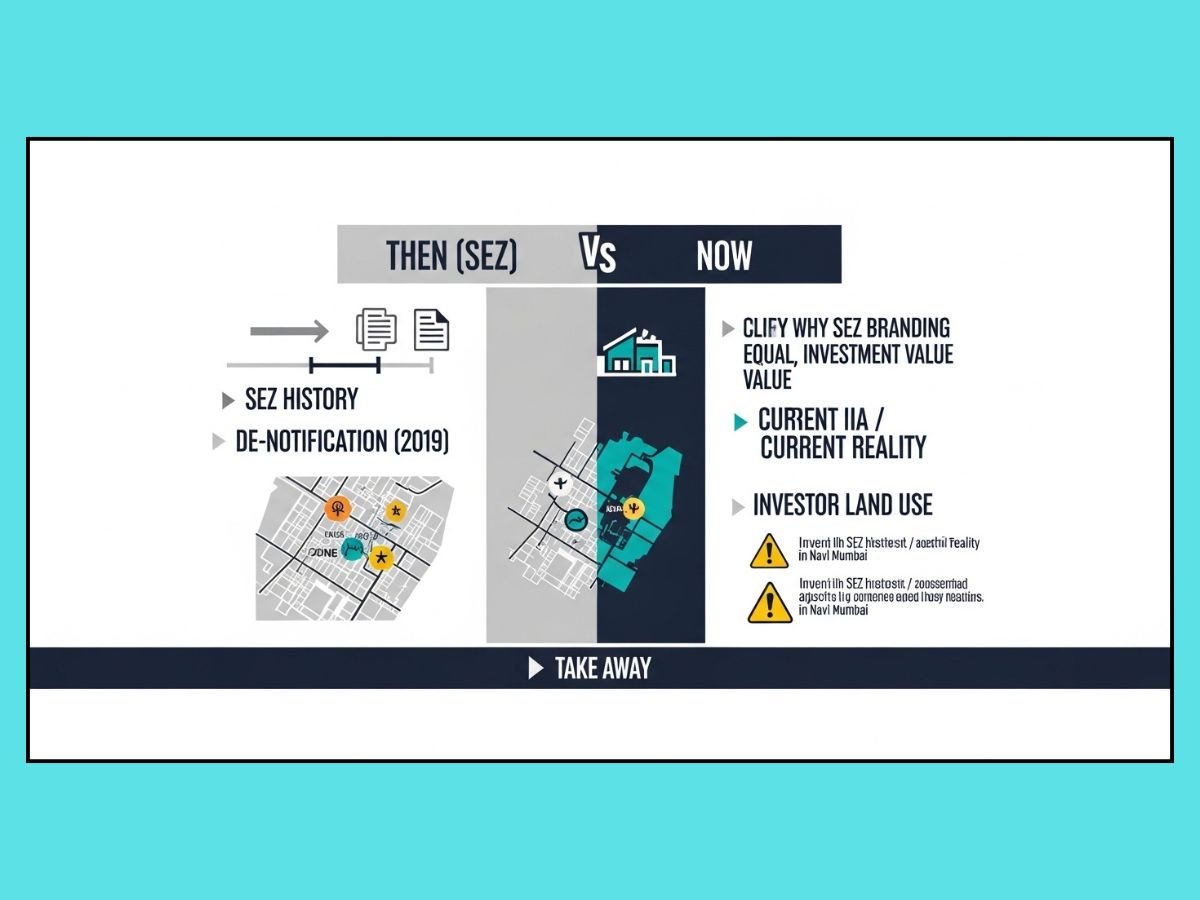
For most buyers, this is the most confusing part of the entire topic.
The simple answer is that you should not assume the old Navi Mumbai SEZ language still defines the current plot you are being shown. In fact, the central government’s SEZ records show full de-notification in 2019 for Navi Mumbai SEZ areas in Dronagiri, Ulwe, and Kalamboli. That changes how loosely brokers can use the old SEZ tag in today’s deals.
Why investors must separate old SEZ branding from current plot-level reality
A land story can remain alive in the market long after the legal or planning position has changed. That is exactly why industrial buyers get trapped here.
Someone may pitch a plot by saying it falls in an “SEZ belt” or “IIA zone,” but that phrase by itself does not settle what your exact product is today. You still have to check the current nodal-plan position, present land-use status, transfer conditions, and whether the product is raw land, built stock, gala inventory, or project-format stock.
What “industrial promise” does not automatically mean in a real deal
It does not automatically mean:
- the plot is usable for your intended industrial activity
- the transfer is straightforward
- truck movement will suit your operation
- utility readiness is good enough
- occupier demand exists at the rate being quoted
- the old SEZ story still gives your plot any special market advantage
This is why industrial investors in Navi Mumbai should treat “SEZ” and “IIA” as starting points for due diligence, not as proof of quality.
Ulwe, Dronagiri and Kalamboli are not the same industrial bet
Dronagiri: where port-linked and logistics-led logic becomes stronger
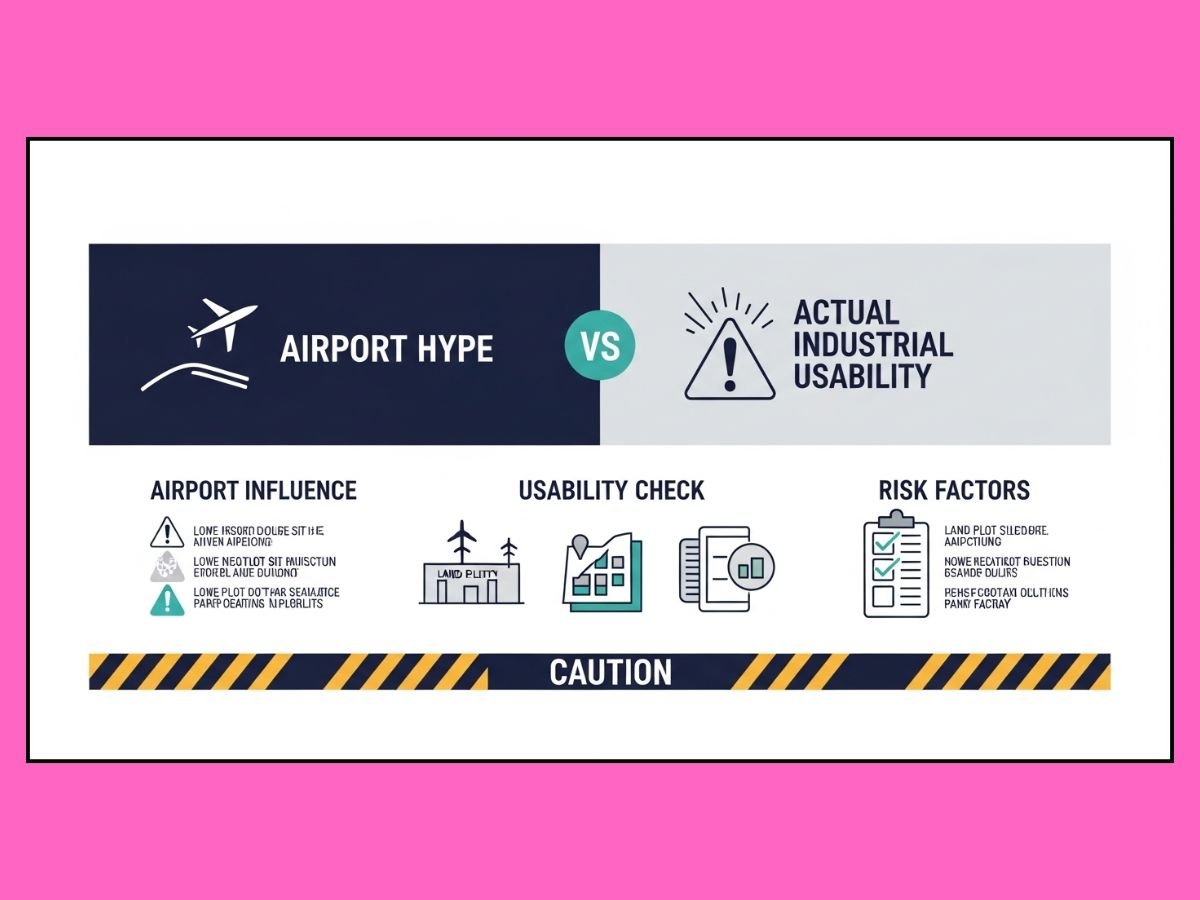
If your lens is port proximity, export-import movement, logistics depth, and long-hold industrial relevance, Dronagiri is the most serious of the three. JNPA remains India’s leading container port among major ports, handling around half of major-port containerised cargo and connecting to over 200 ports globally. That matters because real industrial demand near a port is different from narrative demand. It comes from movement, storage, manufacturing support, and trade ecosystem depth.
There is another reason Dronagiri stands apart. JNPA’s own SEZ is a live, separate port-led industrial platform. So while the old Navi Mumbai SEZ story in Dronagiri was de-notified, the wider port-industrial logic did not disappear. That is an important distinction. It means Dronagiri still has strong industrial relevance, but not for the lazy reason many sales pitches use.
The caution is equally important. Port relevance is not the same as universal plot relevance. Internal access, land designation, transfer chain, distance from practical truck movement corridors, and exact product type still decide investability.
Ulwe: where infrastructure narrative is strong but plot-level filtering becomes critical
Ulwe is the easiest node to oversell and the hardest node to underwrite blindly.
The reason is obvious. Navi Mumbai International Airport has already commenced commercial operations, so the airport story is no longer just future talk. That immediately gives Ulwe stronger visibility, stronger speculation, and stronger optionality language in the market. But airport adjacency alone does not convert land into good industrial land.
In Ulwe, the investor has to ask a more disciplined question: is this really an industrial-use play, or is it mainly an airport-proximity story being stretched into industrial language? That distinction is critical. Many parcels can benefit from broader regional uplift without becoming great industrial assets for warehousing, logistics, fabrication, or occupier-led leasing.
So Ulwe is not a weak node. But it is a node where the gap between narrative value and usable industrial value can become very wide.
Kalamboli: where execution practicality can matter more than hype
Kalamboli is often easier to understand because it is less dependent on one giant future narrative. It has long been read through a practical transport-and-industrial lens, with better market familiarity among smaller and mid-sized industrial players.
That does not make every Kalamboli asset good. But it does mean the node is often easier to evaluate on real industrial questions: access, movement, warehouse fit, support ecosystem, occupier comfort, and resale depth for ordinary industrial formats. For many smaller investors, that reduces confusion.
In other words, Kalamboli may not always sound as dramatic as airport or port storytelling, but practical industrial investing often works better in places where the deal can be read clearly.
Which industrial investor profile fits which node best
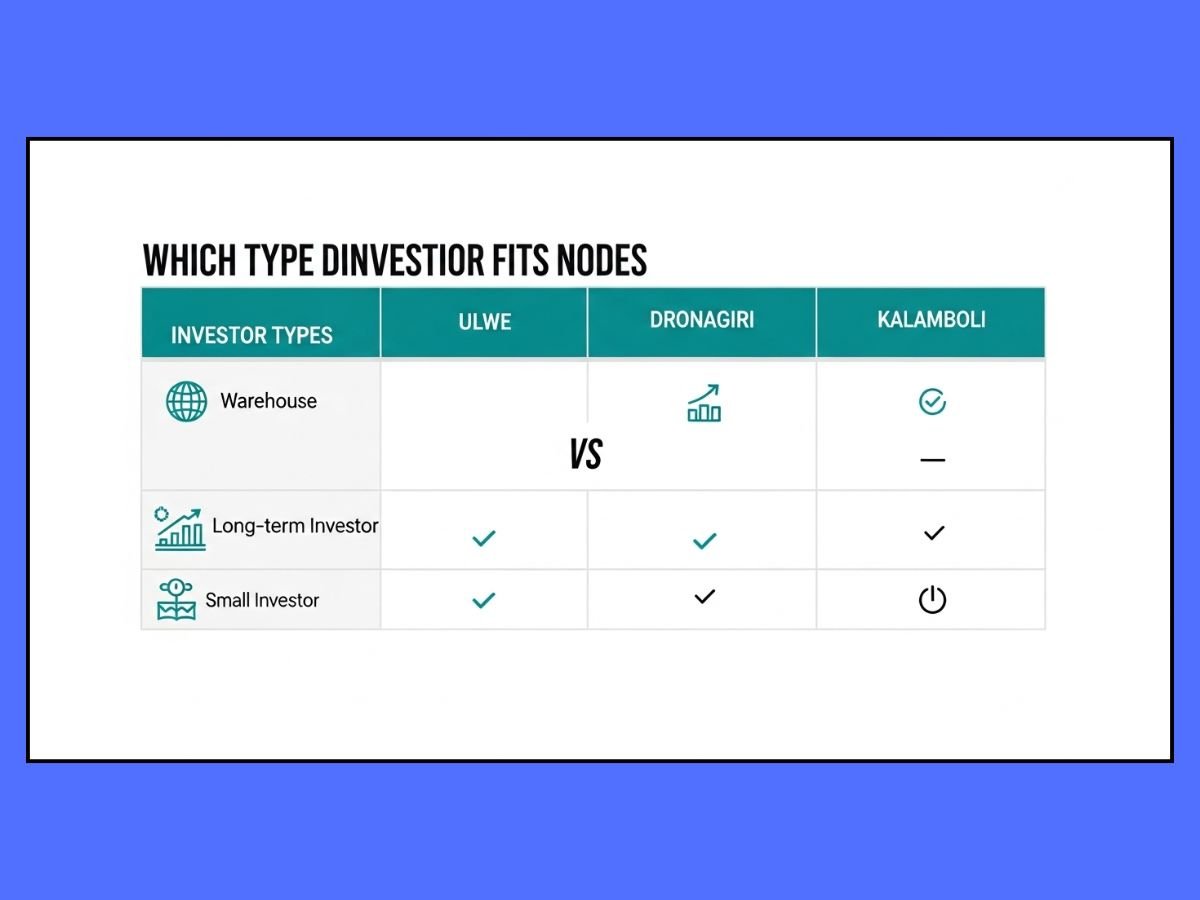
| Your Profile | Dronagiri | Ulwe | Kalamboli |
|---|---|---|---|
| Long-hold Appreciation | Good for port-led regional growth thesis. | Possible, but needs high patience & filtering. | Better for understandable industrial depth. |
| Warehouse User-Investor | Strong if port logic genuinely matters. | Selective; only for clear industrial utility. | Often the most straightforward fit. |
| Export/Port Occupier | Best Fit | Secondary to Dronagiri for this use. | Practical, but less direct port logic. |
| First-time Small Investor | Can be complex (Lease/Title). | Highest confusion risk (Hype-led). | Safer Start |
What should you verify before trusting any “IIA / SEZ” sales pitch
This is where most industrial investors either save money or lose it.
Exact land-use and nodal-plan position
CIDCO publishes nodal plans for Ulwe, Dronagiri, and Kalamboli. That means no buyer should rely only on verbal zoning language. The exact plot position on the relevant plan matters. A broad node-level story is never enough.
Leasehold title, transfer conditions and authority chain
This belt is not freehold-thinking territory. Authority chain matters a lot. CIDCO transfer rules, premiums, NOCs, and documentation can materially affect the economics and speed of a transaction. Even before valuation, the buyer should ask: who is the lessor, what is being transferred, what permissions are needed, and what obligations continue after transfer?
Sanctioned use, access, truck movement, utilities and operational viability
Industrial value fails very quickly when operations fail. Check whether the road width, turning radius, local approach, movement restrictions, and service access actually suit the intended business. A plot can look excellent on a brochure and still be weak for real industrial use.
Whether the product is land, shed, gala, or project inventory and why that changes the checks
Industrial land, a ready shed, a gala, and a project-format product are not one due-diligence category. If it is project-format inventory, MahaRERA relevance may arise depending on the structure and threshold of the development. If it is raw land, title, access, and permitted-use reading become even more important.
Are you buying industrial usability, future optionality, or just a marketing story
This question sounds simple, but it changes the whole investment decision.
A Dronagiri parcel near real logistics movement may justify a port-led holding thesis even if immediate absorption is slower, because the economic logic is tied to trade and movement. That is future optionality backed by a real industrial base.
A so-called industrial parcel in Ulwe may be priced mainly on airport excitement, surrounding development talk, and “next big thing” language. That can still work for some investors, but it is not the same as buying immediate industrial usability.
A functional Kalamboli unit with decent access, known industrial behavior, and ordinary occupier relevance may look less glamorous. Still, many investors quietly do better in such assets because they are buying something the market can actually use, lease, and resell.
What can go wrong even when the macro story sounds excellent
False airport halo
The airport is real. The demand spillover story is real in parts. But the halo can still become false when weak plots borrow the NMIA headline without industrial suitability.
False port halo
The same happens with JNPA. Dronagiri’s broader trade logic is strong, but not every asset near the port ecosystem becomes premium industrial stock.
Misread zoning or sanctioned use
This is one of the costliest mistakes. A buyer assumes broad industrial relevance from area branding, but the exact plot position, permissions, or product format does not support the intended activity.
Weak resale depth despite strong brochure language
This is common in story-led industrial markets. The quote sounds exciting, but when the seller actually needs to exit, the buyer universe is much thinner than expected.
Which approvals, authorities and records actually matter in these deals
CIDCO records matter because these nodes sit inside a planning and leasehold structure where nodal-plan reading, allotment position, transfer permissions, and document chain can be as important as location.
IGR Maharashtra matters because ready reckoner rates help anchor valuation, stamp duty calculation, and registration-side minimum value logic. But a ready reckoner rate is not proof of live market demand, rental depth, or final negotiated industrial value.
MahaRERA matters only where the asset being sold falls into a project format that attracts registration requirements. That is why you should never assume all industrial stock needs a MahaRERA check, but you should also never assume none of it does.
Local planning and utility context matters where it changes execution. A good map story without usable road access, workable services, or smooth transfer conditions is still a weak industrial investment.
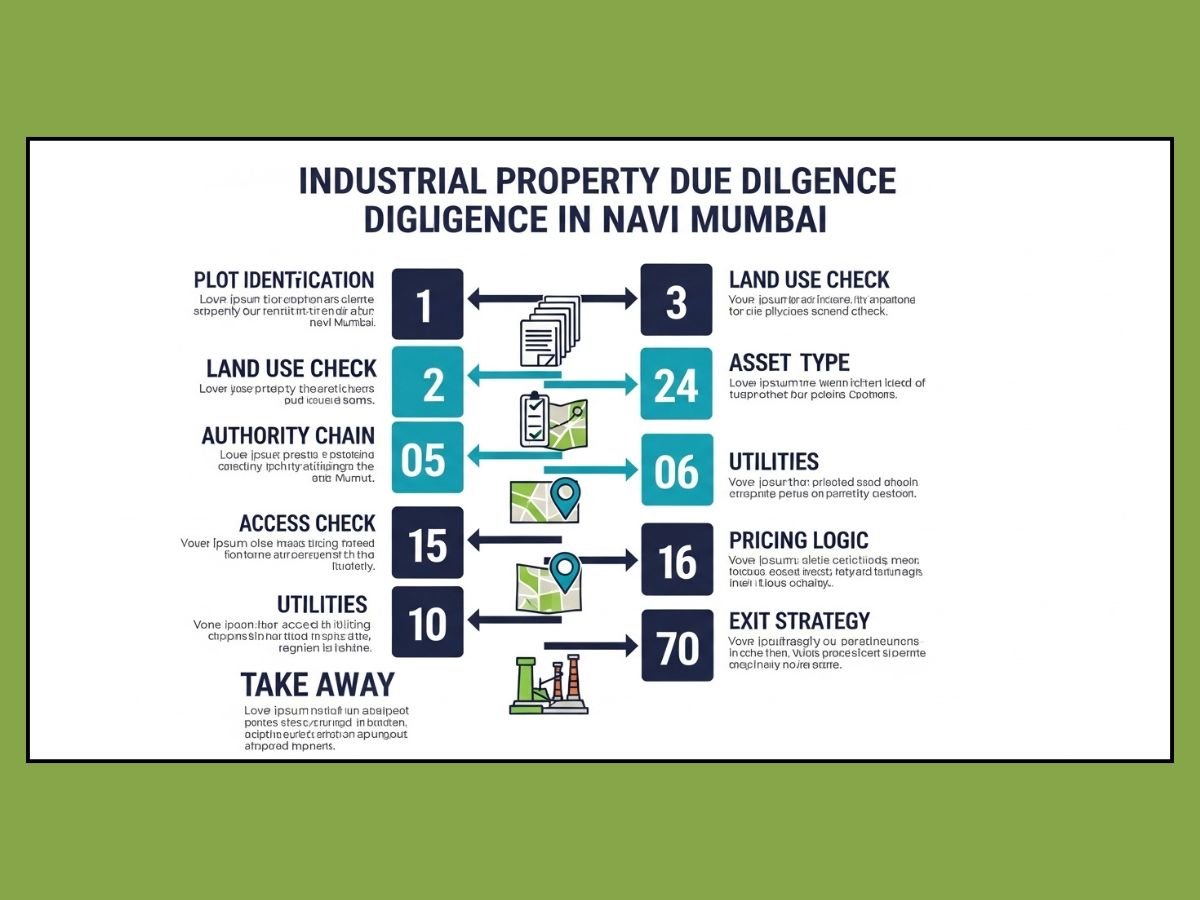
A practical 10-step due diligence sequence before you pay token
1. Identify the exact plot or exact unit, not just the node name. 2. Check the current nodal-plan position and land-use reading. 3. Confirm the authority chain and leasehold documentation. 4. Ask what permissions, NOCs, or premiums apply on transfer. 5. Verify the actual asset type: raw land, shed, gala, or project stock. 6. Check sanctioned use against your intended industrial activity. 7. Visit the approach road and test truck movement logic on ground. 8. Review utilities and operational practicality, not just brochure claims. 9. Compare quoted value with IGR reference logic and actual market usability. 10. Test the exit thesis: who will buy or lease this later, and why?
So where should a cautious investor start today in Ulwe, Dronagiri and Kalamboli
If the investor wants the strongest port-linked logic, Dronagiri deserves the first look.
If the investor wants lower confusion and more practical industrial reading, Kalamboli is often the cleaner starting point.
If the investor wants airport-adjacent optionality and is comfortable with heavier filtering, Ulwe can be studied, but with much more discipline than most brokers encourage.
The safest way to read these nodes is this:
- Best for port logic: Dronagiri
- Best for practical industrial usability: Kalamboli
- Best for patient future optionality: selective parts of Ulwe
- Highest need for filtering: Ulwe
- Highest risk of story being bigger than the product: any deal sold mainly on old SEZ language without current plot proof
Conclusion
A cautious investor should stop treating Ulwe, Dronagiri, and Kalamboli as one “IIA / SEZ opportunity.” That shortcut is exactly how bad industrial decisions happen in Navi Mumbai.
Today, Dronagiri makes the most sense where port and logistics logic are real. Kalamboli usually makes the most sense where practical industrial usability and execution clarity matter. Ulwe can still interest patient investors, but only when the exact plot survives hard filtering beyond airport excitement.
So the right way to invest here is simple: ignore the label-first pitch, read the exact product, verify the authority chain, test the industrial usability, and only then decide whether you are buying a working industrial asset, a long-hold optionality play, or just a polished story.