

How to Buy a Flat in Navi Mumbai: Complete Step-by-Step Guide for Buyers
Introduction
Buying a flat in Navi Mumbai looks simple from the outside. Visit a sample flat, hear a polished sales pitch, compare a few prices, and book. But the real process is very different. Between CIDCO history, NMMC and PMC jurisdiction, water issues in some nodes, leasehold to freehold confusion, and hidden charges, one rushed decision can become a long regret.
That is exactly why this guide matters. Navi Mumbai is still one of the most practical places to buy a home in the Mumbai Metropolitan Region, but only if the buyer moves step by step, not emotionally. A good flat is not just about price. It is about legality, livability, location, and long-term safety.
Quick Summary
| Topic | Quick Take / Details |
|---|---|
| Best budget zones | Taloja, Panvel, Ulwe, Dronagiri side belts |
| Best family zones | Kharghar, Nerul, Seawoods, Vashi |
| Best future-growth zones | Ulwe, Panvel, airport-influence belt |
| Indicative price band |
|
| Stamp duty in Navi Mumbai | 7% for male/joint buyers, 6% for female buyers |
| Registration charges | 1% of property value, capped at ₹30,000 above ₹30 lakh |
| GST | 0% on ready flat with OC, 1% on affordable under-construction, 5% on other under-construction flats |
What makes Navi Mumbai different for homebuyers
Navi Mumbai is not an unplanned city that grew by accident. It was shaped around nodes like Vashi, Nerul, Kharghar, Panvel, and Belapur, each functioning like a micro-city. That gives buyers something rare in this region: wider roads, better layout, clearer sector planning, and more breathing space.
Now the city is changing again. The airport, metro network, MTHL, and expansion corridors have pushed many nodes from “future promise” into active demand. So buying here is no longer only about getting a home. In many cases, it is also about entering the right growth belt at the right time.
Common mistakes buyers make

One of the biggest mistakes is treating all Navi Mumbai locations the same. They are not. Vashi and Nerul behave very differently from Kharghar, Taloja, or Panvel in terms of civic authority, water reliability, taxes, and daily convenience. This local difference matters more than many buyers realize.
Another major mistake is ignoring land title and old CIDCO structure. Some buyers still do not check whether the property is leasehold, freehold, or in transition. Others focus only on launch price and forget legal status, hidden costs, or possession risk. That is where trouble usually begins.
Who should read this guide
This guide is useful for first-time homebuyers, families shifting from Mumbai, investors looking at airport and metro-driven growth, and even NRIs who want a more structured city than many other suburban markets. It is especially relevant for people who want clarity before spending a huge amount of money.
If the goal is to buy smart, not just buy fast, this guide will help. Because honestly, in property, speed impresses salespeople. Caution protects buyers.
Step 1: Set Your Budget Before You Start Searching

Property budget vs total buying cost
The listed flat price is never the full cost. In Navi Mumbai, the final outflow usually includes stamp duty, registration, GST on under-construction units, legal fees, society deposits, parking, and other builder-side charges. That total can easily go well above the headline price.
A buyer should always separate the base property budget from the full acquisition budget. This sounds basic, but many people do not do it. Then the surprise appears near registration, when there is no room left to breathe financially.
Down payment, loan and monthly EMI
Most buyers fund a part of the purchase through a home loan, but banks do not cover everything. A down payment is needed, and statutory charges usually have to be paid separately from personal funds. So loan approval alone does not mean the purchase is comfortably affordable.
Safe EMI rule
A practical rule is simple: keep total EMIs within a manageable share of monthly household income. Just because a bank approves a higher amount does not mean it is wise to take it. A flat should improve stability, not quietly create pressure every month.
Hidden charges buyers often miss
This is where many flat budgets quietly break. The base rate looks manageable, but the final cost rises once the builder adds line-item charges that were never highlighted clearly in the first conversation. In Navi Mumbai, buyers should assume the final outflow can move noticeably above the quoted rate once these extras are added. Stamp duty is typically 7% for male or joint buyers and 6% for female buyers, while registration is 1% and usually capped at ₹30,000 for properties above ₹30 lakh. If the flat is under construction, GST may also apply depending on category.
The charges buyers should specifically ask for in writing are:
- parking charges
- floor rise charges
- preferential location charges
- clubhouse or amenity charges
- advance maintenance
- corpus fund
- meter and utility connection charges
- legal/documentation charges
- GST, if applicable
One more important point. In Maharashtra, stamp duty is generally calculated on the higher of the agreement value or the Ready Reckoner value, so a “discounted deal” does not always reduce the duty amount the way buyers expect.
Step 2: Choose the Right Area in Navi Mumbai
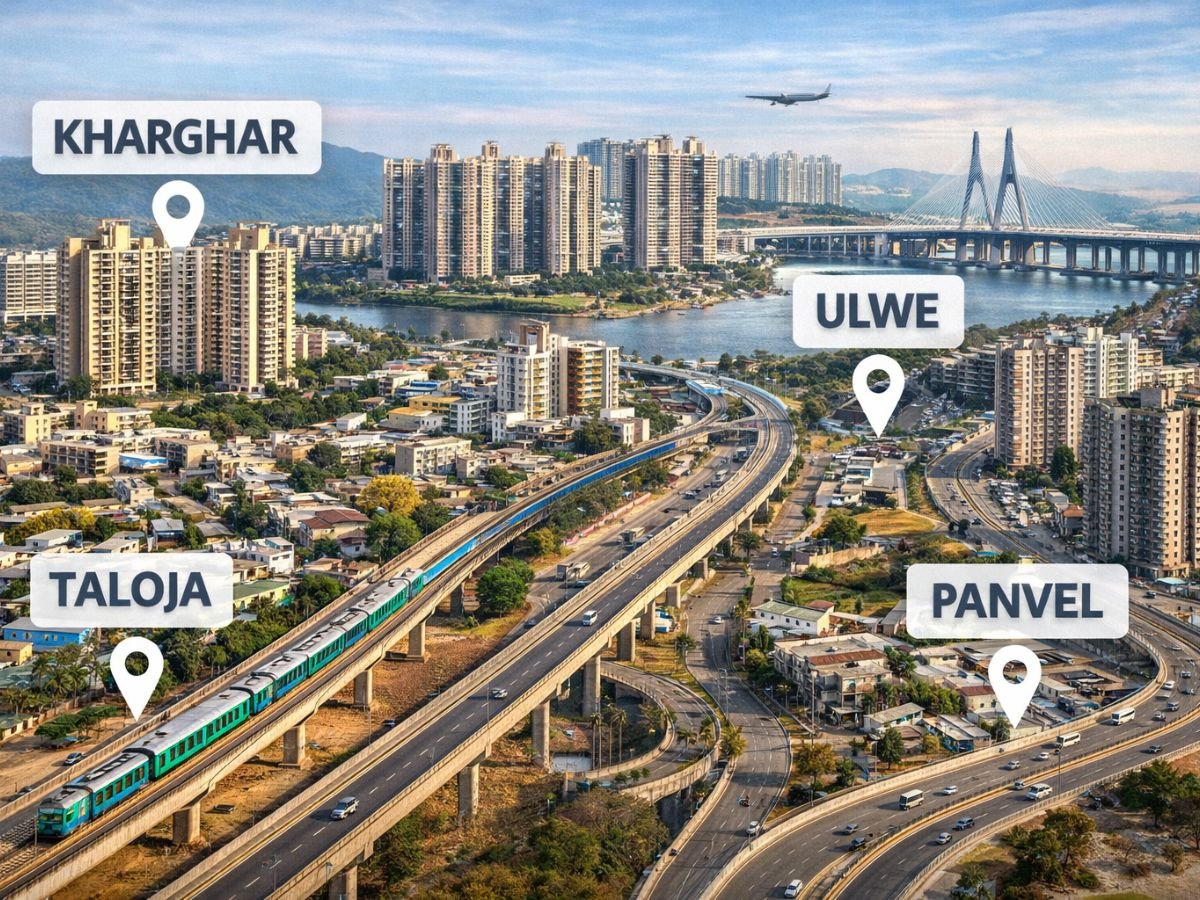
If budget is tight, the realistic starting points are usually Taloja, Panvel, and Ulwe-side affordable pockets. Current market snapshots place Taloja around ₹6,047 to ₹8,950 per sq ft, Panvel around ₹8,499 to ₹13,800 per sq ft, and Ulwe around ₹8,739 to ₹14,850 per sq ft depending on project type, exact sector, age of building, and micro-location.
These zones work best for buyers who want lower entry cost and are willing to trade some maturity for future upside. But budget buying in Navi Mumbai should never be based on price alone. Water supply, station access, internal roads, and actual daily commute matter just as much as the sale rate.
Best areas for families
For family buyers, the stronger choices are still Kharghar, Nerul, Seawoods, and Vashi because these nodes already have better social infrastructure, stronger station connectivity, and a more settled residential feel. Current snapshots place Kharghar around ₹10,885 to ₹17,500 per sq ft, Nerul around ₹18,652 to ₹28,000, Seawoods around ₹18,409 to ₹23,404, and Vashi around ₹20,477 to ₹31,450 per sq ft.
That premium is not just for branding. It usually reflects better daily livability. For families, that matters. A lot.
Best areas for future investment
If the goal is appreciation, Ulwe, Panvel, and airport-linked growth belts still deserve attention. The MTHL has already been open to traffic since January 13, 2024, and it has materially improved Mumbai–Navi Mumbai regional mobility. Meanwhile, Navi Mumbai International Airport began commercial operations in late December 2025, which has strengthened the airport-driven demand narrative around nearby corridors.
Still, future growth should be written carefully in the blog. Say “strong growth potential”, not guaranteed appreciation. That sounds more credible and Google-safe.
Stamp duty and registration charges
As of March 2026, the practical budgeting rule for buyers in Navi Mumbai is straightforward: stamp duty is generally 7% for male or joint buyers and 6% for female buyers, while registration charges are 1% of property value and normally capped at ₹30,000 once the property value crosses ₹30 lakh. These figures are consistently reflected in current 2025–26 Navi Mumbai stamp-duty explainers, while the Maharashtra registration department’s fee-structure and ASR pages remain live for FY 2025–26.
For the blog, keep this sentence simple and direct: buyers should budget statutory costs separately from the flat price because banks often do not fully absorb these charges into the same comfort zone as the home loan. That line reads naturally and also helps the content feel practical instead of over-optimized.
Step 3: Decide Between New, Resale, Ready Possession or Under-Construction Flat
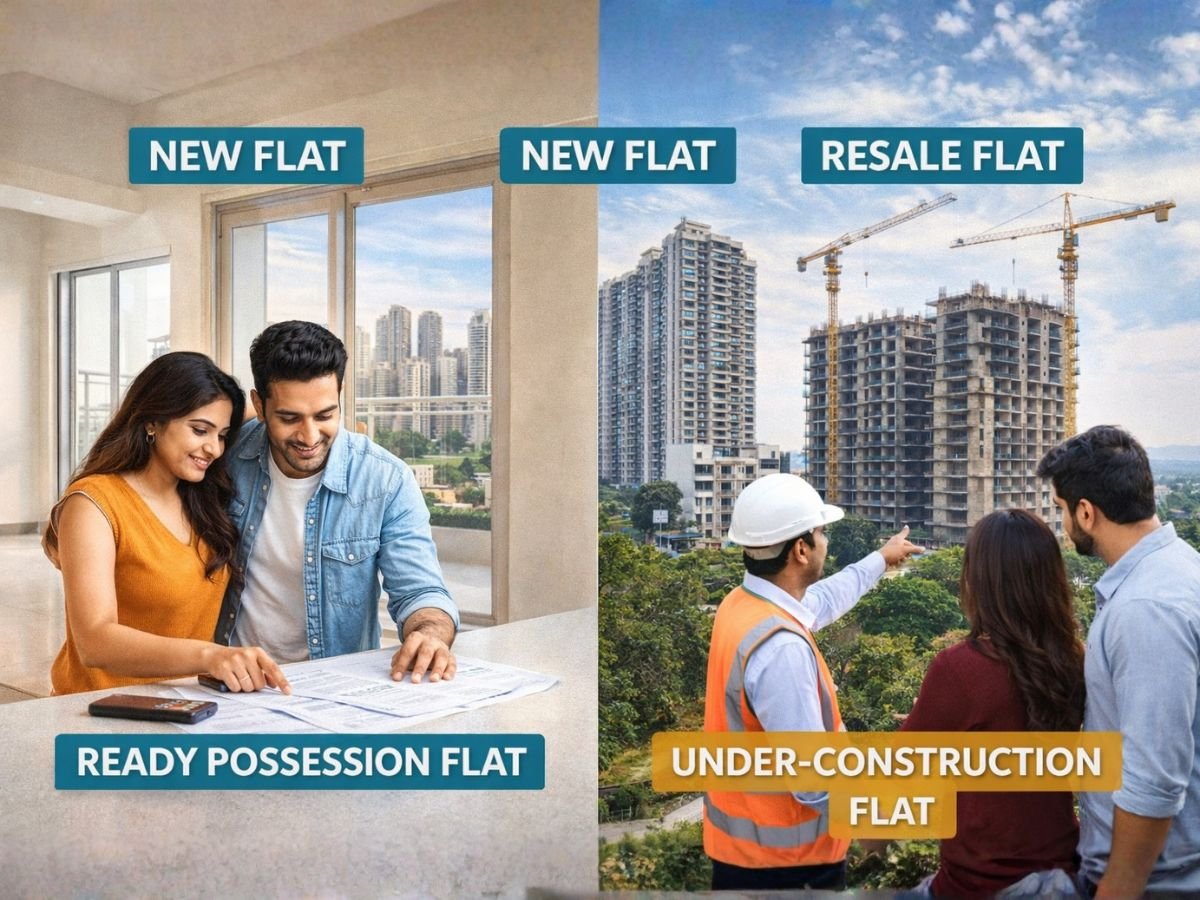
New flat vs resale flat
A new flat gives fresh construction, newer amenities, and modern planning. A resale flat gives something equally valuable: visibility. The building exists, the society works, the area is active, and buyers can judge the actual product instead of trusting render images.
Resale flats in Navi Mumbai have also become more attractive where transfer complications have reduced due to policy changes around leasehold to freehold conversion. But every resale deal still needs strict title and society verification.
Ready possession vs under-construction
Ready possession flats are usually safer because the physical asset is visible and the OC can be checked. They also avoid construction uncertainty. Under-construction flats may offer better entry pricing, flexible payment stages, and more unit choice, but the risk is higher.
From a buyer’s practical point of view, this is the real trade-off: price versus certainty. Some buyers save money upfront. Others pay more for peace of mind. Both choices can work, but only when made consciously.
Which option suits which buyer
End-users needing quick possession generally do better with ready or resale inventory. Investors with time and risk appetite may prefer under-construction projects in growth corridors. Buyers who are already paying rent often underestimate how valuable immediate possession can be.
There is no single best format for everyone. The right option depends on cash flow, urgency, risk tolerance, and how much unpredictability the buyer can realistically handle.
Step 4: Shortlist the Right Project or Building
How to compare projects properly
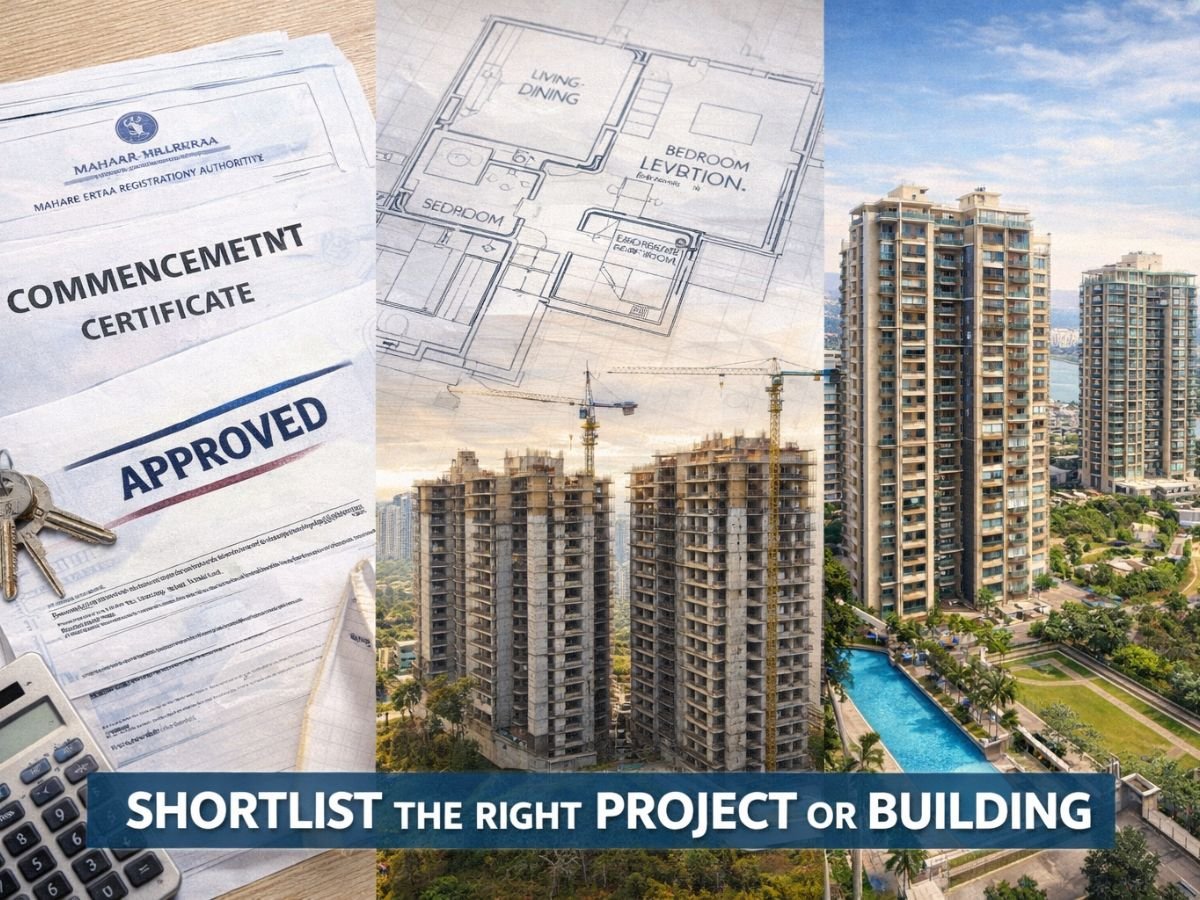
Do not compare projects using brochure language. Compare them using RERA carpet area, total cost, layout efficiency, tower density, and actual usable space. A “cheaper” flat with poor planning can be worse value than a costlier flat with better livability.
This is also where buyers should compare developer track record, completion history, and the quality of the surrounding micro-market. The project matters, but so does the life around the project.
What to check during a site visit
A site visit should be treated like an inspection, not an outing. Check light, ventilation, road access, noise, drainage, tower spacing, and the difference between the sample flat mood and the real building condition.
Ask for the RERA number, approved plan, commencement status, and tower-specific progress. If the salesperson keeps everything verbal and vague, that itself is useful information.
Builder quality, layout and locality factors
Good projects are not just about glossy amenities. Layout efficiency, construction finish, flood safety, water planning, and locality practicality matter far more after handover. Some buyers realize this only after moving in.
In Navi Mumbai, locality quality can sharply affect long-term value. A project in a weak pocket with poor access or civic stress will always remain compromised, even if the flat interior looks good on day one.
Step 5: Verify the Builder or Seller Before Paying Anything
How to check builder reputation
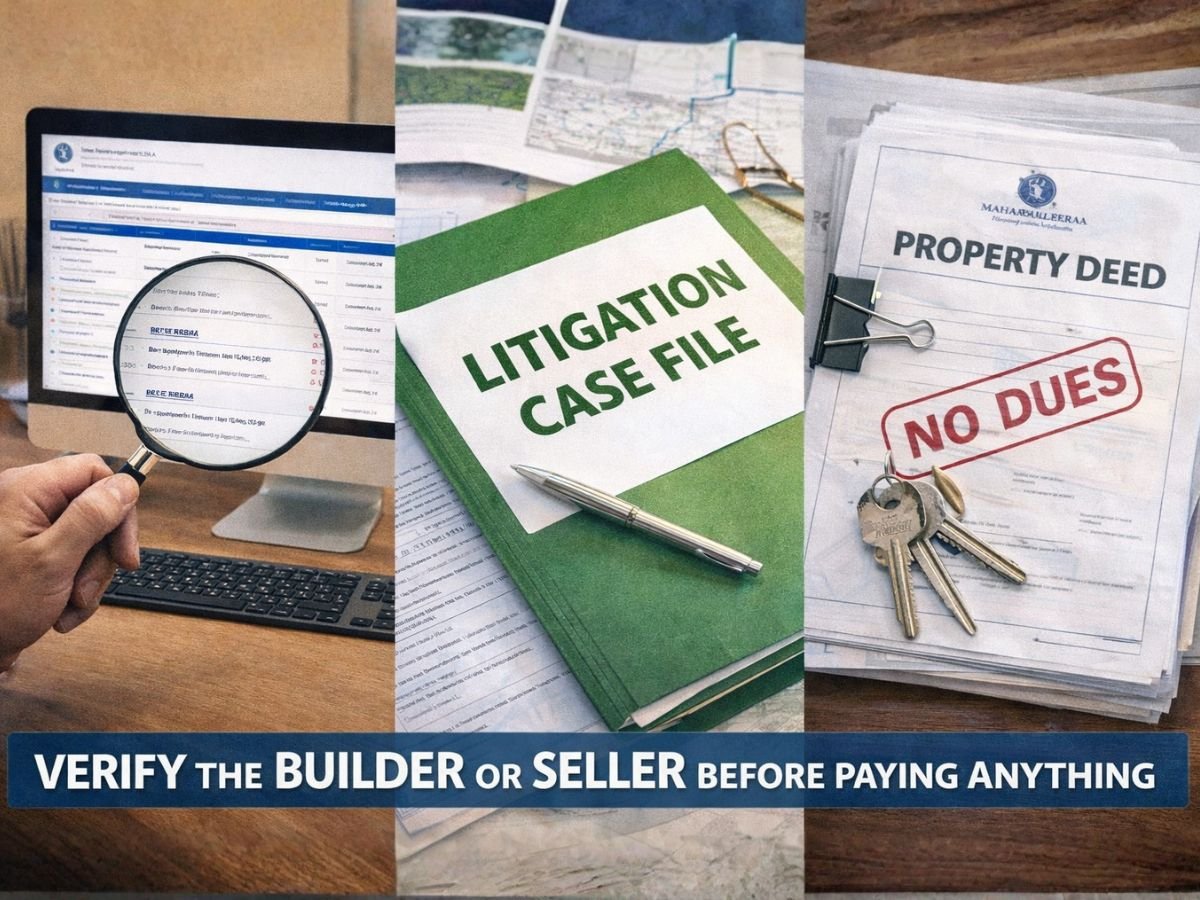
The MahaRERA portal is one of the most useful tools for buyers. Check the builder’s registered projects, delay history, complaint pattern, and overall execution record. Marketing can hide weaknesses. Public data usually cannot.
A builder’s reputation should be judged by delivered work, not launch events. In property, history matters. A lot.
How to verify project history
Project history means checking completion timelines, quarterly progress, litigation, approvals, and whether the tower being sold is actually covered under the paperwork shown. Buyers should not assume the whole project and every phase are equally clear.
This is also the stage to confirm if the promised possession timeline feels realistic or merely attractive. There is a difference.
What to check in a resale owner deal
In resale, the focus shifts to title chain, sale deed, share certificate, pending dues, tax receipts, and society records. The seller may sound genuine, but paperwork must still speak for itself.
A proper legal search is especially important here. Resale is often safer physically, but only when the ownership trail is clean.
Step 6: Check All Important Property Documents
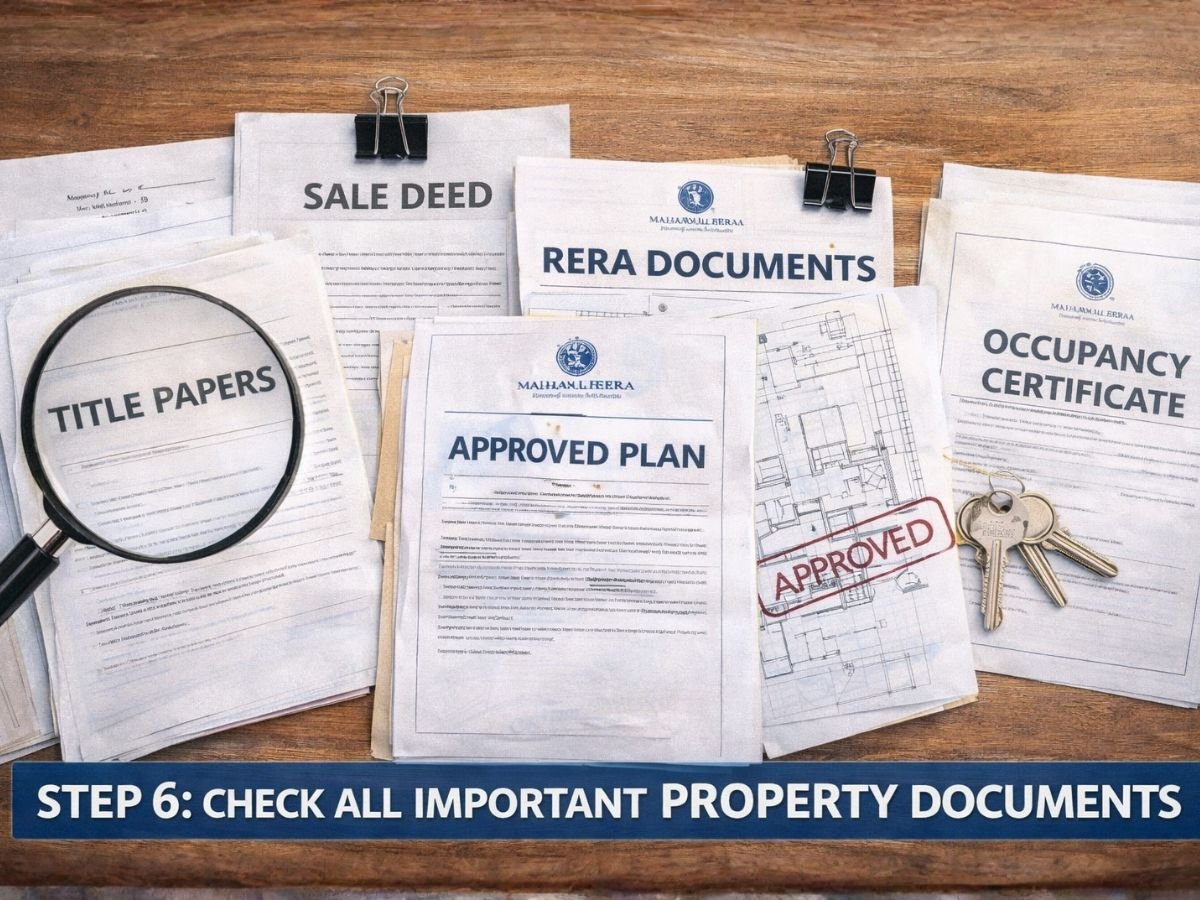
Title and ownership documents
Every flat transaction rests on title clarity. Buyers should check ownership proof, previous transfer records where applicable, and the legal basis of the land or building structure. In many cases, this is where hidden problems surface.
Documents are not a formality. They are the property.
RERA, approved plan and permissions
For under-construction flats, RERA registration, sanctioned plan, and commencement permissions are essential. These show whether the project is legally allowed to be marketed and built in the manner being promised.
If a project is strong, the developer will usually not hesitate to share these documents. Delay or avoidance should raise questions.
OC, CC and possession-related documents
The CC allows construction to begin. The OC confirms the building is fit for occupation. That difference is huge. Buyers who confuse the two often assume the building is safer than it really is.
A completed building without a valid OC is not something a cautious buyer should ignore. Possession without legal readiness can create future trouble.
Step 7: Check Legal Status and Project Approval
Why legal verification matters
A flat is not just a product. It is a legal asset. If title, approvals, or permissions are weak, the buyer may end up owning stress instead of security.
Independent legal review is not optional in a market where one mistake can cost years of savings.
RERA and local approval checks
In Navi Mumbai, local authority matters. NMMC, PMC, CIDCO, and airport-influence planning zones are not interchangeable. Civic service quality, water conditions, and approvals may differ sharply across these bodies.
That is why local due diligence matters here more than in many generic property markets.
Why a property lawyer is important
A good property lawyer does more than read papers. They check risk, title continuity, restrictive clauses, and whether the buyer is stepping into a problem hidden beneath polished documentation.
This cost is small compared to the protection it offers. Very small.
Step 8: Apply for Home Loan and Check Eligibility

Loan eligibility basics
Banks usually assess income, credit profile, existing liabilities, and repayment capacity. A higher salary helps, but stability and existing obligations matter too. Buyers should know their comfortable limit before applying.
Loan eligibility is a bank decision. Loan suitability is a personal decision. They are not the same thing.
Documents needed for home loan
Most lenders will ask for identity proof, address proof, income papers, bank statements, tax records where applicable, and project-related property documents. Salaried and self-employed buyers will have slightly different paper trails.
Keeping these ready early speeds up the process and reduces panic later when timelines become tight.
How much EMI is safe for you
A safe EMI is one that still leaves room for life. Maintenance, interiors, emergencies, school fees, transport, and medical needs do not stop after home purchase. Many buyers forget that.
A flat should not consume the future just to secure the present.
Conclusion
Buying a flat in Navi Mumbai is still one of the better long-term decisions a serious homebuyer can make in the MMR. The city offers planning, growth, and real location diversity. But the smarter purchase is never the fastest one. It is the one built on paperwork, practicality, and patience.
Look beyond the brochure. Check the authority, water reality, legal status, total cost, and possession readiness. Do that properly, and the flat you buy will feel less like a gamble and more like what it should be: a stable asset and a real home.
FAQs
Frequently Asked Questions