Gavlidev Bird Watching Spot Mahape: Species, Timings & Visitor Guide
Gavlidev Bird Watching Spot Mahape is a raw hillside nature patch on the Parsik Hill side, known for early morning bird watching, a seasonal monsoon waterfall, and short nature walks near the Mahape MIDC belt. The best time for birding is usually 7:00 AM to 9:00 AM, especially on winter weekdays. It is useful for patient visitors, not for people expecting a fully developed picnic park.
Quick Summary: Gawalidev Bird Watching Spot Mahape
| Point | Details |
|---|---|
| Location | 395, S Central Road, MIDC Industrial Area, Mahape, Navi Mumbai 400701 |
| Main Attraction | Bird watching habitat, Parsik Hill greenery, short trek, seasonal waterfall |
| Best Time for Bird Watching | 7:00 AM to 9:00 AM, preferably on weekdays |
| Best Season for Birding | Late November to March for better visibility and comfortable weather |
| Best Season for Waterfall | Late June to September, mainly during active monsoon |
| Nearby Railway Stations | Ghansoli and Kopar Khairane are practical access points |
| Approximate Visit Duration | 1 to 2 hours for birding and nature walk |
| Entry Fee | Currently generally free, but this may change after formal development work |
| Authority Context | Forest Department land with NMMC-backed beautification work |
| Visitor Type | Bird watchers, nature photographers, local trekkers, nearby residents |
| Main Caution | Slippery basalt rocks, limited facilities, broken glass risk, crowding in monsoon |
Where Exactly Is Gawalidev Bird Watching Spot in Mahape?
Gavlidev Bird Watching Spot Mahape is located on the S Central Road side of the MIDC Industrial Area in Mahape, near the lower slopes of the Parsik Hill range. The place sits at an unusual edge of Navi Mumbai: one side has offices, industrial buildings, and MIDC roads, while the other side quickly turns into scrubland, rocky slopes, trees, and a hill trail.
This is what makes the spot interesting. You are not travelling to a deep forest outside the city. You are entering a small but important green patch inside the Thane-Belapur industrial belt.
The location is commonly associated with Gawalidev, Gavli Dev, Gavali Dev, or Gavlidev. Many locals use these names loosely for the same hill-side nature and waterfall area near Mahape. The name is connected with the local Gavli Dev or Gavli Devi shrine on the hill side, which has traditional importance for nearby communities.
Is Gawalidev the Same as Gavli Dev Waterfall?
For most local visitors, Gavlidev Bird Watching Spot Mahaperefer to the same broader nature belt in Mahape. The area includes the trail, greenery, seasonal waterfall, old pond section, and the route towards the shrine side.
This matters because people may search different names on Google Maps or ask locals using different spellings. A person saying “Gavli Dev waterfall” and another saying “Gawalidev bird watching spot” are usually referring to the same Mahape hill-side nature zone.
But the purpose of visit changes the experience. During winter mornings, the area is better for bird watching. During heavy monsoon, most visitors come for the waterfall and short trek, not for serious birding.
What Makes Gawalidev Good for Bird Watching?
Gawalidev works for bird watching because it has a mix of scrubland, tree cover, hill slope, water patches, and quieter inner sections away from the main MIDC road. This kind of habitat supports common urban-edge birds, canopy birds, insect-eating birds, sunbirds, parakeets, and raptors.
It is very different from the flamingo-viewing areas near Airoli or Thane Creek. Gawalidev is not a wetland destination for flamingos or large water birds. It is more of a hillside scrub and secondary forest habitat.
The best birding happens when the place is quiet. Early morning is important because bird activity is higher, weather is cooler, and human disturbance is lower. Once picnic groups, trekkers, and monsoon crowds arrive, bird watching becomes much harder.
Which Bird Species Can You See at Gawalidev Bird Watching Spot?
Gawalidev should be understood as a practical bird watching spot, not a guaranteed rare-bird destination. Visitors may see common resident birds easily, while smaller canopy birds and unusual sightings need patience, silence, binoculars, and the right season.
| Bird Category | Species Visitors May Notice | Where They Are Usually Seen |
|---|---|---|
| Common Scrub and Urban-Edge Birds | Common Myna, Asian Koel, Rose-ringed Parakeet, Red-whiskered Bulbul | Near trail entrance, trees, open branches, and lower canopy |
| Small Canopy Birds | Coppersmith Barbet, Purple Sunbird, Purple-rumped Sunbird, Common Tailorbird | Flowering trees, bushes, and mid-level vegetation |
| Insect-Eating Birds | Green Bee-eater, White-spotted Fantail, Indian Paradise Flycatcher | Quieter vegetated sections, especially away from crowds |
| Raptors | Black Kite, Shikra | Above the Parsik Hill ridge and open sky sections |
| Rare or Seasonal Sightings | Eyebrowed Thrush and other unusual winter visitors may be possible but uncommon | Only with strong luck, right season, and careful observation |
The safer way to write or think about the species here is simple: common birds are realistic, rare birds are possible but not guaranteed. Serious birders should not visit expecting a fixed checklist. They should visit early, stay quiet, and observe patiently.
Common Birds Beginners May Notice
Beginners are most likely to notice mynas, bulbuls, parakeets, koels, kites, and sunbirds. These birds are active, vocal, and easier to spot than shy forest birds.
Sunbirds and tailorbirds may require more attention because they move quickly through leaves and small branches. Parakeets are easier to identify because of their green body, loud calls, and group movement.
Birds for Patient Watchers and Photographers
Bird watchers with binoculars may enjoy looking for barbets, fantails, bee-eaters, flycatchers, and raptors. These birds need slower movement and longer observation.
This is where many casual visitors fail. They enter the trail loudly, keep walking continuously, and then feel there are “no birds”. At a place like Gawalidev, standing silently near a good patch for 10 to 15 minutes can be more useful than rushing through the trail.
What Is the Best Time to Visit Gawalidev for Bird Watching?
The best time to visit Gawalidev for bird watching is early morning, ideally between 7:00 AM and 9:00 AM. Weekdays are better than weekends because the trail is quieter and bird movement is easier to observe.
| Visit Purpose | Best Time | Best Season | Practical Advice |
|---|---|---|---|
| Bird Watching | 7:00 AM to 9:00 AM | Late November to March | Best balance of light, silence, comfort, and visibility |
| Bird Photography | 7:00 AM to 8:30 AM | Winter and early summer mornings | Early light helps, but patience is required |
| Waterfall Visit | Morning to early afternoon | July and August | Avoid heavy rain and slippery upper rocks |
| Family Nature Walk | Morning hours | Winter or post-monsoon | Visit in daylight and avoid crowded monsoon weekends |
| Casual Trek | Morning or late afternoon | Monsoon and post-monsoon | Wear proper footwear and avoid dark hours |
Winter is usually the best season for birding because the weather is pleasant and visibility through trees can be better. Post-monsoon is beautiful because the area is green, but dense foliage can make bird spotting difficult. Monsoon is scenic, but it is not the ideal season for serious bird watching because of crowding, slippery rocks, and reduced visibility.
What Are the Timings of Gawalidev Bird Watching Spot?
Gawalidev is often shown online as open for long hours or even “open 24 hours”, but visitors should not treat that as practical advice. It is a forested, rocky, unlit hill-side trail near an industrial zone. Night visits are unsafe and should be avoided.
A practical visitor window is morning to late afternoon, with many local references treating 8:00 AM to 5:30 PM as a reasonable daylight operating range. For bird watchers, the better window is slightly earlier in the morning, around 7:00 AM to 9:00 AM, but visitors should use common sense and avoid isolated or dark conditions.
As NMMC’s beautification work progresses and the area becomes more formalized, stricter entry control, gates, security, or ticketing may be introduced. So timing and access may change after the project is completed.
How to Reach Gawalidev Bird Watching Spot from Nearby Areas
Gawalidev is easy to reach by road if you know the Mahape MIDC side. The nearest practical railway access points are Ghansoli and Kopar Khairane on the Trans-Harbour line. From there, visitors usually need an auto, cab, bus, or private vehicle.
| Starting Point | Best Route Logic | Approximate Local Travel Note |
|---|---|---|
| Ghansoli Railway Station | Take direct auto towards Mahape MIDC and S Central Road | Around 7 to 10 minutes by auto depending on traffic |
| Kopar Khairane Station | Take auto through internal Kopar Khairane-Mahape roads | Around 10 to 12 minutes in normal conditions |
| Mahape MIDC | Use local MIDC roads towards S Central Road and the trail entrance area | Very close for people working nearby |
| Airoli | Travel via Thane-Belapur Road towards Mahape | Good by bike, cab, or private vehicle |
| Vashi | Use Thane-Belapur Road towards Kopar Khairane / Mahape | Better by cab or private vehicle for convenience |
| Thane | Use Thane-Belapur Road towards Mahape | Traffic varies strongly during office hours |
From Ghansoli station, direct auto fares can vary because many drivers may not prefer meter-based short interior trips inside MIDC. NMMT buses towards Mahape may also help if they match your timing, with stops such as Lipi Co. or Standard Alkali side being useful depending on the exact route.
The trail entrance is not a grand tourist gate in the traditional sense. It is closer to a local hill-side access point from the MIDC road. First-time visitors should keep the location open on maps and also ask nearby locals if they are confused.
Car, Bike, Auto or Public Transport: What Works Best?
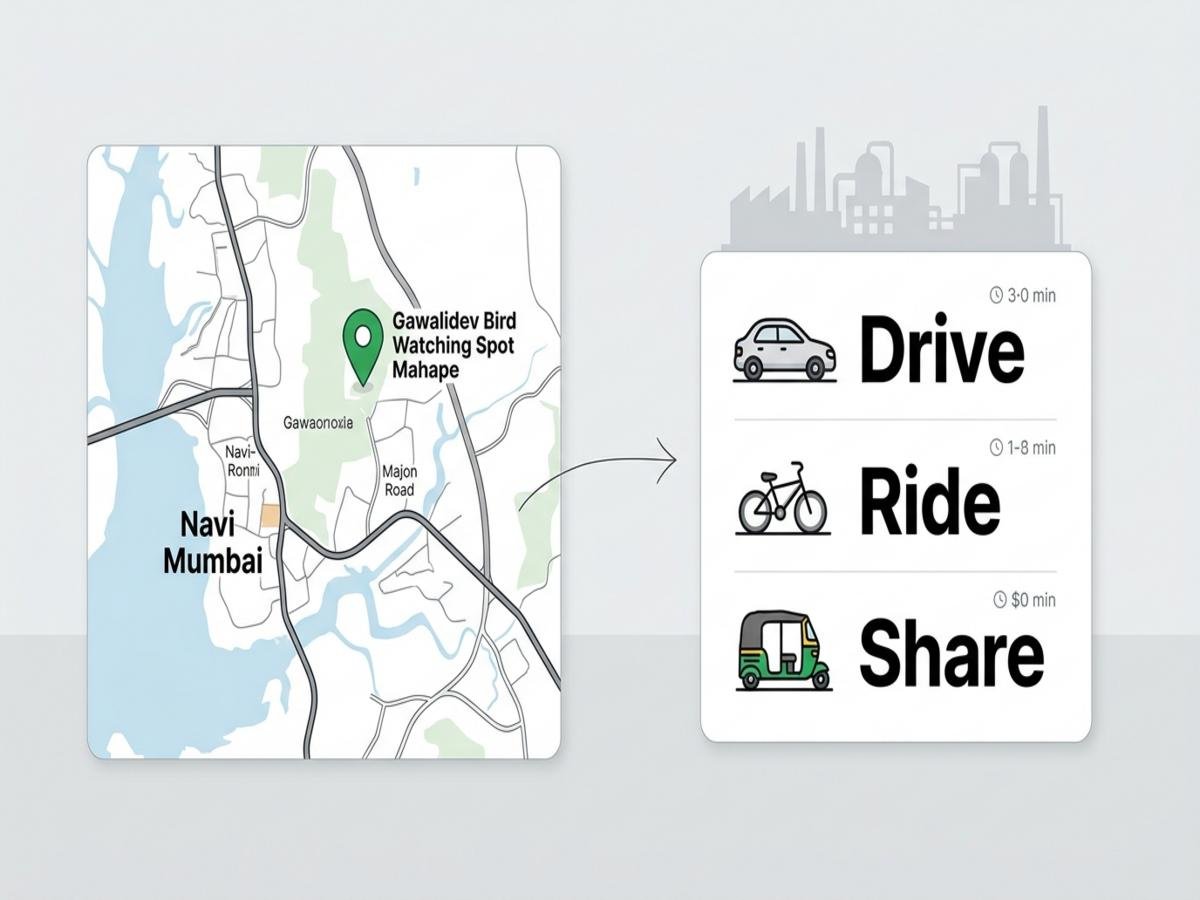
For most first-time visitors, a bike, cab, or private car is more convenient than depending fully on public transport. Train plus auto works well from Ghansoli or Kopar Khairane, but the last-mile ride needs planning.
| Travel Mode | Suitability | Best For | Caution |
|---|---|---|---|
| Bike | Very practical | Local visitors from Ghansoli, Airoli, Kopar Khairane, Mahape | Ride carefully during monsoon because roads and slopes can be slippery |
| Car | Convenient | Families and photographers carrying gear | Parking may be informal near the base |
| Auto | Useful from nearby stations | Visitors coming by train | Direct fare may need negotiation |
| Bus | Budget-friendly if route timing matches | Regular local commuters | Stop may still require walking |
| Cab | Comfortable | First-time visitors and small groups | Costlier for short local trips |
What Should You Carry for Bird Watching at Gawalidev?
Gawalidev is still better treated as a rugged local nature trail, not a managed city garden. Carrying the right basics makes the visit safer and more enjoyable.
- Comfortable trekking shoes or high-grip sandals.
- Water bottle.
- Binoculars if your main purpose is bird watching.
- Camera or mobile with good zoom.
- Cap or light sun protection.
- Mosquito repellent.
- Small snack if visiting early.
- Rain protection during monsoon.
- Power bank if using maps and camera.
- Small bag to carry your own waste back.
Avoid carrying loud speakers, plastic packets, glass bottles, or anything that creates litter. Bird watching depends on silence. A noisy group can disturb the entire patch within minutes.
Is Gawalidev Safe for Families, Children and Solo Visitors?
Gawalidev is safer than many large waterfall spots because it is not a huge deep plunge waterfall. But it is not risk-free. The main danger here is slipping on basalt rock, especially during monsoon.
Families can visit during daylight hours, preferably in the morning. Children should be supervised near water, slopes, stones, and uneven paths. Elderly visitors or people with mobility issues should be careful until the NMMC pathway and safety work is fully completed.
Solo visitors should avoid isolated evening hours. Solo female visitors and individual birders should prefer active morning daylight when there is some movement around the area but not heavy crowding.
The biggest caution during monsoon is not just water. It is the combination of slippery rocks, crowd pressure, broken glass, and sudden stream surge after heavy rain. If rain becomes heavy for more than a short period, it is better to return rather than push further up.
Gawalidev for Bird Watching, Photography or Casual Nature Walk: Who Will Enjoy It Most?
| Visitor Type | Suitability | Best Time | Ground Reality |
|---|---|---|---|
| Beginner Bird Watchers | Good | Winter mornings | Easy common bird sightings if you stay quiet |
| Serious Birders | Selectively good | Early winter weekdays | Good for patient observation, not guaranteed rare sightings |
| Mobile Photographers | Good | Early morning and monsoon breaks | Good light and landscape, but zoom limitations apply |
| DSLR / Wildlife Photographers | Good | 7:00 AM to 8:30 AM | Better chance for canopy birds and raptors |
| Families with Children | Moderate to good | Morning daylight | Supervision and proper footwear are important |
| Friend Groups | Good for trek/waterfall | Monsoon mornings | Can get crowded and slippery on weekends |
| Senior Citizens | Limited for now | Dry season mornings | Wait for better pathways if mobility is an issue |
| Picnic Crowd | Not ideal | Avoid peak birding hours | No resort-style facilities or manicured lawns |
This spot rewards calm visitors. If you enjoy slow observation, nature sounds, birds moving through trees, and short climbs, Gawalidev can feel refreshing. If you want food stalls, seating everywhere, toilets, boating, lawns, and easy parking, this may disappoint you.
Photography Tips for Gawalidev Bird Watching Spot
Gawalidev is good for natural photography, but it needs patience. The best photos usually come when you stop moving and allow the birds to return to their normal activity.
Use morning light whenever possible. Avoid flash for birds. Keep your phone or camera ready near open branches, water edges, and flowering trees. For mobile users, slow video or zoomed photos of common birds may work better than trying to chase fast-moving birds.
Do not go too close to nests, do not throw food to attract birds, and do not enter risky edges for photos. The place is valuable because birds still use it. Disturbing them for one picture defeats the purpose of visiting.
What Facilities Are Available Near Gawalidev?
Facilities at Gawalidev should be treated as limited, especially while the area is still transitioning from a raw trail to a more formal eco-tourism spot. Visitors should not depend on food stalls, reliable toilets, proper seating, or commercial services inside the trail.
NMMC’s Rs 5 crore beautification work is expected to improve the visitor experience with stone pathways, gazebos, bamboo resting huts, drinking water points, toilet facilities, drainage channels, and slope-stabilising gabion walls. However, until all work is complete and properly maintained, visitors should carry their own basics.
This is an important local change. Gawalidev is no longer only an untouched raw spot, but it is also not yet a fully predictable tourist facility. That middle stage is where visitors need realistic expectations.
What Is Changing Under the NMMC Beautification Project?
Gawalidev is currently seeing civic attention because NMMC, in coordination with the Forest Department, has taken up a major beautification and safety improvement plan. The project is backed by a ₹5 crore tourism development budget and includes work such as pathways, drainage, slope protection, resting spaces, and basic visitor facilities.
The land remains connected to the Forest Department, while NMMC is handling infrastructure development. Around 10,000 square metres of reserved forest land at Village Ghansoli has been brought into the beautification scope.
For visitors, this means the place may become safer and easier to access over time. But it may also lose some of its raw, quiet trail feeling as more people start visiting. For bird watchers, this is a mixed development: better access is good, but more crowding can reduce the silence birds need.
What Should Visitors Avoid at Gawalidev?
Visitors should avoid treating Gawalidev like a loud picnic zone. This is still a sensitive hillside nature patch.
Avoid these mistakes:
- Visiting after dark.
- Wearing flat, slippery footwear in monsoon.
- Playing loud music.
- Littering plastic, food packets, or bottles.
- Carrying or breaking glass bottles.
- Feeding birds or disturbing nests.
- Going too close to slippery edges for photos.
- Entering restricted, private, or unclear trail sections.
- Continuing upward during heavy rain.
- Expecting full tourist facilities without checking current conditions.
A simple rule works here: enter quietly, observe carefully, and leave the place cleaner than you found it.
Nearby Places You Can Combine with Gawalidev
Gawalidev can be combined with a short visit to the Gavli Dev waterfall side during monsoon, if conditions are safe. Visitors coming from Ghansoli or Kopar Khairane can also plan breakfast or snacks after the visit in the main residential or commercial pockets nearby.
If your main interest is bird watching, do not overload the day. A focused morning at Gawalidev is more useful than rushing through multiple places. But if you are doing a casual local outing, the Mahape-Ghansoli-Kopar Khairane belt gives enough food and transport options after the visit.
Gawalidev Bird Watching Spot vs Other Navi Mumbai Nature Spots
Gawalidev is not the same kind of experience as Airoli flamingo zones, Kharghar hill trails, or city lake gardens. It has its own character.
Airoli and Thane Creek side are better for flamingo and wetland-related interest. Kharghar hills offer a broader hill and monsoon trekking feel. City lake areas are easier for families and evening walks. Gawalidev is more compact, rough, local, and birding-friendly when visited quietly in the morning.
Its biggest advantage is location. For people living or working in Mahape, Ghansoli, Kopar Khairane, Rabale, or Airoli, it gives a quick nature escape without planning a long trip outside Navi Mumbai.
Who Should Visit Gawalidev Bird Watching Spot?
Gawalidev is worth visiting if you are realistic about what the place offers.
You should visit if you are:
- A beginner bird watcher from Navi Mumbai.
- A nature photographer looking for a quiet morning spot.
- A local resident from Ghansoli, Mahape, Kopar Khairane, Rabale, or Airoli.
- Someone who enjoys short hill-side walks.
- A monsoon visitor who understands slippery terrain risk.
- A parent who wants children to observe nature, not just play in a park.
You may not enjoy it if you want:
- Resort-style comfort.
- Clean picnic lawns.
- Food stalls inside the trail.
- Guaranteed rare bird sightings.
- Fully paved walking paths everywhere.
- A safe late-evening hangout spot.
- Heavy monsoon waterfall fun without physical caution.
FAQs About Gawalidev Bird Watching Spot Mahape
Where is Gawalidev Bird Watching Spot located?
Gawalidev Bird Watching Spot is located near S Central Road, MIDC Industrial Area, Mahape, Navi Mumbai. It lies on the Parsik Hill side and is commonly connected with the Gavli Dev waterfall and nature trail area.
What is the best time to visit Gawalidev for bird watching?
The best time for bird watching is usually 7:00 AM to 9:00 AM, especially on weekdays. Winter months from late November to March are better for comfortable weather and visibility.
Which birds can be seen at Gawalidev Mahape?
Visitors may see common birds such as Common Myna, Asian Koel, Rose-ringed Parakeet, Red-whiskered Bulbul, sunbirds, barbets, bee-eaters, fantails, kites, and Shikra. Rare sightings are possible but should not be expected on every visit.
Is Gawalidev good for beginners?
Yes, Gawalidev is suitable for beginner bird watchers if they visit early, stay quiet, and keep expectations realistic. Common birds are easier to observe than shy canopy birds.
Is there an entry fee at Gawalidev?
At present, the site is generally considered free to visit. However, because NMMC beautification work is underway, entry rules or ticketing may change in the future.
What are the timings of Gawalidev Bird Watching Spot?
Practical daylight hours are safest. Some local references mention 8:00 AM to 5:30 PM, but serious bird watchers usually prefer early morning. Avoid night visits completely.
Which is the nearest railway station for Gawalidev?
Ghansoli and Kopar Khairane are the practical railway access points. From the station, visitors usually need an auto, cab, bus, or private vehicle for the last-mile route.
Can families visit Gawalidev?
Families can visit during daylight, preferably in the morning. Children need supervision because the trail has uneven ground, slopes, rocks, and slippery sections during monsoon.
Is Gawalidev waterfall active throughout the year?
No. The waterfall is seasonal and rain-fed. It is usually active from late June to September, with better flow in July and August depending on rainfall.
Is Gawalidev safe during monsoon?
It can be visited during monsoon with caution, but the rocks become slippery and stream flow can rise quickly after heavy rain. Proper footwear and weather awareness are important.
Final Verdict: Should You Visit Gawalidev Bird Watching Spot in Mahape?
Gawalidev Bird Watching Spot is worth visiting if you want a quiet, early morning nature experience inside Navi Mumbai’s Mahape belt. It is especially useful for beginner bird watchers, local photographers, nearby residents, and people who enjoy short raw trails rather than polished tourist parks.
The place should not be oversold. It has real beauty, but also real ground limitations: slippery basalt, limited facilities, crowding in monsoon, and changing access because of ongoing NMMC development.
Visit for birds in winter mornings. Visit for the waterfall in active monsoon with caution. And if you go, keep the place silent, clean, and respectful. Gawalidev’s real value is not only that it exists near Mahape’s industrial zone, but that birds, trees, water, and local memory have still survived there.