
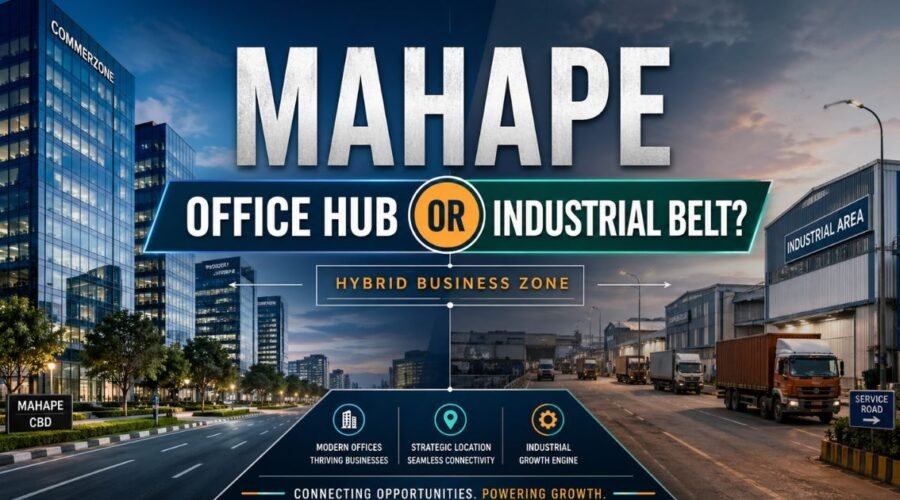
Is Mahape an Office Hub or an Industrial Belt?
Mahape sits inside the TTC MIDC industrial belt, but on the ground it feels less like a smokestack factory zone and more like an electronics-and-IT-led business park cluster. It’s a hybrid: formally “industrial”, practically full of IT offices, data centres and mid-market commercial buildings. This guide breaks down what that actually means for your office shortlist, daily commute, investment plans, or decision to live near Mahape rather than in it.
Quick Summary
What you’ll get from this guide
- A clear verdict on whether Mahape is truly an office hub, an industrial belt, or a hybrid
- A simple 3-layer way to “read” Mahape: on paper, on the ground, and in daily life
- Concrete examples of who Mahape works well for – and when to look at Ghansoli, Airoli or Pawane instead
- Commute and nearby-living realities, not just “well connected” boilerplate
- Next-step guidance to deeper Mahape office, commute, and “live near Mahape” explainers
Mahape Is in MIDC But That Doesn't Mean What Most People Think
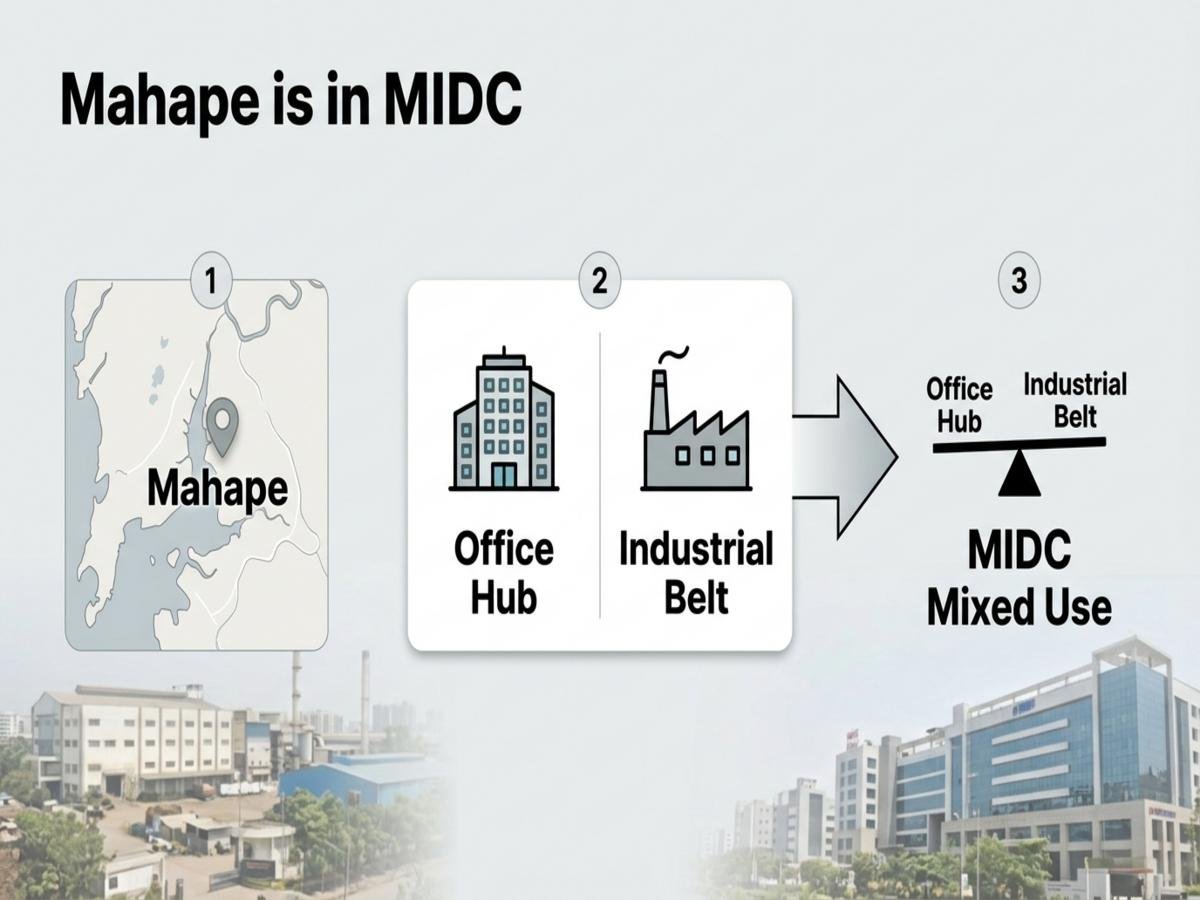
Mahape is officially part of the TTC (Trans Thane Creek) MIDC industrial belt, but that “industrial area” tag covers electronics, IT and business-park activity here, not just heavy factories and chimneys. On maps and in documents you’ll see labels like “MIDC Mahape” or “Electronic Zone, TTC Industrial Area,” yet most people who actually work there experience office blocks, data centres and mid-sized industrial units rather than an old-school industrial estate.
In practical terms, MIDC status means Mahape’s land is governed by industrial-area norms: plot allotments, infrastructure, and permitted-use rules are set by MIDC, not a standard city-development model. For many IT/ITES and tech-linked firms, this is a positive – you get industrial-grade infra, data-centre neighbours and usually more competitive rentals than CBD-grade office districts. But it also means you should never treat a Mahape building like a generic commercial property: always confirm land use, approvals and your exact permitted use before signing.
How to Read Mahape: A 3-Layer Test (Planning, Occupiers, Daily Experience)
Mahape is industrial on paper, electronics-and-IT-led in occupier mix, and feels more like a business-park work zone than a smokestack factory belt. The easiest way to stop being confused is to separate what MIDC says, who actually occupies the buildings, and what your day will feel like if you work or run a business here.
3-Layer Verdict Table
| Layer | What it says about Mahape | Why it matters |
|---|---|---|
| Planning status (MIDC) | TTC MIDC industrial area (MIDC Mahape / Electronic Zone) | Land is industrial-zoned; MIDC norms and permissions apply |
| Occupier mix (actual) | Electronics/IT companies, IT/ITES offices, business parks, data centres, light industrial | Dictates rents, neighbours, and what kind of demand exists |
| User experience (daily) | Feels like a functional office–industrial park cluster with buses, trucks, and corporate shuttles rather than a leafy CBD | Changes commute, walkability, and hiring expectations |
When you read Mahape through this lens, “industrial” stops being a red flag and becomes a factual backdrop. An IT firm might actually benefit from cheaper, infra-backed space among data centres, while a clean corporate head office that hosts clients daily might decide this is the wrong vibe.
What Kind of Industries Actually Operate in Mahape?
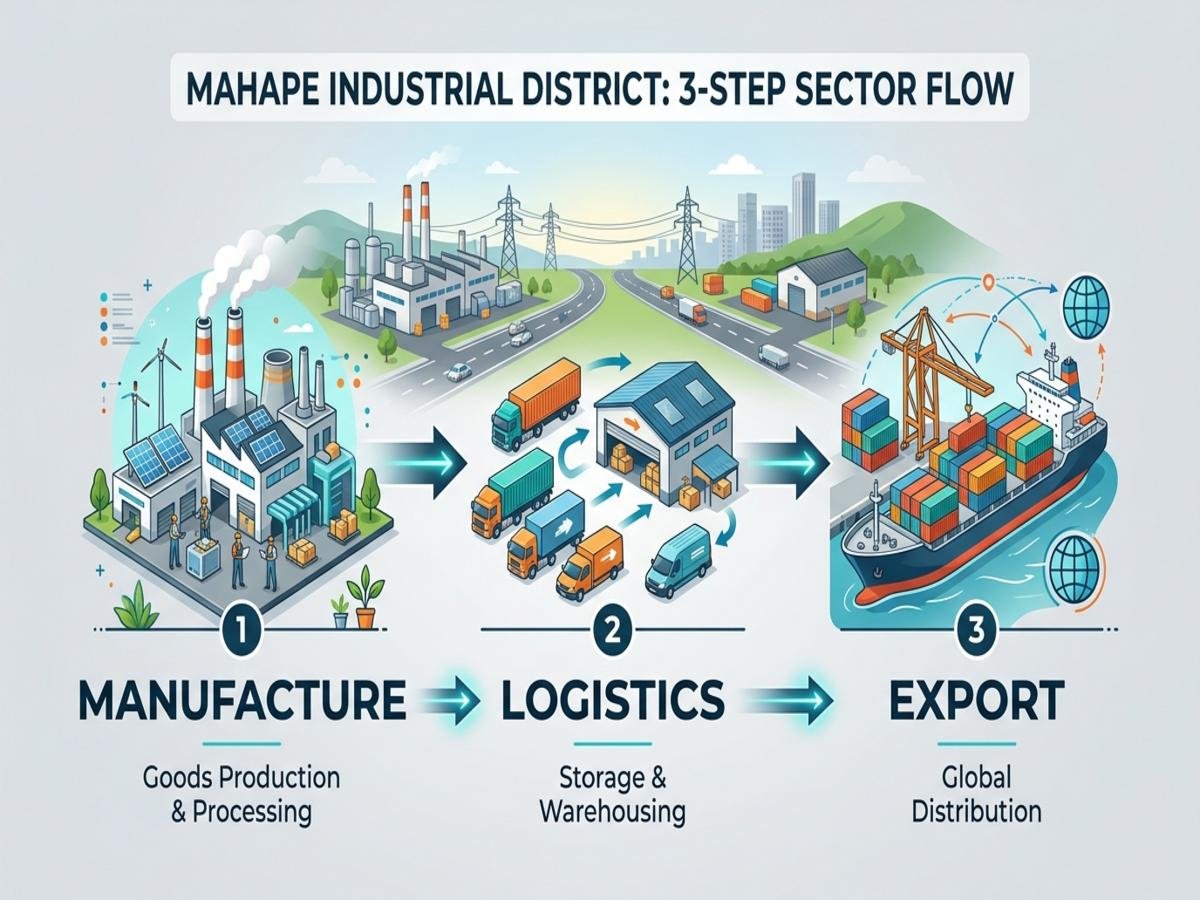
MIDC Mahape is associated with electronics and IT rather than old-line manufacturing, which is why you see glass-fronted offices and data facilities alongside industrial sheds. A cluster around Electronic Zone and Millennium Business Park (MBP) houses IT/ITES operations, tech companies, and data-centric infrastructure, while light industrial and engineering units fill in the rest.
Who you’ll typically find in Mahape
- IT and ITES firms running software, BPO and back-office operations
- Electronics and hardware companies using the “Electronic Zone” branding
- Data-centre and infra operators (for example, well-known rated facilities along Mahape MIDC Road)
- Business-park tenants in and around Millennium Business Park
- Light engineering and auxiliary industrial units that benefit from MIDC zoning
- Far fewer heavy chemical or large-scale smokestack units than nodes like Pawane or Turbhe
This mix is what makes Mahape feel like an “industrial hub that behaves like an office cluster”. For an occupier or investor, it’s critical: your neighbours are more likely to be IT staff and server racks than chimneys and fumes.
Is Mahape Good for Office Space? The Honest Answer
Mahape works well for IT/ITES offices, back-office operations, infra-linked businesses and cost-conscious corporates who want serious infrastructure inside an MIDC belt rather than a polished CBD. It is less suitable if you need a prestige front-door for clients, direct station-exit access, or high-gloss common areas like those in Mindspace Airoli or central Vashi.
| Best Fit in Mahape | Bad Fit in Mahape |
|---|---|
| IT/ITES firms okay with industrial-belt surroundings and focusing on cost & infra | Client-facing HQ that needs a premium, walkable CBD-like environment |
| Back-office or shared-service centres that don't host high-profile visitors | Firms whose brand requires a well-known corporate park address |
| Data-centre-adjacent, infra, logistics or tech operations | Teams that need everyone to walk straight out of a station into the office building |
| SMEs wanting office or hybrid space in an MIDC zone at mid-market rentals | Companies fixated on strong retail, F&B and lifestyle amenities at the office doorstep |
If you treat Mahape like a “secret cheaper Airoli,” you’ll be disappointed. If you treat it as a practical, infra-strong cluster inside MIDC that suits certain kinds of offices very well, it can be an excellent fit.
Which Station Serves Mahape And What Commute Really Looks Like
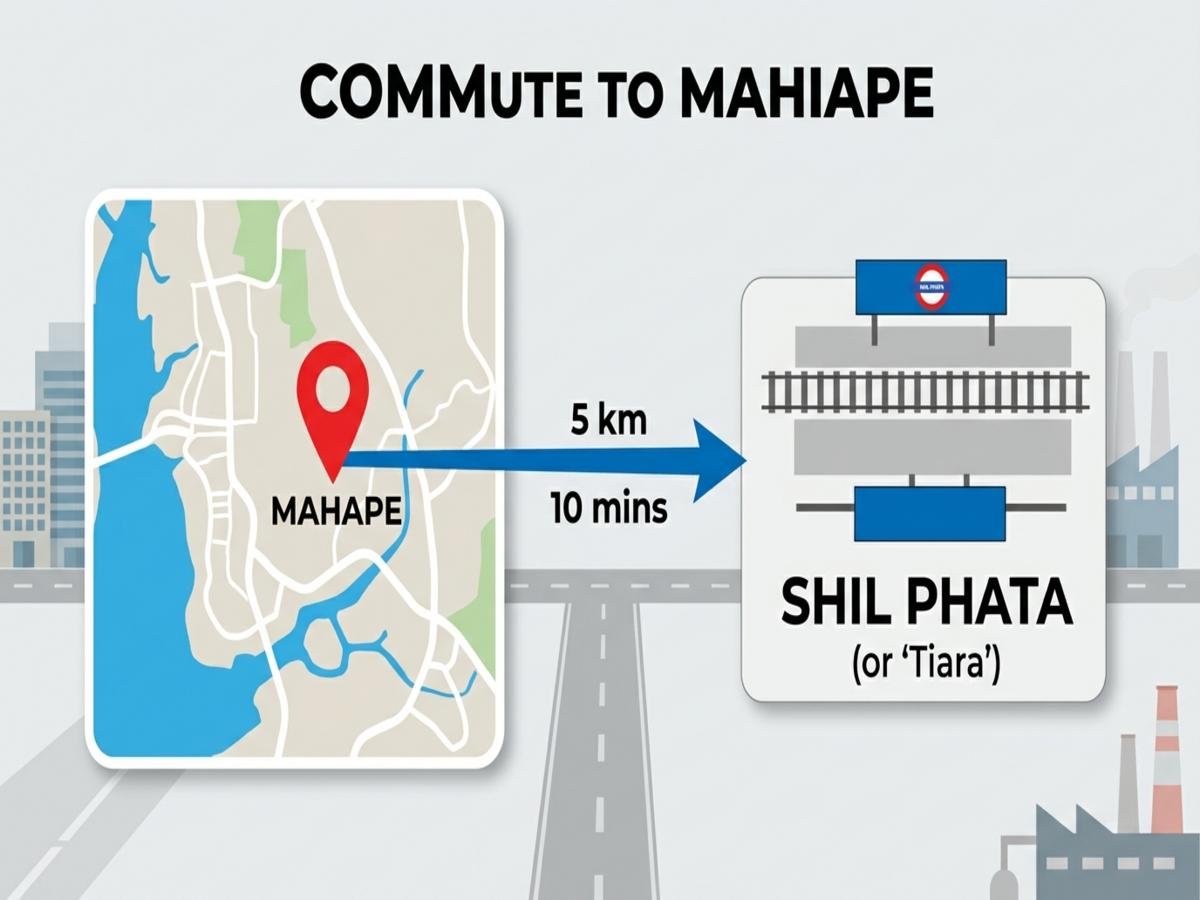
Ghansoli on the Harbour line is the nearest rail touchpoint for most of Mahape MIDC, but in practice people rely on buses and autos between the station and areas like MBP or deeper Electronic Zone rather than walking the whole way. Travel calculators and transit apps show short bus and taxi routes linking Ghansoli to Mahape, with full walking routes feasible but long enough to be tiring daily.
Commute reality in one glance (not brochure-speak)
- From Ghansoli station, buses and shared autos towards Mahape/MBP are common; in peak hours, frequency is usually high.
- Walking all the way from station to deeper MIDC pockets can easily stretch beyond a quick 5–10 minute walk; most people don’t do this daily.
- Coming by car or company bus, TTC roads can be busy with trucks and office traffic; plan for peak-hour delays.
- Internal streets are designed more for industrial and office movement than for a café-lined pedestrian commute.
> Caution box – “Well connected” vs “comfortable commute” > > > Mahape is well connected in the sense that it has rail + bus + road options via Ghansoli and the TTC belt. That does not mean your team will stroll out of the station into a glass tower. Build your commute plan around Ghansoli + bus/auto, or company transport, not a station-front fantasy.
How Mahape Differs from Ghansoli, Airoli, Pawane, and Turbhe
All of these names live inside or alongside the TTC industrial belt, but they play very different roles. Mahape is the electronics-and-IT-flavoured MIDC node with strong business-park and data-centre flavour; Ghansoli and Airoli feel more like corporate and tech-office districts; Pawane and Turbhe feel more traditionally industrial.
TTC Nodes at a Glance
| Node | Dominant activity | Office character | Rail access |
|---|---|---|---|
| Mahape | Electronics, IT/ITES, data centres, business parks | Hybrid office–industrial MIDC cluster | Via Ghansoli |
| Ghansoli | IT and corporate campuses, some life sciences nearby | More office-leaning, with large corporate parks | Ghansoli station |
| Airoli | IT and engineering, major corporate parks (e.g., Mindspace) | Closest to CBD-grade among TTC nodes | Airoli station |
| Pawane | Chemical, textile, food processing, cold storage | Industrial-dominant, MSME-heavy | Nearby stations/road focus |
| Turbhe | Chemical, IT, engineering, food and logistics | Broad industrial-commercial mix | Turbhe station |
| Koparkhairane | Mix of residential, commercial and some industrial | Mixed-use, with stronger residential presence | Koparkhairane station |
Below that table, the real decision is simple: if you’re a clean IT office wanting a high-prestige, station-front environment, Airoli and parts of Ghansoli win. If you’re a cost-conscious IT/infra business okay with industrial surroundings and want to sit in an electronics-and-IT cluster among data centres, Mahape is a serious contender.
| Node | Dominant activity | Office character | Rail access |
|---|---|---|---|
| Mahape | Electronics, IT/ITES, data centres, business parks | Hybrid office–industrial MIDC cluster | Via Ghansoli |
| Ghansoli | IT and corporate campuses, some life sciences nearby | More office-leaning, with large corporate parks | Ghansoli station |
| Airoli | IT and engineering, major corporate parks (e.g., Mindspace) | Closest to CBD-grade among TTC nodes | Airoli station |
| Pawane | Chemical, textile, food processing, cold storage | Industrial-dominant, MSME-heavy | Nearby stations/road focus |
| Turbhe | Chemical, IT, engineering, food and logistics | Broad industrial-commercial mix | Turbhe station |
| Koparkhairane | Mix of residential, commercial and some industrial | Mixed-use, with stronger residential presence | Koparkhairane station |
The “Don’t Misread Mahape” Checklist: 5 Assumptions That Will Cost You
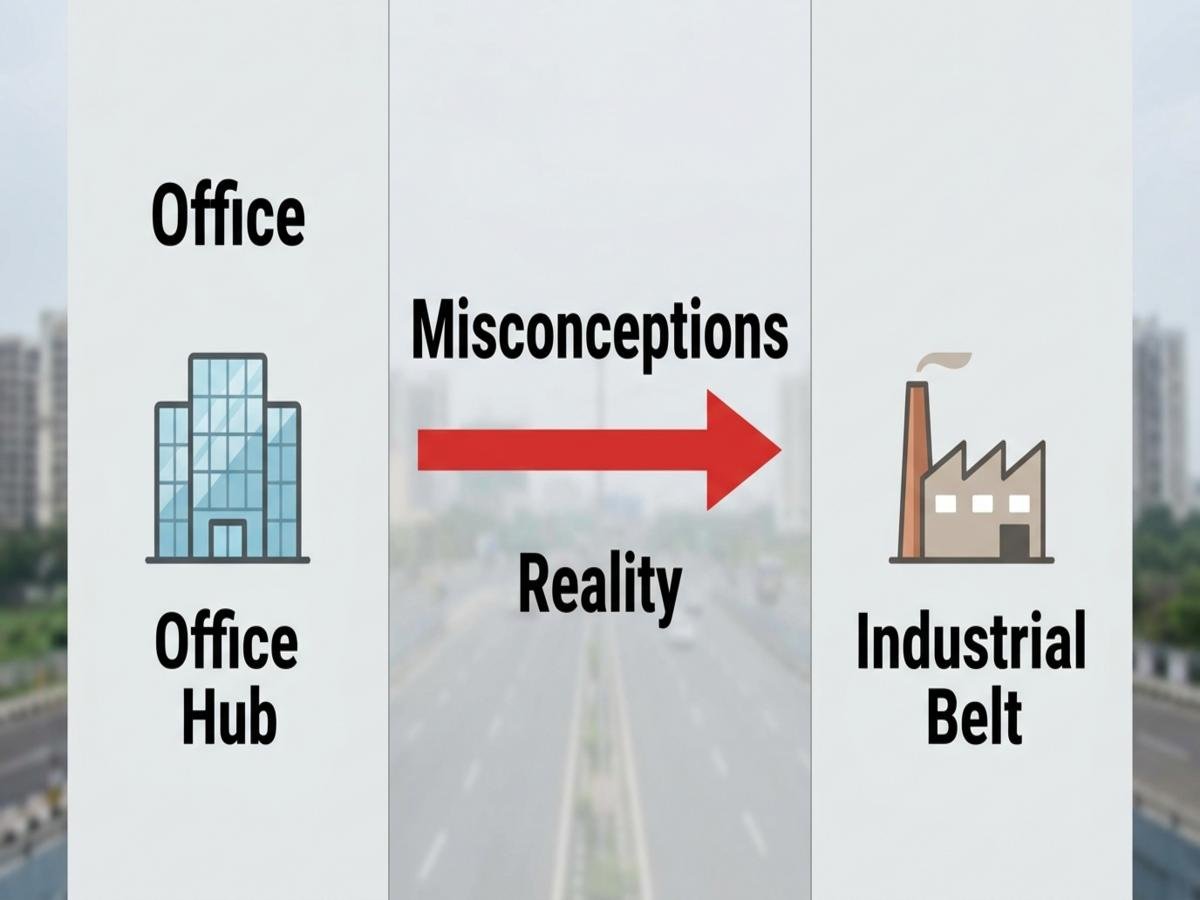
Five widely repeated assumptions about Mahape – from “it’s just a factory belt” to “Ghansoli station is right there” – are wrong enough to ruin a shortlist or a job decision. Correcting them is the difference between a good match and daily regret.
Assumptions vs Reality in Mahape
- ✗ “Mahape is a heavy industrial zone with chimneys and pollution everywhere.”
✓ Reality: It sits in TTC MIDC but is strongly associated with electronics, IT/ITES and business parks, plus data centres, not just heavy factories.
- ✗ “Ghansoli station is practically inside Mahape MIDC.”
✓ Reality: Ghansoli is the logical rail gateway, but most people connect via bus or auto; walking the entire way is more of an occasional choice than a daily norm.
- ✗ “Mahape and Ghansoli are basically the same area.”
✓ Reality: Ghansoli is the station and has its own office clusters; Mahape is the MIDC node and Electronic Zone; they work together but are not interchangeable.
- ✗ “Any industrial-plot building in Mahape can be used as a regular commercial office.”
✓ Reality: MIDC plot type, permitted use and approvals matter; you must check current norms before tweaking usage.
- ✗ “Mahape directly competes with Airoli’s Mindspace for the same tenants.”
✓ Reality: Airoli Mindspace is a premium corporate park; Mahape is a mid-market, MIDC-style cluster that suits different budgets, use-cases and brand expectations.
What Mahape’s Identity Means for You By Persona
Mahape’s hybrid MIDC identity means cost-effective, infra-backed offices for some, bus-first commutes for most, mid-market prospects for investors, and a “live nearby, work here” model for renters. The same facts feel very different depending on who you are.
Corporate occupier / SME
Mahape can be a strong choice if you’re an IT/ITES, tech, infra or back-office operation that values cost, power, data-centre proximity and mid-market space over shiny lobbies. You’ll likely base out of MBP or nearby office buildings in Electronic Zone and move staff via Ghansoli + bus/auto or company buses.
Next step: Deep-dive into the Mahape office rentals and building options guide for typical floor plates, buildings and what you can realistically expect at your budget.
Employee / job-switcher
A job in Mahape usually means a Harbour line train to Ghansoli, then a bus or shared transport into MBP/Electronic Zone or surrounding MIDC lanes. The area feels like a work zone: functional, with food and basic services, but not a mall-and-promenade office CBD.
Next step: Before accepting an offer, read the detailed guide to commuting to Mahape MIDC and our best areas to live near Mahape comparison so you can plan your daily life around it.
Commercial investor
Mahape’s demand comes from electronics, IT, ITES and infra/data-centre-linked occupiers inside an MIDC ecosystem, not from high-street retail or glamour corporate HQs. The play here is mid-market commercial or hybrid industrial–office assets with TTC infrastructure and long-term tech/infra tenants, not premium CBD appreciation stories.
Next step: Use the Mahape commercial property investor guide to understand risk, typical occupier profiles and how Mahape sits alongside Vashi and Airoli in your portfolio.
Renter / nearby-home searcher
Most Mahape workers don’t live in the middle of MIDC; they pick nearby nodes like Ghansoli, Koparkhairane or Airoli for better housing, schools and daily convenience, and commute in. If you work in Mahape, that’s likely the model you’ll follow too.
Where Mahape Sits Among Navi Mumbai Office Markets
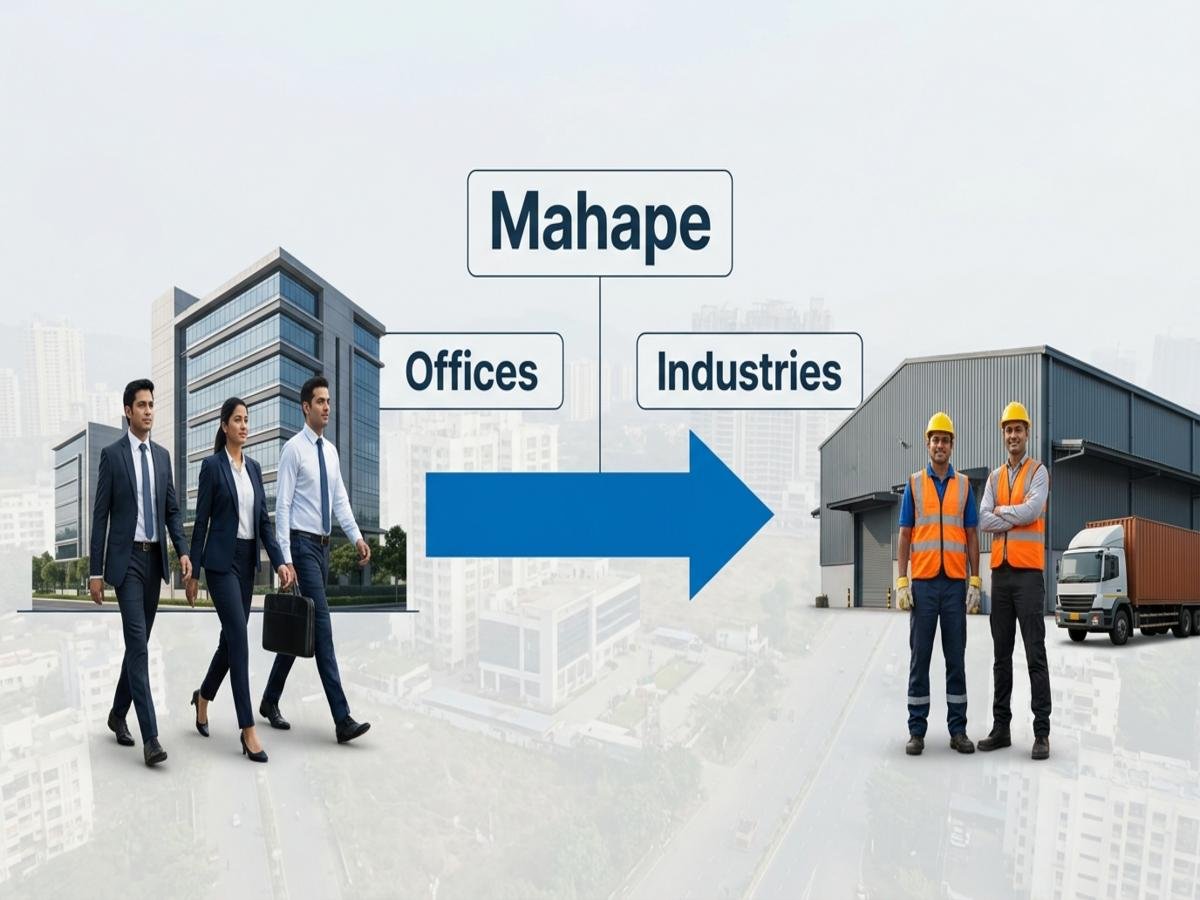
Within Navi Mumbai, Mahape sits below Vashi CBD and Airoli’s premium parks in polish and brand pull, but above more traditional industrial pockets like Pawane or Turbhe in terms of IT/office presence. It’s a mid-market, MIDC-zoned office–industrial hybrid that makes sense when you want electronics/IT cluster benefits without paying top-tier CBD prices.
Quick positioning snapshot
- Compared to Vashi: Mahape generally trades prestige and retail/F&B density for MIDC infra, data-centre neighbours and lower overall cost.
- Compared to Airoli (Mindspace and others): Mahape is more utilitarian and industrial-feeling but can be friendlier to budgets and certain IT/infra operations.
- Compared to Pawane/Turbhe: Mahape is more IT- and office-leaning, with fewer heavy-chemical or purely manufacturing uses in the immediate mix.
You don’t choose Mahape instead of Vashi or Airoli if you need a flagship office. You choose Mahape when the intersection of MIDC infra, tech-adjacent neighbours and mid-market costs align with your business.
One More Helpful Checklist: Is Mahape Right for You?
Use this as a final sense-check before you move to site visits.
- You’re okay with an MIDC industrial address if it gives you better infra and cost.
- Your work is IT/ITES, back-office, electronics/tech, infra or light industrial – not a prestige client-facing HQ.
- Your team can handle a Ghansoli + bus/auto commute rather than a straight station-front office.
- You like the idea of being near data centres, tech parks and other IT occupiers.
- You plan to live (or house staff) in Ghansoli, Koparkhairane or Airoli rather than inside the MIDC grid itself.
- You’re prepared to check MIDC and local permissions carefully before signing any lease or sale deed.
If you tick most of these boxes, Mahape deserves a serious look.
Conclusion
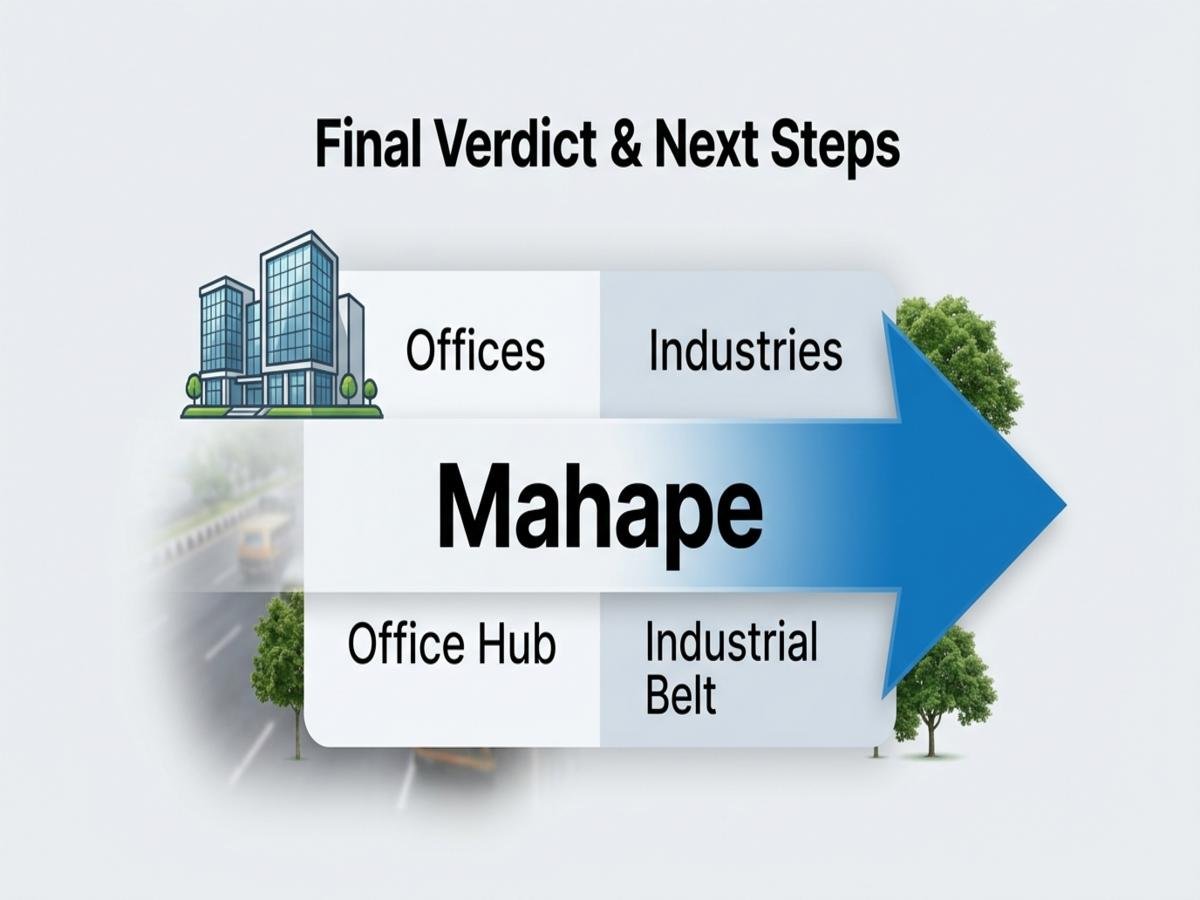
Mahape is not a classic “smokestack industrial belt” and not a polished CBD either. It’s a TTC MIDC node where electronics, IT, ITES, business parks and data centres sit on industrial-zoned land, creating a hybrid office–industrial environment that works brilliantly for some users and poorly for others.
If you’re considering Mahape, your practical next steps are:
- For occupiers and HR teams: read the Mahape office rentals and building options guide and the commuting to Mahape MIDC explainer.
- For investors: dig into the Mahape commercial property investor guide and the Navi Mumbai office markets overview to place Mahape in your wider portfolio.
- For employees and renters: compare Ghansoli, Koparkhairane and Airoli in the best areas to live near Mahape guide so your home and work decisions line up.
When you’re done, keep the 3-layer test in mind. If an “industrial area” that looks and feels like an electronics-and-IT office cluster matches your reality, Mahape might be exactly what you need.
FAQs
Frequently Asked Questions