Warehousing and Logistics Real Estate in Mahape MIDC: Supply Chain Advantage, Risks and Investment Guide
Mahape MIDC is useful for warehousing and logistics because it sits inside the TTC industrial belt with strong access to Thane-Belapur Road, Airoli, Ghansoli, Rabale, Vashi, Turbhe, and wider Navi Mumbai-Mumbai-Thane business routes. But it is not suitable for every logistics user. Buyers and tenants must check MIDC permissions, road width, truck movement, loading access, power load, fire safety, lease transfer status, and actual warehouse usability before committing.
Is Mahape MIDC Actually Good for Warehousing and Logistics Real Estate?
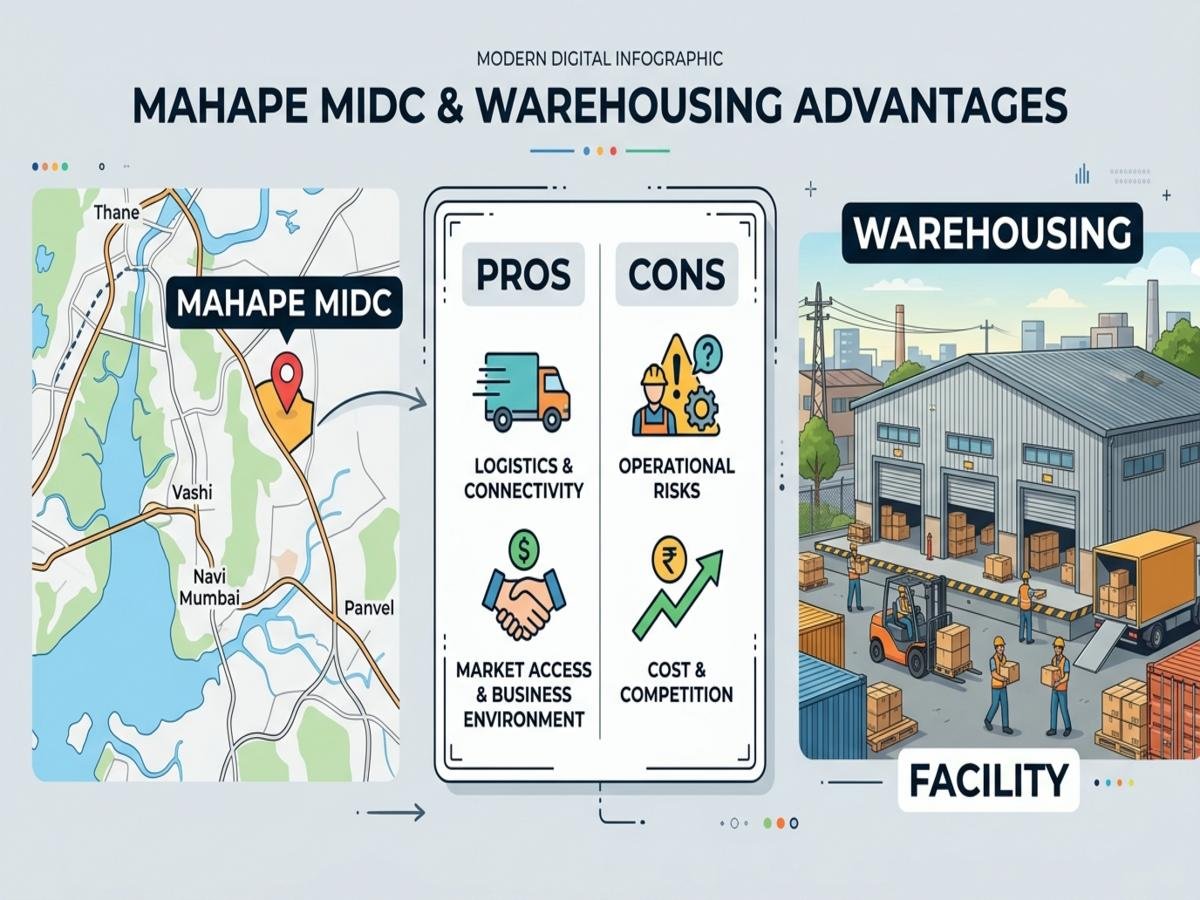
Yes, Mahape MIDC is good for warehousing and logistics real estate, but only for the right kind of business. It works best for mid-scale logistics, industrial supply, component storage, e-commerce support, spare-parts movement, and clean B2B distribution. It is not the ideal location for very large, low-margin bulk storage that needs huge floor plates and cheaper land.
Mahape’s biggest strength is not unlimited space. Its real strength is location efficiency. A business operating from Mahape can serve nearby industrial clients in Rabale, Pawane, Ghansoli, Airoli, Turbhe, and Vashi without being pushed too far into the outer industrial belts.
That is why Mahape should be seen as a mid-city industrial logistics node. It is more suitable for fast-moving, value-sensitive, client-facing, and service-linked logistics than for massive warehouse parks.
Quick Summary: Is Mahape MIDC Suitable for Your Warehouse or Logistics Use?
What Gives Mahape MIDC Its Supply-Chain Advantage in Navi Mumbai?
Mahape MIDC’s supply-chain advantage comes from its position inside the working industrial-commercial belt of Navi Mumbai. It is close enough to industrial clients, office users, residential demand centres, transport corridors, and service networks. This reduces response time for many businesses.
The important point is simple: Mahape is valuable because it helps movement become faster and more practical for certain goods. It is not valuable just because a brochure says “prime MIDC location.”
Access to Thane-Belapur Road and TTC Industrial Demand
Thane-Belapur Road is one of the strongest industrial and business spines in Navi Mumbai. Mahape’s access to this corridor gives logistics users a direct connection to the larger TTC Industrial Area, including Rabale, Ghansoli, Pawane, Turbhe, and nearby business pockets.
For many distributors and industrial suppliers, this matters more than being far away on a cheaper highway-side plot. If your customers are inside the TTC belt, your warehouse being near them saves time, fuel, coordination effort, and delivery uncertainty.
Mahape also benefits from surrounding industrial demand. The TTC belt has a large base of MSME units, technology-linked businesses, manufacturing-support firms, service providers, and backend operations. A warehouse here can support these businesses without needing long daily trips from outer industrial locations.
Proximity to Airoli, Ghansoli, Rabale, Vashi and Turbhe Business Belts
Mahape sits close to several important Navi Mumbai nodes. Airoli and Ghansoli bring IT, office, data-centre-linked and residential demand. Rabale and Pawane bring industrial and utility-heavy users. Vashi and Turbhe bring commercial, wholesale, service, retail and distribution demand.
This mixed demand makes Mahape useful for businesses that need both industrial access and urban proximity. For example, a company storing electronic components, tools, medical supplies, spare parts, branded inventory, or service equipment may prefer Mahape over a cheaper but distant warehouse belt.
The value is in turnaround. If a team can receive material, process orders, support nearby clients, and dispatch within Navi Mumbai or towards Mumbai-Thane routes faster, the higher rent or property cost may become easier to justify.
Why Mahape Works Better for Mid-Scale Logistics Than Large-Format Warehousing
Mahape is not designed like a large greenfield logistics park. Land is limited. Internal roads may not suit continuous heavy vehicle movement in every pocket. Many structures were originally built for industrial or mixed industrial use, not modern high-rack logistics.
So Mahape works better for:
- mid-sized warehousing
- business-to-business distribution
- industrial component storage
- fulfilment support
- repair and service logistics
- office-plus-storage operations
- clean storage linked to technology, electronics, equipment, pharma-support or business supplies
It is weaker for:
- very large bulk storage
- massive 3PL parks
- low-margin commodity warehousing
- heavy raw material storage
- operations needing large container yards
- businesses where land cost is the main deciding factor
This is where many buyers make mistakes. They see “MIDC” and assume every property can become a warehouse. In reality, the exact road, gate, structure, permissions, power load, floor strength and drainage decide whether the property is truly logistics-ready.
Which Logistics and Warehouse Users Are Best Suited for Mahape MIDC?
Mahape MIDC suits businesses that need fast access to Navi Mumbai’s industrial and commercial network. It is not for every warehouse user, but for the right business it can be a strong operational base.
Industrial Suppliers and Component Storage
Industrial suppliers serving the TTC belt can benefit from Mahape. If a business supplies machine parts, electrical components, tools, packaging material, small equipment, technical consumables or maintenance items, being close to nearby industrial clients reduces delivery friction.
For such businesses, the warehouse is not just storage. It is a response centre. A client in Rabale, Ghansoli, Airoli, Pawane or Turbhe may need urgent delivery, replacement, testing, repair or dispatch support. Mahape makes that possible without pushing the operation too far away.
E-Commerce and Urban Distribution Support
Mahape can also work for e-commerce fulfilment and urban distribution, especially where the inventory is manageable in size and value-sensitive. A business delivering across Navi Mumbai, Thane-side pockets, parts of Mumbai and nearby industrial-commercial areas may find Mahape useful.
However, this does not mean every e-commerce operator should choose Mahape. If the business needs very large sorting areas, continuous trailer movement, or massive low-cost storage, outer belts may be better. Mahape is more useful for smaller, faster and more controlled fulfilment operations.
Service Centres, Spare-Parts Storage and Repair-Linked Logistics
Mahape is especially practical for service-linked logistics. This includes spare-parts storage, equipment repair support, IT hardware movement, electronics service inventory, tools, branded technical goods, and maintenance support operations.
These users often need a presentable location, reliable access to business clients, and a combination of office and storage space. Mahape’s hybrid industrial and business environment supports this better than purely heavy industrial belts.
Light Manufacturing With Storage Requirement
Some light manufacturing businesses also fit Mahape if their storage, power, labour, compliance and loading needs are manageable. A unit may manufacture, assemble, pack, store and dispatch from the same location.
But the buyer must not assume permission automatically. If the property is being used for storage-heavy activity, check whether the use is permitted under MIDC rules and whether any conversion, fire, building or operational approval is required.
What Type of Property Should Buyers Look for in Mahape MIDC?
The right property type depends on the business workflow. A warehouse user should not shortlist a property only by area and rent. In Mahape, the wrong structure can look affordable but become expensive after compliance, retrofit, access and operational problems.
Industrial Shed
An industrial shed can work well if it has proper access, enough height, strong flooring, safe electrical load, and usable loading-unloading space. But not every shed is warehouse-ready.
Modern warehouse racking can create concentrated point loads on the floor. A normal industrial slab may not be strong enough for heavy multi-level storage. If the shed was built for light manufacturing, do not assume it can automatically handle high-rack warehousing.
MIDC Plot With Built Structure
A MIDC plot with an existing structure can be attractive for long-term users and investors. But the buyer is usually dealing with leasehold rights, not simple freehold ownership. That means MIDC transfer, dues, permissions, permitted use and earlier approvals become very important.
The built structure should also be checked carefully. Old construction, unapproved extensions, weak flooring, poor drainage, or inadequate fire safety can turn a good-looking asset into a costly problem.
Small Warehouse or Godown
Small warehouses and godowns may work for local distribution, spare-parts storage, equipment storage, packaged goods and low-intensity logistics. These are common requirements in Navi Mumbai because many businesses do not need huge warehouse parks.
But the word “godown” is often used loosely. A buyer should verify whether the property is legally allowed for the intended storage use. Fire safety, ventilation, access, insurance and local authority compliance should be reviewed before operations begin.
Ground-Floor Industrial Unit
Ground-floor units are often more practical for logistics because movement is easier. Loading, unloading, dispatch and inventory handling become faster when the unit has direct vehicle access.
Still, a ground-floor unit is not automatically better. The internal road must support the required vehicle type. The gate should allow turning. The floor should tolerate the load. Monsoon water entry must be checked seriously, especially in vulnerable pockets.
Office-Plus-Storage Format
This is one of Mahape’s more practical formats. Many businesses need a small office team, customer coordination desk, backend support, and inventory storage in the same location.
For example, a technical service company may keep engineers, admin staff, parts inventory and dispatch activity under one roof. Mahape suits this model better than a remote warehouse belt because it offers business access along with industrial utility.
When Does Buying a Warehouse or Industrial Property in Mahape MIDC Make Sense?
Buying in Mahape MIDC makes sense when the business has a long-term operational requirement and the property is legally, structurally and practically fit for that use. It should not be bought only because “MIDC land always appreciates.”
Buying may be suitable when:
- the business needs permanent presence in the TTC belt
- the operation requires custom storage, racking, power or cold-room investment
- the buyer wants control over modifications and long-term use
- the property has clean MIDC transfer status
- the structure has good access, floor strength and fire compliance potential
- the buyer understands the total acquisition cost, not just the headline price
Mahape is a premium market compared to many outer industrial pockets. Research data indicates that 600 sq. m. industrial plots in premium Mahape pockets may be quoted in the multi-crore range, and built-up resale property values can vary significantly depending on location, road frontage, construction quality and document status. These figures should be treated as market indicators, not fixed rules.
The buyer must also consider statutory and authority-linked costs. MIDC transfer charges, ULC-related charges where applicable, stamp duty, registration, legal due diligence, consultant fees, compliance upgrades, structural repairs, fire systems and power enhancement can materially change the real purchase cost.
Buying is strongest when the property solves a long-term operational problem. It is weak when the buyer is only chasing rental yield without understanding MIDC leasehold rules and warehouse usability.
When Is Leasing Better Than Buying in Mahape MIDC?
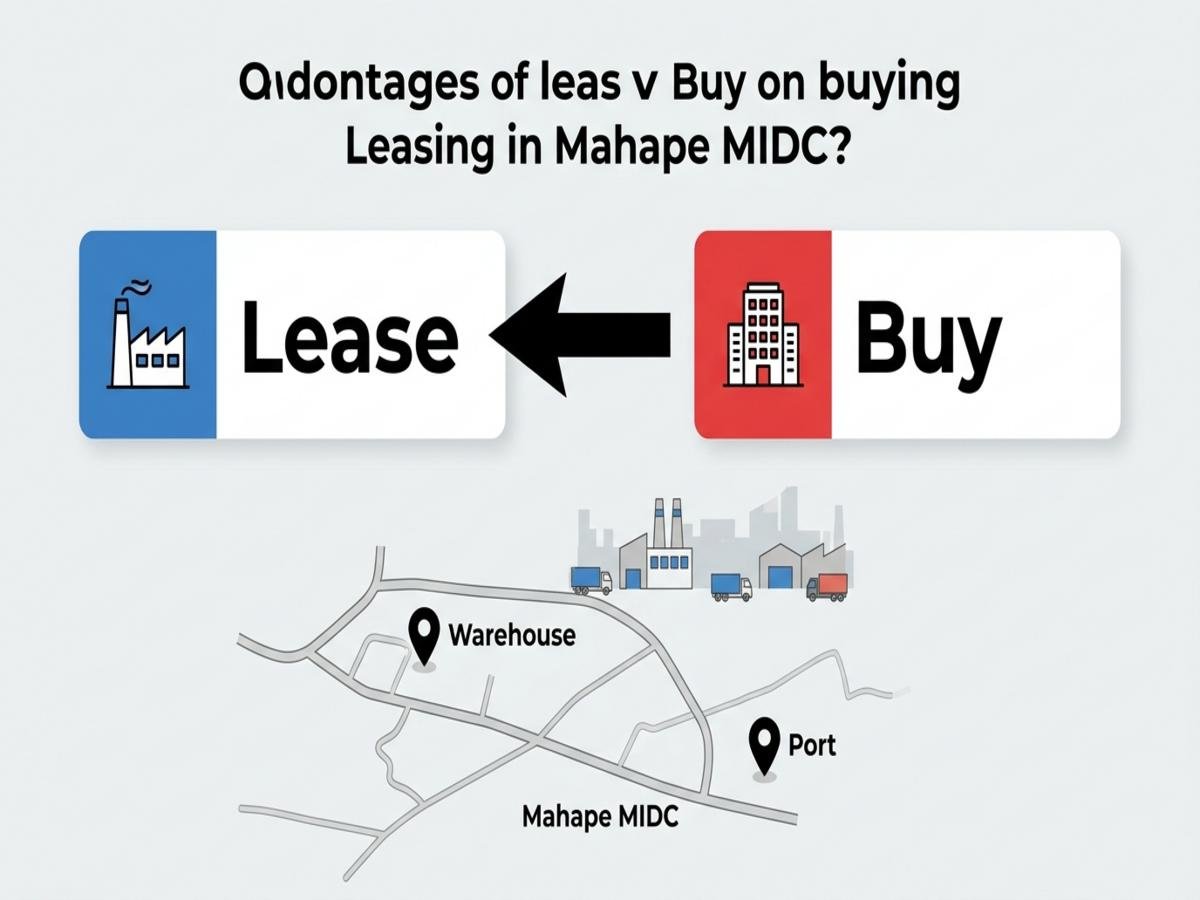
Leasing is better when the business needs flexibility, wants to preserve capital, or is still testing demand in Navi Mumbai. Many logistics and distribution businesses operate on client contracts, seasonal demand, and changing inventory volumes. In such cases, buying may lock too much money into real estate.
Leasing may be better when:
- the business has short-term or uncertain contracts
- inventory volume changes frequently
- the company wants to test Mahape before committing long term
- the operation may later shift to a larger warehouse belt
- the user does not want to handle MIDC transfer complexity
- capital is better used for vehicles, people, technology, inventory or working capital
However, leasing in MIDC property also needs proper checks. A simple private rent agreement may not be enough if MIDC subletting permission is required. The tenant should check whether the landlord has the right to lease the premises for the intended use and whether the required NOC or permissions are in place.
Warehouse rents in Mahape and nearby TTC pockets can vary widely depending on area, access, condition, power, clear height, structure and compliance. A cheaper lease may become expensive if trucks cannot enter properly, material cannot be stacked safely, or the operation faces authority objections.
What Should Investors Understand Before Treating Mahape as a Logistics Rental Market?
Mahape can attract logistics and industrial tenants, but it is not a blind rental-income market. Tenant demand is practical. Good tenants do not pay only for the address. They pay for usability, compliance and operational confidence.
Tenant Demand Is Practical, Not Purely Speculative
A serious tenant will ask basic but important questions. Can goods enter easily? Is there loading space? Is the building safe? Is the permitted use clear? Can power load support operations? Is the landlord ready with proper documentation? Will the monsoon damage inventory?
If the answers are weak, the property may remain vacant even in a good location.
Rent Depends on Usability More Than Address Value
In Mahape, two properties with similar area can earn different rents. The better property may not always be the one closest to the main road. A unit with wider access, better internal movement, stronger floor, cleaner documentation and fire compliance potential can be more valuable than a visible but operationally poor unit.
For logistics tenants, movement is money. Every delay in loading, unloading, truck waiting, inventory handling or inspection affects the business.
Exit Value Depends on Clean Papers and Operational Fit
Investors should remember that resale value depends heavily on clean paperwork and buyer confidence. MIDC lease transfer status, dues, approvals, permitted use, old modifications, fire safety gaps and structural condition can all affect exit.
A buyer may like the location but still reject the asset if the legal or technical due diligence creates risk.
What Are the Most Important MIDC and Legal Checks Before Buying or Leasing?
MIDC checks are central to Mahape industrial property decisions. This is not ordinary residential or commercial property. Many assets are leasehold industrial properties where authority permissions, transfer rules, permitted use and compliance conditions matter.
MIDC Transfer Status and Leasehold Rights
A buyer must check whether the property has clean MIDC allotment and transfer history. The seller should be able to show relevant allotment documents, lease documents, transfer permissions, dues status and authority correspondence.
If there are pending dues, unresolved transfer issues, unauthorized occupation or unclear rights, the transaction can become risky.
Permitted Use and Zoning Compatibility
This is one of the biggest traps in Mahape. An industrial plot may not automatically allow full-scale warehousing or third-party logistics use. Research indicates that in developed MIDC industrial areas, default storage or warehousing use may be limited unless proper conversion or permission is obtained.
The Maharashtra Logistics Policy 2024 has improved the policy environment for logistics by recognizing logistics as an industry and infrastructure-linked activity. However, full conversion to logistics or warehousing use may involve a conversion premium based on prevailing ready reckoner rates. This must be verified with MIDC or a qualified consultant before finalising the deal.
Building Approval, OC and Structural Changes
Buyers should check whether the building is approved as constructed. Many old industrial properties may have extensions, mezzanine floors, partitions, sheds or internal changes. These may look useful but can create legal and safety issues.
If the business needs racking, cold storage, heavy machinery, additional office space or structural modification, technical approval and structural certification may be required.
Fire Safety, Power Load and Pollution-Related Permissions
High-rack storage and larger warehouse use need proper fire safety. Standard fire extinguishers are not enough for many warehouse operations. Depending on the use, requirements may include sprinklers, smoke detection, emergency exits, fire access and Provisional Fire NOC.
Power load is another practical issue. A property suitable for simple storage may not support cold storage, equipment, packaging lines, automation or heavy operations without power enhancement.
Pollution-related permissions may also matter depending on stored goods, manufacturing process, chemicals, batteries, waste or hazardous material. This should be checked before possession, not after starting operations.
What Ground-Level Checks Matter More Than the Brochure?
A Mahape warehouse should be inspected like an operating site, not like a normal property. The brochure may show area, rent and location. But the business will run on roads, gates, floors, drainage, power and permissions.
Road Width and Truck Turning Radius
Check whether the approach road can actually handle the vehicles your business uses. A 40-foot container, large truck, tempo or regular delivery van will have different turning needs.
Being near Thane-Belapur Road is useful only when the internal road and gate support movement. If trucks cannot turn comfortably or must block the lane during loading, the location advantage reduces quickly.
Loading-Unloading Space
Many properties look good until the first dispatch day. There should be enough space for loading, unloading, temporary vehicle halt, material staging and safe movement of workers.
If loading happens directly on a narrow road, the business may face delays, neighbour disputes, traffic complaints and operational stress.
Container or Tempo Movement Restrictions
Heavy vehicle movement in and around Thane and connected routes can be affected by traffic police restrictions. As per the research dossier, heavy vehicles with 10 or more tyres may face controlled entry windows such as 11 AM to 5 PM and 10 PM to 6 AM. These rules can change, so operators must verify current restrictions before planning dispatch schedules.
For a logistics user, this is not a minor issue. Missing a vehicle window can mean idle trucks, delayed deliveries, driver overtime and customer complaints.
Monsoon Drainage and Internal Road Condition
Mahape and nearby Rabale-side pockets can face local drainage stress during the monsoon. The Parsik Hill gradient creates strong runoff, and where natural nullahs or drainage paths are blocked or disturbed, water can enter internal roads, ground-floor units or basements.
A property should be inspected for elevation, water marks, floor level, drainage outlets, basement risk, approach road waterlogging and past monsoon history. Do not inspect only in summer and assume the same condition will remain in July.
Labour, Transport and Last-Mile Availability
A warehouse does not run only on land and building. It needs staff, loaders, supervisors, drivers, transport vendors, repair support, food access and daily commute options.
Mahape benefits from its position near working residential and industrial nodes, but the exact site still matters. A deeper pocket with poor last-mile access may create hiring and attendance issues.
How Does Mahape Compare With Turbhe, Pawane, Rabale, Taloja, Kalamboli and Panvel for Logistics?
Mahape should not be compared only by price. Each Navi Mumbai industrial and logistics pocket has a different operating character. The right choice depends on the business model.
The simple decision is this: choose Mahape when proximity, client access, clean logistics and operational speed matter more than the cheapest per-square-foot cost. Choose Taloja, Panvel or Kalamboli when large land, heavy truck movement and lower occupancy cost matter more.
What Are the Main Risks of Warehousing and Logistics Real Estate in Mahape MIDC?
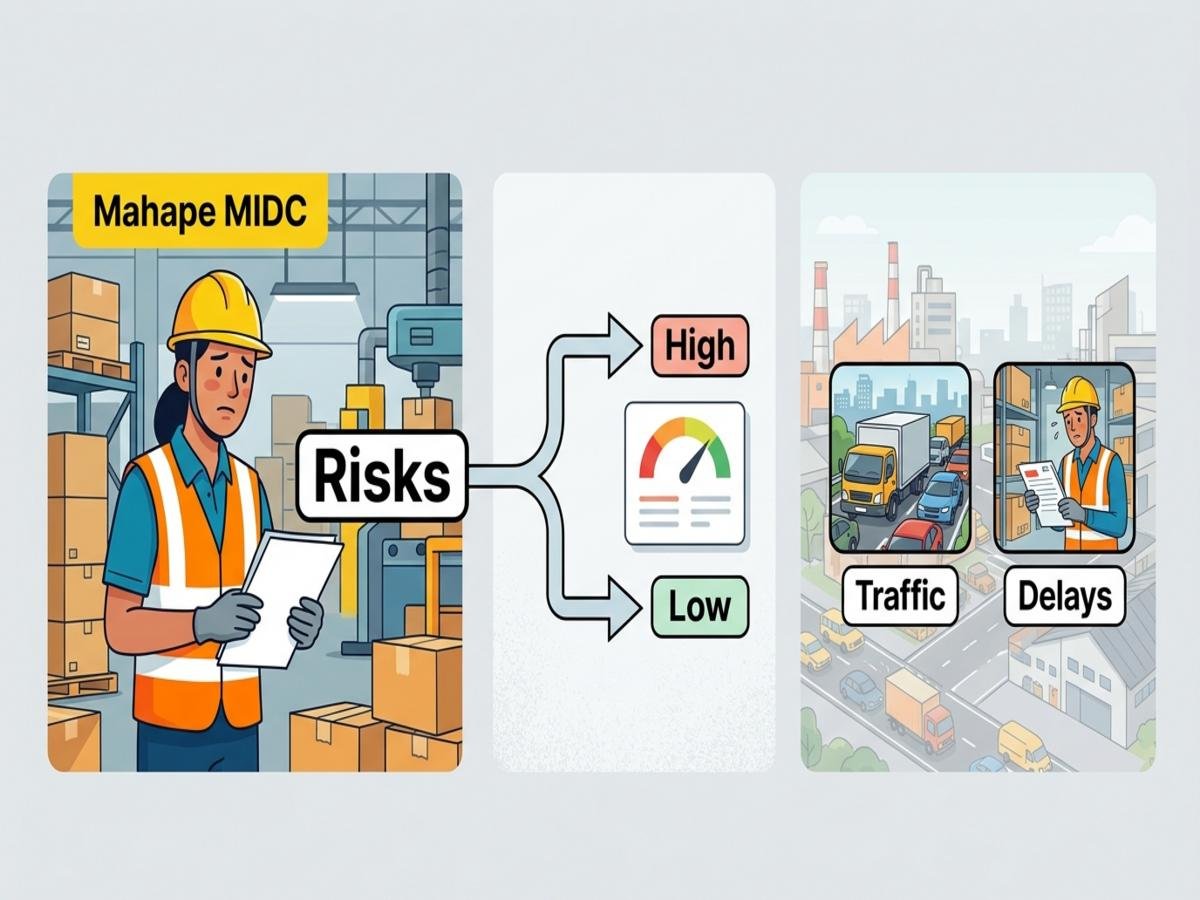
Mahape’s premium can be justified only when the property is actually usable. The biggest risk is paying a premium price for a property that fails legal, structural or operational checks.
Paying Premium Rates for Weak Operational Access
A property may look attractive because it is in Mahape, but if the internal road is narrow, the gate is poorly placed, or vehicles cannot wait safely, logistics performance will suffer.
For warehouse users, poor access directly affects business. Delayed dispatch, blocked vehicles and loading stress can reduce the benefit of being in a premium location.
Buying Without Checking Permitted Industrial Use
This is a serious risk. A buyer may assume that because the property is in MIDC, full warehousing is allowed. That assumption can be wrong.
If the use requires conversion, approval, NOC or compliance upgrades, the real cost may be much higher than expected. Always verify before paying token money.
Assuming Every MIDC Asset Is Suitable for Logistics
An industrial gala, old shed or small unit may be suitable for manufacturing or storage but not for modern logistics. Warehousing needs height, floor strength, loading access, fire safety, ventilation and movement space.
The physical requirements are different. A warehouse is not just an empty industrial room.
Ignoring Ageing Structures and Retrofit Cost
Many old structures need repairs, floor strengthening, fire upgrades, roofing work, electrical improvements, drainage correction or loading modifications. These costs can be heavy.
A property that looks cheaper at purchase may become expensive after retrofit. Investors and users should calculate the total usable cost, not just the deal price.
Practical Example: How Two Similar Mahape Properties Can Perform Differently
Consider two warehouse properties in Mahape MIDC with similar built-up area.
Property A is closer to a visible main road. The rent is higher because the address looks better. But the road outside is often blocked by parked trucks, the gate turning radius is poor, and the building has no clear fire compliance for high-rack storage. The landlord offers only a basic leave-and-license agreement without properly clarifying MIDC subletting permission.
Property B is slightly deeper inside the sector. It has less visibility, but the internal road is wider, the gate allows smoother vehicle entry, the floor has better load-bearing potential, drainage is better, and the owner is willing to provide proper documents and permissions.
For a logistics tenant, Property B may perform better. It may reduce delays, avoid compliance stress, protect inventory during monsoon, and retain better tenants for longer. In Mahape, usability can beat visibility.
Conclusion
Mahape MIDC should be seriously considered by businesses that need fast access to Navi Mumbai’s industrial and commercial network. It is suitable for clean logistics, B2B distribution, component storage, spare-parts supply, service-linked warehousing, e-commerce support and office-plus-storage operations.
It is also suitable for investors who understand MIDC documentation, leasehold transfer, permitted use, structural quality and tenant requirements.
Mahape is not suitable for everyone. If the business needs very large low-cost warehousing, bulk commodity storage, continuous heavy truck movement or large logistics park scale, Panvel, Taloja, Kalamboli or other outer logistics belts may make better sense.
The practical rule is clear: choose Mahape for speed, access, client proximity and controlled logistics. Do not choose Mahape only because the property has an MIDC address.
FAQ's
Frequently Asked Questions