
NMMC Infrastructure and TTC Industrial Regulations: Factory Owner Guide
Factory owners in TTC Industrial Area should not judge a unit only by rent, plot size, or location. Before operating, buying, leasing, or expanding, they must check permitted industrial use, NMMC-side infrastructure, MIDC-related permissions, fire safety, drainage, power load, waste disposal, truck access, building approvals, and whether the actual business activity matches the sanctioned use. A factory may look usable on the ground but still carry serious compliance, operational, insurance, or resale risks.
TTC is one of Navi Mumbai’s most important industrial belts, covering working pockets around Mahape, Rabale, Ghansoli, Pawane, Turbhe, Kopar Khairane, and the Thane-Belapur Road corridor. But it is not one simple industrial zone where every unit can be used for every activity. The real suitability of a factory depends on three things: legal permission, physical infrastructure, and operational practicality.
Quick Summary: What Factory Owners Must Check in TTC Industrial Area
| Check area | What to verify | Why it matters |
|---|---|---|
| Permitted use | Whether the activity matches industrial permission, allotment terms, and sanctioned use | Wrong use can create regulatory and insurance problems |
| NMMC infrastructure | Road condition, drainage, water, waste collection, civic access, property tax records | Poor infrastructure can disturb daily operations |
| MIDC or industrial-layout permissions | Transfer, allotment, lease terms, change of activity, plot use, construction permission where applicable | Industrial property is not always like normal freehold property |
| Fire safety | Fire NOC, access, exits, storage layout, extinguishers, hydrants where required | Fire risk affects legality, safety, and insurance |
| Pollution and waste | MPCB consent, effluent, emissions, hazardous waste, solid waste handling | Required for many manufacturing and processing activities |
| Power load | Sanctioned load, electrical safety, backup, machinery requirement | Under-capacity power can stop production |
| Building documents | Approved plan, completion/occupancy status, structural condition, illegal mezzanine or extensions | A usable-looking unit may still be risky |
| Access and logistics | Truck approach, turning radius, loading/unloading, internal road width | Daily factory movement depends on real access, not map distance |
What Should Factory Owners in TTC Check Before Operating, Buying, or Leasing?
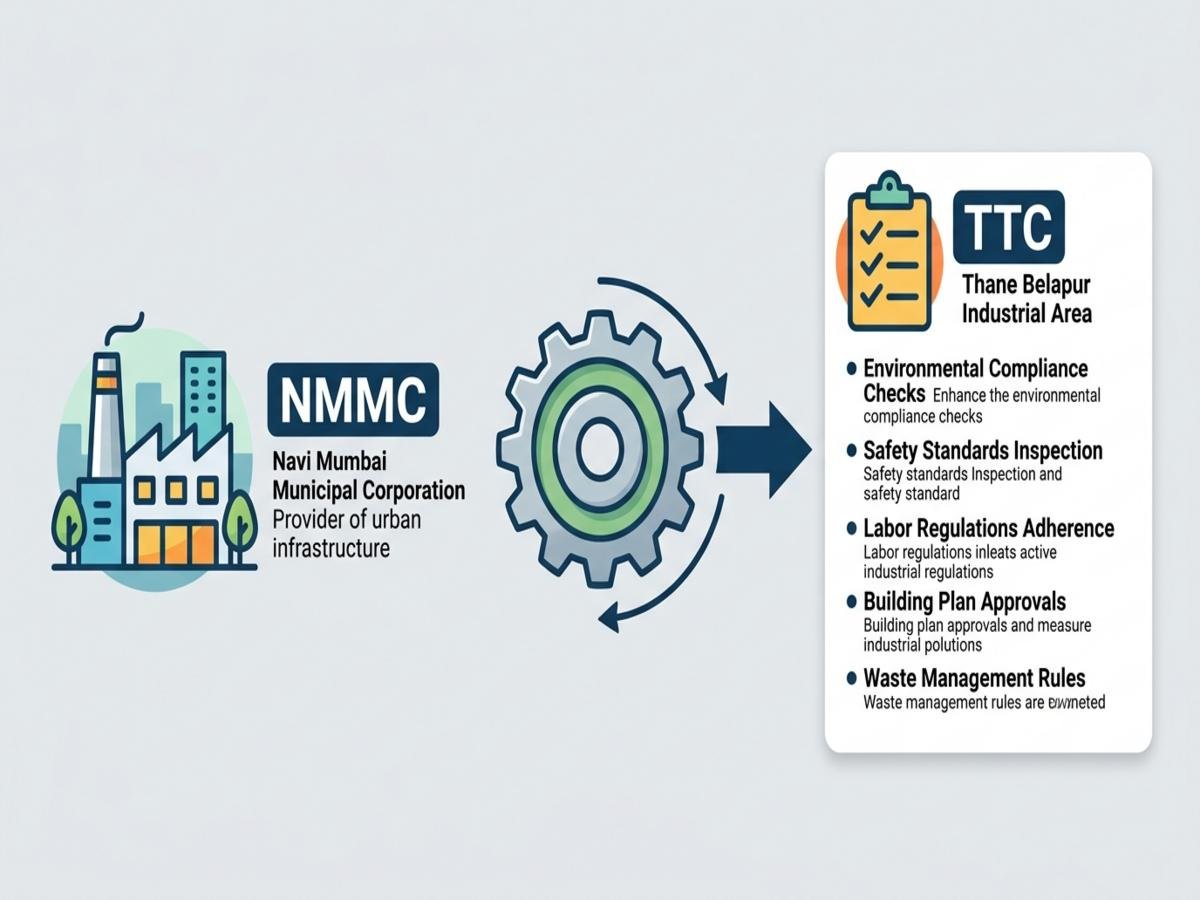
The first check is simple: does the factory unit legally and physically support your actual business activity?
A small packaging unit, an electronics repair setup, a fabrication shop, a warehouse, a chemical storage unit, and a food-processing unit do not carry the same risk. They may all look “industrial” to a normal buyer, but the compliance requirement, fire risk, power load, waste handling, and building suitability can be very different.
Factory owners should check four layers before committing money:
1. Legal use: Is your activity allowed in that unit, plot, or building? 2. Civic infrastructure: Are road, drainage, water, waste, and access conditions workable? 3. Operational fit: Can your staff, machinery, vehicles, raw material, and finished goods move smoothly? 4. Document safety: Are the ownership, lease, transfer, building approval, and dues clear?
This is especially important in older industrial pockets where many units have changed hands, changed usage, or added internal alterations over time.
Why TTC Industrial Area Is Not One Uniform Industrial Zone
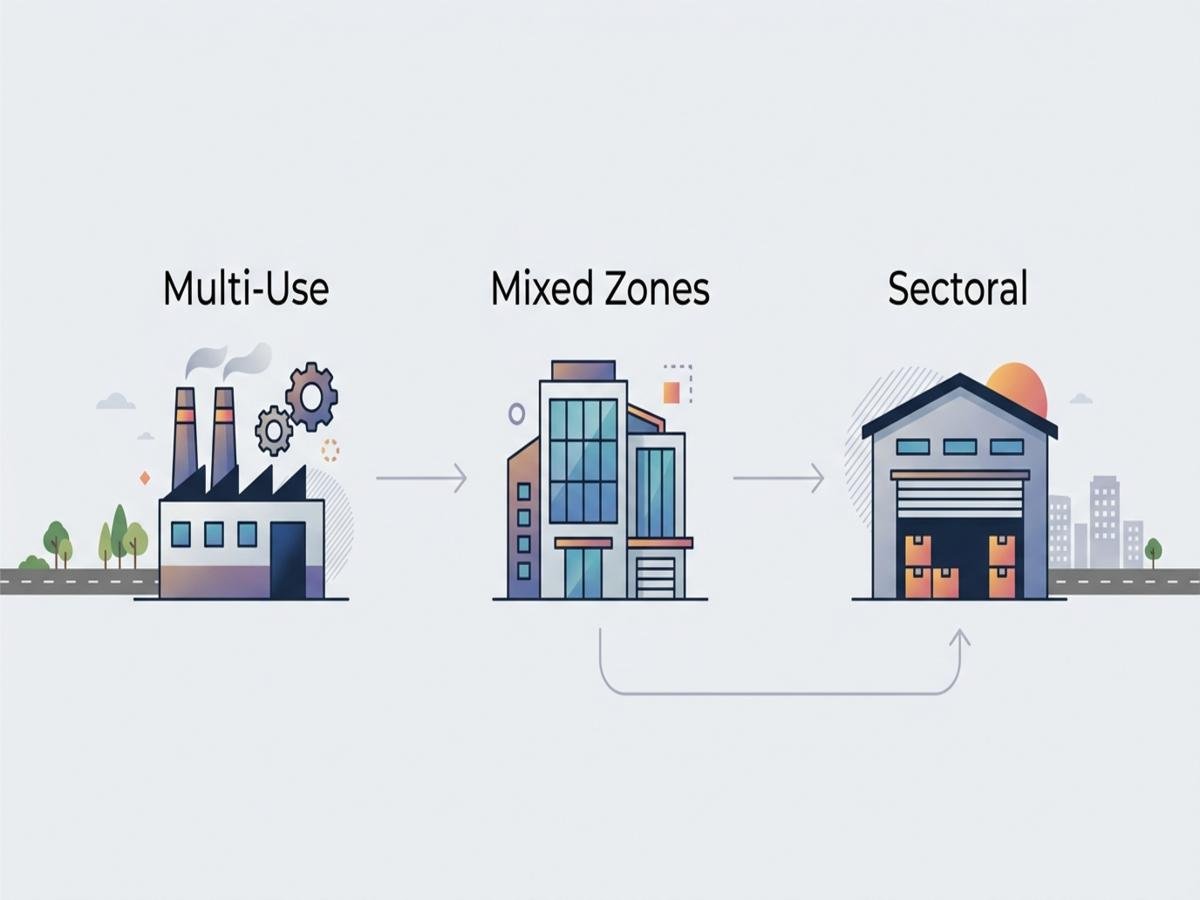
TTC Industrial Area is often spoken about as one belt, but the ground reality changes from pocket to pocket. A Mahape-side office-industrial unit is not the same as a heavy-use fabrication shed in Rabale or a logistics-support unit near Turbhe or Pawane.
Mahape, Rabale, Ghansoli, Pawane, Turbhe, and Kopar Khairane Differ in Real Usability
Mahape is stronger for IT-support, electronics, service units, small offices, light industrial use, and selected warehouse-style operations. Rabale and Pawane have stronger legacy industrial character, with many engineering, fabrication, storage, and manufacturing-linked units. Turbhe has strong access value because of its market, transport, and industrial-commercial mix. Ghansoli and Kopar Khairane have a mixed character where industrial activity, offices, services, and residential pressure often sit close to each other.
This matters because a factory owner should not ask only, “Is this in TTC?” The better question is, “Does this exact pocket support my activity without future friction?”
Why Road Width, Truck Movement, and Surrounding Activity Matter
Factories do not survive only on address value. They need movement.
If the internal road is narrow, loading space is blocked, trucks cannot turn easily, or neighbouring activity creates congestion, daily operations become difficult. For a warehouse, even 15 extra minutes per trip can affect cost. For a manufacturing unit, delayed raw material movement can disturb production. For an export-linked or dispatch-heavy unit, last-mile friction can slowly reduce profitability.
A good TTC location should be judged by real vehicle movement during working hours, not just by Google Maps distance to Thane-Belapur Road.
Which Authority Matters for What: NMMC, MIDC, Fire Department, Pollution Control, and Property Records?
Factory owners often get confused because multiple authorities may matter for one industrial unit. NMMC may matter for civic infrastructure and property-related services. MIDC or industrial-layout authorities may matter for allotment, transfer, lease terms, or permitted industrial use. Fire and pollution departments may matter depending on the building, activity, storage, and operational risk.
This is where many owners make mistakes. They assume one approval means everything is fine. It rarely works that way.
NMMC Infrastructure and Civic Services
NMMC’s role becomes important where civic services affect factory operations. This may include roads, drainage, stormwater flow, solid waste systems, property tax records, water connections, local permissions, and municipal service access.
For a factory owner, these are not small issues. Bad drainage can damage stock and machinery. Poor road condition can affect dispatch. Water irregularity can disturb production or cleaning processes. Unclear property tax or municipal dues can create issues during sale, lease renewal, or documentation.
MIDC or Industrial-Layout-Related Permissions
In many industrial pockets, factory owners must pay close attention to the original allotment, lease conditions, transfer permissions, permitted activity, building approval, and any restrictions on use. Industrial land and galas are not always as simple as buying a normal residential flat.
If a unit has been transferred multiple times, the buyer or tenant should check whether the chain is clean. If the activity has changed from original use, that also needs careful verification.
Fire Safety and Emergency Access
Fire safety is not only about getting a paper certificate. It is about whether emergency response can actually work.
A unit with blocked access, poor internal layout, unsafe electrical load, combustible storage, illegal mezzanine floors, or inadequate exits can become dangerous. It can also create problems in insurance claims after an incident.
Pollution and Waste-Related Compliance
Manufacturing, processing, fabrication, chemical handling, paint work, food processing, printing, metal treatment, and similar activities may require pollution-control checks. The requirement depends on the nature of the activity, discharge, emissions, waste, category, and process.
A simple office or low-risk service activity is different from a unit generating effluent, fumes, dust, hazardous waste, or heavy solid waste. Factory owners should not assume that being in an industrial area automatically solves pollution compliance.
What Infrastructure Conditions Can Quietly Damage Factory Operations?
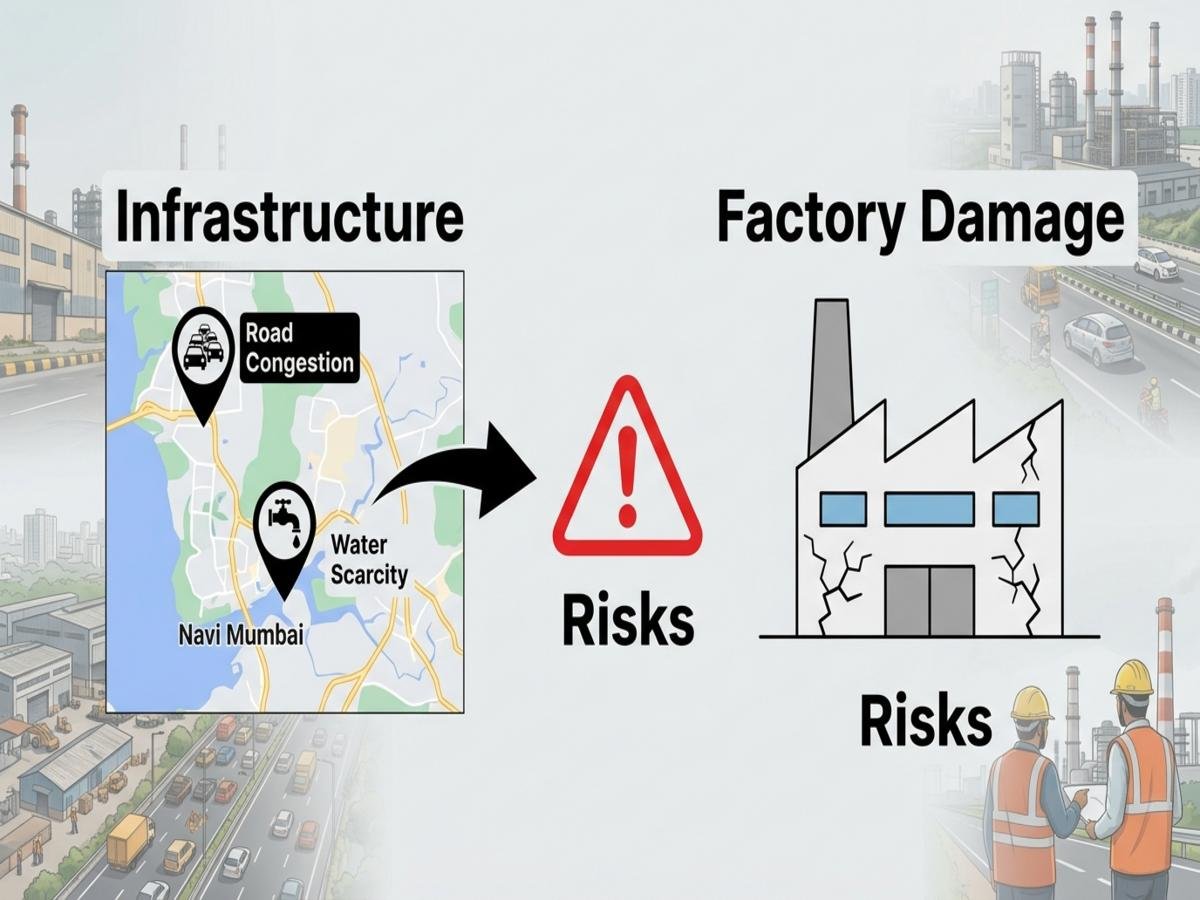
A factory can have legal paperwork and still fail operationally if infrastructure does not support the business.
The most common hidden issues are drainage, power, water, internal access, and loading space. These are not glamorous points, but they decide whether the factory runs smoothly every day.
Drainage and Monsoon Waterlogging Risk
In parts of the TTC belt, monsoon conditions can expose weaknesses that are not visible in summer. Waterlogging near approach roads, poor stormwater flow, low-lying entry points, blocked drains, or backflow near storage areas can damage goods and machinery.
This is especially serious for warehouses, packaging units, electronics storage, paper goods, food-related material, precision machinery, and any business where moisture can create loss.
Before leasing or buying, owners should visit during or immediately after heavy rain if possible. At minimum, they should ask neighbouring units about monsoon history.
Power Load and Backup Planning
Power load is one of the most practical factory checks. A unit may have enough space, but not enough sanctioned load for machines, compressors, welding, cold storage, CNC equipment, packaging lines, or heavy electrical systems.
Factory owners should check existing sanctioned load, upgrade possibility, transformer capacity, internal wiring condition, earthing, panel safety, backup needs, and whether the landlord is making only verbal promises.
For tenants, this is even more important because power upgrade delays can disturb the entire business launch.
Water Supply, Sewage, and Effluent Handling
Water requirement changes by business type. A small office-support unit may need basic water supply, while food processing, washing, cooling, cleaning, or chemical-linked work may need more careful planning.
Owners must also understand the difference between normal sewage, industrial effluent, and hazardous discharge. If the process creates wastewater or chemical discharge, it cannot be treated like ordinary domestic waste.
Internal Road Condition and Truck Turning Space
Many industrial deals look attractive until the first truck arrives.
Before finalising a unit, check whether tempo, container, or heavy vehicle movement is actually possible. Look at road width, turning radius, parking discipline, loading bay access, gate height, entry slope, and whether neighbouring units block movement during peak hours.
For logistics-support, warehouse, and dispatch-heavy units, this is not optional. It is the business model.
> Caution for factory owners: A lower rent in a difficult-access lane may become expensive if daily vehicle movement, loading, unloading, labour movement, or dispatch timing gets affected.
What Regulations Become Important Before Changing Factory Use?
Changing the use of a factory unit is one of the most misunderstood areas in TTC.
A unit that was earlier used for light assembly may not automatically be suitable for chemical storage. A warehouse may not automatically become fit for fabrication. An office-support unit may not be suitable for manufacturing just because it is inside an industrial belt.
Manufacturing to Warehouse
When a manufacturing unit is converted into a warehouse, owners should check storage load, fire category, vehicle access, stacking height, insurance conditions, and whether the type of goods stored creates additional compliance requirements.
For example, storing packaging material is different from storing chemicals, paints, solvents, batteries, or combustible goods.
Warehouse to Assembly or Fabrication
A warehouse may have floor space, but assembly or fabrication needs power load, ventilation, worker safety, machinery layout, welding safety, waste handling, and sometimes pollution-control checks.
The mistake is assuming that empty space equals factory suitability. It does not.
Office-Plus-Industrial Hybrid Use
Many modern TTC units now operate as hybrid spaces: small office in front, operations or service area behind. This can work well for electronics repair, IT hardware service, design-plus-assembly, automation support, or small engineering service businesses.
But the owner must still check whether the building, electricity, fire access, and sanctioned use support the actual work being done.
Storage of Chemicals, Combustible Material, or Heavy Goods
This is where caution must be strongest. Chemical storage, combustible material, heavy machinery, fuel, gases, paint, solvents, batteries, and similar items can change the risk profile completely.
In such cases, factory owners should not rely only on broker statements. They should verify fire, pollution, storage, insurance, and building-safety requirements with qualified professionals and relevant authorities.
What Documents Should Factory Owners Check Before Buying or Leasing a Unit?
Industrial property due diligence in TTC should be document-led. A clean-looking factory can hide legal or operational risk if the paper trail is weak.
Here is a practical checklist for buyers and tenants.
| Document or check | Buyer should verify | Tenant should verify |
|---|---|---|
| Ownership or allotment chain | Yes, in detail | Basic ownership proof and authority to lease |
| Lease or transfer permission | Critical if industrial-layout rules apply | Important if landlord’s rights are unclear |
| Approved building plan | Yes | Yes, especially for activity suitability |
| Completion or occupancy-related documents | Yes | Yes, where applicable |
| Sanctioned use | Must match intended activity | Must match intended activity |
| Property tax and dues | Must check before purchase | Check if dues can affect services |
| Electricity load and meter status | Must verify | Must verify before lock-in |
| Fire safety status | Must verify | Must verify for business operation |
| Pollution consent, if needed | Depends on activity | Depends on activity |
| Illegal additions or mezzanine | Must inspect | Must inspect before setup |
| Maintenance or association dues | Must check | Must check if payable by tenant |
Title, Allotment, Lease, Transfer, and Ownership Chain
Industrial units may have a longer document history than expected. The buyer should understand how the property moved from original allotment to current owner. If there were transfers, those should be supported by proper documentation.
Tenants should at least confirm that the person signing the lease has the right to lease the premises.
Building Permission, Completion Status, and Occupancy-Related Documents
Approved plan, building permission, completion status, and occupancy-related documents help confirm whether the structure itself has legal standing. This is important for bank loans, resale, insurance, expansion, and long-term business continuity.
Do not ignore illegal internal changes. Extra lofts, mezzanine floors, blocked exits, changed staircases, or heavy loading on weak structures can create safety and compliance problems.
Sanctioned Use Versus Actual Use
This is one of the most important checks. The sanctioned use and actual activity should not be in conflict.
If the document says one thing and the factory does another, the owner may face problems later during inspection, insurance claim, sale, transfer, or renewal.
Property Tax, Maintenance Dues, and Association Records
Outstanding dues can create friction after possession. Buyers should check property tax, maintenance, electricity dues, water bills, society or association dues, and any pending notices.
Tenants should clarify which dues are included in rent and which are payable separately.
How Do Fire Safety, Access Roads, and Building Condition Affect Factory Legality and Insurance?
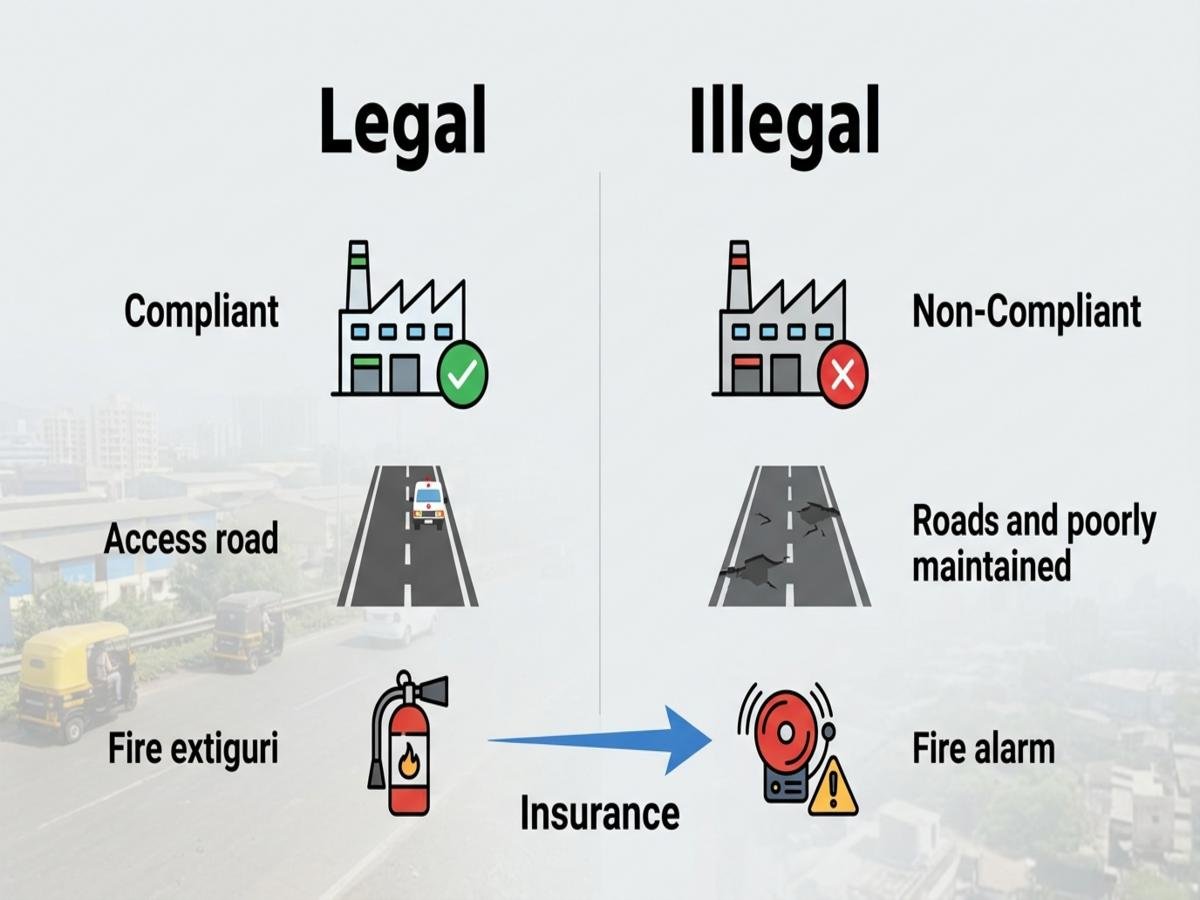
Fire safety is where many small factory owners become casual. That is risky.
A small unit can also have a serious fire risk if it stores combustible material, uses high electrical load, blocks exits, carries out welding, stores packaging material, or operates machinery in a congested layout.
Fire Tender Access and Emergency Exit Planning
The fire department does not only look at what is inside the unit. Access also matters. If the lane is blocked, gate access is poor, or vehicles cannot reach the premises, emergency response becomes difficult.
Factory owners should check whether emergency exits are open, staircases are usable, firefighting equipment is maintained, and internal storage does not block movement.
Internal Storage Layout and Load Risk
Factories often become unsafe slowly. Stock is added in passages. Mezzanine floors are overloaded. Electrical panels are surrounded by material. Exit routes become storage corners.
These small adjustments may look normal during daily work, but they increase risk.
Insurance Claim Risk if Use and Compliance Do Not Match
Insurance companies may examine actual use, storage, safety systems, electrical condition, and compliance after a major incident. If the insured activity and actual activity do not match, claim handling can become difficult.
This is why factory owners should align documents, operations, safety systems, and insurance declarations properly.
> Practical warning: Do not treat fire compliance as a one-time certificate. Treat it as a business continuity requirement.
Which TTC Pockets Are Better for Different Factory-Owner Needs?
There is no single “best” pocket in TTC. The better pocket depends on the activity.
Mahape may work better for service-led, IT-support, electronics, light industrial, and office-linked operations. Rabale and Pawane may suit more traditional industrial, fabrication, engineering, and storage-linked use. Turbhe can be useful for businesses needing market access, transport linkage, and industrial-commercial proximity. Ghansoli and Kopar Khairane can work for selected mixed-use industrial-service requirements, but the exact building and lane matter.
For light manufacturing and assembly, look for clean access, stable power, worker commute, and manageable loading. For engineering and fabrication, check floor strength, power, ventilation, noise tolerance, and movement space. For warehousing, truck access, drainage, loading height, and fire safety become more important. For electronics and IT-support work, power stability, cleaner surroundings, office usability, and staff access matter more.
The key is simple: do not buy or lease by pocket name alone. Match the micro-location to your activity.
What Should Tenants Check Differently From Buyers?
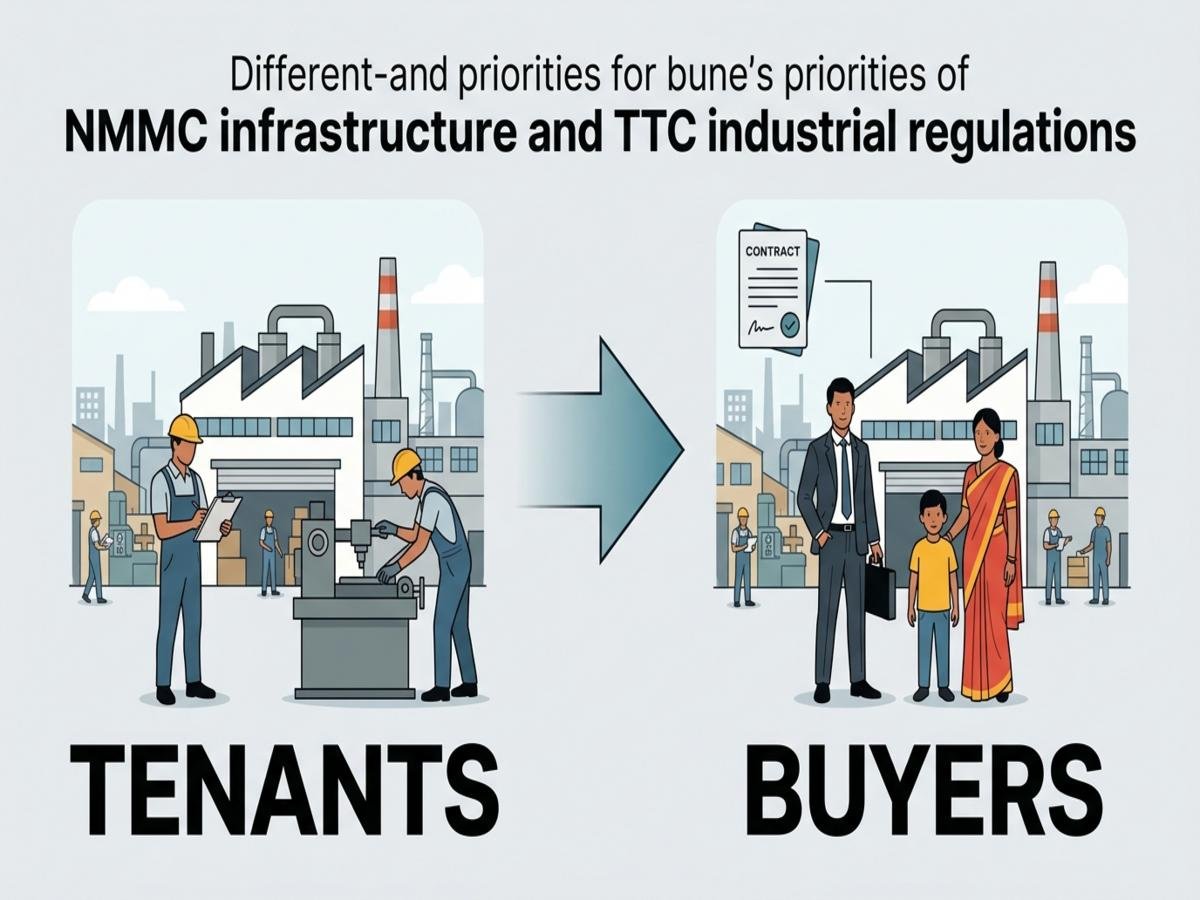
Tenants should think like operators first. Buyers should think like operators and investors.
A tenant’s biggest risks are lock-in period, deposit, activity permission, electricity load, landlord cooperation, repair responsibility, exit terms, and whether the unit can start operations quickly. A buyer’s risks are deeper: title, transfer, resale, building legality, long-term compliance, dues, structural condition, and market liquidity.
For tenants, a low-rent unit with unclear power upgrade, weak access, or doubtful permission can become expensive within months. For buyers, a cheap industrial unit with document gaps can become stuck during resale, loan processing, or future transfer.
What Are the Red Flags Factory Owners Should Not Ignore?
Factory owners should slow down if they notice these warning signs:
- The owner or broker cannot clearly explain permitted use.
- The unit has no proper document trail.
- There are verbal promises about transfer, power load, fire clearance, or approvals.
- The building has illegal mezzanine floors or major internal changes.
- The approach road gets blocked by parking or loading.
- The unit has visible waterlogging marks or monsoon complaints.
- The electrical system looks old, overloaded, or unsafe.
- Fire exits are blocked or missing.
- The activity needs pollution consent, but no one has checked it.
- Property tax, maintenance, electricity, or water dues are unclear.
- The unit is being sold or leased only on “adjustment” logic without paperwork.
- The actual use does not match the stated use.
In TTC, the biggest mistakes usually happen when factory owners trust location more than verification.
Final Verdict
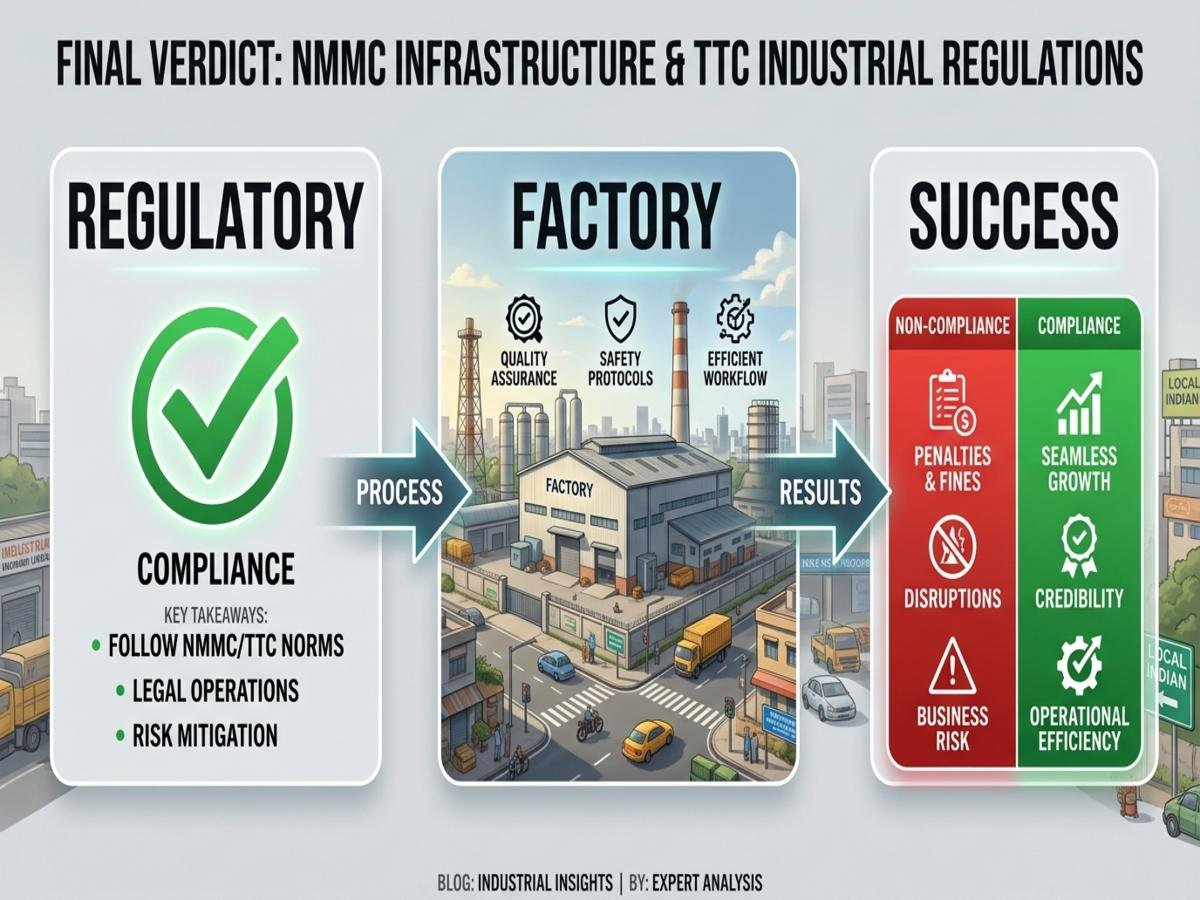
Factory owners in TTC Industrial Area should treat every unit as a combination of permission, infrastructure, and practical usability. A good industrial address is useful, but it is not enough.
Before operating, buying, leasing, expanding, or changing activity, check the exact permitted use, document chain, NMMC-side infrastructure, MIDC or industrial-layout conditions, fire safety, pollution requirements, power load, drainage, and access reality. Mahape, Rabale, Pawane, Turbhe, Ghansoli, and Kopar Khairane each have different strengths, but the final decision must be made at the micro-location and document level.
In Navi Mumbai’s TTC belt, the safest factory decision is not the cheapest unit or the most famous pocket. It is the unit where legal permission, infrastructure, and daily operations all match clearly.
FAQs
Frequently Asked Questions