
Thane Belapur Road Mahape: Complete Local Guide to Connectivity, Traffic and Property Impact
Thane Belapur Road Mahape is one of Navi Mumbai’s most important work corridors, connecting the TTC industrial belt with Mahape’s IT and corporate hub around Millennium Business Park. It gives strong road access toward Airoli, Ghansoli, Kopar Khairane, Turbhe and Thane, but the same stretch also faces heavy peak-hour traffic, truck movement, poor walkability, pollution concerns and rising real estate pressure in nearby residential nodes.
Where exactly is Mahape on Thane-Belapur Road, and what areas does it cover?
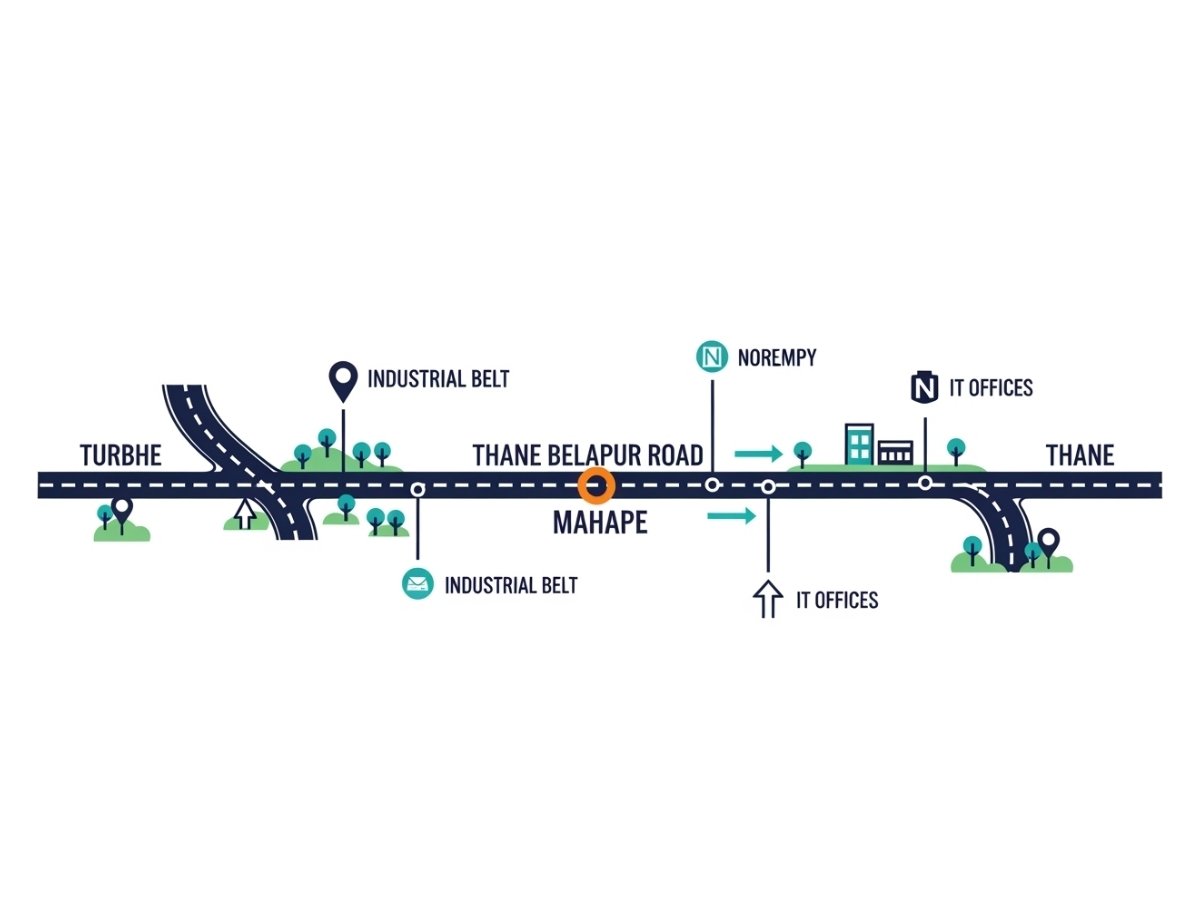
Thane Belapur Road is the main arterial road of the Trans-Thane Creek industrial and commercial belt. The full road is around 15.1 km long and connects the Sion-Panvel Highway side near Turbhe in the south with the Kalwa / Thane side in the north.
Mahape is not the whole Thane Belapur Road. It is one important central stretch on this larger corridor.
In practical local terms, the Mahape stretch sits between the Rabale-Ghansoli side and the Turbhe-Pawane side. It is strongly linked with Mahape MIDC, Millennium Business Park, corporate offices, IT parks, industrial units, warehouses, service businesses and daily office traffic.
For a person searching “Thane Belapur Road Mahape”, the simplest way to understand it is this: Mahape is the point where Navi Mumbai’s older industrial belt and newer IT-office economy meet on the same road.
Quick Summary: Thane Belapur Road Mahape
| Point | Practical Details |
|---|---|
| Location Type | Major road stretch inside Navi Mumbai’s TTC industrial and IT corridor |
| Main Identity | IT, industrial, commercial and office connectivity belt |
| Key Nearby Areas | Ghansoli, Kopar Khairane, Rabale, Airoli, Pawane, Turbhe |
| Main Work Hub | Millennium Business Park, Mahape MIDC and nearby corporate offices |
| Nearest Railway Access | Ghansoli and Kopar Khairane on the Trans-Harbour line |
| Best Use Case | Office commute, commercial access, IT employment, industrial movement |
| Main Problem | Peak-hour traffic, truck movement, weak pedestrian comfort and pollution concerns |
| Real Estate Impact | Strong rental demand in nearby Ghansoli and Kopar Khairane because of office crowd |
From Mumbai or Thane side, many commuters enter this corridor through Airoli and move south towards Rabale and Mahape. From Panvel, Pune or Vashi side, traffic generally approaches through Turbhe or the Sion-Panvel Highway side and moves north.
This is why Mahape behaves like a working junction, not just a road name. It carries office commuters in cars and buses, shared autos from railway stations, trucks serving industrial units, and regional vehicles moving toward bigger highway links.
Why Is the Mahape Stretch So Important in Navi Mumbai?
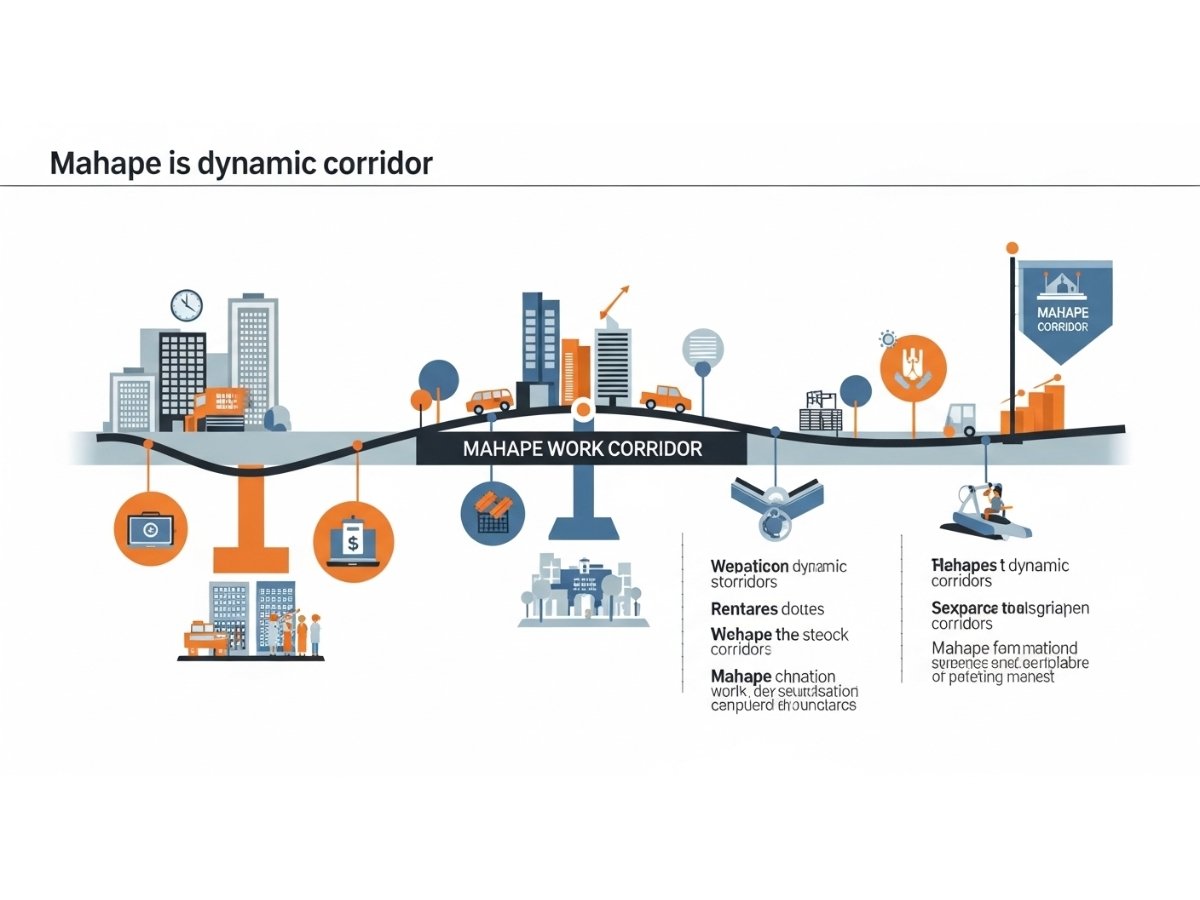
Mahape is important because it is one of Navi Mumbai’s strongest employment zones. It is not only an industrial area anymore. Over the years, the Mahape stretch has become a mix of IT offices, industrial plots, business parks, service companies, logistics activity and corporate support operations.
The biggest anchor here is Millennium Business Park in Mahape MIDC. It is known for major technology and corporate offices, including companies such as Capgemini, TCS and LTIMindtree. For many employees from Thane, Airoli, Ghansoli, Kopar Khairane, Vashi and Panvel side, Mahape is a daily work destination.
This is the main reason why the Thane Belapur Road Mahape stretch has a different character compared to many other industrial roads. It is not only about factories and goods movement. It is also about white-collar employment, IT teams, BPO staff, data operations, office parks, security staff, transport vendors and small service businesses that survive around corporate campuses.
A simple road near a work hub can quietly change the economics of nearby areas. That is exactly what happened here.
Ghansoli became more attractive for renters because it gives faster access to Mahape offices. Kopar Khairane remained useful because it offers older residential supply, markets and better everyday convenience. Airoli gained from its large IT and office ecosystem. Mahape sits in the middle of all this employment movement.
The “frontage” reality many investors miss
For IT companies and office buildings, Thane Belapur Road frontage is valuable because it gives visibility, easier employee access and stronger brand presence.
But for heavy industrial or logistics users, road frontage is not always a simple advantage. Large trucks need turning radius, gate access, loading space, waiting area and predictable entry-exit timing. On a fast, busy road with traffic pressure and peak-hour restrictions, a property directly on the main road can become difficult to operate.
So the same location can be excellent for an office but uncomfortable for a truck-heavy industrial unit. This is an important point for commercial buyers and tenants.
What Is the Real Traffic Scene on Thane Belapur Road Mahape?
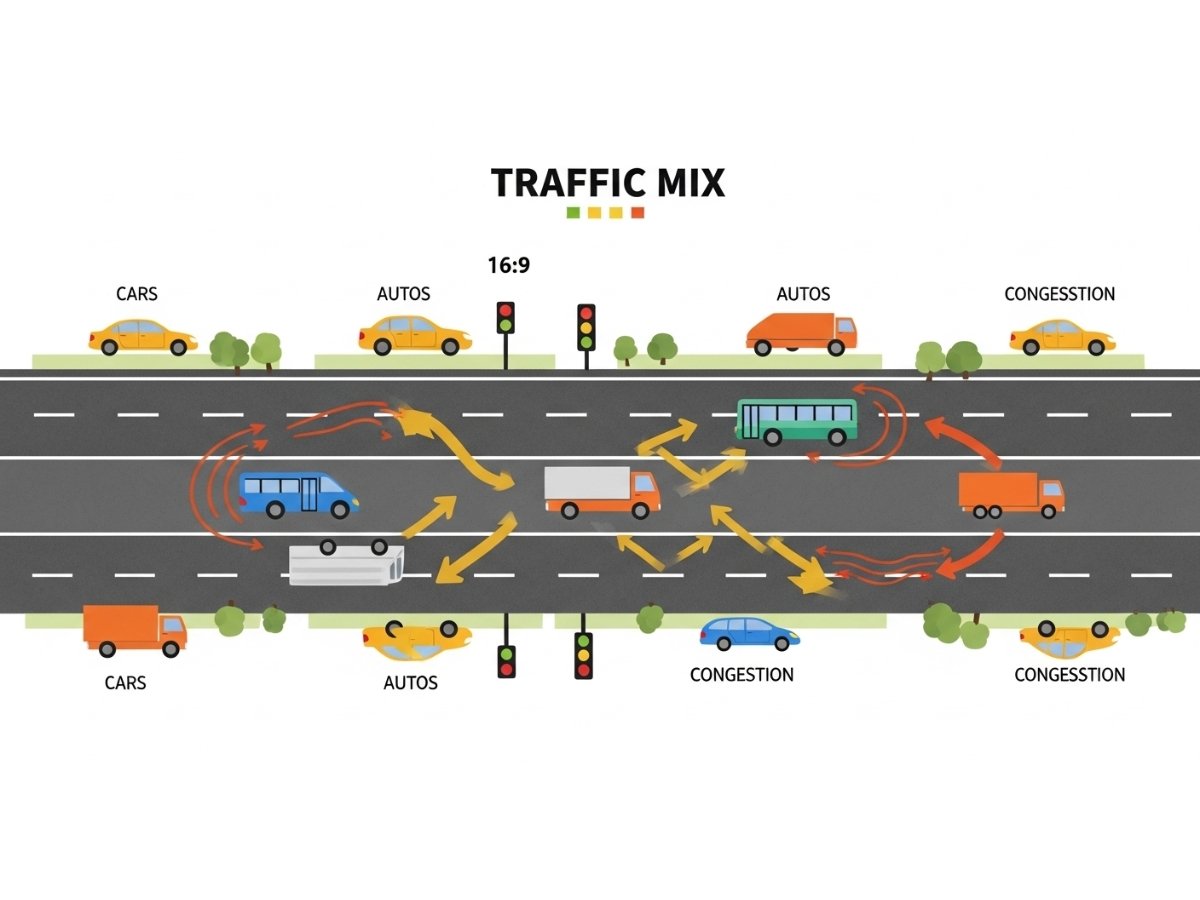
Traffic on the Mahape stretch is serious during office hours because the road is shared by very different types of users. IT employees, private cars, company buses, NMMT buses, shared autos, delivery vehicles, industrial trucks and regional freight vehicles all use the same corridor.
Morning and evening peak hours can become slow, especially around major junctions, office entry points and flyover approaches. In non-peak hours, the same route may feel manageable. But during peak time, a short distance can take much longer than expected.
The main issue is not only vehicle count. The problem is vehicle mix.
A car going to Millennium Business Park, a shared auto from Ghansoli station, a company bus dropping employees, and a heavy vehicle moving toward an industrial plot do not behave the same way on the road. Their speed, turning pattern and stopping behavior are different. This creates friction.
Common traffic pressure points
The Mahape-Rabale belt often sees congestion because of:
- office entry and exit timings
- heavy vehicle movement
- junction-level signal delays
- company bus stoppages
- autos slowing near pickup and drop points
- trucks struggling at turns or flyover climbs
- local cross-traffic from interior MIDC roads
During severe congestion, traffic police may manually control movement instead of fully depending on automated signals. This usually helps main corridor flow, but it can delay vehicles trying to cross or enter from interior roads.
Caution for daily commuters: Google Maps timing can be misleading during office hours on this stretch. A normal 10 to 15 minute movement can stretch sharply if there is a truck breakdown, heavy rain, signal hold-up, or office-bus crowding near a major junction.
How Can You Reach Mahape by Rail, Road and Public Transport?
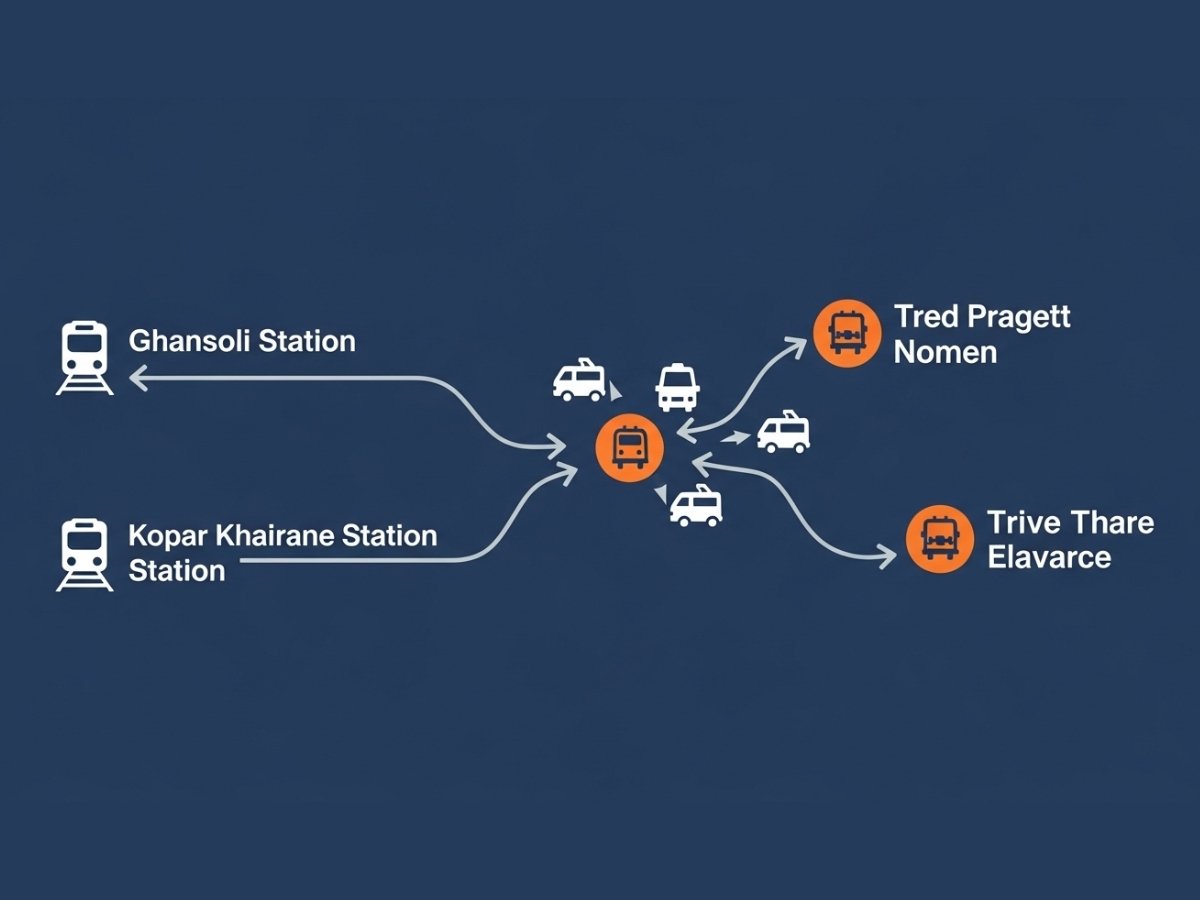
Mahape is well connected by road, but it is not a railway-station-based locality in the way Vashi, Nerul, Ghansoli or Kopar Khairane are. Most people use the railway first and then depend on autos, buses or office transport for the last mile.
Nearest Railway Stations to Mahape
Ghansoli and Kopar Khairane are the most practical railway stations for Mahape commuters. Both are on the Trans-Harbour line, which connects Thane with Vashi, Nerul and Panvel side.
Ghansoli is often preferred for Millennium Business Park and many Mahape office routes because the distance is short and shared autos are easily available. Kopar Khairane is also useful, especially for people staying on that side or working closer to certain industrial pockets.
Approximate distance depends on the exact office gate or building. For many Mahape office commuters, Ghansoli station to MBP is roughly around 2.5 to 3 km.
Auto, Bus and Private Commute Reality
The most common last-mile option from Ghansoli station to Mahape is shared auto. As per current local trend, shared auto fares are commonly around ₹15 to ₹20 for the Ghansoli-Mahape office belt, but fares can vary slightly depending on timing, exact drop point and local practice.
One ground reality is crowding. During morning office rush, shared autos often run at full capacity, and commuters may face the uncomfortable “fourth seat” situation where one passenger sits in front beside the driver. It is common locally, but not comfortable or ideal from a safety point of view.
NMMT buses are also useful. Route 64 is important for Ghansoli-Mahape connectivity, while AC Route 125 connects a wider corridor and passes through the Mahape side. Other routes also support movement in the TTC and Navi Mumbai corridor depending on the exact origin and destination.
Private vehicles give flexibility, but parking and peak-hour traffic must be considered. If your office timing matches the main rush hour, driving may not save as much time as expected.
What About Metro Connectivity?
At present, Navi Mumbai Metro Line 1 serves the Belapur-Pendhar side and does not directly solve Mahape’s commute problem.
A proposed larger metro plan, including Mumbai Metro Line 14 from Kanjurmarg to Badlapur, has been discussed for future regional connectivity and could benefit the Ghansoli-Mahape belt in the long term. But this should be treated as a future planning possibility, not an immediate commuting solution.
For now, the real daily commute still depends on railway plus auto, NMMT buses, office transport, private cars and two-wheelers.
Which Nearby Areas Are Best for Staying Near Mahape?
Most people working in Mahape do not stay inside Mahape unless their budget, job timing or office location makes it practical. For better residential life, they usually compare Ghansoli, Kopar Khairane and sometimes Airoli.
Ghansoli is the most popular choice for people who want shorter access to Mahape and newer housing options. It has grown strongly because of office demand, better high-rise supply and its position near the Thane Belapur Road corridor.
Kopar Khairane is more established and often feels more balanced for daily life. It has older societies, local markets, hospitals, shops, food options and better internal neighbourhood comfort in many pockets. Rents may be slightly more practical compared to premium Ghansoli towers, depending on the exact sector and building.
Airoli is useful for people who want access to both Mahape and the Airoli office belt. But it may not always be the shortest or cheapest choice if the job is deep inside Mahape MIDC.
Ghansoli vs Kopar Khairane vs Airoli for Mahape Workers
| Area | Best For | Strength | Main Concern |
|---|---|---|---|
| Ghansoli | IT employees wanting shorter commute to Mahape | Newer towers, strong rental supply, quick road access | Premium rents, traffic near main roads, pollution near MIDC-facing pockets |
| Kopar Khairane | Families and renters wanting established daily convenience | Markets, older societies, hospitals, local transport | Some buildings are older; commute may vary by sector |
| Airoli | Employees needing access to Airoli plus Mahape | Strong office ecosystem, better connectivity toward Thane/Mumbai | Can be costly and not always closest to Mahape offices |
A common mistake is choosing a flat only because it appears close to Mahape on the map. In this belt, exact sector matters. A building directly near the MIDC border may face more noise, truck movement, dust and night-time pollution complaints than a building deeper inside a residential node.
For families, this difference matters more than a few minutes of commute.
How Does Thane Belapur Road Mahape Impact Property Prices?
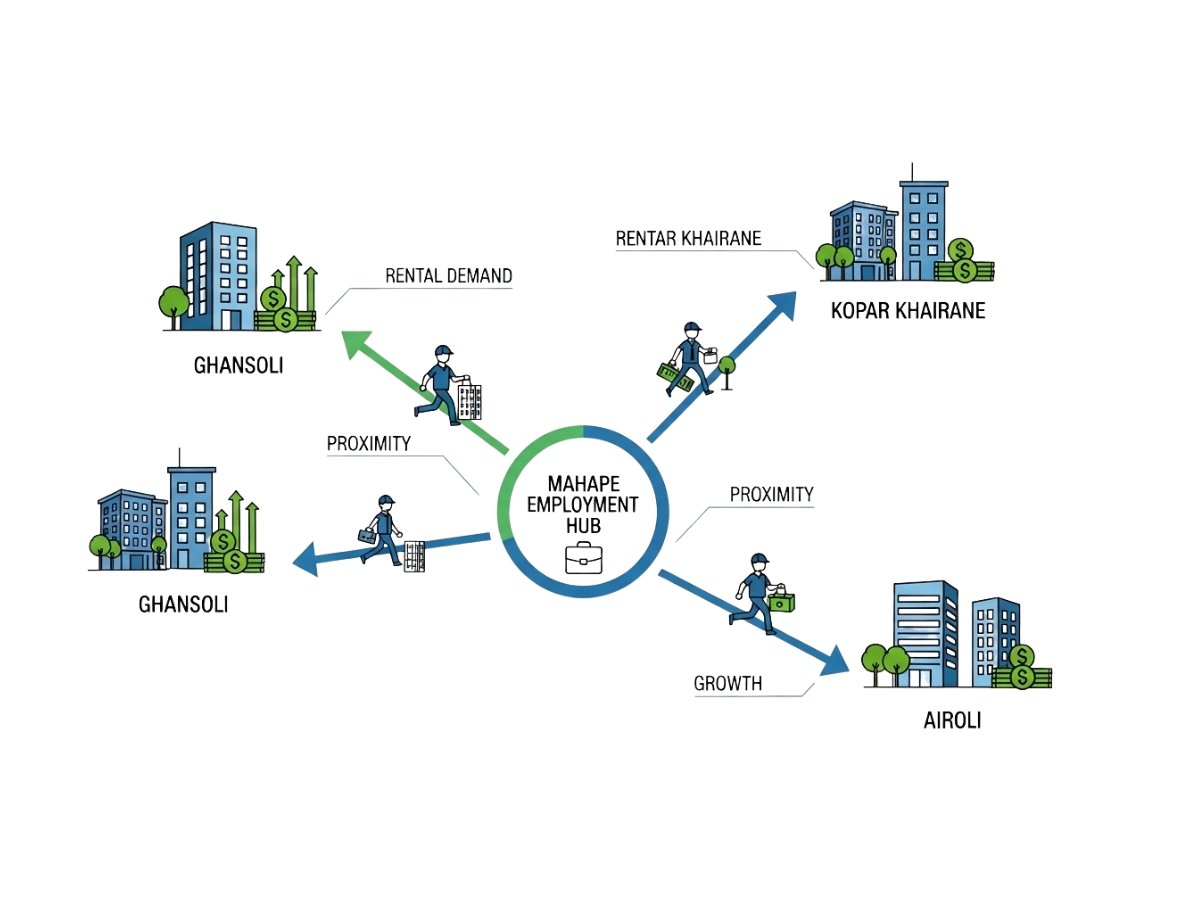
Thane Belapur Road Mahape has a direct impact on nearby property demand because it creates employment. Wherever office jobs are concentrated, rental demand usually stays strong. Mahape’s IT and corporate workforce has pushed rental interest in nearby Ghansoli, Kopar Khairane and selected Airoli pockets.
As per current market trends, premium 1BHK flats in newer Ghansoli projects can command high asking rents, sometimes in the approximate range of ₹35,000 to ₹48,000 per month depending on building, furnishing, amenities and exact location. Larger 2BHK or premium configurations may go higher, especially in towers preferred by corporate tenants and working professionals.
Kopar Khairane generally offers slightly more balanced rental options, especially in older buildings and established sectors. Larger flats may be more practical here for families or shared tenants, although good buildings close to transport and markets still attract strong rent.
For investors, the Mahape-Ghansoli-Kopar Khairane belt is mainly a rental-yield story. Capital appreciation may happen over time, but the stronger near-term logic is regular tenant demand from IT employees, office staff and business users.
What property buyers should understand
The best property near Mahape is not always the nearest property to Mahape. A slightly deeper residential location with better air, lower noise, safer internal roads, better society management and easier daily life may perform better for long-term living.
For commercial investors, office-friendly properties can benefit from Mahape’s corporate ecosystem. But industrial or warehouse properties need a more practical check: truck access, loading area, turning radius, power load, drainage, road width, and entry-exit timing.
Who Actually Prefers the Mahape Area?
Mahape attracts people whose life or business depends on workplace proximity. It is not a lifestyle-first destination. It is a work-first corridor.
IT and office employees
Software engineers, BPO teams, corporate staff, support teams, facility teams and backend office workers prefer Mahape because it reduces daily commute. For them, Ghansoli or Kopar Khairane can make more sense than staying far away and spending hours in traffic.
Small business owners and vendors
Many service businesses survive because of the corporate and industrial ecosystem around Mahape. Food vendors, transport providers, office support agencies, courier partners, repair services, staffing agencies and small suppliers all benefit from the employment density.
Industrial and logistics users
Mahape is still part of the TTC industrial ecosystem. Industrial workers, logistics managers, factory support teams and goods movement operators use this corridor daily. Their needs are different from IT employees. They care more about truck timing, gate access, loading movement and road reliability.
This is where friction happens. One group wants cleaner pedestrian-friendly office access. Another group needs industrial movement. The road has to serve both, and that is why the stretch often feels overloaded.
What Problems Do People Ignore Before Choosing Mahape or Nearby Areas?
Mahape’s biggest problem is that its economic strength also creates pressure. More jobs mean more traffic, more autos, more buses, more commercial activity and more rental demand. But infrastructure does not always keep up at the same speed.
Traffic is not occasional, it is structural
Traffic here is not only because of one bad signal. It is built into the nature of the road. Thane Belapur Road carries industrial traffic and office traffic together. Any roadwork, rain, truck breakdown or signal disruption can quickly create delays.
Walkability is weak
Many first-time employees assume they can simply walk from the highway or nearby stop to their office. In reality, walking conditions in and around Mahape can be uncomfortable because of dust, traffic, heavy vehicles, uneven pedestrian space and poor shade in many stretches.
For daily commute, last-mile planning is important.
Pollution and night-time smell complaints should not be ignored
The Ghansoli-Mahape-Kopar Khairane belt has long faced resident complaints related to chemical smell and industrial air pollution. Pollution concerns are not always visible during a short daytime visit.
Residents in some pockets frequently report stronger chemical odors at night, especially late night to early morning. The concern is linked to the adjacent industrial belt, lower night wind speed and trapped air conditions. MPCB monitoring and civic attention around VOC and PM 2.5 levels make this issue important for renters and buyers to consider.
Caution before renting or buying: Do not inspect a home near the MIDC border only in the afternoon. Visit once at night, preferably after 11 PM, and again during morning peak hours. This gives a more realistic idea of smell, noise, truck movement and traffic.
What Future Developments Can Change the Mahape Stretch?
The future of Thane Belapur Road Mahape depends heavily on infrastructure upgrades. The corridor is already important, and pressure is expected to increase further because of wider Navi Mumbai growth, airport-linked movement, commercial expansion and regional traffic.
A major infrastructure upgrade of around ₹846 crore has been planned for the Thane Belapur Road corridor using the Hybrid Annuity Model. The plan includes reconstruction work and new flyovers at key bottleneck locations.
One of the most important proposed improvements is the Mahape flyover, with a large allocation linked to the stretch from the BASF side toward the Hyundai showroom side. Flyovers are also planned at other pressure points such as Rabale and Pawane. These projects are meant to reduce signal-level conflict and improve traffic movement on the main corridor.
However, commuters should not assume immediate relief. Large road projects usually create short-term construction pain before long-term improvement. Diversions, barricades, road narrowing, slow movement and uneven execution can affect travel for months or even years.
The Turbhe flyover delay is a reminder that Navi Mumbai infrastructure timelines can shift due to design changes, utility conflicts, sewage line issues and agency coordination. So future upgrades are positive, but they should be treated with cautious optimism.
Final Clarity: Who Is Thane Belapur Road Mahape Right For?
Thane Belapur Road Mahape is right for people who value workplace access more than peaceful residential living. It is a strong economic corridor, not a calm neighbourhood road.
For IT employees working in Millennium Business Park or nearby offices, staying in Ghansoli or Kopar Khairane can be practical. It reduces commute stress and gives access to daily facilities. But choose the exact sector carefully and avoid deciding only by map distance.
For renters, Ghansoli is convenient but can be expensive in premium societies. Kopar Khairane can offer a better balance of rent, markets and family life. Airoli is useful if you need access to both Thane/Mumbai side and the Navi Mumbai office belt.
For investors, the Mahape stretch supports strong rental demand because of employment density. But investment should be judged by micro-location, building quality, tenant profile, pollution exposure, traffic access and long-term civic upgrades.
For commercial occupiers, Mahape is excellent for IT, office and service-led businesses that need talent access and corridor visibility. It is less straightforward for truck-heavy operations unless the property has proper industrial access, loading space and turning comfort.
Conclusion
Thane Belapur Road Mahape is one of Navi Mumbai’s most important working corridors because it connects IT offices, industrial activity, transport movement and residential rental demand in one place. Its value comes from employment density and connectivity, not from lifestyle comfort.
For office-goers, it is practical. For investors, it offers rental demand. For commercial users, it gives strategic access. But for families and homebuyers, the decision must be more careful because traffic, pollution, noise and weak walkability are real issues.
The best way to judge Mahape is simple: use it for work advantage, but choose your living or investment location with micro-level caution.
FAQs
Frequently Asked Questions