
Mahape Flyover: Location, Nearby Areas & Connectivity Guide
Mahape Flyover is an important road connector on the Thane-Belapur Road side of Navi Mumbai, mainly serving the Mahape MIDC, Millennium Business Park, Electronic Zone, Ghansoli, Kopar Khairane, Rabale, Airoli, and nearby industrial areas. It helps through-traffic move faster over busy junctions, but it does not remove all traffic problems inside Mahape’s internal MIDC roads and office-access lanes.
For daily commuters, the flyover is useful because Mahape is not a typical residential locality. It is a work-heavy belt with IT parks, industrial units, warehouses, corporate offices, service businesses, and heavy vehicle movement. So the real value of Mahape Flyover is not just “location.” Its value is in how it supports daily office travel, industrial access, and movement between nearby Navi Mumbai nodes.
Quick Summary: Mahape Flyover
| Point | Details |
|---|---|
| Location Context | Mahape Flyover is located around the Mahape junction belt on the Thane-Belapur Road corridor in Navi Mumbai. |
| Main Use | It helps vehicles bypass busy ground-level junctions and supports movement around Mahape MIDC, MBP, and nearby areas. |
| Nearby Areas | Ghansoli, Kopar Khairane, Rabale, Airoli, Turbhe, Mahape MIDC, Millennium Business Park, and Electronic Zone. |
| Important Road Connection | Thane-Belapur Road is the main road spine connected with the flyover’s movement. |
| Best For | Office-goers, industrial visitors, vendors, cab users, delivery riders, and people travelling to Mahape business areas. |
| Practical Railway Access | Ghansoli, Kopar Khairane, and Rabale are commonly used railway access points depending on the exact destination. |
| Traffic Caution | The flyover helps highway movement, but internal MIDC roads can still face congestion, heavy vehicles, and monsoon issues. |
| Real Estate Relevance | It improves access to Mahape’s job belt, but residential comfort depends more on the exact node and pocket. |
Where Is Mahape Flyover Located in Navi Mumbai?
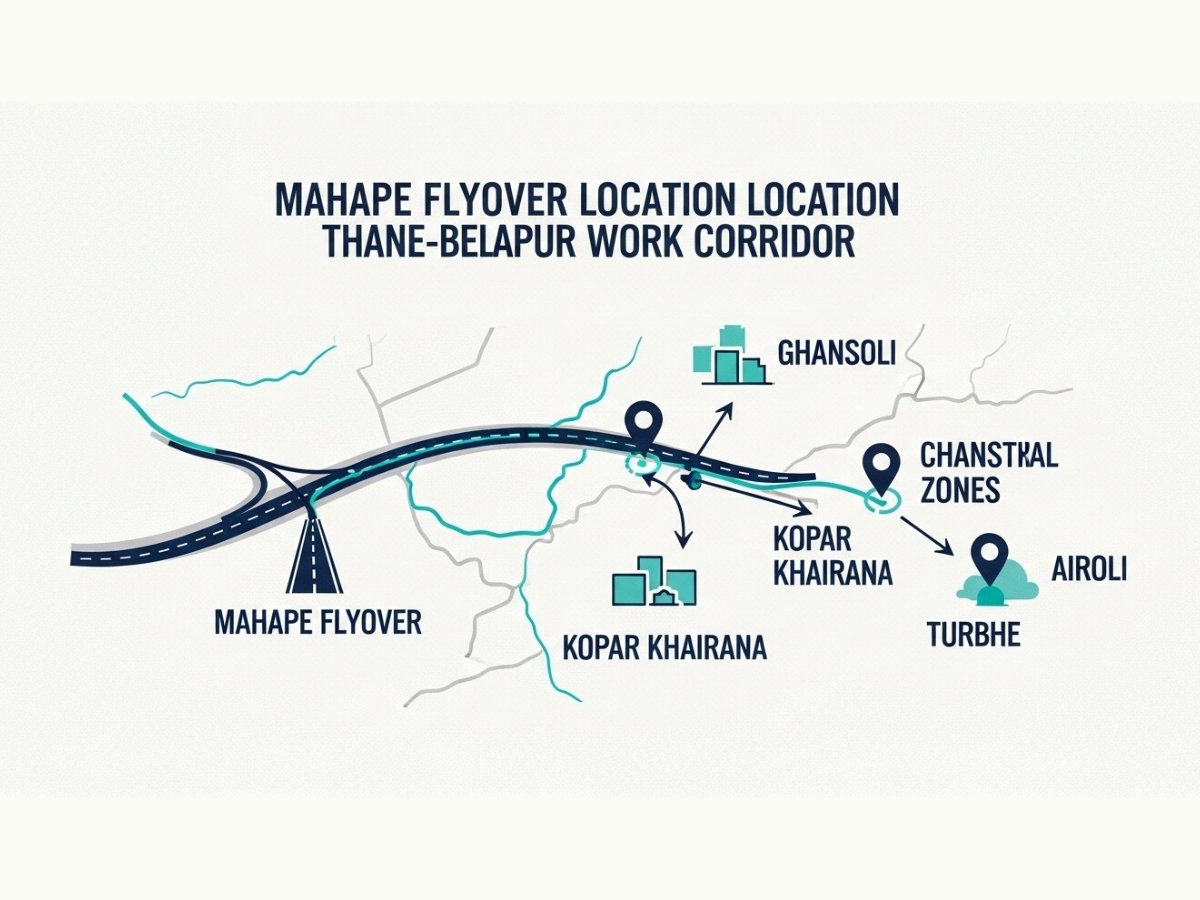
Mahape Flyover is located around the Mahape side of the Thane-Belapur Road corridor, one of the most important working road stretches of Navi Mumbai. This area sits close to Mahape MIDC, Millennium Business Park, Electronic Zone, Ghansoli, Kopar Khairane, Rabale, and Airoli.
The flyover is important because Mahape is not only a locality name. In daily Navi Mumbai usage, “Mahape” usually means the industrial and commercial belt around MIDC units, office parks, IT/ITES buildings, warehouses, and service businesses. Many people who say they are “going to Mahape” may actually be going to Millennium Business Park, Mahape MIDC, Electronic Zone, or a company located inside one of the internal industrial roads.
The flyover helps vehicles moving along the main road avoid some ground-level traffic points. But the moment a vehicle exits towards internal Mahape roads, travel speed can change sharply. This is the first thing commuters should understand.
Which Local Landmarks Help Identify Mahape Flyover?
Mahape Flyover is best understood through nearby working landmarks rather than tourist-style landmarks. The important local references include:
- Mahape MIDC
- Millennium Business Park
- Mahape Electronic Zone
- Thane-Belapur Road
- Ghansoli side access
- Kopar Khairane side access
- Rabale and Airoli side movement
- Nearby corporate and industrial campuses
For a first-time visitor, this area can feel confusing because the road network has the main highway movement, slip roads, industrial lanes, office entries, and station-side last-mile routes. A cab driver may take the elevated road when the passenger actually needs the service road below, or the reverse may happen. So while searching or booking a cab, it is always better to enter the exact building or company name, not just “Mahape Flyover.”
Which Areas Are Connected by Mahape Flyover?

Mahape Flyover mainly supports movement around the Mahape industrial and commercial belt and helps connect traffic coming from nearby Navi Mumbai nodes. Its biggest practical role is around Thane-Belapur Road movement and access towards Mahape’s internal business areas.
| Nearby Area | Why It Matters | Typical User | Practical Connectivity Note |
|---|---|---|---|
| Mahape MIDC | Major industrial and commercial employment zone | Factory visitors, vendors, staff, delivery vehicles | Flyover helps reach the edge of the belt, but internal roads decide the final travel experience. |
| Millennium Business Park | Important office and IT/ITES destination | Office employees, interview candidates, cab users | Many commuters depend on railway station plus auto/cab last-mile access. |
| Mahape Electronic Zone | Industrial and technical business pocket | Vendors, engineers, service providers, logistics users | Internal lane access, parking, and heavy vehicle movement matter a lot. |
| Ghansoli | Strong nearby residential and railway node | Office-goers, renters, working professionals | Useful for people staying near Ghansoli and working in Mahape or MBP. |
| Kopar Khairane | Residential and commercial node close to Mahape | Renters, daily commuters, small business users | Practical access depends on exact road, subway, and ongoing connectivity work. |
| Rabale | Railway and industrial-side access point | Workers, industrial staff, commuters from Airoli side | Useful depending on the exact Mahape destination. |
| Airoli | Important office, residential, and Thane-side access node | Corporate employees, long-distance commuters | Works as a larger access side for people coming from Thane/Airoli direction. |
| Turbhe / Vashi Side | Southward Navi Mumbai access | Drivers, business visitors, office users | Thane-Belapur Road movement connects this side to Mahape. |
The important point is simple: the flyover is useful, but it is not the full journey. In Mahape, the last 1 to 2 km can matter as much as the main road journey.
How Does Mahape Flyover Help Daily Commuters?

Mahape Flyover helps daily commuters by improving movement along the main Thane-Belapur Road side and reducing some ground-level junction friction. For people going towards Mahape MIDC, Millennium Business Park, and nearby office zones, this can make the main approach smoother.
But the experience is different for different users. A person travelling by car from Thane may use the flyover differently from someone coming by train to Ghansoli and then taking an auto. A delivery rider entering the Electronic Zone will face another type of route challenge altogether.
For Office-Goers Going to Mahape MIDC and Millennium Business Park
For office-goers, Mahape Flyover is most useful as part of a daily commute chain. A typical employee may come from Thane, Vashi, Airoli, Ghansoli, Kopar Khairane, or even Panvel side. Some come by road directly. Others use the Trans-Harbour railway line and then take an auto, bus, or cab.
Millennium Business Park and nearby office areas attract a large number of daily workers. During morning office hours, traffic movement around entry points can become slow even if the main flyover movement is better. This is why a person should not judge commute comfort only by the flyover. The office gate, internal road, parking entry, and last-mile auto availability also matter.
For example, a person coming from Ghansoli station to a company inside MBP may not face a very long road distance, but shared auto queues, office entry traffic, and internal turning points can still add time.
For Vendors, Delivery Riders and Industrial Visitors
For vendors and industrial visitors, Mahape Flyover helps reach the Mahape belt faster from the main corridor. But after reaching the area, the real test begins inside MIDC roads.
Mahape has industrial units, office buildings, warehouses, service centres, technical businesses, and logistics activity. Many internal roads are shared by cars, two-wheelers, autos, delivery vehicles, buses, and heavy commercial vehicles. This creates a different type of traffic from a normal residential area.
For delivery riders or vendor vehicles, the correct slip road and exact gate matter. A wrong turn can mean a long detour, especially during peak hours or when roadwork/diversions are active.
Does Mahape Flyover Reduce Traffic Problems Completely?
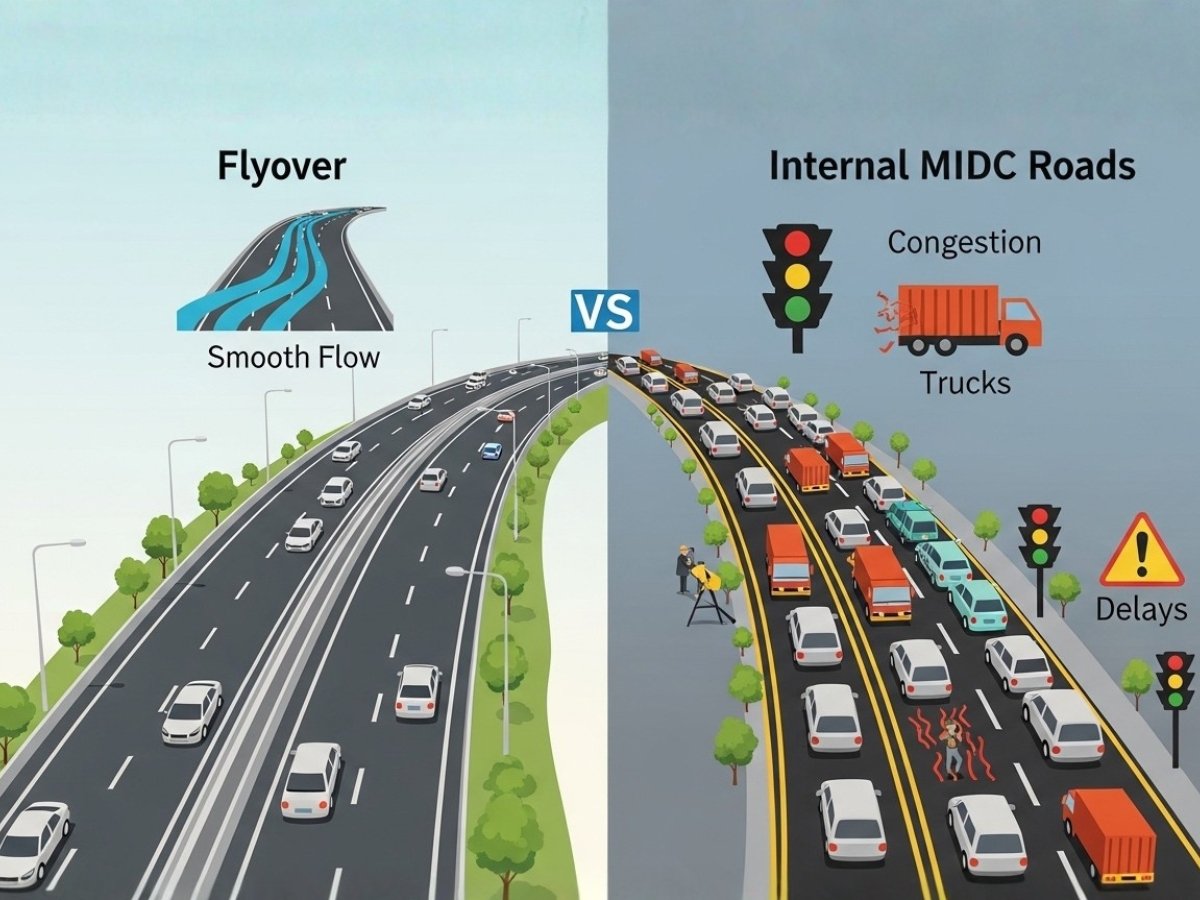
No, Mahape Flyover does not completely remove traffic problems. It helps with main-road movement and can reduce some signal-level or junction-level friction, but it cannot solve internal MIDC congestion, heavy vehicle movement, last-mile delays, monsoon waterlogging, or office gate traffic.
This difference is very important. A flyover can improve linear movement on the main road. But Mahape’s daily traffic problem is not only about one junction. It is also about thousands of people entering offices, factories, industrial galas, warehouses, and service roads at similar timings.
Caution: Do Not Judge Mahape Travel Time Only by Map Distance
Map distance can be misleading in Mahape. A place may look 5 to 10 minutes away on a map, but the actual experience can change due to:
- Morning and evening office rush
- Heavy vehicle movement near industrial pockets
- Internal MIDC road congestion
- Wrong service-road selection
- Parking pressure near office buildings
- Monsoon waterlogging in some low-lying or subway-side routes
- Ongoing civic work and traffic diversions
- Long entry queues near large office complexes
The flyover helps the main flow, but the last-mile experience still needs planning.
How to Reach Mahape Flyover from Nearby Areas?
Reaching Mahape Flyover is usually simple if the starting point is clear. The confusion starts because “Mahape” can mean different things: the flyover, MIDC, MBP, Electronic Zone, Mahape Gaon, or a company located deep inside an internal industrial lane.
| Starting Area | Route Logic | Best For | Practical Note |
|---|---|---|---|
| Ghansoli | Use local road access towards Mahape / Thane-Belapur Road side | MBP employees, office-goers, renters | Good for people using Ghansoli station plus auto/cab. Exact office location matters. |
| Kopar Khairane | Access Mahape side through local connecting roads | Daily commuters, nearby residents, office staff | Some routes may face bottlenecks near subway or internal road points, especially during rain or peak hours. |
| Rabale | Approach from Rabale/Airoli side towards Mahape and MIDC belt | Industrial workers, staff, business visitors | Useful for northern Mahape or industrial-side access depending on destination. |
| Airoli | Move towards Thane-Belapur Road and Mahape side | Thane-side and Airoli-side commuters | Good road-side access, but peak-hour traffic should be considered. |
| Turbhe / Vashi Side | Use Thane-Belapur Road northbound towards Mahape | Business visitors, drivers, office users | Main-road movement is direct, but traffic around major junctions can vary. |
| Thane Side | Use Thane-Belapur Road towards Mahape, or railway plus last-mile option | Long-distance commuters, office workers | During peak hours, train plus auto may be more practical for some users. |
For a first-time visitor, the safest approach is to search the exact company, office tower, MIDC plot, or business park gate rather than only searching “Mahape Flyover.”
Which Railway Stations Are Practical for Reaching Mahape Flyover?
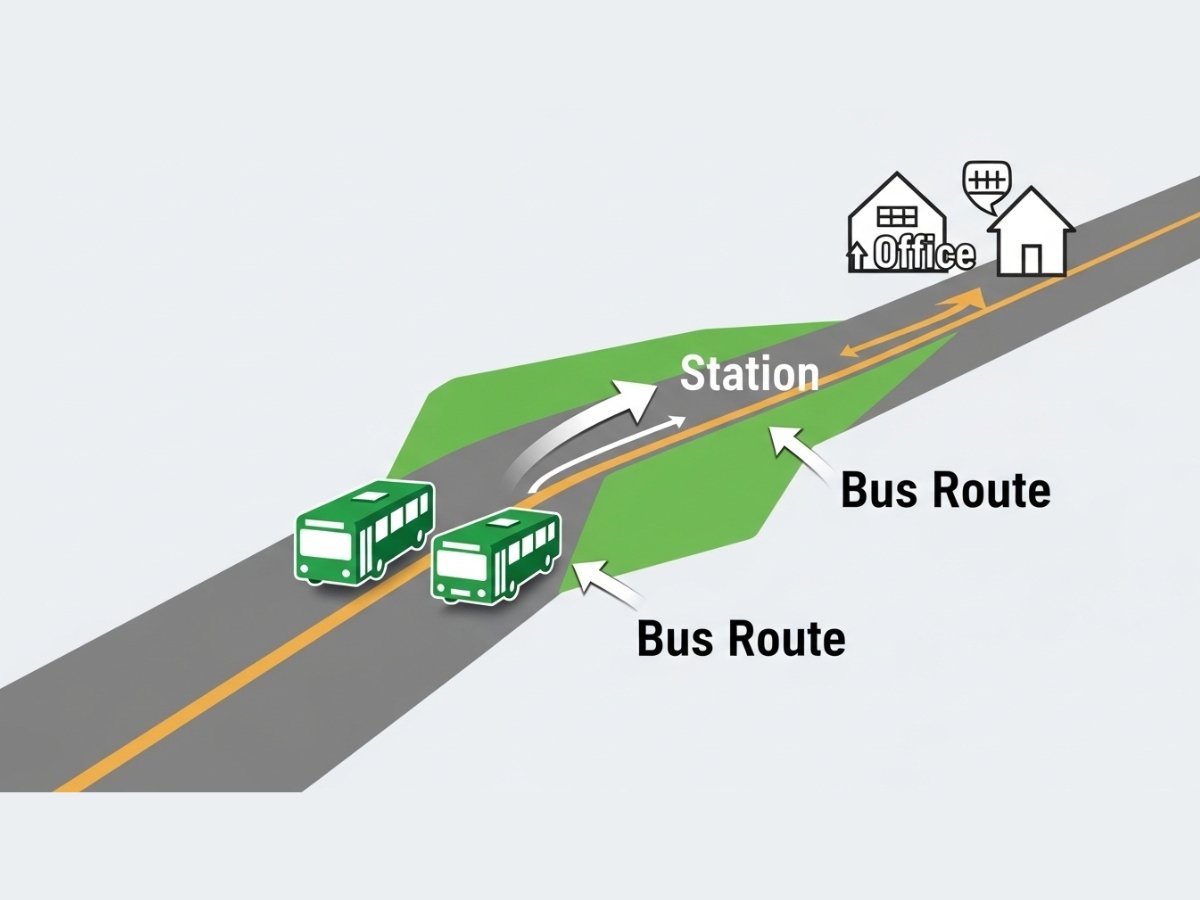
Ghansoli, Kopar Khairane, and Rabale are practical railway access points for reaching different parts of Mahape. The best station depends on where exactly you need to go inside Mahape.
Many new commuters get confused because they assume there is a simple “Mahape station” option for every Mahape destination. In practical daily travel, people usually depend on nearby Trans-Harbour Line stations and then complete the last-mile journey by auto, bus, cab, or company transport.
Ghansoli is commonly useful for people going towards Millennium Business Park and nearby office areas. Kopar Khairane can be useful for some southern-side Mahape and MIDC access. Rabale may work better for certain industrial-side or Airoli-side movements. But these are practical patterns, not fixed rules.
Why the Nearest Station May Not Always Be the Most Convenient
The nearest station on the map is not always the best station for daily commute. In Mahape, the final destination matters more.
A station may look close, but the walking route may be dusty, busy, unsafe at night, or uncomfortable during monsoon. Some internal roads are not ideal for walking because of heavy vehicles and industrial traffic. For many daily commuters, shared autos and regular last-mile options are not optional; they are necessary.
So before choosing a rental flat or planning a daily route, check three things: station distance, auto availability, and the exact office gate location.
Is Mahape Flyover Important for Mahape MIDC and Business Connectivity?
Yes, Mahape Flyover is important for Mahape MIDC and business connectivity because Mahape’s economy depends heavily on road movement. This is not a locality where only residents and shoppers move around. Mahape has industrial units, IT offices, technical service businesses, warehouses, vendor networks, and daily freight activity.
In areas like Mahape MIDC and Electronic Zone, businesses need regular movement of staff, raw materials, equipment, service teams, and delivery vehicles. A slow main road can directly affect office reporting time, vendor visits, logistics schedules, and service operations.
The flyover supports the larger movement around this belt by keeping through-traffic more organised. But again, the internal roads are equally important. A business may be close to the flyover and still face issues if its approach lane is narrow, crowded, badly parked, or waterlogged during rains.
This is where Mahape is different from a clean commercial district. It works well as an employment and industrial zone, but it needs practical route understanding.
What Does Mahape Flyover Mean for Renters and Property Buyers?
For renters and property buyers, Mahape Flyover improves access to the employment belt, but it should not be treated as the only reason to choose a home. Connectivity is useful, but residential comfort depends on the exact node, society, station access, market access, road condition, and daily lifestyle needs.
People working in Mahape often compare Ghansoli, Kopar Khairane, Rabale, Airoli, and sometimes Vashi or Turbhe. Ghansoli and Kopar Khairane are popular because they offer better residential pockets while still keeping Mahape within practical commute distance.
For bachelors and working professionals, staying close to Mahape can save travel time. For families, the decision is more layered. Schools, hospitals, parks, railway access, society quality, markets, and overall surroundings matter more than just quick office access.
Who Should Consider Staying Near Mahape Connectivity?
| Good Fit | Not Ideal For |
|---|---|
| People working in Mahape MIDC or MBP | Families wanting a quieter and more purely residential environment |
| Bachelors prioritising short office travel | People who depend only on walkable railway access |
| Industrial managers, vendors, and business owners | Buyers expecting premium lifestyle surroundings inside Mahape itself |
| Tenants who want quick access to Ghansoli, Kopar Khairane, or Rabale | People who dislike heavy vehicle movement and industrial surroundings |
| Investors targeting office-worker rental demand in nearby residential nodes | Buyers who do not want to check micro-location carefully |
The better approach is to treat Mahape as a job-access zone and nearby nodes as residential decision zones. That is the ground reality.
Mahape Flyover vs Nearby Road Access Points: What Should You Actually Check?
Mahape Flyover is useful, but a smooth commute depends on more than the flyover. Before renting a flat, buying property, visiting an office, or selecting a commercial unit, check the complete access chain.
Important checks include:
- Exact building or office location inside Mahape
- Whether the access road is wide enough
- Distance from the main road or service road
- Auto and bus availability during your actual travel timing
- Parking situation near the building
- Internal road condition during monsoon
- Heavy vehicle movement near the location
- Travel time during office peak hours, not only afternoon or Sunday
- Whether the destination is near MBP, MIDC, Electronic Zone, or deeper industrial lanes
This check is especially important for commercial users. A unit that looks “near Mahape Flyover” may still create daily friction if trucks cannot turn properly, parking is poor, or the approach road gets blocked.
Local Travel Tips Before Visiting Mahape Flyover Area
If you are visiting Mahape for the first time, do not travel with only the broad locality name. Mahape has too many business pockets, internal lanes, and entry points.
Use these practical tips:
- Confirm the exact company name, building name, plot number, or business park gate.
- Search the final destination, not only “Mahape Flyover.”
- Keep extra time during 8:30 AM to 10:30 AM and 5:30 PM to 8:00 PM.
- If coming by train, check whether Ghansoli, Kopar Khairane, or Rabale is better for your exact destination.
- Prefer auto or cab for last-mile movement if the destination is inside MIDC roads.
- During monsoon, avoid assuming that short internal routes will remain smooth.
- For interviews or business meetings, keep a buffer of at least 15 to 20 minutes.
- If your cab driver seems confused between flyover and service road, guide them using the exact landmark or gate.
This is one of those Navi Mumbai areas where a little route planning saves a lot of irritation.
Conclusion: Why Mahape Flyover Matters in Navi Mumbai’s Work Belt
Mahape Flyover matters because it supports one of Navi Mumbai’s busiest work-heavy belts. It helps movement around Mahape MIDC, Millennium Business Park, Electronic Zone, and the Thane-Belapur Road corridor, making it important for office-goers, industrial visitors, vendors, cab users, and daily commuters.
But it should be understood correctly. The flyover improves main-road connectivity; it does not magically solve every Mahape traffic issue. Internal MIDC roads, heavy vehicles, office rush, monsoon conditions, railway last-mile access, and exact destination points still matter.
For commuters, Mahape Flyover is useful. For renters and buyers, it is a connectivity advantage. For businesses, it is an operational support point. But in every case, the final decision should be based on the full route, not just the flyover name.
FAQs
Frequently Asked Questions