Blogs

Everything about Navi Mumbai

Property in Mahape Navi Mumbai: Prices, Trends & Best Options in 2026

Property in Mahape Navi Mumbai is best understood as an employment-led, commercial, industrial, and rental-driven market, not a pure residential family market. In 2026, Mahape is strong for offices, industrial units, warehouses, technical businesses, and workforce rental demand. For family living, nearby Ghansoli, Kopar Khairane, Airoli, Rabale, and Vashi often offer better housing depth, social infrastructure, and resale comfort. Quick Summary: Property in Mahape Navi Mumbai in 2026 Factor Practical Answer Best Suited For Caution Main property character Employment-led commercial and industrial market Businesses, office tenants, industrial users, investors Do not judge Mahape like a normal residential node Best property types Offices, industrial units, warehouses, commercial spaces, workforce rentals SMEs, IT/ITES firms, B2B vendors, rental investors Asset type changes the price logic completely Residential suitability Limited inside Mahape; better options in nearby nodes Employees wanting short commute Families should compare Ghansoli, Kopar Khairane, Airoli, and Vashi Commercial demand Strong around MBP, Electronic Zone, and Mahape MIDC Office users, consultants, service firms, back-end teams Check CAM, fit-out cost, parking, power backup, and lease terms Industrial/MIDC demand Strong for light industrial, electronics, assembly, storage, and technical operations Industrial occupiers, vendors, logistics users Check MIDC permitted use, fire NOC, power load, road access, and transfer rules Nearby living options Ghansoli, Kopar Khairane, Rabale, Airoli, Vashi Families, executives, renters Better lifestyle may cost more Key checks before buying MahaRERA, OC, title, MIDC/NMMC status, sanctioned use, taxes, dues Buyers and investors Never rely only on brochure or broker claim Best buyer profile Commercial investor, business owner, industrial occupier, rental-focused investor Practical asset buyers Not ideal for emotional home buying without comparison Is Mahape a Good Property Location in Navi Mumbai in 2026? Mahape is a good property location in Navi Mumbai if the purpose is commercial use, industrial operations, office leasing, workforce rental income, or business proximity. It is not the first location most families should choose if they are looking mainly for peaceful residential living, schools, daily markets, parks, and a complete neighbourhood lifestyle. The main reason is simple. Mahape works because of jobs and business activity. It sits within the larger TTC-MIDC ecosystem and is closely connected to Millennium Business Park, Mahape MIDC, the Electronic Zone, Rabale, Ghansoli, and the Thane-Belapur Road business belt. This gives the area strong practical value for companies, vendors, employees, and investors who understand the asset type properly. But that same business strength also creates a residential limitation. Industrial surroundings, office movement, heavy-use roads, and mixed-use pockets make Mahape different from nodes like Nerul, Vashi, Kharghar, Ghansoli, or Kopar Khairane. Why Mahape Demand Is Different from Normal Residential Nodes In a normal residential node, property demand usually comes from families, schools, retail markets, hospitals, public spaces, and long-term end-use buyers. Mahape is different. Here, demand is largely created by offices, industrial units, technical services, B2B vendors, IT support companies, warehouse users, and employees working nearby. This is why a small office unit, industrial gala, or warehouse in Mahape may have stronger practical demand than a residential flat inside the same area. The property must be judged by utility, not just by pin code. Where Mahape Works Best and Where It Feels Weak Mahape works best for people who want to stay close to work, run a business, lease an office, operate a technical unit, or invest in employment-linked rental demand. It also works for businesses that need access to the TTC belt without paying for a premium corporate address in a more polished commercial district. It feels weak when judged as a complete family-living destination. For daily residential comfort, nearby Ghansoli, Kopar Khairane, Airoli, Rabale, and Vashi usually give better choices in societies, schools, hospitals, markets, food options, and public transport convenience. What Are the Property Prices in Mahape Navi Mumbai in 2026? Property prices in Mahape Navi Mumbai vary sharply because Mahape has many asset types. A single average rate can mislead buyers. Residential flats, commercial offices, industrial plots, MIDC units, shops, warehouses, and rental properties all follow different price logic. The following ranges should be treated as indicative and market-dependent. Final rates can change based on building grade, exact location, legal status, road access, frontage, furnishing, power load, floor height, parking, and current demand. Property Type Indicative 2026 Price / Rent Logic Best Buyer or Tenant What Changes the Rate Verification Needed 1 RK / 1 BHK residential units in Mahape Gaon Lower than premium Ghansoli stock, but varies by building and pocket Employees, bachelors, small rental investors Building condition, station access, safety, daily convenience Live listings, broker inputs, building visit 2 BHK flats near Mahape / Ghansoli side Nearby Ghansoli can command around ₹19,500 to ₹21,500 per sq. ft. in stronger projects Families and executives Society quality, sector, parking, amenities, age of building Recent resale data, IGR reference, society checks Flats in Kopar Khairane side Around ₹17,000 to ₹19,000 per sq. ft. in stronger pockets Family buyers seeking balance Sector, station access, building age, maintenance Local broker check and resale comparison Office units near MBP / Mahape Commercial rents often seen around ₹50 to ₹80 per sq. ft. monthly; premium spaces may go higher IT, consulting, BPO, service firms Grade, furnishing, power backup, parking, building maintenance Lease terms, CAM, GST, lock-in, fit-out cost Premium Grade-A offices Some furnished or higher-grade spaces can move toward ₹100 to ₹150+ per sq. ft. depending on configuration Corporate tenants, larger teams Seating density, furnishing, tower quality, brand value Total occupancy cost calculation Commercial office sale Indicative resale can vary widely, roughly ₹8,500 to ₹18,000 per sq. ft. depending on building and classification Commercial investors, owner-users IT park status, lease potential, maintenance, vacancy Title, sanctioned use, existing lease, CAM Industrial units / sheds Large transactions can run into several crores depending on land, structure, FSI, and MIDC status Manufacturers, technical users, industrial investors Plot size, BCC, FSI consumption, power load, road access MIDC transfer rules, fire NOC, title chain Warehouses / godowns Rate depends heavily on floor height, access, loading, vehicle movement, and permissions Storage, logistics, B2B distribution Loading

Read More
Mahape vs Ghansoli: Which Is Better to Live in Navi Mumbai?

Ghansoli is generally the better place to live in Navi Mumbai because it has stronger residential societies, railway access, schools, clinics, markets, and daily convenience. Mahape is better understood as a work-focused industrial, IT, and commercial zone. If your office is inside Mahape MIDC or Millennium Business Park, Mahape can reduce commute time, but for family life, long-term comfort, and residential value, Ghansoli is usually the stronger choice. This comparison is important because Mahape and Ghansoli are close on the map, but they are not the same type of place. Ghansoli works like a proper residential node. Mahape works more like an employment zone with limited residential pockets around it. For a person working in Mahape, the real decision is not just “Which area is closer?” The better question is: Do you want maximum work proximity or better daily living quality? Quick Answer: Is Mahape or Ghansoli Better for Living? For most people, Ghansoli is better for living. Mahape is useful only for a specific group of people who want to stay extremely close to their workplace and are comfortable with a more commercial or industrial surroundings. Factor Better Choice Why It Matters Family living Ghansoli Better residential societies, schools, clinics, markets, and daily convenience Bachelor living Ghansoli for comfort, Mahape for work proximity Ghansoli gives better food, station access, and weekend mobility; Mahape may save commute time Rental options Ghansoli Wider range of flats, societies, shared flats, and family homes Buying a flat Ghansoli Stronger residential market, better resale demand, and more formal housing supply Office commute to Mahape Mahape Best if your only priority is reaching MBP, Mahape MIDC, or TTC offices quickly Railway access Ghansoli Ghansoli has its own suburban railway station; Mahape depends on road access and nearby stations Daily markets Ghansoli Better grocery, food, medical, and family-level convenience Schools and clinics Ghansoli Stronger social infrastructure for families Residential market depth Ghansoli Current property portals show a much deeper residential market and wider housing inventory in Ghansoli; actual resale performance still depends on the exact building, legal status, condition and purchase price. Peaceful residential feel Ghansoli More society-led residential environment compared to Mahape’s work-zone character The simple way to understand it is this: Mahape is better for work proximity. Ghansoli is better for living quality. Why Ghansoli Usually Feels More Livable Than Mahape Ghansoli feels more livable because it has developed as a residential node with proper housing, markets, schools, clinics, station access, and everyday street activity. Mahape, on the other hand, is strongly shaped by MIDC, IT parks, logistics activity, and the larger TTC industrial belt. This difference changes daily life. In Ghansoli, a family can manage school, medical needs, groceries, railway travel, tiffin services, and local shopping without depending heavily on another node. In Mahape, many daily needs may still push residents toward Ghansoli, Rabale, Kopar Khairane, or Airoli. Ghansoli Has Better Residential Supply Ghansoli has a wider mix of residential buildings, from older standalone structures and gaothan-side rental options to planned CIDCO sectors and premium gated societies. This gives renters and buyers more choice. For families, this matters a lot. A family looking for a 1 BHK or 2 BHK usually wants more than just four walls. They want parking, lift, security, regular water storage, nearby medical stores, schools, coaching classes, vegetable shops, and safe access to transport. Ghansoli offers these things more consistently than Mahape. Mahape does have some residential pockets, especially around Mahape Gaon and fringe areas, but the supply is narrower and more functional. Many options are suitable for people who want to stay near work, not necessarily for people looking for a complete family lifestyle. Daily Life Is Easier Around Ghansoli Ghansoli is stronger after office hours. This is a useful local test. In Ghansoli, many pockets remain active in the evening because families, students, office-goers, shop owners, food vendors, and local commuters keep the area moving. Around station-side areas and residential sectors, daily errands are easier to complete. In Mahape, the atmosphere changes more sharply after business hours. Office crowds reduce, industrial movement becomes more noticeable in some stretches, and certain areas can feel less residential. This does not mean Mahape is unusable, but it does mean the daily rhythm is different. For a working person, this difference may look small in the beginning. After a few weeks, it becomes practical. Where will you buy milk at night? Where will you find a pharmacy? Where will your family go for a walk? How easy is it to get an auto when it rains? These questions are where Ghansoli usually performs better. Where Mahape Still Makes Sense for Living Mahape still makes sense for people whose work life is tightly connected to Mahape MIDC, Millennium Business Park, the TTC Industrial Area, or nearby commercial and technical workspaces. Dhirubhai Ambani Knowledge City should be treated separately when comparing commute locations. Public government records place it opposite Kopar Khairane Railway Station on Thane-Belapur Road, so it should not be described as a Mahape employment campus. If someone works long hours, has a demanding shift, or wants to avoid even a short daily commute, staying in or near Mahape can be practical. This is especially true for bachelors, technical staff, IT employees, small business owners, and people whose workplace is within walking or short auto distance. Mahape Is Strong for Work Access, Not Full Residential Comfort Mahape’s biggest advantage is employment access. For people working inside MBP or Mahape MIDC, the area can save time, energy, and transport cost. A person who works a 12-hour shift may value a five-minute commute more than a premium residential environment. But this advantage should not be confused with full livability. Mahape’s core identity remains commercial, industrial, and office-led. It is not designed like Ghansoli’s residential sectors. Before choosing Mahape, check: Is the building properly maintained? Is the road outside active and safe in the evening? Are grocery shops, medical stores, and food options available nearby? Is public transport available at your actual work timings?

Read More

Is Mahape a Good Real Estate Investment? 2026 Prices, ROI & Expert View

Mahape can be a good real estate investment in 2026, but mainly for commercial offices, industrial units, warehouses, IT/ITES spaces, and rental-income-focused buyers. It is not the strongest choice for pure family residential investment. For residential buyers, nearby Ghansoli, Kopar Khairane, Airoli, and Vashi usually offer better social infrastructure, station access, and resale comfort. In Mahape, ROI depends heavily on asset type, legal use, tenant demand, access, building condition, and exit liquidity. Is Mahape a Good Real Estate Investment in 2026? Mahape is not a normal residential market. It is an employment-led real estate market inside Navi Mumbai’s TTC-MIDC industrial and technology corridor. Its value comes from business activity, office demand, industrial operations, technical companies, warehouses, and the daily working population around Millennium Business Park, Mahape MIDC, Electronic Zone, and nearby Thane-Belapur Road. So the correct answer is not simply “yes” or “no”. Mahape is good for investors who understand commercial and industrial property. It can work well for someone buying a pre-leased office, an industrial gala for own business use, a warehouse with proper access, or a commercial unit with verified tenant demand. But Mahape is only selective for residential flat investment. If the buyer wants peaceful family living, schools, large residential societies, malls, good station-side convenience, and stronger resale demand, then Ghansoli, Kopar Khairane, Airoli, Nerul, Seawoods, or Vashi may make more sense depending on budget. In simple words, Mahape rewards practical investors. It does not reward blind investors. Quick Summary: Who Should Invest in Mahape and Who Should Avoid It? Investor Type Mahape Suitability Best Asset Type Main Caution Small business owner Good Industrial gala, office, warehouse Check permitted use, power load, road access, and NMMC dues Commercial investor Good Pre-leased office, IT space, B2B office Net yield may reduce after tax, maintenance, vacancy, and transfer costs Industrial occupier Good MIDC unit, workshop, light industrial space Check MIDC approvals, MPCB category, floor loading, and truck movement Rental income investor Selective to good Office, warehouse, staff-linked rental asset Tenant quality and vacancy risk matter Family flat buyer Selective Residential property in nearby nodes Core Mahape may lack lifestyle comfort compared with Ghansoli or Airoli Short-term speculator Weak Usually not recommended Transfer premium, tax dues, and narrow buyer pool can hurt exit Long-term Navi Mumbai investor Good if asset is right Business-use asset with legal clarity Must buy with 5 to 10 year view, not short-term hype Why Mahape’s Real Estate Market Works Differently from Pure Residential Nodes Mahape works differently because it is not built around residential lifestyle first. It is built around business activity. The area is part of the wider Trans Thane Creek industrial belt and is connected with Mahape MIDC, Millennium Business Park, Electronic Zone, Rabale, Ghansoli, Pawane, Turbhe, and Thane-Belapur Road. This changes the investment logic completely. In a residential node like Ghansoli or Airoli, a buyer may look at society quality, schools, station access, markets, hospitals, parks, and family convenience. In Mahape, a serious investor must look at different things: sanctioned use, floor loading, power availability, truck access, tenant type, drainage, parking, property tax clearance, and MIDC transfer conditions. That is why two properties with the same square feet in Mahape can have completely different investment value. A well-maintained office in Millennium Business Park may attract IT, B2B, consulting, support-service, or back-office tenants. An old industrial gala in a poor-access pocket may look cheap on paper but may struggle with vacancy, repairs, compliance, or resale. Mahape Is Stronger as a Work Zone Than a Family-Living Zone Mahape has strong employment demand because thousands of people work around offices, industrial units, warehouses, manufacturing setups, technical service businesses, and support operations. This gives the area strong daytime activity and business-linked rental demand. But that does not automatically make it a strong family-living market. Many people working in Mahape prefer living in Ghansoli, Kopar Khairane, Airoli, Vashi, or Rabale because these areas offer better railway access, food options, schools, supermarkets, clinics, and proper residential supply. This is the biggest difference many first-time investors miss. Mahape creates residential demand, but a large part of that demand gets absorbed by nearby nodes. Residential Demand Near Mahape Often Spills into Ghansoli, Kopar Khairane and Airoli For someone working in Mahape, living near Ghansoli station or Kopar Khairane can feel more practical than living inside an industrial pocket. Daily food, transport, schools, medical access, auto availability, and society environment matter in real life. This is why residential investors should not look only at Mahape’s lower entry price. A low price does not always mean higher appreciation. It may simply reflect weaker lifestyle demand. For rental housing, Ghansoli and Kopar Khairane often benefit from Mahape’s workforce because they offer a more balanced residential environment. Airoli also works well for people who want stronger corporate connectivity and better residential comfort. What Type of Property Gives Better ROI in Mahape? The best ROI in Mahape usually comes from commercial, IT/ITES, industrial, warehouse, and business-use assets. Residential flats can work, but they need a different lens and should not be judged with the same expectation as office or industrial property. Commercial offices in Millennium Business Park and nearby premium business spaces may command stronger rental demand if the building is maintained, legally clear, and suitable for corporate tenants. Indicative commercial office capital values in MBP-type spaces can range around ₹15,000 to ₹20,590 per sq ft on carpet basis, while standard rentals may fall around ₹70 to ₹95 per sq ft per month. Premium buildings and better-grade spaces can command higher rentals, sometimes around ₹85 to ₹140 per sq ft per month depending on building, fit-out, location, and tenant profile. Industrial buildings and factories in Mahape MIDC may show lower capital values, commonly around ₹11,000 to ₹16,000 per sq ft on built-up basis in market references. Their rent may be around ₹40 to ₹60 per sq ft per month depending on access, floor, loading capacity, building condition, and use permission. Residential apartments in core or peripheral Mahape are much lower in pricing compared with

Read More

Flats in Mahape, Navi Mumbai: Best Apartments to Buy in 2026

Mahape is where many people go to work, but it is not always the best place to buy a family flat. In 2026, the best apartments for Mahape employees and investors are usually in nearby residential nodes like Ghansoli, Kopar Khairane, Airoli, and selected Rabale pockets. These areas offer better housing supply, station access, family convenience, resale comfort, and rental demand than most flats directly inside Mahape. If your office is in Millennium Business Park, Mahape MIDC, Electronic Zone, or the TTC industrial belt, the right question is not only “Which flat is closest to Mahape?” The better question is: “Which flat gives me a short commute without compromising daily living, legal safety, water supply, parking, and future resale?” That is where most buyers make a mistake. A flat may look close on Google Maps, but the daily reality can be different because of Thane-Belapur Road traffic, industrial movement, lack of pedestrian comfort, and mixed-use surroundings. For a home, especially a long-term home, residential comfort matters as much as office distance. Quick Summary Best Choice Suitable Buyer Why It Works Watch Out For Ghansoli Mahape employees, investors, young families Strong proximity to MBP, Reliance Corporate Park, Ghansoli station, and rental demand Sector selection matters; check water pressure, road access, and building quality Kopar Khairane Families, resale buyers, end-users Mature residential market with shops, schools, hospitals, and established societies Older buildings may need deeper structural and maintenance checks Airoli Buyers wanting better lifestyle and society quality Cleaner corporate-residential feel, good planning, and stronger premium housing profile Higher entry cost and slightly longer commute depending on sector Rabale Budget-conscious buyers and renters Lower entry cost and close to industrial/employment belt Industrial adjacency, road conditions, safety, and resale liquidity need careful checks Selected Mahape-side pockets Buyers needing extreme office proximity Very short commute if the building is suitable Limited residential depth, industrial surroundings, noise, traffic, and legal checks Turbhe/Sanpada side Specific buyers with work/family reasons in that belt Useful if workplace or family network is toward Vashi/Sanpada Not the first choice for most Mahape-focused buyers Are Flats in Mahape Actually Good to Buy in 2026? Flats in Mahape can make sense only for very specific buyers. Mahape is not a typical residential node like Kharghar, Nerul, Vashi, Ghansoli, or Airoli. It is better known for Mahape MIDC, Millennium Business Park, Electronic Zone, and the wider TTC industrial belt. This means the area has strong employment value, but limited pure residential comfort. The roads, land use, traffic movement, and daily environment are shaped more by offices, industrial units, logistics, and business activity than by family housing. For a person working in MBP or Mahape MIDC, living very close to work can sound attractive. But a home is not only about office distance. A good apartment also needs proper road access, clean surroundings, water supply, parking, safety, nearby shops, medical access, and resale demand. This is why many serious buyers search for flats “in Mahape” but finally shortlist Ghansoli, Kopar Khairane, Airoli, or Rabale. These places are close enough for daily travel and usually better for actual residential life. Important caution: Do not buy a flat only because it is close to Mahape. Check the building’s legal title, Occupancy Certificate, water supply, parking, road width, noise level, industrial surroundings, and resale demand before paying token money. Best Areas to Buy Apartments Near Mahape in 2026 The best apartments near Mahape are usually found in the residential belt around Ghansoli, Kopar Khairane, Airoli, and selected Rabale pockets. Each area serves a different type of buyer. Area Best For Commute to Mahape Residential Quality Price Comfort Main Caution Ghansoli MBP employees, investors, compact family buyers Very practical for Mahape and MBP Mixed but improving, with both older and premium pockets Medium to high Choose sector carefully Kopar Khairane Families and resale buyers Practical through Thane-Belapur side access Mature and convenient Medium Older stock needs inspection Airoli Premium end-users and corporate families Good, but depends on exact sector Better planned in many pockets Higher Higher budget needed Rabale Budget buyers and workers near MIDC Very close in many cases Mixed residential-industrial feel Relatively lower Pocket selection is critical Mahape-side pockets Office-first buyers Shortest Limited residential comfort Varies widely Industrial influence and legal checks Ghansoli: Best Balance for Mahape Office and MIDC Employees Ghansoli is usually the most practical answer for people working in Mahape. It gives good access to Mahape, MBP, Reliance Corporate Park, Ghansoli station, local markets, and daily transport options. For many office employees, shared autos and short bike rides from Ghansoli to Mahape are part of the daily routine. The commute is not always “walkable” in a comfortable way, because Thane-Belapur Road and internal business park access can be tiring. Still, compared to faraway nodes, Ghansoli keeps daily travel under control. Ghansoli also has different micro-markets. Some pockets have older, compact buildings and relatively affordable resale flats. Some sectors, especially toward the creek and newer high-rise belts, have more premium pricing. This difference matters. A buyer should not judge all of Ghansoli as one uniform market. For investment, Ghansoli has strong rental logic because of the employment base around Mahape, Airoli, Reliance Corporate Park, and the wider TTC belt. For self-use, it works best when the building has proper parking, reliable water storage, decent internal road access, and a family-friendly society environment. Kopar Khairane: Practical Choice for Established Residential Living Kopar Khairane is a more established residential market than Mahape. It has deeper social infrastructure, daily shops, clinics, schools, local eateries, railway access, and a wide range of resale options. For families, this maturity is valuable. A slightly older but well-maintained society in Kopar Khairane can sometimes be more practical than a newer but poorly located flat near an industrial pocket. Daily life becomes easier when markets, schools, medical stores, banks, and local transport are nearby. The main caution in Kopar Khairane is building age. Many buildings are older compared to newer high-rise projects in Ghansoli or Airoli. Before buying, check leakage, lift condition,

Read More

Co-Working and Small Office Space in Mahape

Mahape is seeing a co-working and small office boom because it sits between Navi Mumbai’s IT, MIDC, logistics, industrial, and service-business ecosystem. Areas around Millennium Business Park, MIDC Mahape, Rupa Solitaire, Ghansoli, Rabale, and Thane-Belapur Road are attracting small teams that need affordable, practical, well-connected workspaces. This is not a luxury office boom. It is a functional business-location boom. For many businesses, Mahape offers something very specific: a workable office address without the heavier cost pressure of Vashi, Airoli, or premium corporate zones. Freelancers, IT vendors, recruitment firms, digital agencies, engineering consultants, back-office teams, logistics coordinators, and industrial support businesses are finding Mahape useful because it connects them to both white-collar and industrial clients. At the same time, Mahape is not perfect for everyone. Last-mile commute from railway stations, parking, building quality, MIDC-related permissions, SEZ restrictions, and agreement terms need careful checking. The right office in Mahape can work very well. The wrong one can become a daily operational headache. Why Is Mahape Seeing a Co-Working and Small Office Boom? Mahape is growing as a small office and flexible workspace market because it solves a practical business problem: many small teams want a Navi Mumbai office address near IT and industrial clients, but they do not want to spend heavily on large commercial spaces. The demand is not coming from one type of business. It is coming from many small and mid-sized users who need flexible space, lower setup cost, better client access, and a location that works for staff living across Navi Mumbai and Thane-side areas. Demand Driver How It Helps Mahape Who Benefits MIDC and TTC industrial ecosystem Creates demand for vendor offices, engineering support, logistics coordination, and B2B services Industrial vendors, consultants, logistics teams Millennium Business Park and IT presence Gives Mahape an established office identity IT firms, SaaS teams, back-office units Better value than many prime nodes Allows small businesses to take larger or better-equipped spaces Startups, agencies, small firms Thane-Belapur Road access Connects Mahape to Airoli, Ghansoli, Rabale, Turbhe, Vashi, and Thane Client-facing and field-support teams Flexible workspace formats Reduces upfront cost of office setup Freelancers, remote teams, consultants Nearby residential catchment Staff can commute from Ghansoli, Kopar Khairane, Airoli, Rabale, Vashi, and Thane Growing small businesses The key point is simple: Mahape is becoming useful because it is surrounded by work. It has factories, IT parks, industrial units, corporate support services, warehouses, data-related infrastructure, and business clients within practical reach. That is why a co-working space in Mahape is not only about a desk and Wi-Fi. For many users, it is about being close to the market they serve. What Makes Mahape Different From a Regular Office Location? Mahape is not a regular high-street office location like Vashi. It is also not a pure corporate campus market like parts of Airoli. Mahape works because it is an industrial-commercial hybrid. This matters because the type of office demand here is different. A wealth management company that needs a luxury client-facing address may not treat Mahape as its first choice. But an IT support firm, industrial automation vendor, logistics coordinator, software implementation team, or recruitment agency may find Mahape very practical. Mahape works because of its mixed IT, MIDC, and service-business ecosystem Mahape sits within the wider TTC industrial belt. This gives it a working-business character. Around Mahape, you will find IT offices, MIDC plots, industrial buildings, engineering units, warehouse-linked activity, service firms, and corporate support operations. This mixture creates demand for small offices. A vendor who serves companies in Rabale, Ghansoli, Turbhe, and Pawane does not always need a premium glass building in Vashi. They may need a 300 to 900 sq. ft. lockable office, a few workstations, a meeting cabin, internet backup, parking access, and quick movement to client sites. It attracts cost-conscious businesses, not only premium corporate occupiers Mahape’s office demand is practical. Businesses come here because they want usable space and business proximity. Many do not want to spend large money on interiors, long leases, and expensive locations before their revenue is stable. This is where co-working, managed offices, and small independent offices become useful. They give small teams a controlled way to grow without taking a large office too early. A simple example: a 4-member software implementation team serving manufacturing clients in TTC and logistics clients near Turbhe may not benefit from a high-street Vashi office. A smaller office in Mahape can reduce commute to clients, lower monthly pressure, and still provide a professional address. Which Businesses Are Driving Small Office Demand in Mahape? The small office demand in Mahape is driven by businesses that need function more than glamour. These are usually B2B, service-led, support-led, or operations-led businesses. IT support, software, ERP, SaaS, and back-office teams Mahape has long had an IT and technology-related identity through Millennium Business Park and nearby business buildings. This makes it suitable for software teams, ERP implementation firms, SaaS support teams, website agencies, IT hardware support companies, and back-office units. Such teams usually need stable internet, power backup, meeting rooms, and a commute-friendly location. They may not need walk-in retail visibility. For them, a shared office in Mahape or a small lockable office can work well. Recruitment, staffing, accounting, legal, and consulting firms Recruitment agencies, CA firms, legal consultants, compliance advisors, payroll teams, and business consultants also find Mahape useful because they serve companies operating in the nearby industrial and IT ecosystem. A staffing firm that hires for IT parks, factories, warehouses, logistics companies, and service firms can use Mahape as a central operating point. A CA or compliance consultant serving MSMEs may also prefer being closer to the business belt rather than paying for a more expensive office address. Logistics, engineering, industrial vendors, and field-support offices This is one of Mahape’s strongest use cases. Industrial vendors, automation firms, engineering design consultants, equipment suppliers, logistics coordinators, and maintenance contractors often need office space near their clients. For them, a pure co-working seat may not always be enough. They may need storage for samples, a

Read More

Mahape to Ghansoli, Airoli, Thane & Vashi Time

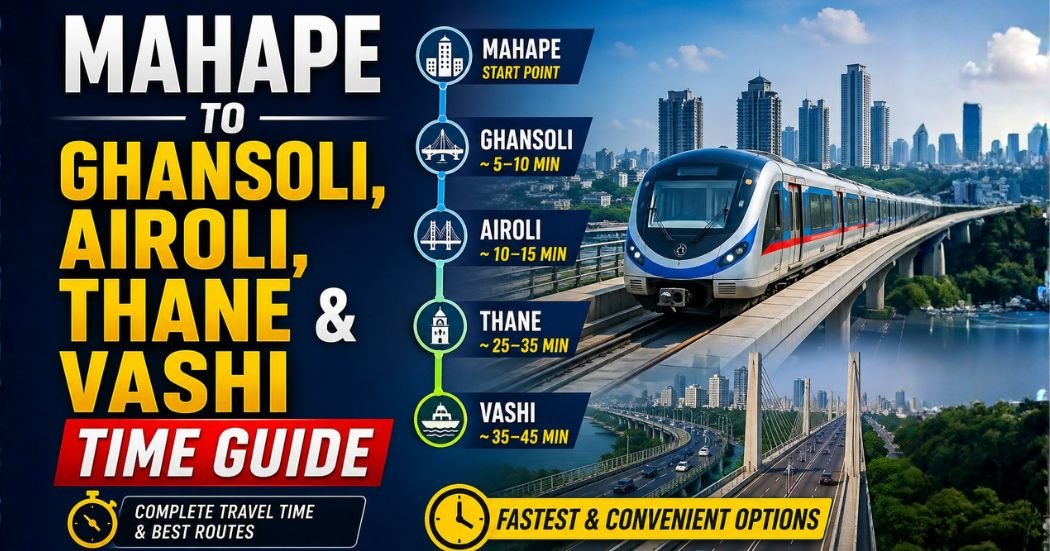
Key Facts Details Who this guide is for Mahape workers, renters, buyers, SMEs, and commuters choosing between Ghansoli, Airoli, Thane, and Vashi. Key numbers Mahape to Ghansoli: about 1–6 minutes by bus/taxi depending on pickup; Mahape to Airoli: about 17 minutes by direct bus; Thane to Mahape: about 14–37 minutes depending on mode. Main decision Choose the node that gives you the least daily commute pain, not just the shortest map distance. Reality check Exact timing changes by Mahape pocket, station choice, and peak-hour traffic on the corridor. Mahape commuters usually have the easiest daily run from Ghansoli, then Airoli or Vashi depending on exact pickup point and mode, while Thane is still practical but needs more buffer and planning. This guide compares the four nodes in plain language so you can pick the least painful daily commute, not just the shortest line on a map. Mahape to Ghansoli travel time: what to expect daily Most Mahape–Ghansoli trips are extremely short, especially when you are moving between Millennium Business Park and the Ghansoli side of the corridor. Direct bus results show about 1 minute, taxi results about 6 minutes, and map-style road estimates around 10 minutes, so this is usually the quickest of the four node comparisons. Mode Typical Time What This Means Bus 1–2 min Best for the fastest no-car commute between the Mahape–Ghansoli corridor points. Taxi / cab 6–10 min Good backup when you need door-to-door flexibility. Walk 53 min Not practical for daily commuting unless you are very close to the office side. If your office is inside Mahape MIDC or farther from the bus stop, add buffer time because the “Mahape” label can hide a meaningful last-mile difference. For most readers, the next step is simple: compare Ghansoli against the other three nodes only if you want a better home base, not because Ghansoli itself is slow. What to do next Check whether your office entrance is closer to Millennium Business Park or the MIDC interior. If you are choosing where to live, compare this with the “live near Mahape” node pages, especially Ghansoli. Mahape to Airoli travel time and best route options Mahape–Airoli is still a short commute, but it is longer and slightly more mode-sensitive than Ghansoli. Direct bus results show about 17 minutes, while taxi comes in around 8 minutes in free-flow conditions, which makes Airoli a strong but not the absolute fastest choice for Mahape workers. Mode Typical Time Best Use Case Bus 17 min Best budget-friendly daily option for regular commuters. Taxi 8 min Best when you need speed and flexibility. Walk 1h 29m+ Not realistic for daily commuting. Airoli is worth considering if you want a balance between Mahape access and broader connectivity, but for pure commute ease Ghansoli usually wins. Next, users should compare Airoli with Ghansoli directly if commute is the deciding factor in where to rent or buy. What to do next Compare Airoli rent and lifestyle against Ghansoli only after you accept the commute trade-off. Move to an “Airoli vs Ghansoli for Mahape workers” click-through if housing is the next decision. Mahape to Thane: road vs train for your daily commute Thane is workable for Mahape, but it is a more serious commute decision than Ghansoli or Airoli. Route results show about 14–16 minutes by taxi or drive in free-flow conditions, about 35 minutes by direct train to Ghansoli, and about 37 minutes when you combine train and bus via Rabale, so the best mode depends on how much buffer you can tolerate. Option Typical Time Notes Taxi / drive 14–16 min Fastest when roads are moving well, but traffic risk is higher. Train to Ghansoli 35 min Simple rail-based option if you can handle the last mile from the station. Train + bus via Rabale 37 min Useful when your Mahape end point is better served via Rabale. Bus 35–49 min Budget-friendly, but less predictable than a clean road run. The practical answer is that Thane works best for readers who need Thane-side living for family or city reasons and can absorb a longer daily commute. If your work hours are strict, the next step is to compare Thane against Ghansoli and Airoli before making a housing decision. What to do next Decide whether you can comfortably add buffer time on bad traffic days. Read a Thane-to-Mahape commute or “best Thane localities for Mahape workers” page next. Mahape to Vashi travel time and bus connections Vashi is a practical Mahape node because it combines short road access with workable public transport. The route sources show that Vashi-to-Mahape travel can be direct by road or bus, and Mahape-to-Vashi typically sits in the low-teens range in ideal conditions, making it useful for commuters who also want strong commercial and residential convenience. Mode Typical Time Why It Matters Road / cab Low teens in ideal conditions Good for direct point-to-point trips. Bus Direct bus option available Useful for regular, lower-cost commuting. Vashi is not the fastest choice on pure commute time, but it can be the most balanced for users who want a stronger mixed-use node with better day-to-day convenience. The next step is to compare Vashi with Ghansoli if you want the best mix of commute, amenities, and practical living. What to do next Use Vashi as a comparison node only if your household also values commercial convenience. Click onward to a Vashi-near-Mahape residential or commute guide. Which station is best for Mahape: Ghansoli, Rabale, Koparkhairne or Turbhe? There is no single universal “best station” for Mahape because the right answer depends on the exact office pocket and the last-mile route. Ghansoli is usually the strongest default, Rabale becomes useful for some Thane-side trips, and Koparkhairne or Turbhe can matter depending on where inside Mahape your destination sits. Station Why It Matters for Mahape Best Use Case Ghansoli Closest-feeling default for many Mahape offices. Best overall starting point for most commuters. Rabale Useful for Thane-side rail options. Best when you are coming from Thane and can

Read More

Warehousing and Logistics Real Estate in Mahape MIDC: Supply Chain Advantage, Risks and Investment Guide

Mahape MIDC is useful for warehousing and logistics because it sits inside the TTC industrial belt with strong access to Thane-Belapur Road, Airoli, Ghansoli, Rabale, Vashi, Turbhe, and wider Navi Mumbai-Mumbai-Thane business routes. But it is not suitable for every logistics user. Buyers and tenants must check MIDC permissions, road width, truck movement, loading access, power load, fire safety, lease transfer status, and actual warehouse usability before committing. Is Mahape MIDC Actually Good for Warehousing and Logistics Real Estate? Yes, Mahape MIDC is good for warehousing and logistics real estate, but only for the right kind of business. It works best for mid-scale logistics, industrial supply, component storage, e-commerce support, spare-parts movement, and clean B2B distribution. It is not the ideal location for very large, low-margin bulk storage that needs huge floor plates and cheaper land. Mahape’s biggest strength is not unlimited space. Its real strength is location efficiency. A business operating from Mahape can serve nearby industrial clients in Rabale, Pawane, Ghansoli, Airoli, Turbhe, and Vashi without being pushed too far into the outer industrial belts. That is why Mahape should be seen as a mid-city industrial logistics node. It is more suitable for fast-moving, value-sensitive, client-facing, and service-linked logistics than for massive warehouse parks. Quick Summary: Is Mahape MIDC Suitable for Your Warehouse or Logistics Use? Use Case Fit in Mahape MIDC Practical Reason E-commerce fulfilment for Navi Mumbai and nearby areas Good Strong urban access and faster local distribution B2B industrial component storage Good Close to TTC industrial clients Spare-parts, electronics, tools and service logistics Good Fits Mahape’s clean industrial and tech-linked profile Light manufacturing with storage Good Works if approvals, power and loading access are clear Heavy chemical storage Weak to speculative Needs strict compliance and may not suit all pockets Large 3PL bulk warehousing Limited Space, truck movement and costs may not support large-scale use 100-acre logistics park model Not suitable Panvel, Taloja or outer highway belts are usually better Investor buying any old shed for rental income Speculative Tenant quality depends on compliance and usability What Gives Mahape MIDC Its Supply-Chain Advantage in Navi Mumbai? Mahape MIDC’s supply-chain advantage comes from its position inside the working industrial-commercial belt of Navi Mumbai. It is close enough to industrial clients, office users, residential demand centres, transport corridors, and service networks. This reduces response time for many businesses. The important point is simple: Mahape is valuable because it helps movement become faster and more practical for certain goods. It is not valuable just because a brochure says “prime MIDC location.” Access to Thane-Belapur Road and TTC Industrial Demand Thane-Belapur Road is one of the strongest industrial and business spines in Navi Mumbai. Mahape’s access to this corridor gives logistics users a direct connection to the larger TTC Industrial Area, including Rabale, Ghansoli, Pawane, Turbhe, and nearby business pockets. For many distributors and industrial suppliers, this matters more than being far away on a cheaper highway-side plot. If your customers are inside the TTC belt, your warehouse being near them saves time, fuel, coordination effort, and delivery uncertainty. Mahape also benefits from surrounding industrial demand. The TTC belt has a large base of MSME units, technology-linked businesses, manufacturing-support firms, service providers, and backend operations. A warehouse here can support these businesses without needing long daily trips from outer industrial locations. Proximity to Airoli, Ghansoli, Rabale, Vashi and Turbhe Business Belts Mahape sits close to several important Navi Mumbai nodes. Airoli and Ghansoli bring IT, office, data-centre-linked and residential demand. Rabale and Pawane bring industrial and utility-heavy users. Vashi and Turbhe bring commercial, wholesale, service, retail and distribution demand. This mixed demand makes Mahape useful for businesses that need both industrial access and urban proximity. For example, a company storing electronic components, tools, medical supplies, spare parts, branded inventory, or service equipment may prefer Mahape over a cheaper but distant warehouse belt. The value is in turnaround. If a team can receive material, process orders, support nearby clients, and dispatch within Navi Mumbai or towards Mumbai-Thane routes faster, the higher rent or property cost may become easier to justify. Why Mahape Works Better for Mid-Scale Logistics Than Large-Format Warehousing Mahape is not designed like a large greenfield logistics park. Land is limited. Internal roads may not suit continuous heavy vehicle movement in every pocket. Many structures were originally built for industrial or mixed industrial use, not modern high-rack logistics. So Mahape works better for: mid-sized warehousing business-to-business distribution industrial component storage fulfilment support repair and service logistics office-plus-storage operations clean storage linked to technology, electronics, equipment, pharma-support or business supplies It is weaker for: very large bulk storage massive 3PL parks low-margin commodity warehousing heavy raw material storage operations needing large container yards businesses where land cost is the main deciding factor This is where many buyers make mistakes. They see “MIDC” and assume every property can become a warehouse. In reality, the exact road, gate, structure, permissions, power load, floor strength and drainage decide whether the property is truly logistics-ready. Which Logistics and Warehouse Users Are Best Suited for Mahape MIDC? Mahape MIDC suits businesses that need fast access to Navi Mumbai’s industrial and commercial network. It is not for every warehouse user, but for the right business it can be a strong operational base. Industrial Suppliers and Component Storage Industrial suppliers serving the TTC belt can benefit from Mahape. If a business supplies machine parts, electrical components, tools, packaging material, small equipment, technical consumables or maintenance items, being close to nearby industrial clients reduces delivery friction. For such businesses, the warehouse is not just storage. It is a response centre. A client in Rabale, Ghansoli, Airoli, Pawane or Turbhe may need urgent delivery, replacement, testing, repair or dispatch support. Mahape makes that possible without pushing the operation too far away. E-Commerce and Urban Distribution Support Mahape can also work for e-commerce fulfilment and urban distribution, especially where the inventory is manageable in size and value-sensitive. A business delivering across Navi Mumbai, Thane-side pockets, parts of Mumbai

Read More

Millennium Business Park Mahape: Complete Local Guide to Location, Companies, Buildings, Commute and Visitor Information

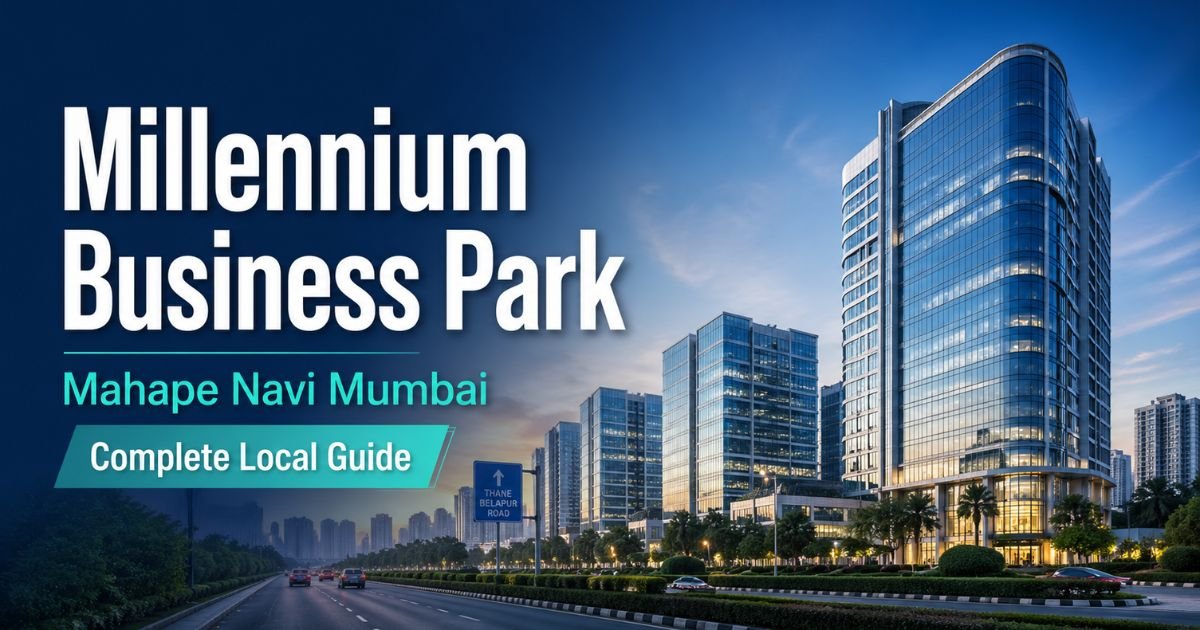
Millennium Business Park (MBP) Mahape is the largest government-operated IT and commercial business park in Maharashtra, located in Mahape, Navi Mumbai, along the Thane-Belapur Road (MIDC Industrial Area, Sector 1, Kopar Khairane, PIN: 400710). It houses 50+ national and multinational companies including Capgemini, Accenture, TCS, and Tech Mahindra across 10+ buildings and Rupa Solitaire. The nearest railway station is Ghansoli (16–20 minutes walk). This guide is written from five years of working in and around MBP Mahape. Quick Summary Full Name Millennium Business Park (MBP), MIDC Mahape Address MIDC Industrial Area, Sector 1, Kopar Khairane, Mahape, Navi Mumbai, Maharashtra PIN Code 400710 Nearest Station Ghansoli (Harbour Line) 16–20 min walk Second Nearest Kopar Khairane 20–25 min walk Major Bus Stop MBP Mahape (NMMT buses: 125AC, 7AC, C-513) Office Hours Mon–Fri: 9 AM–6 PM Major Tenants Capgemini, Accenture, TCS, Tech Mahindra, AT Kearney, Brother India, DKSH India Landmark Building Rupa Solitaire (1.2 million sqft) Type Government-operated (MIDC) IT and commercial park What is Millennium Business Park Mahape? Millennium Business Park, commonly called MBP Mahape, is the largest government-operated IT and commercial business park in Maharashtra. Developed under the MIDC (Maharashtra Industrial Development Corporation) framework and located on Thane-Belapur Road in the TTC Industrial Area, it has been one of Navi Mumbai’s most important commercial destinations for over two decades. MBP Mahape is not a single building; it is a large mixed-use commercial campus spread across Sectors 1 and 2 of Mahape MIDC, comprising over 10 office buildings, the iconic Rupa Solitaire tower, and a growing ecosystem of food options, hotels, banks, and support services for thousands of working professionals. The park primarily serves the IT, ITES, BPO, consulting, and engineering sectors. It is the go-to destination for companies seeking affordable, well-connected, Grade-B to Grade-A office space in Navi Mumbai at rents lower than Mindspace Airoli but with strong infrastructure and established connectivity. Local Experience Note: “I’ve worked in and around MBP for five years. When I first heard ‘Millennium Business Park’, I imagined a small corporate lane. What you actually get is an entire commercial township with bus stops named after it, hotels inside it, restaurants all around, and hundreds of cabs and autos feeding into it every morning. It’s not just an office park; it’s a working professional’s daily world.”  MBP vs Other Navi Mumbai IT Parks Quick Overview Park Location Type Best For MBP Mahape Thane-Belapur Road, Mahape MIDC (Govt.) Affordable, established IT/BPO Mindspace Airoli Airoli (East + West) Private REIT Premium occupiers, large enterprises Ghansoli Corporate Belt Ghansoli, Thane-Belapur Road Mixed private Mid-size IT, BFSI TTC Rabale Rabale MIDC MIDC (Govt.) Industrial + IT mix Seawoods Grand Central Seawoods Mixed private South Navi Mumbai firms Location and Address of Millennium Business Park Full Address: Millennium Business Park, MIDC Industrial Area, Sector 1 & 2, Kopar Khairane, Mahape, Navi Mumbai, Maharashtra 400710 MBP sits directly on Thane-Belapur Road, one of Navi Mumbai’s major arterial roads running parallel to the Harbour Line rail corridor. This location gives it unmatched access from both train and road. Coming from Vashi or Belapur, you will pass Ghansoli and Kopar Khairane and MBP’s buildings start appearing on the right side of Thane-Belapur Road. The park’s area covers both Sector 1, which includes older buildings and Rupa Solitaire, and Sector 2, which includes newer developments. All buildings are within walking distance of each other. Nearby Landmarks: Barbeque Nation MBP, inside MBP campus Country Inn & Suites by Radisson, 5 min from MBP Ramada Navi Mumbai, Rupa Solitaire premises MIDC Kopar Khairane Police Station, 2 km Reliance Smart Point Mahape, 1 km Nearest Railway Station to Millennium Business Park The nearest railway station to Millennium Business Park Mahape is Ghansoli, on the Harbour Line of Central Railway. It is approximately 1.1 to 1.5 km from MBP a 16 to 20-minute walk or a 3 to 5-minute auto ride. Kopar Khairane station is the second closest, about 20 to 25 minutes by walk.  Station Line Distance Walk Time Auto Time Ghansoli Harbour Line ~1.3 km 16–20 min 3–5 min Kopar Khairane Harbour Line ~1.8 km 20–25 min 5–7 min Airoli Harbour Line ~4 km Not walkable 10–12 min Vashi Harbour Line ~10 km Not walkable 20–25 min Belapur Harbour Line ~12 km Not walkable 25–30 min Station Distance Summary: Local Experience Note: “The walk from Ghansoli station to MBP is completely manageable in the morning if you leave before 9 AM. The path goes along Prabhakar Krishanati Patil Marg it’s a straight road with decent footpath coverage for most of the stretch. After 9:30 AM, I’d recommend taking an auto because the road gets busy and the walk starts feeling longer. In monsoon, add 10–15 extra minutes.”  Exact Location on Thane-Belapur Road MBP sits between the Ghansoli and Kopar Khairane railway stations on the Thane-Belapur Road. If you are driving from Mumbai towards Belapur, MBP will appear on your left side after Ghansoli. If coming from Belapur or Panvel, it will be on your right after Kopar Khairane. Google Maps search: “Millennium Business Park Mahape” will take you directly to the main gate on Thane-Belapur Road. Companies in Millennium Business Park Mahape MBP Mahape hosts 50+ companies across multiple sectors. The park is most heavily concentrated in IT services, consulting, and BPO/ITES making it one of Navi Mumbai’s largest private-sector employment zones. Note: Company presence in MBP changes over time. The list below is based on publicly available information and local knowledge as of 2026. Some companies may have expanded, downsized, or relocated. Always verify with the specific company for current office addresses.  IT Services Companies in MBP Mahape Company Sector Notes Capgemini IT Services Major presence; multiple floors Accenture IT / Consulting Long-standing tenant TCS (Tata Consultancy Services) IT Services Established presence Tech Mahindra IT Services Multiple buildings iGate, now merged with Capgemini IT / BPO Legacy operations under Capgemini Consulting and Professional Services Company Sector AT Kearney / Kearney Management Consulting DKSH India Market Expansion Services Various Big 4 support operations Consulting Manufacturing, Distribution

Read More

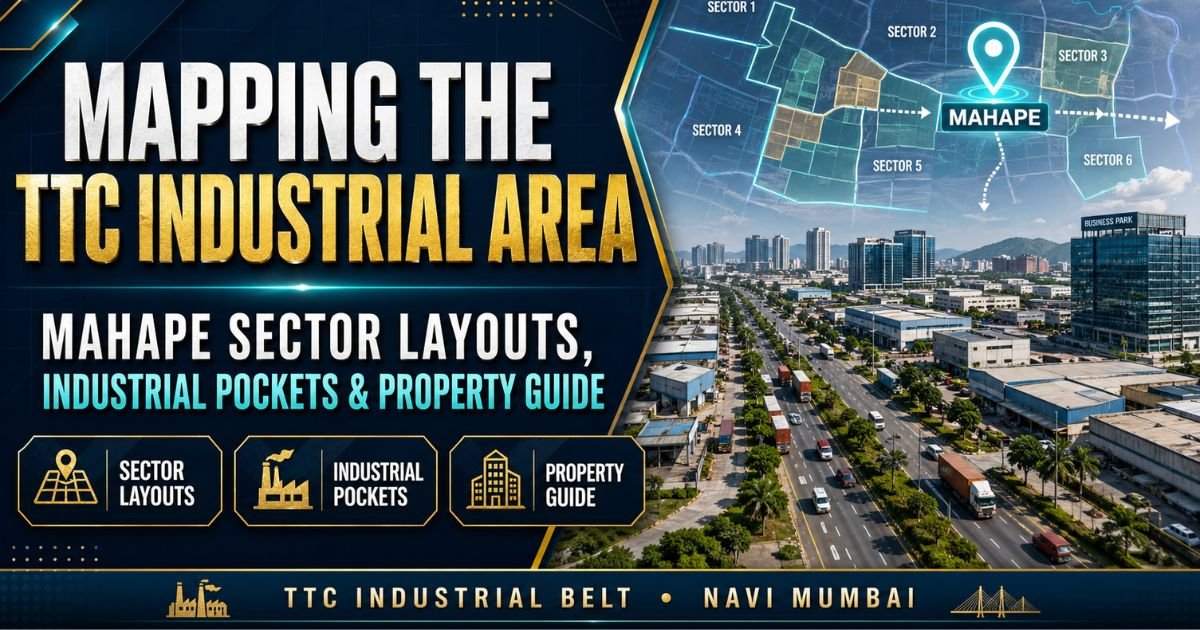
Mapping the TTC Industrial Area: Mahape Sector Layouts, Industrial Pockets and Property Guide

Mahape is one of the most important working pockets of the TTC Industrial Area in Navi Mumbai, but it is not one uniform industrial zone. Its real value depends on the exact pocket, road width, permitted use, power load, truck access, drainage condition, station connectivity, and compliance status. A Mahape address alone is not enough. The right sector layout must match the business activity. Mahape sits inside the larger Trans Thane Creek industrial belt, commonly associated with MIDC-planned industrial land, manufacturing units, warehouses, electronics activity, IT/ITES offices, service businesses, and commercial buildings. On paper, it may look like a clean industrial grid. On the ground, it behaves like a hybrid micro-market. One part of Mahape can suit an electronics assembly unit. Another can work better for an IT back office. A third may be practical for a small warehouse or service centre. A fourth may look attractive on a map but fail on truck turning, waterlogging, parking, fire compliance, or old municipal dues. That is why Mahape should be studied through usability, not only through map boundaries. Quick Summary: How to Read Mahape’s Sector Layout Reader Question Practical Answer Is Mahape part of the TTC Industrial Area? Yes. Mahape is a key pocket within the TTC industrial belt of Navi Mumbai. Is Mahape fully industrial? No. It has industrial plots, electronics-oriented pockets, warehouses, galas, office buildings, service businesses, and IT/ITES spaces. Is a Mahape address enough for property selection? No. Exact road access, sanctioned use, building type, power load, and compliance matter more. Best suited for Electronics, precision work, small and medium manufacturing, service centres, IT/ITES offices, back offices, selected warehousing. Main caution Do not trust only map location or broker description. Verify MIDC use, NMMC tax dues, fire compliance, drainage, road width, and transfer conditions. Key local access anchors Thane-Belapur Road, Ghansoli station, Kopar Khairane station, Rabale, Turbhe, Airoli, Mahape-Shilphata corridor. Where Exactly Does Mahape Sit Inside the TTC Industrial Area? Mahape is positioned in the central working belt of the Trans Thane Creek Industrial Area. In local business terms, it sits between the older, more rugged industrial character of Rabale and the more corporate, office-led movement seen around Airoli and Ghansoli. This location gives Mahape a special role. It is neither only a heavy manufacturing belt nor only a polished office district. It works as a middle operating zone where manufacturing, electronics, IT support, warehousing, repairs, engineering, and commercial offices coexist. The wider TTC industrial belt was developed as a major industrial corridor along the Thane-Belapur Road side of Navi Mumbai. The broader estate is spread across a large industrial area and houses thousands of micro, small, medium, and large businesses. Mahape is one of the pockets where this older industrial base has gradually adapted to newer types of demand. In practical terms, Mahape connects with: Thane-Belapur Road for north-south industrial and office movement Ghansoli and Kopar Khairane railway stations for staff commute Rabale for older industrial depth Turbhe and Pawane for logistics and APMC-linked movement Airoli-Ghansoli for IT, business parks, and office-led demand Mahape-Shilphata side for movement toward Kalyan-Dombivli and wider freight routes This is why Mahape cannot be judged like a normal city sector. It has to be read as a working industrial-commercial grid. How Should Readers Understand Mahape’s Sector Layout Beyond a Simple Map? A map can show roads, plots, and labels. It cannot show whether a 40-foot trailer can turn properly, whether the power load is enough, whether a lane gets waterlogged, or whether a building’s sanctioned use matches the business activity. That is the real difference in Mahape. Main-Road-Facing Pockets Versus Internal MIDC Lanes Properties closer to main approach roads may offer better visibility and easier staff access. But for many industrial businesses, main-road visibility is not always the biggest advantage. Loading and unloading can become difficult if the site opens directly onto a busy traffic stretch. Internal MIDC lanes can sometimes work better for factories, galas, and service units because they may offer calmer vehicle movement and more practical loading space. But this depends on the actual road width, turning space, parking pressure, and building entry. A unit on a narrow internal lane may be cheaper, but it may create daily operational problems for trucks, vendors, staff, and emergency access. Electronic Zone-Side Activity Versus Mixed Industrial-Commercial Pockets Mahape has a strong electronics and cleaner industrial identity in some pockets. The Electronic Zone side is generally more relevant for low-emission, precision-oriented, assembly, hardware, electronics, repair, or technology-linked work. This does not mean every vacant gala in the area can be used for any activity. A heavy chemical, noisy fabrication, or high-emission activity cannot be assumed to fit only because the rent looks attractive. The permitted use and pollution category must be checked properly with the relevant authorities. Mixed pockets, on the other hand, may include service centres, small engineering firms, packaging businesses, office support units, and industrial-commercial buildings. These areas need closer due diligence because a property may look commercial from outside but may still have industrial-use restrictions. Factory, Gala, Warehouse, and Office Clusters Are Not the Same One of the biggest mistakes in Mahape is treating all built spaces as interchangeable. A factory shed, industrial gala, warehouse unit, back office, and commercial office do not require the same infrastructure. A factory may need slab strength, ventilation, machine layout, power load, and loading access. A warehouse may need height, truck access, staging space, and dry storage. An office may need parking, lifts, fire safety, staff commute, washrooms, internet, and daily amenities. The sector layout must be judged by use. Mahape Pocket Type Usually Better For What Must Be Checked Electronic Zone-style pockets Electronics, assembly, precision work, repair, hardware support Sanctioned use, power quality, ESD-sensitive setup needs, fire safety, ventilation General industrial lanes Manufacturing, packaging, fabrication, engineering, service workshops Road width, slab load, truck access, noise/emission permissions, drainage MBP and office-led pockets IT/ITES, BPOs, consulting, back offices, corporate teams Parking, fit-out quality, power backup, lifts, staff commute, lease terms Main approach-road pockets Client-facing

Read More

Mahape Flyover: Location, Nearby Areas & Connectivity Guide

Mahape Flyover is an important road connector on the Thane-Belapur Road side of Navi Mumbai, mainly serving the Mahape MIDC, Millennium Business Park, Electronic Zone, Ghansoli, Kopar Khairane, Rabale, Airoli, and nearby industrial areas. It helps through-traffic move faster over busy junctions, but it does not remove all traffic problems inside Mahape’s internal MIDC roads and office-access lanes. For daily commuters, the flyover is useful because Mahape is not a typical residential locality. It is a work-heavy belt with IT parks, industrial units, warehouses, corporate offices, service businesses, and heavy vehicle movement. So the real value of Mahape Flyover is not just “location.” Its value is in how it supports daily office travel, industrial access, and movement between nearby Navi Mumbai nodes. Quick Summary: Mahape Flyover Point Details Location Context Mahape Flyover is located around the Mahape junction belt on the Thane-Belapur Road corridor in Navi Mumbai. Main Use It helps vehicles bypass busy ground-level junctions and supports movement around Mahape MIDC, MBP, and nearby areas. Nearby Areas Ghansoli, Kopar Khairane, Rabale, Airoli, Turbhe, Mahape MIDC, Millennium Business Park, and Electronic Zone. Important Road Connection Thane-Belapur Road is the main road spine connected with the flyover’s movement. Best For Office-goers, industrial visitors, vendors, cab users, delivery riders, and people travelling to Mahape business areas. Practical Railway Access Ghansoli, Kopar Khairane, and Rabale are commonly used railway access points depending on the exact destination. Traffic Caution The flyover helps highway movement, but internal MIDC roads can still face congestion, heavy vehicles, and monsoon issues. Real Estate Relevance It improves access to Mahape’s job belt, but residential comfort depends more on the exact node and pocket. Where Is Mahape Flyover Located in Navi Mumbai? Mahape Flyover is located around the Mahape side of the Thane-Belapur Road corridor, one of the most important working road stretches of Navi Mumbai. This area sits close to Mahape MIDC, Millennium Business Park, Electronic Zone, Ghansoli, Kopar Khairane, Rabale, and Airoli. The flyover is important because Mahape is not only a locality name. In daily Navi Mumbai usage, “Mahape” usually means the industrial and commercial belt around MIDC units, office parks, IT/ITES buildings, warehouses, and service businesses. Many people who say they are “going to Mahape” may actually be going to Millennium Business Park, Mahape MIDC, Electronic Zone, or a company located inside one of the internal industrial roads. The flyover helps vehicles moving along the main road avoid some ground-level traffic points. But the moment a vehicle exits towards internal Mahape roads, travel speed can change sharply. This is the first thing commuters should understand. Which Local Landmarks Help Identify Mahape Flyover? Mahape Flyover is best understood through nearby working landmarks rather than tourist-style landmarks. The important local references include: Mahape MIDC Millennium Business Park Mahape Electronic Zone Thane-Belapur Road Ghansoli side access Kopar Khairane side access Rabale and Airoli side movement Nearby corporate and industrial campuses For a first-time visitor, this area can feel confusing because the road network has the main highway movement, slip roads, industrial lanes, office entries, and station-side last-mile routes. A cab driver may take the elevated road when the passenger actually needs the service road below, or the reverse may happen. So while searching or booking a cab, it is always better to enter the exact building or company name, not just “Mahape Flyover.” Which Areas Are Connected by Mahape Flyover? Mahape Flyover mainly supports movement around the Mahape industrial and commercial belt and helps connect traffic coming from nearby Navi Mumbai nodes. Its biggest practical role is around Thane-Belapur Road movement and access towards Mahape’s internal business areas. Nearby Area Why It Matters Typical User Practical Connectivity Note Mahape MIDC Major industrial and commercial employment zone Factory visitors, vendors, staff, delivery vehicles Flyover helps reach the edge of the belt, but internal roads decide the final travel experience. Millennium Business Park Important office and IT/ITES destination Office employees, interview candidates, cab users Many commuters depend on railway station plus auto/cab last-mile access. Mahape Electronic Zone Industrial and technical business pocket Vendors, engineers, service providers, logistics users Internal lane access, parking, and heavy vehicle movement matter a lot. Ghansoli Strong nearby residential and railway node Office-goers, renters, working professionals Useful for people staying near Ghansoli and working in Mahape or MBP. Kopar Khairane Residential and commercial node close to Mahape Renters, daily commuters, small business users Practical access depends on exact road, subway, and ongoing connectivity work. Rabale Railway and industrial-side access point Workers, industrial staff, commuters from Airoli side Useful depending on the exact Mahape destination. Airoli Important office, residential, and Thane-side access node Corporate employees, long-distance commuters Works as a larger access side for people coming from Thane/Airoli direction. Turbhe / Vashi Side Southward Navi Mumbai access Drivers, business visitors, office users Thane-Belapur Road movement connects this side to Mahape. The important point is simple: the flyover is useful, but it is not the full journey. In Mahape, the last 1 to 2 km can matter as much as the main road journey. How Does Mahape Flyover Help Daily Commuters? Mahape Flyover helps daily commuters by improving movement along the main Thane-Belapur Road side and reducing some ground-level junction friction. For people going towards Mahape MIDC, Millennium Business Park, and nearby office zones, this can make the main approach smoother. But the experience is different for different users. A person travelling by car from Thane may use the flyover differently from someone coming by train to Ghansoli and then taking an auto. A delivery rider entering the Electronic Zone will face another type of route challenge altogether. For Office-Goers Going to Mahape MIDC and Millennium Business Park For office-goers, Mahape Flyover is most useful as part of a daily commute chain. A typical employee may come from Thane, Vashi, Airoli, Ghansoli, Kopar Khairane, or even Panvel side. Some come by road directly. Others use the Trans-Harbour railway line and then take an auto, bus, or cab. Millennium Business Park and nearby office areas attract a large number

Read More
Digital To Infinity Academy - Build Skills. Build Projects. Build Your Future.