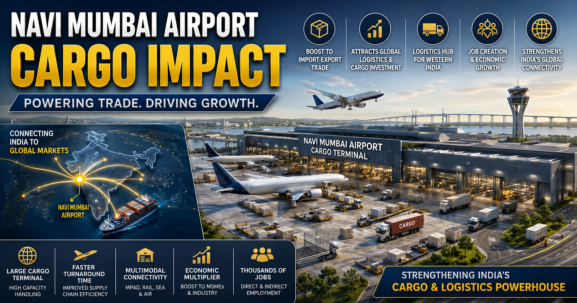
How to Choose the Right Industrial Location Near Navi Mumbai for Your Factory, Warehouse or Business Activity
Choosing the right industrial location near Navi Mumbai is not only about rent, price or whether the property “looks good” on first visit. For a factory, warehouse, MIDC plot, industrial shed, industrial gala, logistics unit or investment property, the real question is whether the location fits your activity, compliance profile and day-to-day movement pattern. You need to check MIDC or non-MIDC status, zoning, truck access, power load, water, MPCB category, fire access, labour reach, budget, logistics cost and future expansion before comparing any two units. The wrong location can create approval delays, daily congestion, power problems, document trouble and weak resale. The right one can save time, money and operational stress.
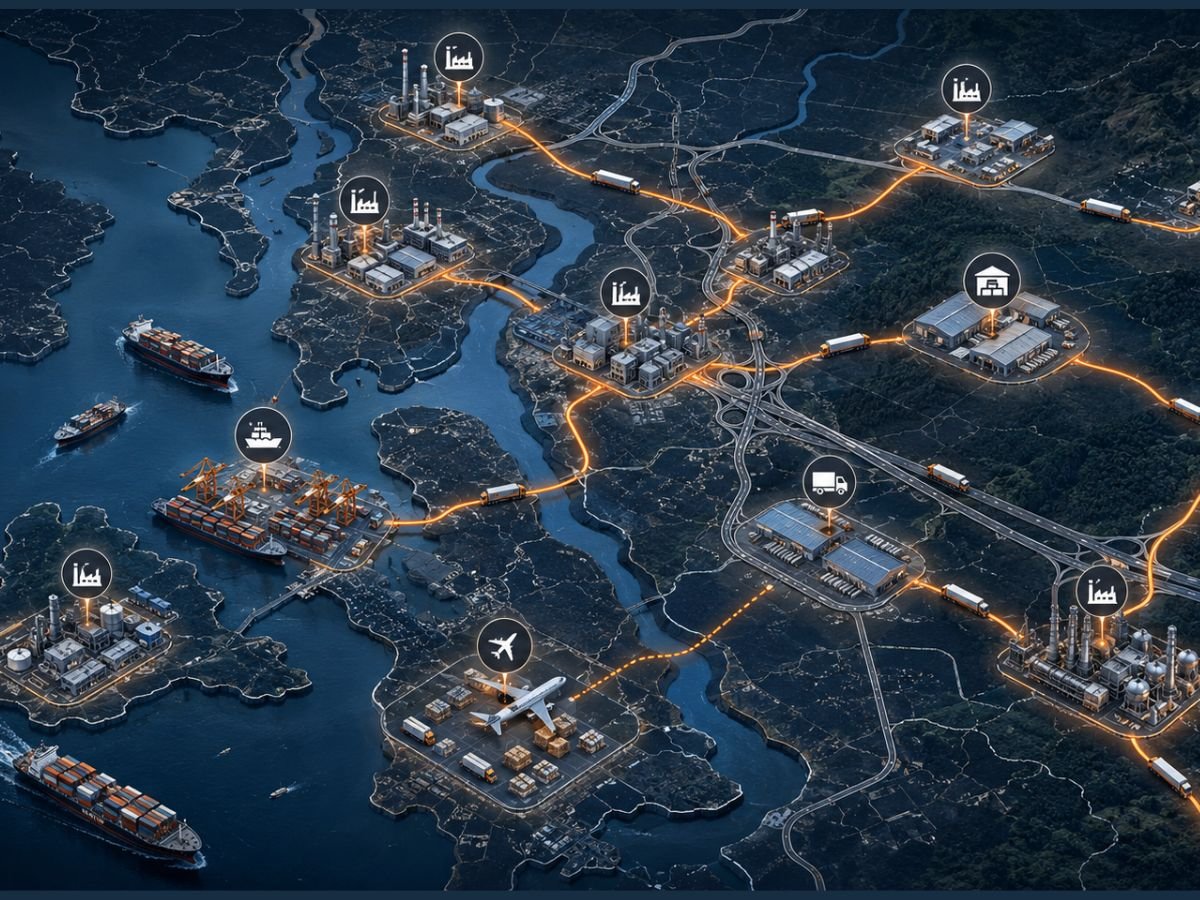
This guide is built on practical site-selection logic, but it is also aligned with the official systems that actually affect industrial decisions. MIDC’s own resources confirm that it offers developed plots, built-up spaces and sheds, usually on long lease, runs a Single Window system that now routes new users through MAITRI 2.0, and provides core infrastructure such as roads, water and in some industrial areas even natural gas. MPCB’s current framework matters because industrial classification now references Red, Orange, Green, White and Blue categories. JNPA, CIDCO/NAINA, MMRDA and NMIA matter because port handling, road links, airport influence and planning controls directly affect how Panvel, Kalamboli, Uran, Dronagiri, JNPT side and airport-influence belts should be judged.
Quick Verdict
- If you need premium Navi Mumbai industrial access, TTC, Mahape, Rabale, Pawane and Turbhe may be suitable, but you must check pricing, older buildings, truck access, parking and permitted activity carefully.
- If you need manufacturing depth and larger industrial activity, Taloja, Patalganga, Rasayani, Additional Ambernath, Ambernath, Badlapur and Khalapur may be worth shortlisting depending on activity, compliance profile and budget.
- If you need port-linked warehousing or import-export movement, JNPT/Nhava Sheva, Uran, Dronagiri, Panvel and Kalamboli may be stronger options depending on container movement, title, approach road and operational timing.
- If you need more cost-sensitive industrial options, Ambernath, Additional Ambernath, Badlapur, Khopoli and selected outer belts may work better than TTC, but utility readiness, access, approvals and distance must be checked more carefully.
Quick Answer
| Business Requirement | Locations to Consider | Why These Locations May Fit | Main Caution Before Finalising |
|---|---|---|---|
| Clean light manufacturing | TTC, Mahape, Rabale, selected Pawane, selected Taloja | Better access to Navi Mumbai, talent and compact industrial stock | Higher cost in TTC, older buildings, limited trailer movement in some pockets |
| Chemical/process unit | Taloja, Patalganga, Rasayani, Ambernath, Additional Ambernath | Deeper industrial ecosystem for process users | MPCB category, effluent handling, fire systems and exact activity fit must be verified |
| Pharma manufacturing | Taloja, selected Ambernath/Additional Ambernath, selected Patalganga/Rasayani belts | Existing manufacturing orientation and expansion potential | Cleanroom, water quality, compliance and neighbour activity matter |
| Engineering/fabrication | Rabale, Pawane, Taloja, Ambernath, Khopoli, selected Rasayani/Khalapur | Better fit for machinery, workshops, movement and industrial labour | Crane load, power, road width and noise/movement suitability must be checked |
| Packaging unit | TTC belt, Taloja, Ambernath, Panvel-side industrial pockets | Can work in both city-side and outer manufacturing belts | Final answer depends on dispatch radius, power and approvals |
| Food business | Panvel, Kalamboli, selected Taloja, selected JNPT/Uran side, selected TTC pockets | Better logistics and access for inbound/outbound movement | Hygiene, drainage, fire, FSSAI-linked operating setup and odour-sensitive surroundings matter |
| E-commerce warehouse | Panvel, Kalamboli, selected Pawane, selected Taloja, JNPT-side only if import-heavy | Better for distribution and highway movement | Do not choose port-side location if daily city dispatch matters more than import flow |
| Cold storage | Panvel, Kalamboli, JNPT/Uran side, selected Taloja, selected TTC units | Stronger logistics for perishables and port/highway access | Power backup, refrigeration design and fire compliance are critical |
| Import-export warehouse | JNPT/Nhava Sheva, Uran, Dronagiri, Panvel, Kalamboli | Port ecosystem, CFS links, container movement | Gate congestion, documentation timing, title and road access matter |
| Logistics company | Kalamboli, Panvel, JNPT/Uran/Dronagiri, selected Pawane/Turbhe | Better movement-driven locations | Same-day city distribution needs a different answer than port-led activity |
| Industrial investor | TTC, Taloja, Panvel/Kalamboli, JNPT-side, Ambernath | Different belts serve different tenant pools | Do not buy only on price; tenant fit and document quality drive real value |
| Budget factory buyer | Ambernath, Additional Ambernath, Badlapur, Khopoli, selected Taloja-side outer pockets | Lower entry ticket in many cases | Low price can hide road, power, approval or location-performance issues |
| Large expansion factory | Patalganga, Additional Patalganga, Rasayani, Khalapur, Khopoli, Additional Ambernath | Larger land options and longer-term industrial scale | Distance from suppliers, labour and customers must be calculated, not assumed |
Why Industrial Location Selection Is Different from Normal Real Estate
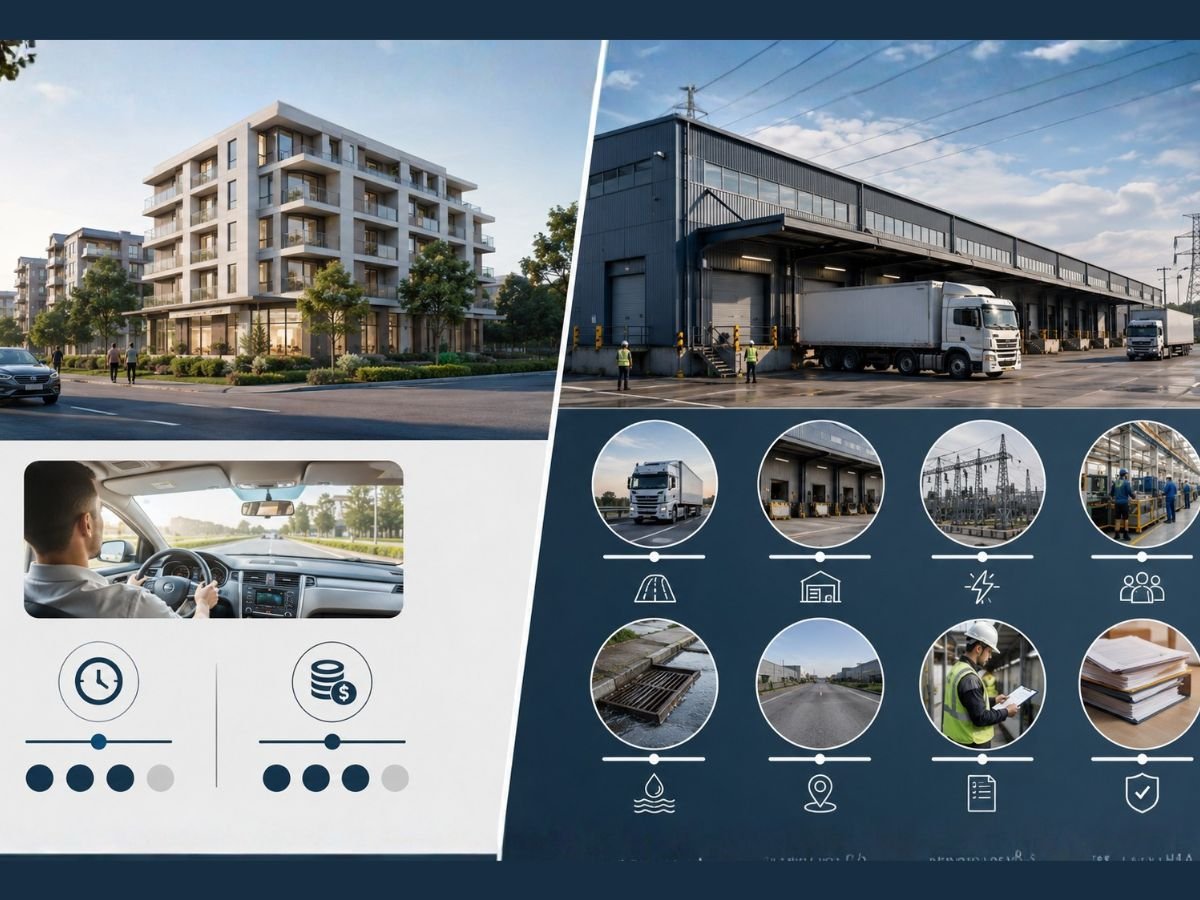
A residential or standard commercial property can often be compared on price, carpet area, building quality and daily commute.
Industrial property works differently.
A factory or warehouse location affects:
- whether your activity can practically run there
- whether trucks can reach the unit during real working hours
- whether power load is enough for your machinery or refrigeration
- whether the drainage and effluent side can support your process
- whether the fire tender can even reach the premises
- whether staff and labour can reach the site reliably
- whether your customers, suppliers, port, highway or city deliveries are actually efficient
- whether the same property will still make sense after your business grows
That is why two units in the same MIDC can perform very differently.
One unit may have:
- wider internal road
- better transformer or sanctioned power
- higher clear height
- more practical loading area
- legal approved structure
- cleaner transfer history
- better fire approach
- stronger resale and rental demand
And a unit just two lanes away may fail on all of those.
That is also why “best industrial area” is the wrong question.
The better question is:
Which area, in which exact pocket, in which exact property format, is right for my activity, budget and movement model?
Industrial Location Selection Framework
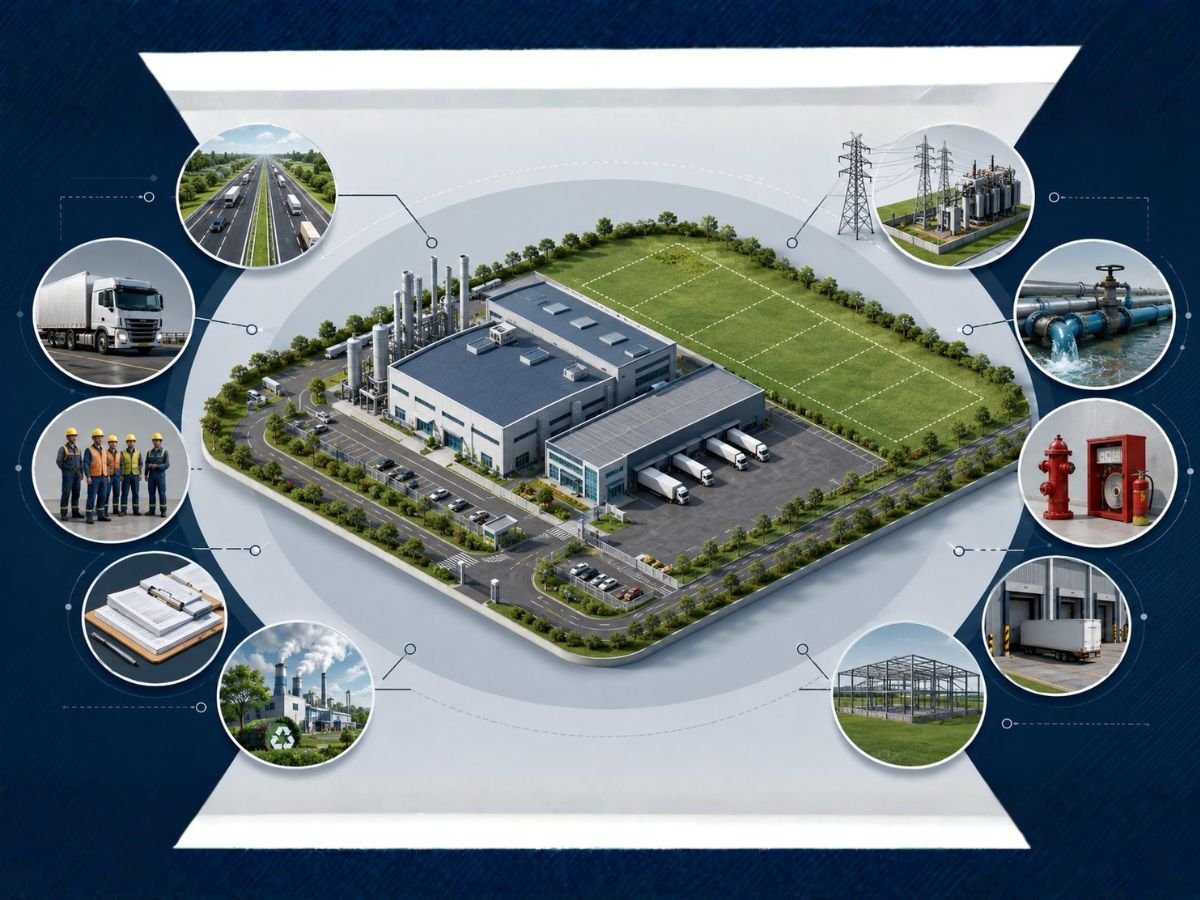
Before you shortlist any factory, warehouse, plot, shed or gala, use these 12 checks.
MIDC’s own FAQ and SWC pages make one thing clear: industrial property is not only land and building. It sits inside a larger system of lease structure, infrastructure charges, approvals, utility connections and online approval pathways. MPCB, JNPA, CIDCO/NAINA, MMRDA and NMIA add another layer depending on your activity and location.
Business activity fit
Why it matters: A clean assembly unit, chemical process plant, engineering workshop, food processor, warehouse and cold-storage operator do not need the same type of location.
What to check:
- exact activity
- emissions, odour, effluent, noise, storage type
- machinery footprint
- labour intensity
- daily ingress/egress pattern
- whether you need open yard, dock, clean room, cold room, crane or heavy floor load
Common mistake: Choosing a location by brand name or price before understanding the activity requirement.
MIDC vs non-MIDC status
Why it matters: MIDC and non-MIDC property do not operate under the same document logic, transfer logic or planning context.
What to check:
- whether the property is under MIDC, CIDCO, JNPA SEZ, local municipal authority or private title
- leasehold vs private ownership structure
- transfer conditions
- ongoing dues
- authority-specific approvals
Common mistake: Assuming MIDC is automatically simpler or non-MIDC is automatically flexible.
Zoning and permitted use
Why it matters: A cheap property is useless if the activity, building type or local development framework does not fit.
What to check:
- industrial vs mixed vs commercial vs special planning context
- whether the building format matches warehousing, manufacturing or office-led use
- exact sanctioned use in building and layout records
- zone confirmation where relevant on CIDCO/NAINA side
Common mistake: Relying only on agent language like “industrial property hai” without checking actual status.
MPCB category and consent requirements
Why it matters: For many industrial users, pollution category affects the basic feasibility timeline.
What to check:
- likely category of your activity
- whether Consent to Establish or Consent to Operate may be required
- whether ETP, CETP, hazardous storage, stack, scrubber or related infrastructure could apply
- whether the surrounding industrial ecosystem fits your category
Common mistake: Treating MPCB as a later-stage problem after the token is paid.
MPCB’s current classification references Red, Orange, Green, White and Blue categories, which means even before site shortlisting you should know roughly where your activity sits in the compliance spectrum.
Truck and container access
Why it matters: A warehouse that cannot handle your vehicles is not a warehouse solution. A factory that blocks trailers every day is an operating liability.
What to check:
- 20-ft container ability
- 40-ft container ability
- trailer turning radius
- internal road width
- gate width
- loading/unloading space
- queue spillover on main road
- time-of-day access
Common mistake: Inspecting on Sunday or in off-peak hours and assuming weekday movement will be the same.
Power load and transformer capacity
Why it matters: Power is not only about connection. It is about whether the supply profile fits your actual load.
What to check:
- sanctioned load
- expandable load
- transformer capacity
- three-phase requirements
- DG backup need
- cooling or process-specific load
- heavy start-up load for machines
Common mistake: Believing “power available” means your actual machinery can start immediately.
Water, drainage and effluent handling
Why it matters: Water-intensive units, process units, food users, pharma and chemical units can fail operationally even in a good location if water or drainage is weak.
What to check:
- actual water availability
- storage capacity
- borewell vs authority supply
- drainage line condition
- stormwater risk
- effluent handling
- CETP access where relevant
Common mistake: Checking only the tap connection and ignoring production-stage water need.
MIDC’s FAQ also notes recurring water charges and, where relevant, CETP charges in industrial areas. That is why operating cost must include utility and treatment reality, not just rent.
Fire safety and emergency access
Why it matters: Industrial fire risk is not theoretical. It affects approvals, insurance and basic operational survival.
What to check:
- fire tender approach
- hydrant, tank, pump room, extinguishers
- hazardous storage distance
- access width
- emergency exits
- neighbour risk
Common mistake: Seeing a fire extinguisher and assuming the property is fire-ready.
MIDC’s infrastructure page states that fire responsibility formally sits with the relevant local bodies or special planning authorities, while MIDC also manages fire services in selected industrial areas under its policy for hazardous and high-risk activity zones. In practice, you must verify the exact local fire ecosystem instead of assuming one universal answer.
Labour and staff access
Why it matters: A technically perfect unit can still fail if staff commute is too difficult.
What to check:
- railway and bus distance
- last-mile transport
- shift pattern
- worker catchment
- executive travel time
- driver parking/rest issues
Common mistake: Choosing a remote low-cost site without calculating labour attrition and transport cost.
Customer, supplier, port and highway distance
Why it matters: Distance is not just kilometres. It is travel time, queueing and reliability.
What to check:
- where your goods come from
- where they go
- whether port or city delivery matters more
- whether you need JNPT proximity or highway distribution
- whether same-day Mumbai delivery is important
- whether Pune-side access matters
Common mistake: Choosing a port-side belt for a business that really needs fast city dispatch, or choosing city-side property for a business that mostly moves containers.
Total cost, not only rent or price
Why it matters: Cheap industrial property can become expensive very quickly.
What to check:
- rent or purchase price
- deposit
- stamp and registration position
- transfer cost
- loading infrastructure cost
- floor strengthening
- fire upgrades
- power augmentation
- travel and labour cost
- downtime during fit-out or approvals
Common mistake: Comparing only ₹ per sq.ft. and ignoring every cost after possession.
Expansion, resale and exit value
Why it matters: Industrial property is often a long-cycle decision.
What to check:
- future adjacent space possibility
- whether bigger vehicle movement can be added later
- whether mezzanine or layout changes are possible
- whether the belt has strong tenant demand
- whether the buyer profile for resale is deep enough
Common mistake: Buying the “perfect” unit for today that becomes wrong in 24 months.
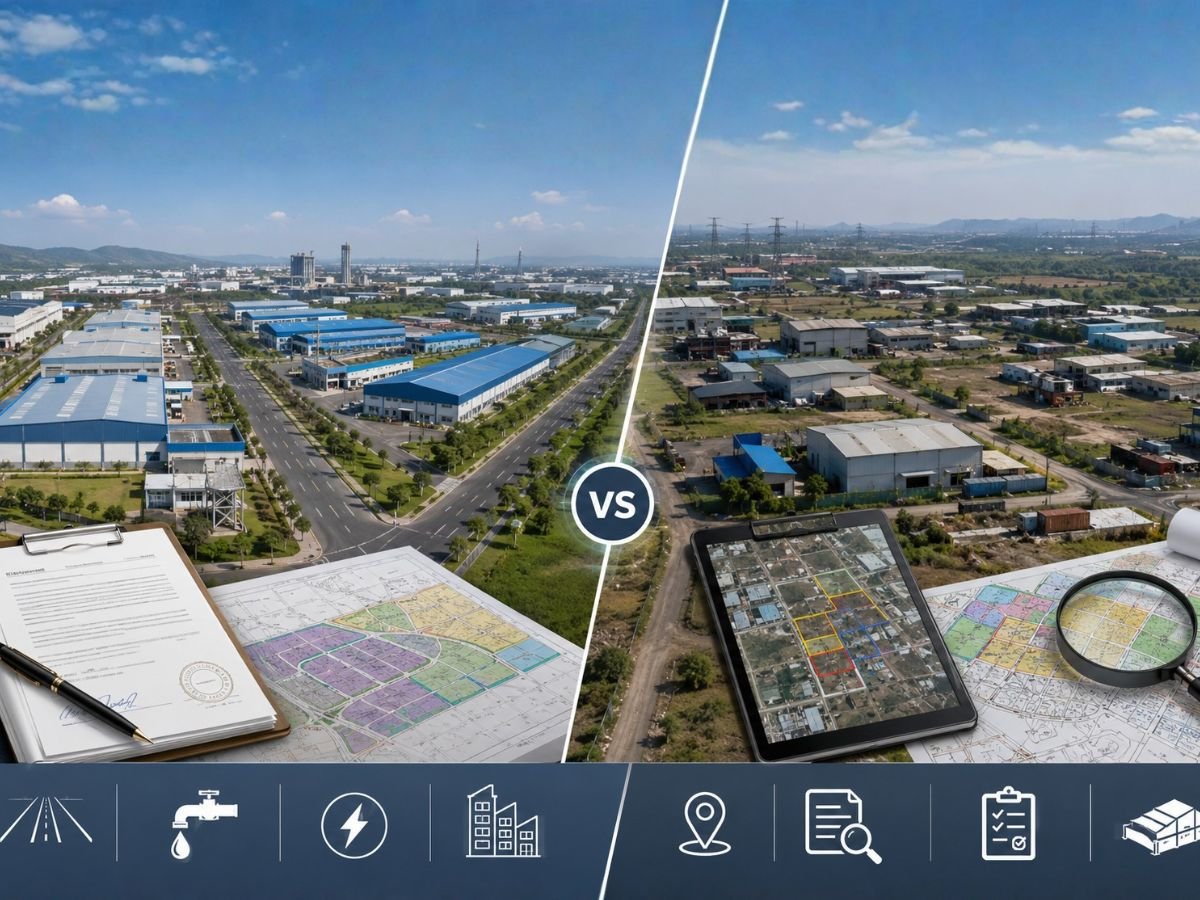
MIDC vs Non-MIDC Industrial Property Near Navi Mumbai
| Factor | MIDC Property | Non-MIDC / Private Industrial Property | What the Buyer/Tenant Should Verify |
|---|---|---|---|
| Authority | Usually MIDC-led industrial framework | May be CIDCO, JNPA SEZ, municipal, local planning authority or private layout | Exact authority is the first document-level question |
| Title / lease structure | Often leasehold / assignment of lease rights | Can be freehold, leasehold, converted land or mixed documentation | Who owns what, and on what terms |
| Permitted activity | Often industrially structured, but not one universal answer for every activity | Can vary sharply by zone, building approval and land status | Actual use fit, not only local market language |
| Transfer process | Usually more defined but document-heavy | Depends on title chain, local records and authority permissions | Transfer, mutation, NOC and dues must be checked |
| Utility | Often stronger industrial identity for water/roads | May vary by estate, park or village-side infrastructure | Actual available power, water and road, not only promised supply |
| Road access | Usually industrially planned, but quality differs by estate and age | Can range from excellent logistics park access to weak local approach | Site-level inspection during working hours is essential |
| Expansion | Depends on plot size, FSI, existing structure and adjacent availability | Can be flexible in some cases, difficult in others | Expansion should be checked before purchase, not after |
| Compliance | Often easier to understand structurally, but still activity-dependent | Can be more document-sensitive and zoning-sensitive | Building plans, NOC, consent, certificate trail |
| Resale | Better liquidity in strong belts, not everywhere | Highly dependent on exact location and title quality | Real exit demand and buyer profile |
| Risk | Hidden in old dues, transfer defects, unauthorized construction, wrong activity assumptions | Hidden in zoning, title chain, access, conversion, authority mismatch | Document diligence is compulsory in both cases |
MIDC property is not automatically safe just because it is in an industrial estate. Non-MIDC property is not automatically bad just because it is private. The real issue is whether the documents, use fit, road access, utilities and approvals actually support your business model.
Read this before comparing MIDC and private industrial land: MIDC vs Non-MIDC Industrial Property Near Navi Mumbai
Area-Wise Industrial Location Comparison Near Navi Mumbai
Official naming matters while checking documents and rates. MIDC’s land-rate system itself lists T.T.C., Taloja, Addl. Patalganga, Addl. Ambernath, Addl. Ambernath Pale Ph-3 and Ambernath Jambhivali Ph-4. CIDCO’s planning pages separately show southern Navi Mumbai nodes such as Kalamboli, Pushpak, Panvel, Ulwe and Dronagiri, while NAINA has its own DP, DCPR and online zone-confirmation setup. Use official names during due diligence, not only local shorthand.
| Location | Best Suited For | Strengths | Loopholes / Risks / Checks | Better Alternative If This Does Not Fit |
|---|---|---|---|---|
| TTC MIDC | Premium Navi Mumbai access, light manufacturing, engineering, compact distribution, industrial services | Mature industrial identity, city access, stronger staff convenience | Higher pricing, older stock, parking pressure, mixed building quality, trailer movement not uniform | Taloja for larger industrial use, Ambernath for lower entry cost |
| Mahape | Electronics, compact assembly, clean industrial, office-industrial hybrid, service centres | Better corporate feel within industrial belt, employment depth, Thane-Belapur access | Some pockets are more office-led than movement-led, check permitted use and loading practicality | Rabale for harder industrial use, Pawane for better movement-driven operations |
| Rabale | Engineering, fabrication, infra workshops, industrial service users | Stronger traditional industrial character inside TTC side | Older buildings, road width, compliance and parking checks matter | Pawane or Taloja depending movement and size |
| Pawane | Warehousing, movement-heavy engineering, distribution, operational users | More practical for loading and day-to-day movement than office-led pockets | Traffic, truck parking, narrow stretches in selected lanes, loading spillover | Kalamboli for larger logistics, Taloja for larger industrial stock |
| Turbhe | Trading, central warehousing, service logistics, APMC-linked movement | Central Navi Mumbai access and strong B2B movement relevance | Congestion, parking, mixed-use pressure and local traffic slowdown | Pawane or Kalamboli if vehicle flow is heavier |
| Ghansoli | Office-support, cleaner industrial proximity, business support functions | Better for staff-led occupiers than hard factory users | Limited suitability for heavy movement or hard manufacturing in many pockets | Mahape for hybrid users, Rabale/Pawane for harder industrial use |
| Taloja MIDC | Chemical, pharma, engineering, manufacturing, selected warehousing | Deep industrial ecosystem, larger stock, process-user relevance, natural-gas availability per MIDC infra | Traffic, heavy vehicles, pocket-wise difference, MPCB and effluent issues, power and road checks | TTC for cleaner city-side users, Ambernath for lower-cost manufacturing |
| Taloja-Ambernath Road belt | Industrial movement corridor, sheds, land, outer-belt manufacturing | Connects multiple industrial catchments | Heavy vehicle pressure, travel time, road condition, document and access variability | Ambernath or Taloja proper depending priority |
| Panvel | Warehousing, distribution, airport-influence, selected industrial | Highway and regional connectivity, growing logistics relevance | Mixed authority context, title/zoning variance, speculative pricing in some pockets | Kalamboli for transport-led users, JNPT side for EXIM-heavy warehousing |
| Kalamboli | Logistics, warehouse movement, transport ecosystem, steel/trading users | Highway-linked operations and transport familiarity | Congestion, mixed land profile, heavy vehicle pressure, title verification needed | Panvel for broader logistics parks, JNPT side for port-led users |
| Uran | Port-linked storage, EXIM, container support, industrial-logistics land search | Closer to port ecosystem and future corridor influence | Authority/title, CRZ/environment, exact access route, container timing | Dronagiri or JNPT-side warehousing if more structured logistics fit exists |
| Dronagiri | Port-side warehousing, logistics, SEZ/industrial investment-led users | Strong port and future infrastructure relevance | Development stage differs by exact parcel, authority framework varies, utilities must be checked | Uran or Panvel depending use case |
| JNPT / Nhava Sheva | Import-export warehouse, container movement, CFS-linked users | Direct port ecosystem, DPD relevance, terminal-led operating logic | Port-gate timing, road congestion, gate queues, exact route and documentation matter | Kalamboli or Panvel if inland distribution matters more |
| Patalganga | Large manufacturing, process industry, bigger industrial footprints | Industrial depth and scale potential | Distance from city-side staff, utilities, compliance and transport burden | Rasayani, Khalapur or Taloja depending exact need |
| Additional Patalganga | Expansion-led manufacturing, process users, larger plots | MIDC-recognised industrial identity, natural-gas availability per MIDC infra | Exact phase readiness and utilities must be checked | Patalganga or Khalapur |
| Rasayani | Manufacturing, chemicals, industrial expansion, selected warehousing | Useful between Panvel-side and deeper Raigad industrial belts | Title, exact zone, labour and water checks matter | Patalganga or Khalapur |
| Khalapur | Large plots, expansion factories, highway-linked manufacturing | Good for users who need scale more than city proximity | Distance, labour, approval speed and utility readiness | Rasayani or Khopoli |
| Khopoli | Industrial users linked to highway and Pune corridor, manufacturing | Better for scale, highway logic and some budget cases | Distance to Navi Mumbai-driven distribution, labour and exact parcel quality | Khalapur or Ambernath depending objective |
| Ambernath | Cost-sensitive manufacturing, engineering, selected chemical and MSME users | Established industrial demand and lower entry compared to TTC in many cases | Older stock in parts, exact phase matters, distance and compliance checks matter | Additional Ambernath or Badlapur for budget, Taloja for greater industrial depth |
| Additional Ambernath | Larger manufacturing, process and engineering users | Expansion-oriented industrial character, natural gas per MIDC infra | Phase, road access, utilities and plot readiness vary | Ambernath or Pale/Jambhivali depending budget and phase |
| Pale MIDC / Additional Ambernath Pale | Phase-wise expansion users, budget-sensitive industrial buyers | Official MIDC naming exists in rate system | Do not assume readiness across all pockets; verify phase, utilities and access | Additional Ambernath or Badlapur |
| Jambhivali / Ambernath Jambhivali | Expansion-belt industrial buyers and long-hold users | Official MIDC naming exists in rate system | Phase, infrastructure maturity and access must be verified manually | Additional Ambernath or Pale |
| Badlapur | Budget factories, MSME manufacturing, selected lower-ticket industrial users | Lower-cost entry in many cases | Longer travel, weaker fit for port-led or premium city-side users, document checks | Ambernath for more established industrial depth |
Taloja-side research: Taloja MIDC Industrial Area Guide, Factory for Rent in Taloja MIDC Guide, Warehouse for Rent in Taloja MIDC Guide, TTC MIDC vs Taloja MIDC Comparison and Taloja MIDC vs Ambernath MIDC Comparison.
Port-led users: Compare Warehouse Near JNPT / Nhava Sheva Guide and Panvel-Kalamboli Warehouse and Logistics Guide before finalising.
Eastern and Raigad-side belts: Keep Ambernath MIDC Industrial Area Guide, Additional Ambernath MIDC Guide and Patalganga, Rasayani and Khalapur Industrial Belt Guide on your shortlist.
Detailed Location Notes
TTC, Mahape, Rabale, Pawane, Turbhe and Ghansoli
Best for:
- businesses needing Navi Mumbai or Thane-Belapur side access
- light manufacturing and clean operational users
- engineering, assembly, service centres and mixed industrial-office users
- occupiers who depend on staff convenience
Avoid if:
- you need large cheap land
- you need strong trailer movement every day in a compact lane
- you need process-heavy chemical compatibility
- you assume every TTC address works equally well for every industrial use
Field checks:
- road width at unit gate, not only on main road
- actual loading space
- whether staff and visitor parking spills onto the road
- older RCC condition, dampness, drainage and waterlogging
- whether the building is office-heavy or industrially usable
Document checks:
- MIDC transfer history
- approved plan and actual built structure match
- occupation/completion status where applicable
- dues and pending notices
- use fit for your exact activity
Logistics checks:
- 20-ft vs 40-ft container feasibility
- time needed to reach Thane-Belapur Road
- turning radius near the unit
- whether day-time movement creates local friction
Hidden costs:
- old-building upgrades
- fire retrofitting
- power augmentation
- parking penalties or staff transport arrangements
- premium pricing for city-side access
Taloja MIDC and Taloja-Ambernath Road
Best for:
- manufacturing depth
- chemical, pharma and engineering users
- bigger factory formats
- users willing to trade centrality for industrial scale
Avoid if:
- you need premium office image
- daily management team commute from city-side locations is critical
- your operation is very sensitive to daily road delays but not port/manufacturing-led
- you have not yet understood your MPCB and effluent profile
Field checks:
- inspect during working hours, not Sunday
- check main approach plus final 500 metres
- compare pocket to pocket; Taloja is not one uniform belt
- inspect monsoon condition and roadside parking pressure
Document checks:
- phase and plot identity
- approved use and structure
- any environmental or operating history relevant to the unit
- water and power sufficiency
- neighbour activity if your use needs cleaner surroundings
Logistics checks:
- access during shift change and peak truck movement
- trailer waiting area
- road shoulder quality
- if you are on Taloja-Ambernath Road side, measure actual travel time, not map time
Hidden costs:
- effluent side compliance
- transformer or load upgrades
- road delay cost
- truck detention
- staff transport
Officially, Taloja-side road conditions should not be judged as “permanently solved” simply because projects are announced. MMRDA’s own project pages show an active 45 m DP road connection from Taloja MIDC Road to old NH-4 and a separate widening project from Taloja MIDC Road to Ambernath–Katai Naka, both aimed at reducing congestion. At the same time, local industry complaints about congestion, accidents and illegal parking in Taloja have already been documented publicly. In practical terms, ongoing road improvement is a positive sign, but users must inspect current conditions with their own eyes.
Panvel and Kalamboli
Best for:
- highway-led warehousing
- distribution centres
- selected industrial/logistics parks
- users influenced by NMIA and broader regional links
Avoid if:
- you assume every Panvel-side parcel is clear industrial land
- you want a pure MIDC-style document environment without checking authority
- you need immediate zero-congestion city-side distribution in all directions
Field checks:
- exact authority and zone context
- access to highway without local bottleneck
- whether the property sits in an organised park or fragmented local belt
- drainage and last-mile road condition
- staff transport from station or bus routes
Document checks:
- title chain
- layout approval
- zoning and development status
- NA/industrial use where relevant
- expansion ability
Logistics checks:
- dock configuration
- trailer holding area
- last-mile link to JNPT or expressway
- whether city-distribution and port-distribution are equally practical
Hidden costs:
- document cleaning
- infrastructure finishing
- road improvement around the parcel
- staff shuttle cost
- speculative pricing in airport-influence pockets
CIDCO’s development-planning pages list Kalamboli, Pushpak, Panvel, Ulwe and Dronagiri among southern Navi Mumbai nodes, while NAINA maintains an Interim Development Plan, DCPR and online zone-confirmation systems. That is exactly why non-MIDC property on the Panvel side should be checked through planning records, not only broker descriptions.
Uran, Dronagiri, JNPT and Nhava Sheva
Best for:
- import-export warehousing
- CFS-linked or port-linked activity
- container dependent operations
- businesses where port time matters more than city time
Avoid if:
- your business has little or no EXIM dependence
- you need daily fast access to inner Navi Mumbai staff catchment
- you assume port proximity automatically means smooth operations
Field checks:
- route from warehouse to port gate or parking plaza
- exact heavy-vehicle route
- land authority context
- whether the surrounding environment supports your actual operation
- flood, drainage and marsh-side exposure where relevant
Document checks:
- authority: JNPA, CIDCO, private, SEZ, local title
- lease or allotment structure
- environment/CRZ sensitivity where relevant
- approved building and warehouse use
- fire and customs-operational relevance if needed
Logistics checks:
- gate timing
- documentation routing
- parking plaza waiting time
- terminal allocation pattern
- whether you need DPD benefit or a more conventional warehouse model
Hidden costs:
- queueing
- reefer delay risk
- driver waiting
- route restrictions
- gate-dependent operations
JNPA’s official pages show why this belt is unique: five container terminals, Direct Port Delivery, rail access linked to the Dadri–JNPA Western DFC, and a deeper port-service ecosystem. JNPA’s SEZ page also shows that some nearby industrial-land options operate under JNPA’s own planning and utility framework, not generic MIDC assumptions. But this belt is not free from friction: exporters have recently flagged delays and queueing at JNPT-side parking plaza and terminal approaches during road works and partial gate operations. For EXIM-heavy users, the belt can still be correct, but the operation must be designed around port reality.
Patalganga, Rasayani, Khalapur and Khopoli
Best for:
- larger manufacturing
- process industry
- land-hungry users
- long-term factory expansion
Avoid if:
- your business depends on daily Mumbai-side executive access
- you need city-adjacent dispatch several times a day
- you want a small ready industrial unit with minimal compliance burden
Field checks:
- distance from supplier and customer base
- water and power profile
- surrounding industrial type
- whether the approach road is strong enough for your vehicle type
- future expansion on the same site or nearby
Document checks:
- authority records
- approved plans
- utility status
- environmental and fire requirements
- exact industrial use match
Logistics checks:
- highway access
- staff transport
- container turnaround time
- night movement feasibility
- slope and terrain in some Khopoli-side sites
Hidden costs:
- staff buses
- utility creation or upgrades
- longer travel cycles
- environmental systems
- lower liquidity if the location is too niche
MIDC’s infrastructure page specifically names Khalapur among proposed greenfield industrial areas and confirms natural-gas availability in Additional Patalganga. That supports the logic that these belts deserve serious consideration for larger, longer-horizon manufacturing rather than only overflow from city-side belts.
Ambernath, Additional Ambernath, Pale, Jambhivali and Badlapur
Best for:
- budget-sensitive industrial buyers
- MSME manufacturing
- engineering and selected process users
- occupiers who need more space for less money than TTC
Avoid if:
- you need premium Navi Mumbai corporate access
- you need very fast JNPT connectivity
- your business loses money when management commute becomes long and frequent
Field checks:
- exact phase and actual site condition
- road quality and truck turning
- labour catchment
- unit age
- whether current utility support matches the promised capacity
Document checks:
- if it is Ambernath, Additional Ambernath, Pale or Jambhivali, verify the exact formal industrial-area name in records
- transfer and dues
- approved building plan
- power and water status
- compliance history
Logistics checks:
- actual travel time to highway
- actual travel time to Navi Mumbai or port if relevant
- whether staff can come by rail/bus and last-mile transport
- trailer access if needed
Hidden costs:
- travel time
- older building repairs
- fire and compliance upgrades
- power-load enhancement
- weaker exit liquidity in less mature phases
MIDC’s land-rate system is useful here because it confirms that local market labels like Pale and Jambhivali have official references such as Addl. Ambernath Pale Ph-3 and Ambernath Jambhivali Ph-4. That is exactly why buyers should not rely on local shorthand while checking documents. MIDC’s infrastructure page also lists Additional Ambernath among industrial areas with natural-gas pipeline availability.
Best for:
- budget-sensitive industrial buyers
- MSME manufacturing
- engineering and selected process users
- occupiers who need more space for less money than TTC
Avoid if:
- you need premium Navi Mumbai corporate access
- you need very fast JNPT connectivity
- your business loses money when management commute becomes long and frequent
Field checks:
- exact phase and actual site condition
- road quality and truck turning
- labour catchment
- unit age
- whether current utility support matches the promised capacity
Document checks:
- if it is Ambernath, Additional Ambernath, Pale or Jambhivali, verify the exact formal industrial-area name in records
- transfer and dues
- approved building plan
- power and water status
- compliance history
Logistics checks:
- actual travel time to highway
- actual travel time to Navi Mumbai or port if relevant
- whether staff can come by rail/bus and last-mile transport
- trailer access if needed
Hidden costs:
- travel time
- older building repairs
- fire and compliance upgrades
- power-load enhancement
- weaker exit liquidity in less mature phases
MIDC’s land-rate system is useful here because it confirms that local market labels like Pale and Jambhivali have official references such as Addl. Ambernath Pale Ph-3 and Ambernath Jambhivali Ph-4. That is exactly why buyers should not rely on local shorthand while checking documents. MIDC’s infrastructure page also lists Additional Ambernath among industrial areas with natural-gas pipeline availability.
Factory vs Warehouse vs Plot vs Investor
| User Type | What Matters Most | Locations Usually Considered | Mistakes to Avoid |
|---|---|---|---|
| Factory tenant | Immediate usability, power, movement, compliance fit | TTC, Taloja, Ambernath, Panvel-side industrial pockets | Taking a unit that looks good but cannot run the activity |
| Factory buyer | Long-term control, expansion, document strength | Taloja, Ambernath, Additional Ambernath, Patalganga, Khalapur, TTC | Buying short-term fit without future growth room |
| Warehouse tenant | Dock, route, clear height, turn radius, fire | Panvel, Kalamboli, JNPT side, Pawane, selected Taloja | Focusing on rent but losing money on every truck cycle |
| Warehouse buyer | Tenant demand, route logic, build format | Panvel, Kalamboli, JNPT/Uran/Dronagiri, selected TTC | Buying in wrong micro-location for your target tenant pool |
| MIDC plot buyer | Lease rights, transfer, utility, exact industrial fit | Taloja, TTC, Ambernath, Patalganga, Additional Ambernath | Not checking dues, transfer or approved use |
| Non-MIDC land buyer | Title, zoning, conversion, access, development context | Panvel, Kalamboli, Uran, Dronagiri, outer belts | Assuming “industrial-looking” land is legally industrial |
| Investor | Occupier demand, belt depth, future exit | TTC, Taloja, Panvel/Kalamboli, JNPT side, Ambernath | Buying based only on airport or road hype |
| Logistics company | Route efficiency, fleet flow, container handling | Kalamboli, JNPT side, Panvel, Uran, Pawane | Choosing port-side when last-mile city distribution matters more |
| Import-export business | Port operations, documentation timing, container flow | JNPT, Uran, Dronagiri, Kalamboli | Choosing city-side warehouse for a port-dependent model |
| Chemical/pharma user | MPCB fit, effluent/fire, industrial ecosystem | Taloja, Patalganga, Rasayani, Ambernath, Additional Ambernath | Treating compliance as a post-possession issue |
| E-commerce/cold-storage user | Dispatch route, power, dock, customer radius | Panvel, Kalamboli, selected Taloja, selected TTC, JNPT side if import-led | Taking a low-rent building with poor dispatch geometry |
Before paying token: use this Industrial Property Due Diligence Checklist for Navi Mumbai and MIDC areas.
Best Locations by Business Activity
Chemical unit
Locations to consider:
- Taloja
- Patalganga
- Rasayani
- Ambernath
- Additional Ambernath
Locations to be cautious about:
- office-heavy TTC pockets
- Ghansoli-led support zones
- general warehousing belts with weak process compatibility
Property format needed:
- compliant industrial plot or factory with proper utilities, setbacks, storage logic and movement space
Compliance and logistics checks:
- probable MPCB category
- effluent handling
- hazardous storage logic
- fire access
- neighbour sensitivity
- tanker and truck movement
Mistakes to avoid:
- choosing on land price alone
- ignoring environmental systems
- assuming every industrial belt suits process users equally
For a dedicated sectoral breakdown, read Best Location for Chemical Factory Near Navi Mumbai.
Pharma unit
Locations to consider:
- Taloja
- selected Ambernath and Additional Ambernath pockets
- selected Patalganga/Rasayani-side industrial belts
Locations to be cautious about:
- noisy fabrication-heavy pockets
- road-chaotic sites where GMP-sensitive operations may suffer
- low-grade old sheds needing major rebuilding
Property format needed:
- clean factory setup with reliable power, water and scope for controlled internal layout
Compliance and logistics checks:
- cleanroom retrofitting feasibility
- water quality and storage
- fire readiness
- waste handling
- export logistics if relevant
Mistakes to avoid:
- underestimating building-upgrade cost
- ignoring neighbourhood activity
- choosing only by location prestige
Read Best Location for Pharma Manufacturing Near Navi Mumbai before shortlisting.
Engineering and fabrication
Locations to consider:
- Rabale
- Pawane
- Taloja
- Ambernath
- Khopoli
- selected Rasayani/Khalapur belts
Locations to be cautious about:
- office-led Mahape buildings
- Ghansoli support zones
- old TTC units with weak loading
Property format needed:
- industrial shed, RCC unit or plot with crane/floor capability and strong movement logic
Compliance and logistics checks:
- power
- floor load
- crane provision
- trailer access
- noise impact
- workshop ventilation
Mistakes to avoid:
- choosing based on address rather than truck practicality
- ignoring fabrication-related fire and movement needs
Packaging unit
Locations to consider:
- TTC belt
- Taloja
- Ambernath
- Panvel/Kalamboli depending dispatch logic
Locations to be cautious about:
- very remote large-plot belts if dispatch is city-heavy
- premium corporate zones with weak industrial practicality
Property format needed:
- compact factory or mid-size shed with loading and moderate power
Compliance and logistics checks:
- carton or material inflow
- finished-goods dispatch
- labour
- packing-line power
- storage flow
Mistakes to avoid:
- paying TTC premium if your dispatch is highway-led and outer belt works better
Food business
Locations to consider:
- Panvel
- Kalamboli
- selected Taloja pockets
- selected JNPT/Uran side for import-export-linked food movement
- selected TTC units for city-side processing and dispatch
Locations to be cautious about:
- chemically sensitive or incompatible neighbourhoods
- low-drainage properties
- buildings that are difficult to sanitize or upgrade
Property format needed:
- hygienic industrial unit or warehouse with drainage, ventilation and food-safe layout potential
Compliance and logistics checks:
- drainage
- waste handling
- water quality
- fire safety
- nearby odour/noise issues
- dispatch timing
Mistakes to avoid:
- treating food as ordinary dry storage
- underestimating layout cost for hygiene-compliant operation
E-commerce warehouse
Locations to consider:
- Panvel
- Kalamboli
- selected Pawane
- selected Taloja
- selected TTC only if customer radius justifies premium
- JNPT side only if inbound import flow is a major part of the model
Locations to be cautious about:
- purely port-driven locations for city-dispatch models
- low-road-width industrial lanes
- warehouse shells with weak dock design
Property format needed:
- higher clear-height warehouse or dispatch-friendly shed with open turning area
Compliance and logistics checks:
- dispatch cycle time
- van and truck mix
- B2C last-mile radius
- loading docks
- parking
Mistakes to avoid:
- choosing low rent over route speed
- ignoring seasonal surge capacity
Read Best Warehouse Location for E-commerce Near Navi Mumbai.
Cold storage
Locations to consider:
- Panvel
- Kalamboli
- JNPT/Uran side
- selected Taloja
- selected TTC units only when city-side distribution is the core priority
Locations to be cautious about:
- weak power locations
- narrow-road sites
- low-ceiling old structures
Property format needed:
- purpose-built or heavily upgradable structure for refrigeration, insulation and backup power
Compliance and logistics checks:
- power reliability
- DG backup
- refrigerant and fire design
- reefer access
- thermal layout
- uptime requirement
Mistakes to avoid:
- underestimating electrical and refrigeration capex
- ignoring route delays for perishables
NMIA has already started commercial operations, and official releases put phase-one cargo capacity at 0.5 million metric tonnes annually, with a FedEx automated cargo hub under development. That strengthens the longer-term case for airport-linked cold-chain and time-sensitive cargo logic on the Panvel-Ulwe-JNPT side, but only for the right business model.
Read Best Location for Cold Storage Near JNPT, Panvel and Navi Mumbai.
Import-export warehouse
Locations to consider:
- JNPT / Nhava Sheva
- Uran
- Dronagiri
- Kalamboli
- Panvel
Locations to be cautious about:
- city-side industrial belts with no real port advantage
- properties whose route to the port looks short on map but is slow in practice
Property format needed:
- EXIM-friendly warehouse with strong truck flow, staging area and documentation-ready operations
Compliance and logistics checks:
- port gate access
- parking plaza queue
- customs/CFS dependency
- DPD benefit potential
- reefer handling if needed
Mistakes to avoid:
- selecting “near JNPT” only by distance
- ignoring actual gate and documentation behaviour
Read Best Location for Import-Export Warehouse Near JNPT.
Logistics company
Locations to consider:
- Kalamboli
- Panvel
- JNPT/Uran/Dronagiri
- selected Pawane and Turbhe belts
Locations to be cautious about:
- high-cost TTC pockets unless city access is mission-critical
- remote factory belts if turnaround time matters
Property format needed:
- yard-friendly warehouse, transit hub or operational shed
Compliance and logistics checks:
- truck parking
- fleet movement
- city vs port route split
- night movement
- maintenance support
- road restrictions
Mistakes to avoid:
- choosing the same belt for every logistics business regardless of route model
MSME light manufacturing
Locations to consider:
- TTC
- Mahape
- Rabale
- Pawane
- Ambernath
- Badlapur
- selected Taloja pockets
Locations to be cautious about:
- overpaying for premium address
- very remote land parcels without workforce support
Property format needed:
- small to medium industrial gala, shed or compact unit
Compliance and logistics checks:
- sanctioned power
- loading
- worker commute
- noise and ventilation
- practical expansion
Mistakes to avoid:
- choosing based on aspiration instead of cash-flow reality
Industrial investor
Locations to consider:
- TTC
- Taloja
- Panvel/Kalamboli
- JNPT side
- Ambernath/Additional Ambernath
Locations to be cautious about:
- raw hype zones with weak occupier depth
- document-unclear plots
- locations where exit demand is too narrow
Property format needed:
- asset type should match target tenant: factory, warehouse, plot or hybrid
Compliance and logistics checks:
- tenant profile
- document transferability
- rent sustainability
- competing supply
- area-specific demand engine
Mistakes to avoid:
- buying only on rate rise expectation
- ignoring whom the eventual user will be
Rates and Budget Planning
Do not rely on one “market rate” for an entire industrial belt.
Use editable placeholders:
Indicative rent range: ₹___ to ₹___ per sq.ft. per month
Indicative sale range: ₹___ to ₹___ per sq.ft.
Indicative plot premium/rate: ₹___
Deposit: ___ months
Updated: [Month Year]
What changes industrial rates:
- road width
- plot size
- built-up area
- clear height
- dock quality
- floor load
- power load
- crane provision
- age of structure
- MIDC or non-MIDC status
- frontage
- truck access
- fire compliance
- legal and document clarity
- urgency of seller or landlord
- nearby tenant demand
- neighbouring activity
- possession timeline
Why cheap property can become expensive:
- longer truck turnaround
- wrong zoning or document delay
- power upgrade cost
- floor strengthening
- fire retrofitting
- worker transport burden
- drainage or water correction
- lower resale and weaker tenant pool
Check updated industrial property rates in Navi Mumbai, TTC MIDC, Taloja, JNPT, Panvel and Ambernath before finalising.
Common Mistakes While Choosing Industrial Property Near Navi Mumbai
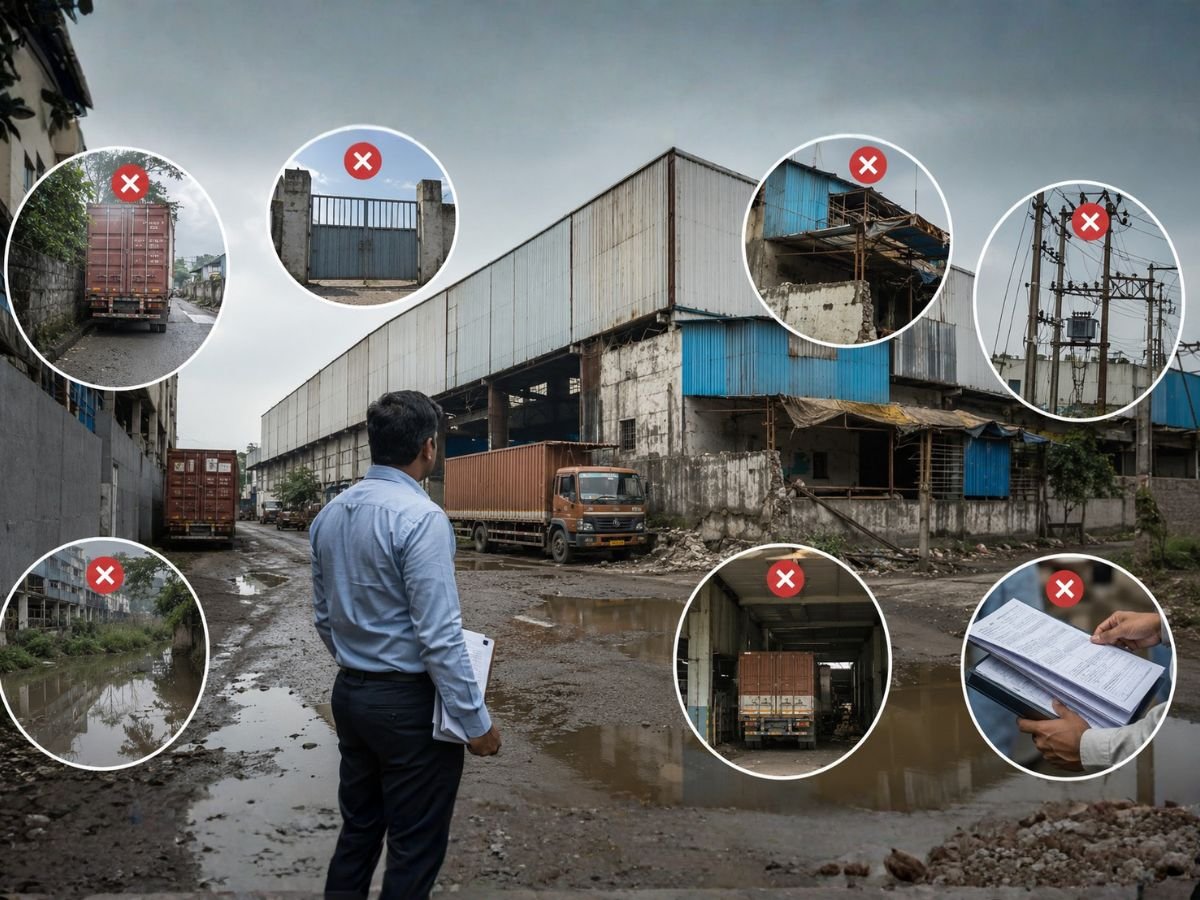
- Choosing the cheapest property without checking activity permission.
- Assuming every MIDC unit suits every activity.
- Ignoring MPCB category and consent logic.
- Not checking 20-ft, 40-ft or trailer access.
- Not inspecting during real traffic hours.
- Ignoring actual power load and transformer capacity.
- Ignoring drainage, effluent and stormwater behaviour.
- Ignoring fire tender access.
- Ignoring illegal construction or unauthorized extension.
- Ignoring MIDC transfer history and old dues.
- Buying non-MIDC land without zoning and title check.
- Comparing rent without calculating logistics cost.
- Taking a warehouse without dock, floor load or turning radius.
- Ignoring monsoon access and waterlogging.
- Not checking neighbouring activity.
- Not checking future expansion fit.
- Not checking resale and tenant exit demand.
Site Visit Checklist
Use this checklist during the first serious inspection:
- Road width at approach and gate
- Truck entry comfort
- 20-ft container feasibility
- 40-ft container feasibility
- Trailer turning
- Loading and unloading area
- Dock height
- Floor condition
- Floor load
- Clear height
- Sanctioned power load
- Transformer presence and adequacy
- Water source and storage
- Drainage and stormwater direction
- Fire access
- Ventilation
- Office and staff space
- Labour access
- Parking
- Security
- Neighbouring activity
- Monsoon behavior
- Legal documents on hand
- Approvals shown at site
- Existing dues
- Scope for internal modification
Important field note:
A site visit on Sunday or during low-traffic hours can give the wrong impression. For industrial property, inspect approach roads and truck movement during real working hours.
Document and Compliance Checklist
Before finalising any industrial property, check:
- Title deed or lease deed
- MIDC allotment and transfer documents where applicable
- Approved building plan
- Completion or occupation certificate where applicable
- Property tax and utility dues
- Electricity load sanction
- Water connection
- Fire NOC where applicable
- MPCB consent where applicable
- Factory licence where applicable
- Previous activity history
- No-encumbrance / title verification
- Agreement terms
- Lease lock-in
- Deposit and refund terms
- Maintenance terms
- Illegal modification or unauthorized construction
- Permitted use verification
- Litigation, notice or dispute check if applicable
Use this checklist before buying a MIDC plot, industrial shed, warehouse or non-MIDC industrial land.
Decision Matrix
| Requirement | First Locations to Check | Why | Avoid / Caution |
|---|---|---|---|
| Need premium Navi Mumbai access | TTC, Mahape, Rabale, Pawane | Better city-side industrial relevance | Don’t pay TTC premium if your operation is size-led not access-led |
| Need lowest possible rent | Ambernath, Badlapur, Khopoli, selected outer belts | Lower entry cost in many cases | Check distance, utilities and documents harder |
| Need chemical/process compatibility | Taloja, Patalganga, Rasayani, Ambernath, Additional Ambernath | Stronger industrial/process logic | Heavy compliance checks required |
| Need port access | JNPT, Uran, Dronagiri, Kalamboli, Panvel | Better EXIM movement | Do not ignore gate congestion and route pressure |
| Need e-commerce distribution | Panvel, Kalamboli, selected Pawane, selected Taloja | Better dispatch radius and highway logic | Port-side may be wrong if import is not the driver |
| Need large plot | Patalganga, Rasayani, Khalapur, Khopoli, Additional Ambernath | Better scale potential | Distance and utility planning matter |
| Need 40-ft container movement | Kalamboli, JNPT side, Panvel, selected Taloja, selected outer belts | Better heavy-vehicle practicality | Check micro-location, not only macro belt |
| Need pharma / clean activity | Selected Taloja, selected Ambernath/Additional Ambernath, selected TTC/Mahape | Depends on clean internal setup and controlled environment | Avoid noisy or process-heavy neighbouring activity if unsuitable |
| Need heavy engineering / fabrication | Rabale, Pawane, Taloja, Ambernath, Khopoli | Better industrial movement and workshop fit | Check crane, floor load and road width |
| Need investment / resale demand | TTC, Taloja, Panvel/Kalamboli, JNPT side, Ambernath | Deeper occupier pools in established belts | Document quality decides more than brochure story |
| Need quick possession | Existing sheds and ready units in TTC, Taloja, Panvel-side parks, Ambernath | Faster start than land development | Ready possession can still hide wrong utility or documents |
| Need long-term expansion | Patalganga, Additional Patalganga, Rasayani, Khalapur, Additional Ambernath | Better for growth horizon | Don’t ignore staff and transport consequences |
Recommended Shortlisting Process
Define exact activity
Do not start with the area. Start with the activity.
Write down:
- exact product or service
- whether you manufacture, process, store, assemble or distribute
- whether your operation creates emissions, effluent, odour, dust or hazardous storage
- machinery list
- staff count
- vehicle type
Define property format
Decide whether you need:
- MIDC plot
- non-MIDC industrial land
- ready factory
- industrial shed
- industrial gala
- warehouse
- built-to-suit
- investment asset
A wrong format can waste months even in the right area.
Confirm rent or purchase budget
Include:
- deposit
- transfer and registration
- fit-out
- power upgrade
- fire upgrade
- machinery installation
- staff transport
- downtime
Check compliance category
Before site visits, understand whether your activity is likely clean, moderate or process-heavy. This decides whether TTC-like pockets, Taloja-like belts or deeper manufacturing corridors make more sense.
Shortlist two or three location belts
Do not inspect 20 random properties.
Example:
- one TTC option
- one Taloja option
- one Ambernath or Panvel-side option
That gives you a real comparison.
Inspect during working hours
Visit at the time your business will actually operate. Many industrial mistakes happen because a calm mid-day or Sunday site visit hides road chaos.
Check truck and container movement
Walk the route from gate to road. If you need 40-ft container movement, test the exact route mentally and physically.
Verify documents
Do not pay token first and check papers later. Reverse that order.
Compare total operating cost
Calculate:
- rent or EMI
- transport
- labour commute
- utilities
- compliance
- downtime
- resale risk
Finalize only after authority, legal and compliance verification
Industrial decisions punish shortcuts more than residential ones.
Practical Example Scenarios
Hypothetical example: packaging unit comparing TTC vs Taloja

A packaging unit needs 8,000 to 12,000 sq.ft., moderate power, regular dispatch to Navi Mumbai and Thane, and no heavy chemical process.
TTC may fit if:
- dispatch radius is city-side
- staff access matters
- the company wants faster daily management movement
- the higher rent is offset by lower travel friction
Taloja may fit if:
- budget is tighter
- larger unit size matters
- customer base is more dispersed
- management is comfortable with longer travel and more industrial surroundings
Decision logic: If the business saves money every day through faster dispatch and staff convenience, TTC can still beat cheaper Taloja. If the packaging line is larger and cost-sensitive, Taloja may be the stronger operating answer.
Hypothetical example: import-export warehouse comparing JNPT vs Kalamboli
A warehouse user imports containers from the port but also distributes part of the stock inland.
JNPT side may fit if:
- port turnaround is the core business
- DPD or port-adjacent operation matters
- container frequency is high
Kalamboli may fit if:
- the user needs a balance between port access and inland dispatch
- truck staging and highway logic matter
- the business can tolerate slightly more port distance in exchange for broader distribution logic
Decision logic: If every hour at port matters, go closer to JNPT. If the business is half port-led and half inland-distribution-led, Kalamboli can be more balanced.
Hypothetical example: chemical unit comparing Taloja vs Ambernath
A process user needs a compliant industrial environment, larger factory use and reasonable entry cost.
Taloja may fit if:
- the activity needs a deeper process-industry ecosystem
- there is stronger industrial clustering benefit
- the business can manage traffic and compliance rigor there
Ambernath may fit if:
- cost sensitivity is higher
- industrial depth is still sufficient for the activity
- eastern-side labour and land economics work better
Decision logic: This is not a “which is cheaper” comparison. It is a compliance, movement and process-ecosystem comparison.
Hypothetical example: e-commerce warehouse comparing Panvel vs Pawane
The user needs a warehouse that serves Navi Mumbai, Mumbai and outer zones with fast van movement.
Panvel may fit if:
- highway dispatch and broader region servicing matter
- warehouse format is more modern
- airport and future corridor relevance matter
Pawane may fit if:
- city-side proximity is more important than larger modern stock
- order concentration is Navi Mumbai/Thane-side
- vehicle size is smaller and turnaround is local
Decision logic: Panvel is often stronger for regional logic. Pawane can be stronger for compact city-side operations.
Hypothetical example: budget factory buyer comparing Ambernath vs Badlapur
A small manufacturer wants ownership at the lowest workable cost.
Ambernath may fit if:
- the user wants more established industrial character
- supplier and service ecosystem matter
- budget can stretch slightly higher
Badlapur may fit if:
- upfront ticket size is the biggest limit
- the business can tolerate longer travel and weaker industrial depth in selected pockets
Decision logic: If the business needs industrial ecosystem maturity, Ambernath often wins. If budget dominates and activity is simpler, Badlapur may still work after strict document and access checks.
Official Sources to Verify Before Final Decision
- MIDC official website and services portal
- MPCB industry categorisation and consent resources
- JNPA / JNPT official port resources
- MMRDA / official infrastructure project resources
- Navi Mumbai International Airport official resources
- CIDCO / NAINA / relevant planning authority resources
- Local municipal corporation or planning authority records where applicable
- Electricity, fire and water authority records where applicable
Disclaimer
This guide is for practical location-selection guidance only. Final property selection must be verified through the relevant authority, title documents, approved plans, MIDC/CIDCO/local body records, zoning status, permitted industrial use, fire requirements, MPCB category, consent requirements and other applicable approvals. Rates, availability and suitability change by property, activity and time.
FAQs
Frequently Asked Questions