

Blogs

Everything about Navi Mumbai

Risks of Buying Property Without Society in Navi Mumbai: Buyer Checklist

Buying property without a registered society is not automatically illegal, but it is a high-risk deal unless the title, conveyance, approvals, dues, encumbrances and seller authority are verified. Before paying token money in Navi Mumbai, Panvel, Ulwe, Kharghar, Taloja, Dronagiri, Uran, NAINA or CIDCO areas, check IGR records, land records, OC/CC, MahaRERA status and conveyance documents. Should You Buy Property Without Society? You can consider it only after proper verification. But do not treat it as a small paperwork issue. A “property without society” can mean different things. The society may not be registered. The society may be registered but conveyance may not be completed. Or the builder may still control important documents, land rights, parking, common areas or future redevelopment value. Do not pay token money only because the broker says, “Society will be formed later.” In Navi Mumbai and nearby markets, this becomes more important because properties may fall under CIDCO, NAINA, gaothan, village land, leasehold, redevelopment, coastal, CRZ or mixed land-record situations. What “Without Society” Actually Means 1. No registered cooperative housing society yet The building may be occupied, but the legal society may not be registered. Residents may have an informal committee, but that is not the same as a registered cooperative housing society. A registered society helps maintain member records, dues records, transfer process, share certificates, maintenance decisions and future redevelopment decisions. 2. Society formed, but conveyance not done This is a major issue. Conveyance means the land and building rights are transferred from the builder or landowner to the society. Deemed conveyance is a legal route used when the builder does not execute conveyance. If the society exists but conveyance is pending, the building may still face future title, redevelopment or common-area control issues. 3. Builder still controls key rights In some cases, the builder may delay society formation because control over land, FSI, parking, terrace, open spaces or future development rights is still commercially useful. This does not automatically prove fraud. But it is a clear signal to verify documents before paying. 4. CIDCO, NAINA or gaothan-related property In CIDCO or NAINA areas, society status is only one part of due diligence. A buyer should also check lease conditions, transfer permissions, commencement certificate, occupancy certificate, approved plan, development permission, property card, 7/12 extract and mutation entries. For gaothan or village-side property, society may not be the central issue. The bigger risk may be unclear title, old family ownership, access road, sanad, land conversion, CRZ, green zone or no-development zone. Main Risks of Buying Property Without Society Risk Why it matters Unclear land or building control Buyer may not know who legally controls land, common areas or future rights No reliable dues record Maintenance, water, electricity, property tax or builder dues may be hidden Weak resale trail Future buyer or bank may question missing society records Pending conveyance Society may not have full control over land/building rights Builder dependency Buyer may depend on builder for NOC, transfer, records and clarifications Loan confusion Bank loan approval does not mean title is fully safe Future redevelopment risk Society may struggle during redevelopment if title/conveyance is unclear Fraud risk Token money may be collected before documents are properly verified Documents to Check Before Paying Token Money Use this checklist before paying even a small token amount. Document / Record What it helps verify Registered agreement or sale deed chain Whether past transfers are properly registered Index II Summary of registered transaction details Society registration certificate Whether a legal society exists Share certificate Whether seller is recorded as a society member Conveyance deed or deemed conveyance order Whether land/building rights moved to the society 7/12 extract Land record for survey-number-based land 8A extract Revenue record connected with landholding details Property card Urban property record, often used for city survey/CTS properties Mutation entry Change in land record after sale, inheritance or transfer OC Whether occupancy was permitted by authority CC Whether construction commencement was approved Sanctioned plan Whether construction matches approved plan MahaRERA project page Project status, approvals, encumbrance, title report, if applicable CIDCO / NAINA approval Planning permission, CC/OC and development-plan relevance Dues statement Maintenance, utility, society/builder dues Bank NOC / loan closure proof Existing mortgage or loan clearance Lawyer title-search report Independent legal review before token Important: A document supports verification. Do not assume one document alone “proves ownership.” How to Verify the Property Step 1: Search IGR Maharashtra records Check registered agreements, sale deeds and Index II through IGR Maharashtra eSearch. This helps verify whether the transaction chain is registered and whether party names, flat details, survey numbers, CTS numbers or consideration details are consistent. Step 2: Check land records For land-linked properties, check 7/12 extract, 8A, property card and mutation entries through official Maharashtra land-record portals. Plain meaning: 7/12 extract: land record showing survey number, area, occupant/holder and land details. 8A extract: revenue-related landholding record. Property card: urban land/property record, commonly linked to city survey or CTS properties. Mutation entry / फेरफार: record of change after sale, inheritance, transfer or other event. These records support due diligence. They are not a replacement for legal title search. Step 3: Check MahaRERA, if applicable For applicable registered projects, check the project on MahaRERA. Look for: Project registration status Promoter name Legal title report Encumbrance details Approved plans Commencement certificate details Completion timeline Complaints, if visible Lapsed, revoked or abeyance status Do not assume a RERA number means the property is fully safe. It is one verification layer. Step 4: Check CIDCO or NAINA approvals For Panvel, Ulwe, Dronagiri, Uran, Taloja, Pushpak Nagar and NAINA-side properties, check CIDCO/NAINA permission records where relevant. Ask for: Development permission Commencement certificate Occupancy certificate Approved layout Building permission NAINA zoning or development-plan relevance If the property is in a NAINA or village-edge area, verify with the planning authority before relying on broker claims. Step 5: Check conveyance status Ask whether conveyance has been executed in favour of the society. If not, ask: Why is conveyance pending? Has the society applied for

Read More
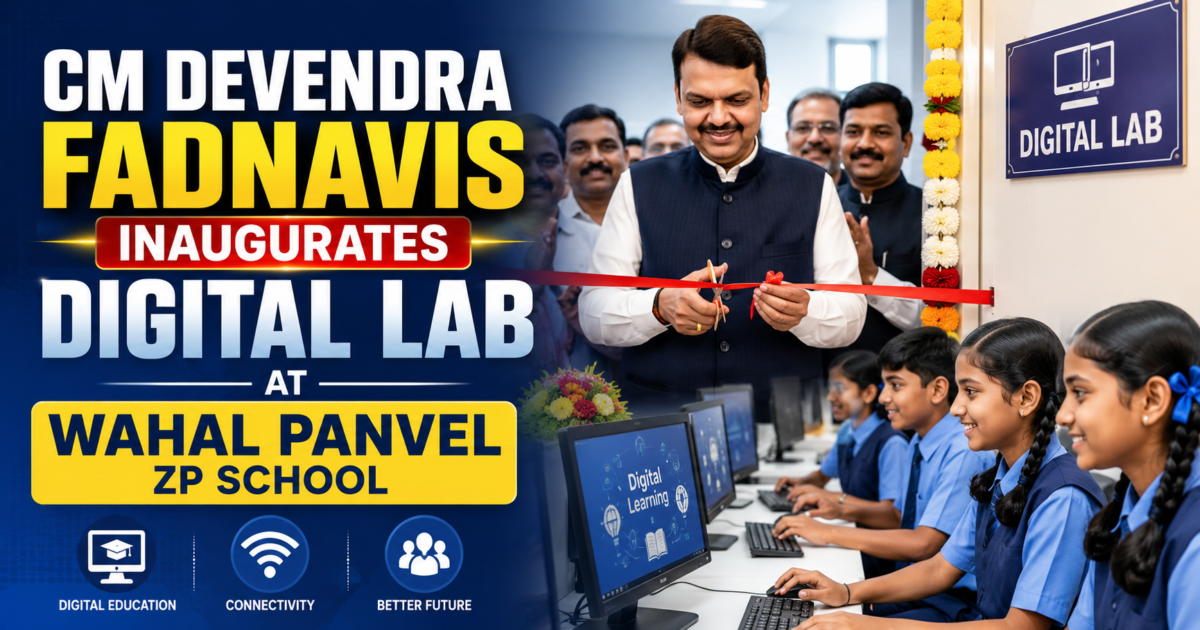
CM Devendra Fadnavis Visit Panvel Wahal ZP School

Maharashtra Chief Minister Devendra Fadnavis visited Wahal, also written as Vahal, in Panvel on June 15, 2026, and inaugurated the IDEAL Centre Digital Lab at PM Shri Raigad Zilla Parishad Primary School during Shala Praveshotsav 2026. The visit brought Wahal Gaon into focus because it connected a local government school with digital learning, student interaction and village-level education development. In simple words: Wahal Panvel is in the news because Maharashtra CM Devendra Fadnavis inaugurated the IDEAL Centre Digital Lab at PM Shri Raigad Zilla Parishad Primary School during Shala Praveshotsav 2026. The update is important because it brings digital learning infrastructure to a government school and gives Wahal Gaon stronger local development visibility. Why Wahal Panvel Is in the News Wahal Panvel is in the news because the Chief Minister’s visit turned a local school event into a larger education and development update for the Panvel region. The programme was linked with Shala Praveshotsav 2026, the school entrance festival held at the start of the academic year. The venue was PM Shri Raigad Zilla Parishad Primary School, Wahal, where students were welcomed back to school and the new digital learning facility was inaugurated. The event included students, teachers, parents, local residents and officials. It was not just a formal visit. The Chief Minister interacted with students, reviewed the new digital facility and spoke about the changing quality of Zilla Parishad schools. For Wahal Gaon, this is important because most public attention around Panvel-side villages usually comes from land, roads, airport influence or real estate. This news adds a different and more grounded angle: education infrastructure inside the village itself. Key Highlights of Wahal Panvel School News Point Details Location Wahal / Vahal, Panvel Taluka, Raigad district Event Shala Praveshotsav 2026 Date June 15, 2026 School PM Shri Raigad Zilla Parishad Primary School, Wahal Chief Guest Maharashtra Chief Minister Devendra Fadnavis Main Update IDEAL Centre Digital Lab inauguration Focus Digital education, government school improvement and student learning Local Impact Wahal Gaon gained regional visibility through education development What Is the IDEAL Centre Digital Lab? The IDEAL Centre Digital Lab is a technology-based learning facility created to help government school students learn through digital tools, audio-visual lessons and assessment support. IDEAL stands for Interactive Digital, Experimental, Administration and Learning Centre. In simple terms, it is a digital classroom and learning support system designed for school students, especially in government and semi-urban or rural school settings. The facility is meant to support students from Classes 1 to 8. It includes audio-visual learning material, digital lessons and examination support. One important feature reported in the research is that the system can work with a high level of offline capability. That matters in local school environments where internet access may not always be perfect. For students, this can make learning less dependent on only textbooks and blackboard teaching. For teachers, it can support classroom explanation, digital evaluation and better learning engagement. What Happened During the School Event? The Shala Praveshotsav event at Wahal had both a traditional school welcome and a modern digital learning update. Students were welcomed for the new academic year with a festive atmosphere. Reports mention traditional elements such as flowers, school celebration and local participation. New textbooks and uniforms were also distributed as part of the school opening programme. The main formal moment was the inauguration of the IDEAL Centre Digital Lab by CM Devendra Fadnavis. After the inauguration, he interacted with students and observed how they were using the digital tools. One of the most memorable parts of the event was the student interaction. A fourth-grade student, Yashashree Mithu Ghule, confidently interviewed the Chief Minister and asked him questions about his life, political journey and inspiration. This made the event more human and memorable, not just another ribbon-cutting programme. The presence of local leaders and officials also gave the event wider importance. It showed that the school upgrade was not just an internal school matter, but a visible public education initiative in the Panvel-Raigad belt. CM Devendra Fadnavis’ Message on Education CM Devendra Fadnavis used the event to speak about the changing role of government schools and the need for modern education tools. One key message was that Zilla Parishad schools are improving and should not be seen as backward or weak institutions. He indicated that reforms and better facilities are helping government schools compete more strongly with private schools. He also spoke about digital literacy. Facilities like the IDEAL Centre can help students learn through audio-visual content and become more comfortable with technology from an early age. Another important part of his message was that education is not only about marks. Schools should also teach values such as discipline, social responsibility, cleanliness, environmental awareness, respect for teachers and parents, and constitutional values. For a local school in Wahal, this message matters because it connects village-level education with a broader state-level education vision. Why This News Matters for Wahal Gaon This news matters for Wahal Gaon because it gives the locality visibility beyond property listings and airport-related discussions. Many people hear about Wahal or Vahal because of Panvel’s growth, Ulwe-side development, Pushpak Vahal, land interest or the Navi Mumbai Airport influence area. But a school upgrade is a more people-first development signal. It affects families, students and daily local life. The digital lab gives local students access to tools that are usually associated with better-funded schools. Audio-visual lessons, digital assessments and computer-based learning can make classroom education more engaging, especially for younger students. It can also improve parent confidence. When a government school receives visible attention, upgraded facilities and state-level recognition, local families may feel more confident about public education options in the area. For Wahal, the bigger message is clear: development is not only about roads, plots and buildings. Schools, students and civic services also define how livable a locality becomes. How This News Connects With Panvel Development Panvel’s growth story is usually discussed through large infrastructure: Navi Mumbai International Airport, MTHL connectivity, CIDCO nodes, Ulwe, Pushpak Nagar,

Read More

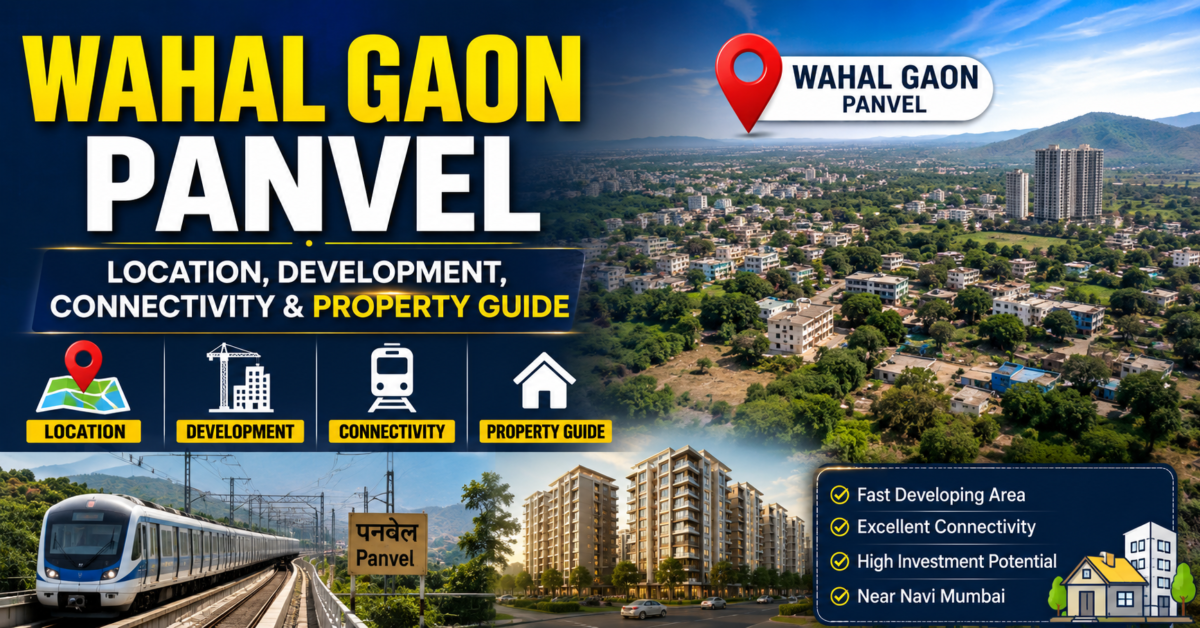
Wahal Panvel: Location, Development, Connectivity & Property Guide

Wahal Gaon Panvel, also written as Vahal, is a developing village/locality in Panvel Taluka of Raigad district, Maharashtra. It is gaining attention because of its location near Ulwe, Pushpak Vahal, Bamandongri railway station and the upcoming Navi Mumbai International Airport influence zone. For property buyers, Wahal is worth researching, but legal title, access road, NA status, CIDCO/RERA approvals and actual infrastructure must be checked carefully. In simple words, Wahal is not just a regular village name anymore. It sits between old village settlement logic and new Navi Mumbai development logic. That is why people searching for Wahal Gaon Panvel may find mixed results: some talk about village land, some about Pushpak Vahal projects, some about Ulwe-side connectivity, and some about recent local school development. Where Is Wahal Gaon Located? Wahal Gaon is located in the Panvel region of Raigad district in Maharashtra. The name is found in two spellings: Wahal and Vahal. “Wahal” is commonly seen in real estate and village references, while “Vahal” is also used in postal and local news references. Administratively, the village is connected with Panvel Taluka and the wider Raigad district context. Panvel itself is an important growth point in the Navi Mumbai and MMR side because it connects older Raigad villages, CIDCO-planned nodes, logistics corridors, and airport-linked development. For readers, the most important point is this: Wahal should not be understood only as one simple pin on the map. There is the original village/gaon identity, and there are also nearby planned or developing pockets such as Pushpak Vahal, Ulwe-side sectors, and CIDCO-influenced areas. Point Details Locality Name Wahal Gaon / Vahal Region Panvel Taluka Panvel Taluka District Raigad State Maharashtra Pin Code 410206 Local Character Village/locality with peri-urban development influence Nearby Growth References Ulwe, Pushpak Vahal, Navi Mumbai Airport influence zone, Panvel region Exact distances should always be checked through a live map before any property decision. In this area, distances can change depending on the specific pocket, road access and whether the property is inside the old village area, a CIDCO-influenced sector, or a nearby project location. Wahal Gaon and Panvel’s Development Connection Wahal Gaon is important because it sits in a transition zone. It has a village identity, but it is also influenced by the rapid urban growth happening around Panvel, Ulwe, Pushpak Nagar and the airport corridor. Panvel has grown from being a traditional gateway area of Raigad into one of the most watched real estate and infrastructure belts near Navi Mumbai. The formation of the Panvel Municipal Corporation in 2016, the expansion of CIDCO-planned nodes, and the development around Navi Mumbai International Airport have changed how nearby villages are viewed. Wahal is part of this larger shift. Original village land, Gram Panchayat areas, CIDCO planning influence, airport-linked development and new residential projects can all exist close to each other. This is exactly why buyers should avoid judging the entire locality from one project brochure or one broker claim. A safer way to understand the area is this: Wahal Gaon can be seen as part of Panvel’s wider development belt, but property decisions should depend on actual road access, title clarity, zoning, water, drainage, approvals and on-ground site inspection. Connectivity Around Wahal Gaon Connectivity is one of the main reasons people search for Wahal Gaon Panvel. The area gets attention because it is close to the Ulwe-Pushpak side of Navi Mumbai, has access to railway connectivity through nearby stations, and sits within the broader airport influence zone. The nearest useful railway references are generally Bamandongri and Kharkopar on the Harbour Line side. These stations matter more for daily commuting than generic claims about Panvel railway station. One important caution: many property listings loosely attach Wahal to Panvel and may create the impression that Panvel railway station is very close. In reality, Panvel station is not normally a walking-distance station for Wahal pockets. Depending on the exact location and route, the road distance can be much higher and may require auto, cab, bike or car travel. Connectivity Point Practical Reading Nearby Railway Access Bamandongri and Kharkopar are important nearby railway references Panvel City Access Possible by road, but exact distance depends on the pocket and route Road Network Linked with the broader Ulwe, Uran, JNPT and Panvel-side road network Airport Influence The upcoming Navi Mumbai International Airport is a major reason for search interest Daily Commute Reality Pocket-wise access matters more than locality name Public Transport Bus and shared transport availability should be checked locally before buying or renting For a buyer or renter, the right question is not only “Is Wahal connected?” The better question is: from this exact building or plot, how do I reach the station, school, hospital, market and workplace every day? Lifestyle in Wahal Gaon Panvel Wahal has a semi-urban lifestyle. It is not as dense or mature as older Navi Mumbai nodes like Vashi, Nerul or Seawoods, and it is not as fully urban as central Panvel either. It is more of a developing pocket where old village settlement and new urban growth are meeting. This can be attractive for people who want a quieter environment and are comfortable with developing-area realities. But it may not suit someone who expects mature malls, wide roads, premium hospitals, frequent public transport and polished civic infrastructure at the doorstep. Basic local facilities are available in and around the Wahal-Ulwe-Pushpak belt, but for larger hospitals, bigger markets, colleges, offices and premium retail, residents may still depend on nearby developed nodes and Panvel-side facilities. Local school infrastructure has also come into focus recently. The PM Shri Raigad Zilla Parishad Primary School in Vahal/Wahal gained attention after a digital learning centre upgrade and a visit by Maharashtra Chief Minister Devendra Fadnavis during Shala Praveshotsav 2026. This gives the locality a civic-development angle beyond only property and land discussions. Why Wahal Gaon Panvel Is Getting Attention Wahal is getting attention for a mix of reasons, not just one reason. The biggest factor is the wider Panvel and Navi Mumbai development story. The

Read More

Dedicated Freight Corridor Navi Mumbai Impact on Real Estate

The Dedicated Freight Corridor Navi Mumbai impact will be strongest in logistics, warehousing, port-linked jobs, industrial land demand, and rental demand around JNPA, Uran, Dronagiri, Ulwe, Pushpak-Chirle, Panvel, and Taloja. But it does not make every nearby plot or flat a safe investment. Buyers must verify title, zoning, NA or development permission, road access, MahaRERA, CIDCO/NAINA status, and CRZ risk before paying token money. What the Dedicated Freight Corridor Means for Navi Mumbai The Dedicated Freight Corridor, or DFC, is not a passenger metro line. It is a freight railway corridor built mainly for goods movement. For Navi Mumbai, the important point is simple: the Western Dedicated Freight Corridor connects the north and western freight network with the JNPA/JNPT port side of Navi Mumbai. This improves the logistics value of the region. That means the impact will not be limited to railway tracks. It can influence: Container movement Port-linked logistics Warehousing Industrial activity Trucking and transport businesses Rental housing for workers and managers Demand for commercial support services This is why buyers are now hearing more about the Dedicated Freight Corridor impact in areas like Uran, Dronagiri, Ulwe, Pushpak Nagar, Chirle, Panvel, Taloja, and the larger NAINA belt. But there is one important warning. Infrastructure growth is not the same as legal clearance. A property may be close to the DFC, port, airport, or logistics park. Still, it can have title issues, zoning restrictions, CRZ limitations, unclear road access, or missing permissions. This is an educational guide. Verify the latest position with the relevant authority or a property lawyer before making a transaction. For a broader understanding of job-led property growth, also read Navi Mumbai employment hubs real estate impact. Why JNPA Makes This Corridor Important JNPA, also known as JNPT, is one of India’s most important container ports. Its location near Uran and Navi Mumbai gives the Western Dedicated Freight Corridor a strong local real estate connection. The DFC helps freight move more efficiently between the port and inland industrial markets. When port connectivity improves, the surrounding ecosystem usually becomes more active. This can create demand for: Demand Type How It May Grow Logistics jobs Warehouse staff, drivers, supervisors, operations teams Industrial land Warehousing, packaging, storage, light industrial use Rental housing Workers and mid-level professionals need nearby homes Commercial spaces Food outlets, repair shops, offices, transport services Residential projects Demand may rise in practical commuting zones This is why the DFC should be seen with other major Navi Mumbai infrastructure projects like NMIA, Atal Setu, JNPA expansion, Pushpak Node, CIDCO’s logistics plans, and the Panvel-Ulwe-Uran growth belt. For related reading, connect this section with Navi Mumbai logistics hub real estate impact and JNPT real estate impact. Area-Wise Dedicated Freight Corridor Navi Mumbai Impact The DFC impact will not be equal everywhere. Some areas may benefit directly from logistics and industrial demand. Some may benefit indirectly through rental and residential demand. Area Likely Impact Buyer Caution JNPA / Uran Port-linked logistics, transport, warehousing, worker housing Check CRZ, access road, title, authority permissions Dronagiri Residential demand from port, logistics, and future connectivity Verify CIDCO leasehold, project completion, OC, and resale liquidity Ulwe Housing demand from airport, JNPA, Atal Setu, and logistics workers Avoid overpaying only because of future claims Pushpak / Chirle Logistics park, airport-support economy, commercial activity Verify CIDCO allotment, land-use, and approvals Panvel Wider housing base for workers, professionals, and investors Check whether land falls under PMC, CIDCO, NAINA, or revenue jurisdiction Taloja MIDC, warehousing, industrial employment, affordable rentals Consider pollution, commute, road condition, and MIDC proximity NAINA villages Long-term plotted development potential Check zoning, TPS status, 7/12, 8A, mutation, road access, and CRZ risk where relevant The safest approach is not to ask, “Is this near DFC?” The better question is: Is this property legally usable, accessible, financeable, and suitable for the buyer’s purpose? Impact by Property Type Flats and Residential Projects Flats may benefit from DFC-linked employment growth, but mostly in areas where people can actually live and commute comfortably. For example, a logistics manager working around JNPA, Uran, Dronagiri, or Pushpak may prefer Ulwe, Dronagiri, Panvel, or Kharghar depending on budget and family needs. A warehouse worker may prefer affordable rental pockets near Taloja, Panvel, Kalamboli, or nearby transport routes. So rental demand can improve, but it depends on: Commute time Rent level Safety Road access Schools and daily markets Railway, bus, and highway connectivity For residential comparisons, use employment impact on rental demand Navi Mumbai as a next supporting article. Plots and Land Plots carry the highest risk. A broker may say, “DFC ke paas land hai, future logistics zone hai.” That statement alone means nothing unless documents support it. For plots, the buyer must verify: 7/12 extract 8A extract Mutation entries Survey number and hissa number Title chain Index II Zoning certificate NA or development permission NAINA/CIDCO status Road access CRZ or mangrove restrictions where relevant A 7/12 extract supports land-record verification, but it does not alone give complete ownership certainty. A lawyer must check the full title chain and registered documents. Warehousing and Industrial Property DFC has the most direct impact on logistics, warehousing, and industrial real estate. But here also, location is not enough. Before buying or leasing a warehouse, gala, shed, or industrial plot, check: Permitted land use Road width and truck access Fire access MIDC/CIDCO/NAINA permissions Power and water availability Environmental restrictions if applicable Leasehold conditions, if CIDCO or MIDC property Transfer permission requirements For industrial-area decision-making, internally link to MIDC proximity pros and cons. Retail and Commercial Property Commercial property may benefit where workers, transporters, drivers, warehouse teams, and office staff create daily demand. This may help: Food outlets Repair shops Logistics offices Packaging suppliers Labour contractor offices Small retail stores Vehicle service-related businesses But commercial demand follows actual activity. It does not automatically rise because a corridor passes nearby. Documents to Check Before Buying Near DFC-Influenced Areas For Flats Check these before paying token money: Document Why It Matters MahaRERA registration Confirms project registration and basic public

Read More

Turbhe Industrial Area Impact on Navi Mumbai Real Estate

Turbhe Industrial Area impacts Navi Mumbai real estate by creating steady employment-led rental demand, commercial demand, warehouse demand, and daily business movement around Turbhe, Sanpada, Vashi, Pawane, and Kopar Khairane. But buyers should not treat MIDC proximity as automatic appreciation. Before paying token money, check zoning, title, OC, MahaRERA status, IGR records, MIDC permissions, traffic impact, and industrial-use risks. What Is Turbhe Industrial Area? Turbhe Industrial Area is one of the important employment and business zones in Navi Mumbai. It sits close to the wider TTC Industrial Area and the Thane-Belapur Road corridor, which connects major work hubs like Turbhe, Pawane, Mahape, Rabale, Ghansoli, and Airoli. For property buyers, Turbhe is not just an industrial location. It is a demand generator. Factories, warehouses, offices, APMC-linked businesses, logistics operators, service vendors, repair units, and small businesses create daily movement. This movement supports rentals, commercial spaces, small shops, food businesses, transport services, and nearby residential pockets. The impact is strongest in: Area Impact from Turbhe Industrial Area Turbhe Direct industrial, commercial, and worker demand Sanpada Residential demand from people who want better livability near work Vashi Premium convenience due to commercial ecosystem and connectivity Pawane Industrial and warehouse demand Kopar Khairane Rental demand from MIDC and office employees Ghansoli / Airoli Wider IT + MIDC corridor advantage Turbhe’s location matters because it connects employment, railway access, road transport, APMC Market activity, and the Thane-Belapur industrial belt. How Turbhe MIDC Affects Property Demand 1. It Creates Steady Rental Demand Industrial areas usually create practical rental demand. Turbhe does the same. The demand comes from: Factory workers Supervisors MSME employees Logistics staff APMC-linked traders Office staff Small business owners Service vendors This helps nearby affordable rental pockets. A 1 RK, 1 BHK, shared room, or small flat may attract tenants who want to stay close to work. But tenant quality and rent potential will differ by location. A flat in Sanpada or Vashi may attract a different tenant profile compared to a unit very close to industrial movement. 2. It Supports Commercial Property Demand Turbhe is also useful for commercial buyers and investors. Demand may come for: Office spaces Industrial galas Warehouses Small shops Repair units Packaging businesses Distribution businesses Cold storage and logistics-linked activity This is why Turbhe should not be judged only as a residential locality. Its bigger value is in employment, business, and commercial movement. 3. It Improves Demand in Nearby Residential Nodes Many people working near Turbhe may not prefer to live inside the industrial area. They may choose nearby residential nodes with better daily comfort. This helps areas like: Sanpada Vashi Kopar Khairane Juinagar Ghansoli Airoli For example, a person working in Turbhe MIDC may choose Sanpada because it offers railway access, better residential surroundings, markets, schools, and faster access to Vashi. This is where the real property impact happens. Turbhe creates jobs and commercial movement, while nearby residential areas absorb part of the housing demand. Turbhe MIDC Impact on Sanpada and Vashi Property Sanpada benefits from Turbhe because it offers a cleaner residential alternative near an employment zone. A buyer may not want to live next to heavy vehicle movement, industrial sheds, or warehouse traffic. But living in Sanpada gives access to Turbhe, Vashi, Palm Beach Road, railway connectivity, and better civic surroundings. Vashi also benefits because it already has strong commercial value. APMC Market, offices, railway access, malls, hospitals, and business activity make Vashi a stronger convenience market. Simple Buyer View Buyer Type Better Fit Budget worker or small business employee Turbhe / nearby affordable pockets Family tenant working near Turbhe Sanpada / Kopar Khairane / Vashi Commercial investor Turbhe / Pawane / Vashi edge Premium residential buyer Sanpada / Vashi Industrial unit buyer Turbhe MIDC / Pawane, subject to document checks Important point: Turbhe proximity is useful, but the exact micro-location decides value. A property near constant truck movement is not the same as a well-maintained building near Sanpada station. Pros and Cons of Buying Near Turbhe Industrial Area Pros Cons Steady employment-led demand Heavy traffic on important stretches Good commercial activity Truck movement and parking pressure Useful for rental investors Industrial noise or pollution perception Close to Vashi and Sanpada Some pockets may feel less residential Demand for shops, offices, galas, warehouses Industrial documents can be complex Railway and road connectivity Resale depends heavily on title and approvals Turbhe has strong practical value, but it is not a blind investment location. It works best when the property has clear documents, good access, bankability, and a realistic exit plan. Documents to Check Before Buying Near Turbhe Industrial Area Document checking depends on the property type. A flat, shop, office, warehouse, gala, and MIDC unit cannot be verified in the same way. For Residential Flat Buyers Check: MahaRERA registration, if applicable Approved building plan Commencement Certificate Occupancy Certificate Agreement for Sale IGR Index II Registered sale deed or agreement Property card or city survey details, where applicable Society registration certificate Conveyance or deemed conveyance status Property tax dues Maintenance dues Existing loan or mortgage status Do not depend only on a brochure, WhatsApp PDF, or broker statement. For Industrial Gala, Warehouse, or MIDC Unit Buyers Check: MIDC allotment letter Lease deed Assignment deed, if resale MIDC transfer order MIDC no-dues certificate Approved industrial activity or user Building Completion Certificate or Occupancy Certificate Fire NOC, if applicable MPCB consent, if applicable Electricity load approval Pending dues to MIDC, society, utility provider, or tax authority Litigation and encumbrance search For MIDC leasehold property, never pay token money only because the seller says “transfer ho jayega.” Verify the transfer process with MIDC and a property lawyer. For Wider Navi Mumbai / NAINA / Land Comparison Buyers Turbhe itself is not the same as NAINA, Panvel, Ulwe, Dronagiri, or Raigad-side land markets. But many buyers compare industrial employment hubs with future land investments. For plots or land, check: 7/12 extract 8A extract Mutation entries Property card, if applicable Survey number or CTS number NA or development permission status Zone confirmation

Read More

Navi Mumbai Employment Real Estate Impact

Navi Mumbai employment hubs increase property demand, but not equally in every area. Airoli, Ghansoli, Mahape and Rabale mainly support rental demand from IT, corporate and industrial workers. Ulwe, Panvel, Pushpak Nagar, Dronagiri and Uran are more influenced by airport, logistics and port-led growth. Buyers should check commute, tenant profile, legal title, RERA, OC, zoning and land records before paying token money. Why Employment Matters in Navi Mumbai Real Estate Employment is one of the strongest real estate demand drivers in Navi Mumbai. But it must be understood properly. A job hub does not automatically make every nearby property a good investment. It only helps when the property has practical commute access, liveable surroundings, legal clarity, good building quality and realistic pricing. For example, a flat in Ghansoli may get stronger current rental demand because of Airoli, Rabale and Mahape offices nearby. A flat near Pushpak Nagar may depend more on future airport and logistics growth. Both can be good, but the buyer logic is different. This is where many buyers make mistakes. They hear “IT hub nearby” or “airport impact” and assume prices will always rise. In reality, Navi Mumbai employment real estate impact depends on the exact micro-market. How Employment Hubs Affect Real Estate Demand Rental Demand Comes First When offices, factories, logistics parks or industrial zones grow, rental demand usually appears first. Employees want to reduce travel time. They prefer homes near railway stations, bus routes, office corridors and affordable rental pockets. This is why Airoli, Ghansoli, Kopar Khairane, Rabale and Mahape continue to attract working tenants. The same logic applies differently in Panvel, Ulwe, Dronagiri, Uran and Taloja, where demand is linked to industrial, airport, port and logistics activity. Resale Liquidity Improves in Practical Areas Employment can improve resale demand, but only in practical locations. A flat near a railway station, business park, school, market and hospital will usually have better resale liquidity than a flat that is only marketed as “future growth.” Liquidity means the property is easier to sell. It does not always mean the highest price appreciation. Commercial Demand Follows Daily Footfall Where employees move daily, local businesses also grow. Food outlets, gyms, hostels, clinics, co-working spaces, stationery shops, courier offices, cafés and service businesses benefit from employment density. This is visible around business belts like Airoli, Ghansoli, Mahape, Rabale, Turbhe and Vashi. In logistics belts, the demand may be more for warehousing, transport offices, godowns, small eateries and worker housing. Main Employment Hubs in Navi Mumbai and Their Property Impact Airoli IT Park Real Estate Impact Airoli is one of Navi Mumbai’s strongest employment-led real estate markets. The presence of Mindspace Airoli, Gigaplex, Airoli Knowledge Park and other business spaces gives the area a strong IT and corporate employment base. This supports rental demand in: Airoli Ghansoli Rabale Kopar Khairane Parts of Digha and Thane-side locations For IT employees, Airoli is practical because it connects to Thane-Belapur Road, railway access and nearby residential nodes. For investors, the main advantage is tenant availability and resale liquidity. But pricing can be high. Buyers should check building age, parking, maintenance, OC, society condition and actual rent potential before assuming strong returns. Ghansoli IT Corridor Real Estate Impact Ghansoli has become one of the most practical residential choices for people working in Airoli, Rabale, Mahape and Kopar Khairane. It is not only an IT location. It is a mixed residential-corporate belt. Ghansoli works well for: IT employees working in Airoli Corporate employees working along Thane-Belapur Road Families wanting better access to schools and daily services Investors looking for steady rental demand For buyers, Ghansoli’s strength is not just future appreciation. Its real strength is current demand. However, every building is not equal. Older buildings, weak parking, poor maintenance, high society dues and incomplete paperwork can reduce resale value. Mahape and Millennium Business Park Impact Mahape and Millennium Business Park influence nearby rental markets strongly. Working professionals from IT, back-office, data, engineering and service companies often prefer nearby residential areas like Ghansoli, Kopar Khairane, Rabale and Airoli. Mahape’s impact is mostly rental-driven. It may not create the same premium lifestyle value as Seawoods or Kharghar, but it supports steady working-class and professional tenant demand. For investors, the question should be simple: Will the flat rent quickly to a working tenant at a realistic rent? If yes, the location may work. If the answer depends only on future appreciation stories, be careful. Rabale MIDC Property Impact Rabale MIDC has a different type of employment impact. It is not the same as Airoli IT Park. Rabale MIDC supports industrial, manufacturing, SME, logistics, warehouse and service employment. This can support rental and commercial demand in nearby areas like Rabale, Airoli, Ghansoli and Digha-side belts. Pros of MIDC Proximity Regular worker and staff movement Demand for budget rentals Demand for small shops, food outlets and services Commercial activity around industrial access roads Cons of MIDC Proximity Truck movement Noise and pollution in some pockets Lower lifestyle appeal near industrial stretches Fire and industrial safety concerns in certain areas Not ideal for every family buyer MIDC proximity can help rental demand, but buyers must inspect the surroundings properly. Turbhe, Pawane and Sanpada Industrial Influence Turbhe, Pawane and nearby TTC industrial areas affect both residential and commercial demand. Sanpada benefits more from station access, Vashi proximity and better residential appeal. Turbhe and Pawane are more industrial and commercial in nature. For investors, these areas should be judged by use case. A small commercial unit near industrial movement may perform differently from a residential flat in a noisy or poorly maintained pocket. Do not buy only because the broker says “MIDC nearby.” Check tenant type, access road, parking, building approval and surroundings. Taloja MIDC and Panvel-Kharghar Belt Impact Taloja MIDC supports industrial and affordable rental demand. Its impact is visible in Taloja, Roadpali, Kalamboli, parts of Panvel and some surrounding belts. Kharghar is different. Kharghar’s demand is more lifestyle, education, metro, family housing and long-term residential quality. It is not purely dependent on

Read More

Mahape vs Airoli for Working Professionals: Which Navi Mumbai Area Is Better?

For most working professionals, Airoli is the better residential choice because it has stronger railway access, better housing options, Mindspace Airoli connectivity, and a more balanced lifestyle. Mahape is better only if your workplace is inside Mahape MIDC, TTC Industrial Area, Millennium Business Park, or nearby offices and your main goal is to reduce daily travel time. Mahape vs Airoli: Quick Comparison Mahape and Airoli are close to each other, but they serve different types of working professionals. Airoli is more residential and office-friendly. Mahape is more work-zone and industrial-office focused. Factor Airoli Mahape Best for IT employees, office professionals, families MIDC workers, industrial staff, nearby office employees Main employment pull Mindspace Airoli, IT offices, nearby corporate parks Mahape MIDC, TTC Industrial Area, Millennium Business Park Railway access Stronger because of Airoli railway station Weaker compared to Airoli Residential options Better housing societies and rental depth Limited residential depth in comparison Lifestyle Better for families and long-term living More work-convenience focused Investment appeal Stronger for end-use and resale liquidity Pocket-specific and employment-driven Best decision Better all-rounder Better only for short commute to Mahape offices Simple verdict: Choose Airoli if you want a better all-round residential life. Choose Mahape if your office is in Mahape and daily commute is your biggest problem. Why Airoli Works Better for Most Professionals Airoli has become one of Navi Mumbai’s strongest employment-linked residential areas. The biggest reason is simple: Airoli has both jobs and homes nearby. Mindspace Airoli East is a major business park near Airoli railway station and is part of the Thane-Belapur commercial belt. This gives Airoli a clear advantage for IT, ITeS, corporate, finance, consulting, and back-office employees. For working professionals, this matters because the best area is not only about rent. It is about: Daily commute Railway access Office proximity Food and daily needs Safety after office hours Family comfort Long-term rental and resale demand Airoli performs better on most of these points. Airoli Has Better Residential Depth Airoli has more established residential pockets, apartment societies, rental homes, local markets, schools, clinics, gyms, and daily services. This makes it more practical for: Married professionals IT employees Women professionals Hybrid workers Families with children People planning to buy a flat for end-use Airoli also gives better access to Ghansoli, Rabale, Kopar Khairane, Thane, Mulund, and other parts of Navi Mumbai. That is why it works well for people whose jobs may change within the same employment belt. Why Mahape Still Matters Mahape should not be ignored. It is an important employment zone in Navi Mumbai, especially because of Mahape MIDC, TTC Industrial Area, Millennium Business Park, IT offices, industrial units, logistics activity, and data-centre demand. For someone working inside Mahape, living nearby can save a lot of time. Mahape is useful for: MIDC employees Industrial supervisors Factory staff IT park employees Night-shift workers Contract workers Professionals with fixed office locations in Mahape But Mahape is not always the best residential choice. Some pockets feel more industrial than residential. Heavy vehicle movement, limited lifestyle options, and fewer mainstream housing choices can make it less attractive for families compared to Airoli, Ghansoli, Kopar Khairane, or Rabale. So the real question is not “Is Mahape good or bad?” The right question is: Is Mahape better for your daily routine than Airoli? If your workplace is inside Mahape, yes, it can be. If your workplace is in Airoli or you want better residential balance, Airoli is stronger. Commute Comparison: Mahape vs Airoli Commute should be checked before rent, deposit, or token payment. Do not trust only the broker’s line: “Sir, office just 10 minutes.” Check it during office hours. Your Workplace Better Living Option Why Mindspace Airoli Airoli Better office access and railway connectivity Airoli IT Park / nearby corporate offices Airoli or Ghansoli Balanced commute and residential life Mahape MIDC Mahape, Ghansoli or Rabale Shorter daily travel Millennium Business Park Mahape or Ghansoli Better for work proximity TTC Industrial Area Mahape, Rabale, Ghansoli, Kopar Khairane Depends on exact company gate Hybrid job in Navi Mumbai Airoli Better long-term living Night shift in Mahape Mahape or Ghansoli Shorter late-night travel can matter Practical Local Advice If your company is in Mahape, also compare Ghansoli and Rabale before finalising. Many professionals prefer these areas because they offer a better balance between work distance and daily life. If your company is in Airoli, do not shift to Mahape only because rent looks slightly cheaper. The daily travel, road condition, transport timing, and late-night return must be checked first. Rent and Property Buying Reality Airoli generally has a stronger residential market than Mahape. Airoli has more housing societies, more resale options, more rental demand, and better end-user preference. Mahape has demand, but it is more employment-driven. The demand often comes from people who want to stay close to the office, not necessarily from families looking for a long-term residential environment. For Renters Choose Airoli if you want: Better railway access Better family environment More society flats More food and daily options Better long-term convenience Choose Mahape if you want: Short commute to Mahape office Work-first location Possible budget rental or shared stay Less travel after long shifts For Property Buyers Airoli is usually safer for end-use because it has stronger residential acceptance. Mahape can still work, but micro-location is very important. Before buying in or around Mahape, check: Is the property in a proper residential building? Does it have Occupancy Certificate? Is it close to heavy industrial movement? Is the title chain clear? Is the land use properly approved? Is the building society formed? Are maintenance and dues clear? Do not buy only because the area is close to offices. Buy because the property is legally clean, liveable, financeable, and easy to resell. Best Choice by Professional Type Professional Type Better Choice Reason IT employee in Mindspace Airoli Airoli Best office and residential balance MIDC employee in Mahape Mahape or Ghansoli Shorter commute Night-shift worker Mahape or Ghansoli Less late-night travel Married professional with family Airoli Better daily

Read More

Land Fraud Navi Mumbai: Checks Before Buying Land or Paying Token

Land fraud in Navi Mumbai usually happens when buyers trust verbal claims about ownership, CIDCO approval, NAINA growth, gaothan rights, NA permission or future development without checking official records. Before paying token money for land in Navi Mumbai, Panvel, Ulwe, Uran, Dronagiri, Taloja or nearby NAINA areas, verify the 7/12 extract, property card, mutation entries, IGR registered documents, title chain, zoning, CIDCO/NAINA status, CRZ risk and seller identity. Do not buy the story. Verify the land. Why Land Fraud Matters for Navi Mumbai Buyers Land in and around Navi Mumbai can look attractive because of airport growth, NAINA development, CIDCO influence, road projects, logistics hubs and expanding residential demand. That is exactly why buyers must be careful. Many land deals are sold with lines like: “This plot is near the airport.” “NAINA approval is coming.” “CIDCO transfer is easy.” “This is gaothan land, no issue.” “Pay token today or the deal will go.” “The 7/12 is clear, so nothing else is required.” These lines may be true in some cases. But they are not proof. A safe land purchase needs document verification, title search, land-use check, authority confirmation and written legal review. A 7/12 extract alone does not guarantee that the land is safe to buy. For Navi Mumbai buyers, the biggest risk is not only fake documents. The bigger risk is paying token before understanding what the land legally is. What Land Fraud Means in Navi Mumbai Land fraud means any transaction where the buyer is misled about ownership, legal rights, approvals, development potential, restrictions, possession or transferability of the land. In Navi Mumbai and nearby growth areas, this can include: Fraud Type What It Means Buyer Risk Fake ownership claim Seller is not the real legal owner Token/payment loss, litigation Forged documents Fake sale deed, fake allotment letter, fake NOC or edited land record Criminal dispute and blocked transaction Same land sold twice Seller or broker collects money from multiple buyers Long legal fight Fake CIDCO plot claim Land is presented as CIDCO-allotted or transferable without proof Transfer may fail NAINA approval confusion Buyer is told approval is confirmed when only future planning is discussed Land may not be buildable now Gaothan confusion Village/gaothan property is sold without clear title or transfer rights Ownership and permission issues Agricultural land sold as residential plot Farm land is marketed as ready residential plotting Construction/use may not be permitted CRZ or green zone issue Land has coastal, creek, mangrove, green zone or development restrictions Construction or resale may become difficult Token money fraud Buyer pays before written verification Refund dispute The practical rule is simple: if the seller cannot prove the claim through official records, treat it as unverified. Areas Where Buyers Should Be Extra Careful This guide is especially useful if you are checking land in: Panvel Ulwe Dronagiri Uran Taloja Kharghar fringe areas NAINA villages Raigad-side growth belt Thane-side village/property belt CIDCO-influenced land pockets Gaothan or village properties Plots near creek, mangrove or coastal areas These areas are not “unsafe” by default. Many genuine transactions happen here. But the document layer can be more complex because one plot may involve village records, survey numbers, CIDCO/NAINA planning rules, development plan reservations, CRZ checks, title history, mutation entries and land-use permissions. Key Documents to Check Before Paying Token Money Use this checklist before even discussing token payment. Document / Record What to Check Where to Verify 7/12 extract Owner name, survey/gat number, area, land type, loans, restrictions, mutation references Mahabhumi / Mahabhulekh 8A extract Revenue account and landholding details Mahabhumi / Mahabhulekh Property card CTS number, holder name, area and urban land details Mahabhumi / Bhumiabhilekh Mutation / Ferfar entries How ownership changed over time Mahabhumi / revenue office Sale deed chain Previous registered transfers IGR Maharashtra / lawyer Index II / IGR search Registered documents, past transactions, mortgage clues IGR Maharashtra eSearch Encumbrance / search report Mortgage, claim, charge or legal burden Lawyer / IGR records Seller identity proof Seller name, PAN, Aadhaar, address, authority to sell Buyer/lawyer verification Power of attorney, if any Whether POA is valid, registered and specific Lawyer verification CIDCO documents Allotment, lease, transfer permission, NOC, scheme documents CIDCO office / CIDCO portal NAINA records ZCS, development plan, CC/OC, TPS status, building permission CIDCO/NAINA portal NA / land-use approval Whether land can be used for the promised purpose Planning authority / revenue office CRZ / CZMP check Coastal, creek, mangrove or restricted-zone risk MCZMA / CZMP records MahaRERA record If land is sold as part of a plotted development/project MahaRERA portal Important: A broker-forwarded PDF or WhatsApp screenshot is not enough. Download or verify records from official portals or through a qualified professional. Step-by-Step Verification Process 1. First identify the exact land Before checking documents, identify the land correctly. Ask for: Village name Taluka Survey number / gat number CTS number, if applicable Plot area Boundary details Access road details Current possession status Seller name Previous owner details If the land shown on site does not match the land record, stop. 2. Check the latest 7/12 extract or property card The 7/12 extract is a land record used mainly for agricultural/village land in Maharashtra. It can show details such as landholder name, survey number, land area, crop/land-use entries, mutation references, loans or other rights. A property card is more common for urban/CTS-based property. For Navi Mumbai, Panvel, Uran, Taloja and NAINA-side land, you may need both land-record and planning-authority checks. Check: Is the seller’s name visible? Does the survey/gat/CTS number match? Is the land area the same as promised? Are there loans, restrictions or other rights? Is the land agricultural, residential, government, Class-II, leasehold or restricted? Is the latest mutation reflected? Mahabhumi/Bhumiabhilekh provides official digital land-record services such as 7/12, 8A, Ferfar/mutation and property card services. 3. Check mutation entries Mutation, also called Ferfar, records changes in land records after sale, inheritance, partition, gift, court order or other transfer. But mutation is not the same as full title clearance. It only shows that a change

Read More

Legal Notice to Builder Navi Mumbai: Guide for Delay, Refund and Fraud

A legal notice to builder is a formal written demand sent when a builder delays possession, refuses refund, changes promised terms, demands unexplained charges, hides approvals, or ignores buyer complaints. In Navi Mumbai, Panvel, Ulwe, Kharghar, Taloja, Dronagiri, Uran, CIDCO and NAINA areas, buyers should collect evidence and verify MahaRERA, agreement, payment records, IGR documents, land records, CIDCO/NAINA permissions and OC/CC status before escalating. Why This Matters for Navi Mumbai Buyers Many property disputes do not start as “fraud”. They start with small excuses. The builder says: “Agreement will happen next week.” “OC is coming soon.” “RERA update is pending.” “Pay this extra amount first.” “Refund will be processed after approval.” “Don’t worry, this is CIDCO/NAINA clear.” A buyer waits. Then months pass. A legal notice helps you put the issue on record. It forces the builder to respond in writing, gives a clear demand, and helps preserve your case if you later go to MahaRERA, consumer commission, police, civil court, CIDCO, NAINA or another authority. Important: Do not send a random notice copied from the internet. First collect documents. A weak legal notice can damage your position. What Is a Legal Notice to Builder? A legal notice to builder is a formal notice usually drafted and sent through an advocate. It explains: Who the buyer is Which flat, shop, plot or unit is involved What the builder promised What the builder failed to do What documents or relief the buyer wants How much time the builder has to respond What action the buyer may take if the issue is ignored It is not a court order. It does not automatically force the builder to refund or hand over possession. But it creates a written record of your demand. For a Navi Mumbai buyer, this record can be useful when the problem later becomes a RERA complaint, consumer complaint, refund dispute, token money dispute or fraud complaint. When Should You Send a Legal Notice to Builder? You may consider sending a legal notice when the builder is not responding properly or when the issue has become serious. Buyer Problem When Notice May Help What You Should Ask For Possession delay Builder has missed the agreement/RERA possession date Possession timeline, interest, compensation or refund, subject to legal advice Refund refusal Builder is not returning booking/token/cancellation amount Refund calculation, payment date and written reason for deduction Extra charges Builder demands unexplained parking, maintenance, legal, infrastructure or development charges Clause-wise breakup and legal basis Missing OC/CC Builder offers possession without proper approval clarity OC, CC, sanctioned plan and completion documents Layout or carpet area change Flat, tower, plan, amenity or carpet area differs from promise Approved revised plan and buyer-consent proof False approval claim Builder says project is RERA/CIDCO/NAINA approved but does not show records Official approval copies and registration details Suspected forgery Receipts, agreements, title documents or approvals look doubtful Document verification and refund/complaint route A legal notice is stronger when it is based on documents, not emotion. Step 1: Check MahaRERA Before Sending the Notice If the property is part of a registered real estate project, check the project on the MahaRERA portal. Verify: Project name MahaRERA registration number Promoter name Project address Completion date Revised completion date, if any Project status Uploaded approvals Agreement-related details Complaint/order history, if available Registered real estate agent details, if a broker is involved MahaRERA allows complaints by aggrieved persons for registered projects through its online complaint process. So before making allegations in a legal notice, match your facts with the official project record. Buyer warning: The brand name used in an advertisement may be different from the promoter’s legal name. Always match the promoter name with the agreement, receipt, bank account and RERA record. Step 2: Verify the Agreement and Payment Records Before sending notice, arrange your own documents. Check: Booking form Allotment letter Agreement for Sale Payment receipts Bank transfer proof Stamp duty proof Registration proof Index II GST payment proof, if applicable Builder demand letters Email and WhatsApp communication Brochure or advertisement used during sale Cancellation request, if any If the agreement is not registered, that itself is a serious risk area. Do not pay large amounts only on the basis of booking form, WhatsApp chat or verbal assurance. Step 3: Check Land and Title Records This is especially important for plots, gaothan properties, CIDCO-related properties, NAINA-area projects, redevelopment projects and landowner-builder joint development projects. Check: 7/12 extract 8A extract Property card Mutation entries Survey number / gat number / CTS number Village and taluka Current owner name Past sale deeds Development agreement Power of attorney Encumbrance details IGR e-search and Index II Legal title report Mahabhumi and Maharashtra land-record portals provide access to land records such as 7/12, 8A, property card and mutation-related services. IGR Maharashtra should be checked for registered documents and Index II records. Important: A 7/12 extract, property card or Index II helps verification. It should not be treated as complete proof of safe ownership by itself. Title must be checked by a property lawyer. Step 4: Check CIDCO, NAINA and Planning Permissions In Navi Mumbai, many disputes happen because buyers do not understand who the planning authority is. For CIDCO, NAINA, Panvel, Ulwe, Dronagiri, Uran, Kharghar and nearby areas, check whether the builder’s claim matches official records. Verify: CIDCO allotment letter, if applicable CIDCO transfer permission CIDCO lease deed CIDCO NOC CIDCO 12.5% scheme documents, if relevant NAINA development permission Building permission Commencement Certificate Occupancy Certificate Final plot / town planning scheme status Road access and reservation NA or deemed NA position CRZ risk, if near creek, mangrove or coastal zone CIDCO’s official services include development permission, CRZ certificate, 12.5% scheme services, public complaint routes and NAINA-related information. Do not accept “CIDCO clear” or “NAINA approved” only because the broker says it. Ask for documents and verify them. What Should the Legal Notice Demand? The demand should match the problem. Do not overload the notice with every possible complaint if the real issue is narrow. Situation

Read More

Turbhe Industrial Area Property Impact: Buyer Guide for Navi Mumbai

Quick Summary Turbhe Industrial Area supports property demand because it creates jobs, rental movement, commercial activity, warehouse demand and MSME business around Sanpada, Vashi, Juinagar, Pawane and Thane-Belapur Road. But buyers should not treat industrial proximity as an automatic “buy” signal. Check the exact building, road, use permission, OC, MahaRERA status, IGR records, MIDC lease or transfer permissions, fire safety and local nuisance before paying token money. This is an educational guide. Verify the latest position with the relevant authority or a property lawyer before making a transaction. Why Turbhe Industrial Area Matters in Navi Mumbai Real Estate Turbhe is not just a residential location. It is part of Navi Mumbai’s active employment and business belt. The area connects with Thane-Belapur Road, Turbhe Railway Station, APMC Market, Sanpada, Vashi, Juinagar, Pawane and the larger TTC/MIDC industrial belt. That means property demand here is driven by practical use. People look at Turbhe for: Work access Commercial space Small offices Warehousing Industrial units Budget rentals Business support services This is why Turbhe industrial area property impact is different from a normal residential locality guide. A buyer should not ask only, “Is Turbhe cheap or costly?” The better question is: Is this exact property suitable for the kind of demand Turbhe creates? For wider context, this article connects with Navi Mumbai employment hubs real estate impact, because Turbhe is one of the key industrial and commercial demand pockets in the city. Property Types Affected by Turbhe Industrial Area Property type Positive impact Risk to check Residential flats Rental demand from workers, staff and business owners Traffic, noise, pollution, power reliability, old building condition Commercial offices Demand from SMEs, traders and service businesses OC, fire NOC, parking, electricity load Shops Footfall from workers and transport movement Frontage, congestion, loading/unloading issues Warehouses Operational convenience near industrial users Permitted use, road width, loading access MIDC / industrial units Business ecosystem and industrial demand MIDC lease, transfer permission, dues, activity permission Investor flats Possible rental depth Overpaying because of “MIDC nearby” hype Main point: Turbhe can be useful for practical buyers, investors and business owners. It may not suit every family buyer looking for quiet premium residential living. Impact on Nearby Residential Areas Turbhe Turbhe works mainly for affordability, work access and rental convenience. It can suit buyers who work nearby or investors targeting budget rental demand. But the exact lane matters. A flat close to heavy vehicle movement, workshops, drainage issues or industrial nuisance should not be valued like a flat in a cleaner residential pocket. Sanpada Sanpada can benefit from Turbhe’s employment and business movement while offering stronger residential appeal. For many buyers, Sanpada is a better balance: close to Turbhe, but more established for families. Add a future internal link here to Turbhe MIDC impact on Sanpada property. Vashi Vashi has its own demand drivers: railway access, commercial activity, schools, healthcare, retail and lifestyle. Turbhe supports the nearby business ecosystem, but Vashi property decisions should not depend only on Turbhe industrial proximity. Juinagar Juinagar can work for buyers who want railway access and relative affordability compared with Vashi and Sanpada. If the property has clear documents, decent access and manageable surroundings, it may benefit from nearby employment demand. Pawane and MIDC-side Pockets Pawane and MIDC-side locations are stronger for business, commercial, warehouse and industrial-use logic. For pure residential buying, the buyer must be more careful about liveability. Rental Demand Impact Turbhe Industrial Area can support rental demand because employment hubs create daily movement. Possible tenant segments include: Industrial workers Office staff Warehouse and logistics employees APMC-linked traders and workers MSME owners Service vendors People working between Vashi, Sanpada, Turbhe, Pawane and Mahape But rental demand is not guaranteed. Industrial proximity creates tenant demand, but rent stability depends on the building, lane, legal status, water, electricity, parking, safety and road access. A cheaper flat near Turbhe may rent faster if the location is convenient. But resale value and tenant quality can suffer if the building has poor maintenance, weak society records, traffic nuisance or unclear documents. For comparison, buyers can also study Airoli IT Park real estate impact, Ghansoli IT corridor real estate impact and Rabale MIDC property impact to understand the difference between IT-led demand and industrial-led demand. Turbhe vs IT Corridors: Different Demand Logic Corridor Main demand driver Property impact Turbhe / MIDC Industrial, MSME, logistics, APMC, commercial movement Practical rental and business demand Airoli IT parks, corporate offices, Thane access Stronger white-collar rental demand Ghansoli IT corridor, business parks, residential growth Better IT-employee residential appeal Rabale / Mahape MIDC, IT/business parks, industrial services Mixed office and industrial demand Turbhe is not the same as Airoli or Ghansoli. Airoli and Ghansoli attract more IT and corporate-office demand. Turbhe attracts more industrial, commercial, logistics and SME-linked demand. So buyers should choose based on their objective. For IT employee housing comparison, add an internal link to best areas for IT professionals in Navi Mumbai. MIDC Proximity: Pros and Cons Factor Benefit Risk Employment More working population nearby Tenant profile may be budget-sensitive Business activity Demand for shops, offices and services Parking and congestion pressure Industrial ecosystem Useful for MSMEs and vendors Use-permission and lease issues Connectivity Thane-Belapur Road, railway and Vashi access Peak-hour traffic Rental demand More tenant base Lower premium appeal in industrial lanes Turbhe’s industrial location is useful for business-driven buyers. But for families, liveability checks are important. Visit the property during morning peak, evening peak and late evening. Also check the area during monsoon if possible. Do not judge Turbhe property only from a clean afternoon site visit arranged by the broker. Documents to Check Before Buying Near Turbhe Industrial Area The checklist changes based on property type. For Under-Construction Flats or Commercial Units Check: MahaRERA registration number Project status on MahaRERA Quarterly or annual project updates Lapsed, revoked or abeyance status Approved building plan Commencement Certificate Occupancy Certificate, if completed Agreement for Sale Carpet area details Promoter history Litigation or complaint status, if available MahaRERA should be checked from the

Read More