Industrial Property Mistakes First-Time Investors Make in Navi Mumbai
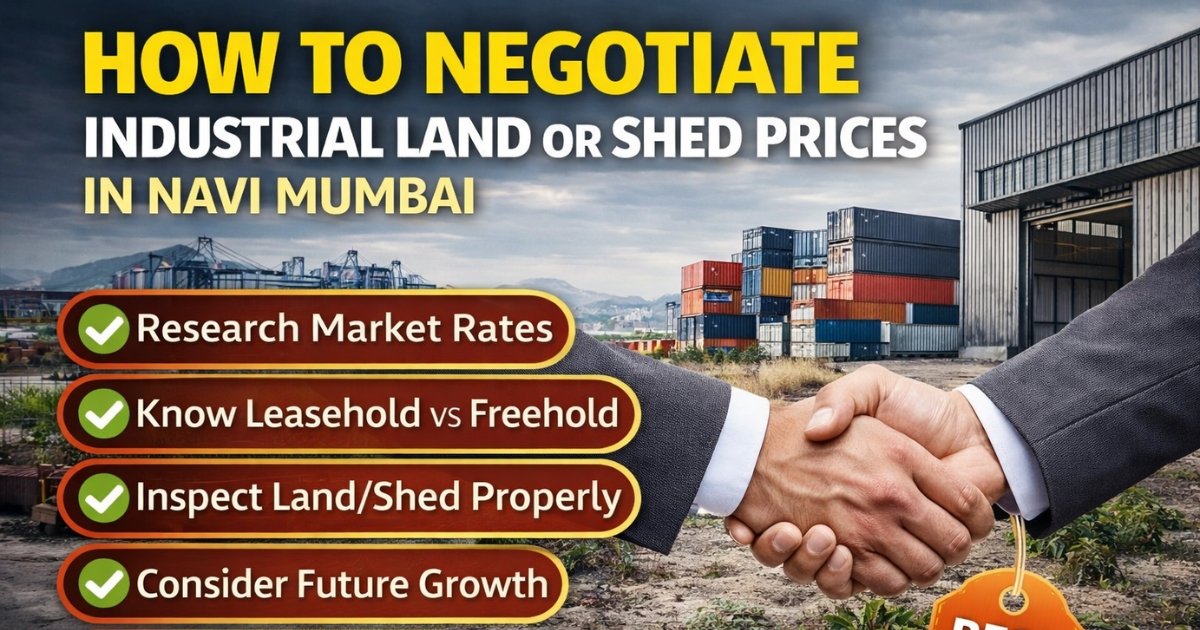
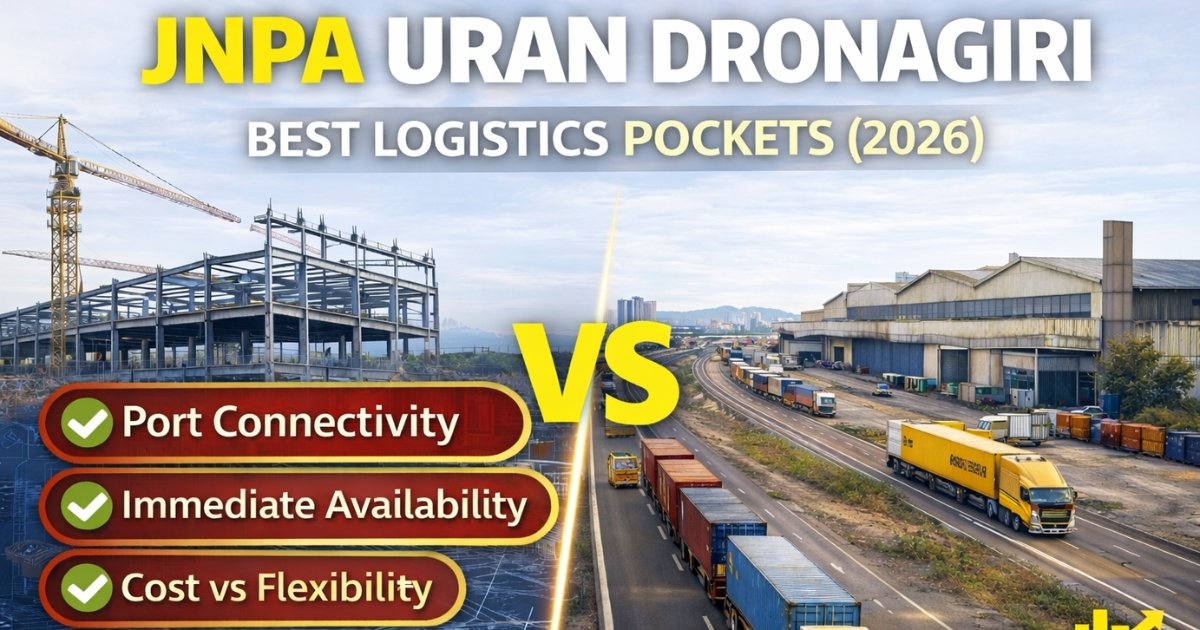
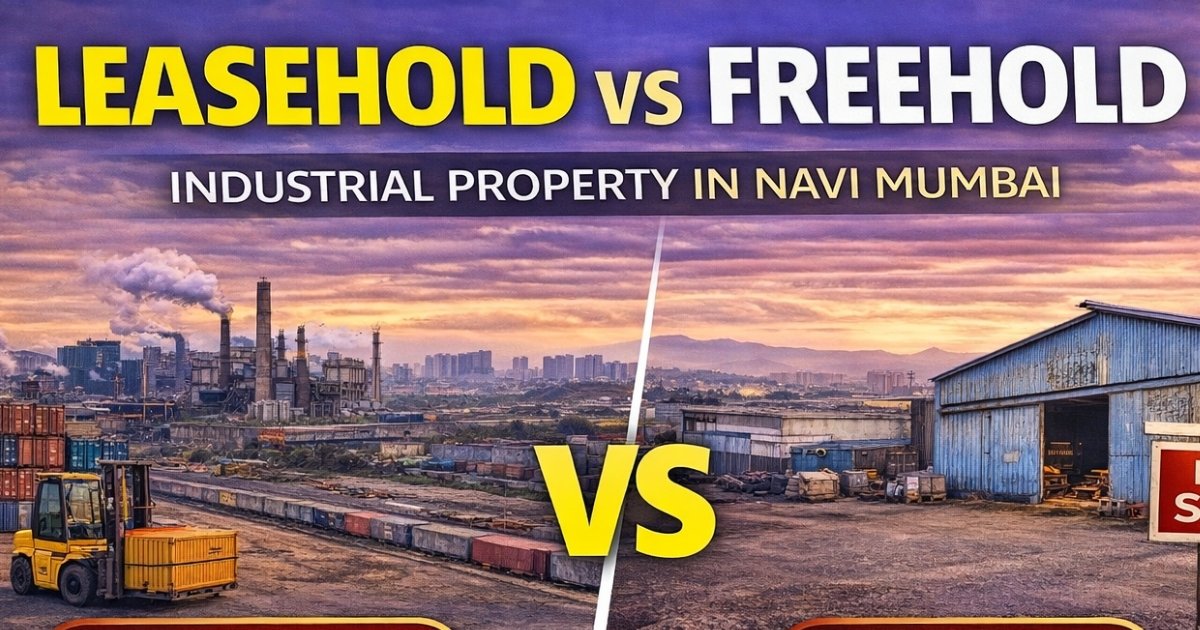
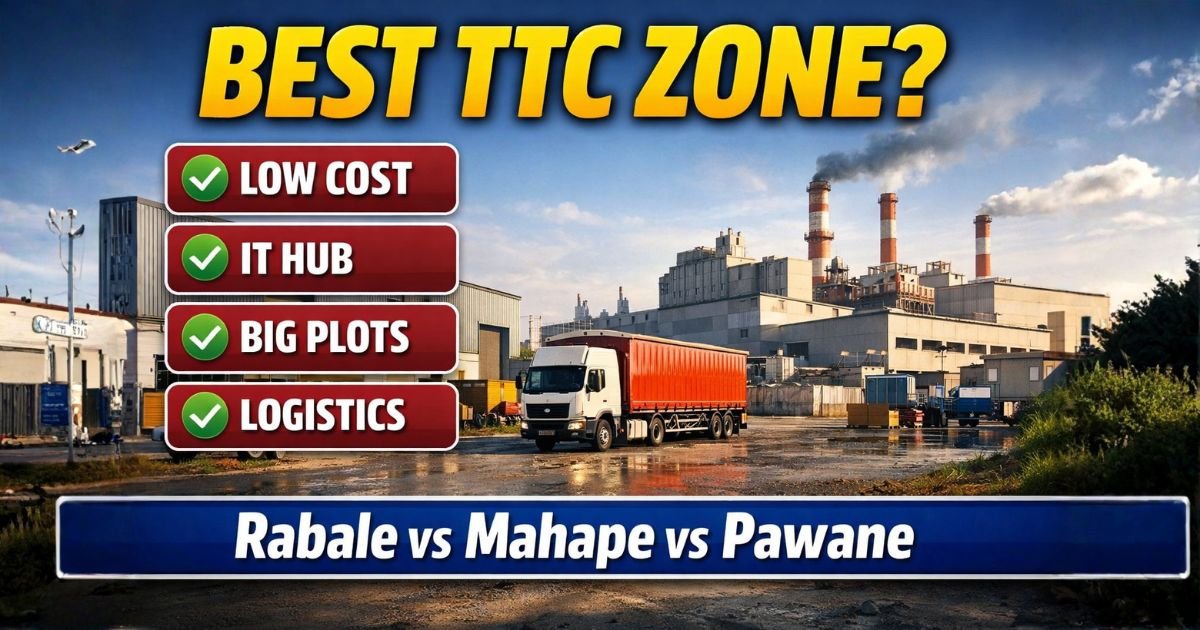
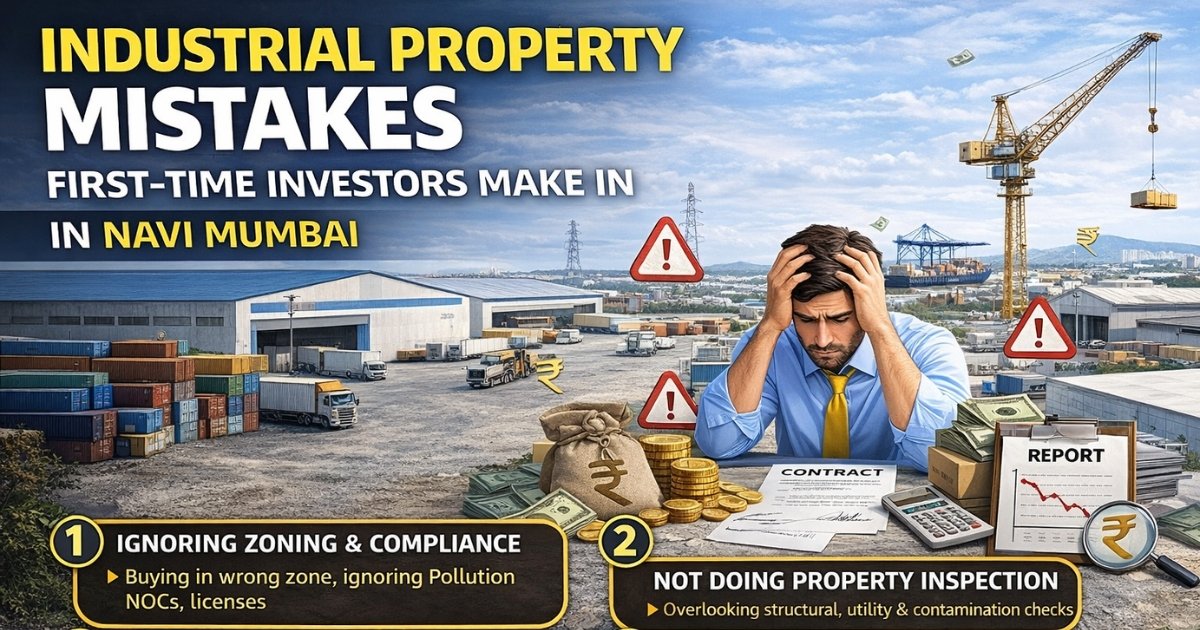
The biggest mistake first-time investors make in Navi Mumbai is treating industrial property like a simple passive asset. It is not. In most cases, you are buying into a leasehold, authority-driven, compliance-heavy system where the wrong location, wrong asset type, poor approvals, weak access, or hidden transfer costs can damage returns badly. In this market, cheap does not always mean smart, and future growth does not fix a bad industrial asset. Industrial property in Navi Mumbai can work very well for the right buyer. But beginners usually lose money in very predictable ways. They buy based on brochure pitch, headline rate, or “airport aa raha hai” style excitement without checking what really matters: authority records, development status, operational usability, transfer liability, utility fit, and exit quality. That is why this guide is not about theory. It is about the mistakes that actually trap first-time buyers in TTC, Taloja, Kalamboli, Dronagiri, and similar industrial belts. What are the biggest industrial property mistakes first-time investors make in Navi Mumbai? Here is the short version before we go deeper. Mistake Why it happens What it can cost What to check instead Treating all industrial belts as one market Buyers hear “Navi Mumbai industrial” and assume same logic everywhere Wrong area selection, weak tenant demand, poor resale Match the asset to TTC, Taloja, Kalamboli, or Dronagiri ground reality Buying the wrong asset type Plot, shed, gala, warehouse, and factory-use unit get mixed up Vacancies, wrong occupier fit, compliance issues Check who will actually use the property Buying only by low price Cheap stock looks attractive on paper Poor truck access, weak building specs, transfer burden Visit physically and test operational usability Trusting future growth stories blindly Airport, port, bridge, metro, and highway stories sound convincing Dead capital, slow absorption, holding cost pressure Check present-day demand, not just future buzz Ignoring title and authority-side risk Buyers think registration alone is enough Transfer rejection, dues, closure risk, delay Verify MIDC/CIDCO status, BCC/OC, tax, no-dues, approvals Not checking transferability and financeability Buyers assume every unit can be sold or financed later Exit problems and buyer pool shrinkage Check document cleanliness and formal transfer path Underestimating total cost Only base price is discussed Big extra outflow after token Add stamp duty, cess, transfer premium, repair, utility, legal cost Buying for rent without leasing logic Yield is imagined, not tested Vacancy and fit-out burden Understand who the likely tenant is and what specs they need Ignoring power, water, pollution, and compliance fit Non-operators miss these details Useless asset for intended user Check sanctioned load, water, MPCB fit, fire norms Assuming resale will be easy Strong location name creates false confidence Long listing period, discount exit Check usability, age, title, layout, demand depth Mistake 1: Treating all industrial property in Navi Mumbai as one market This is the first and biggest strategic error. Navi Mumbai industrial property is not one uniform market. TTC, Taloja, Kalamboli, and Dronagiri do not behave the same way, and a beginner who buys with a city-level mindset usually overpays or buys the wrong kind of risk. Why TTC, Taloja, Kalamboli, and Dronagiri behave differently TTC is the older, more mature belt. It benefits from better Mumbai-side access and a stronger urban-industrial ecosystem, but older stock, tighter internal movement, redevelopment complexity, and higher tax exposure can make a “premium” purchase look better than it really is. Taloja is more manufacturing-oriented. It can suit serious industrial users, including heavier categories in the right sectors, but that also means utility, pollution, and effluent-related checks matter far more. Kalamboli is often read through a logistics lens. That can be correct, but only in the right pockets. A warehouse without proper road logic is not automatically a good logistics asset just because it sits in the Kalamboli side. Dronagiri is the future-story market in many conversations. Port adjacency and airport narratives create interest, but present-day labor ecosystem, support infrastructure, and actual occupier depth still matter. Why the same budget can buy very different risk profiles A first-time investor may compare two similarly priced units and think they are comparable. They are not. One may be in a mature but technically outdated pocket. Another may be in a growth corridor with lower current usability. The price may look similar, but the risk is completely different. That is why area logic must come before rate discussion. In industrial property, the wrong micro-location can destroy leasing, operations, and resale even if the headline rate looked attractive. Mistake 2: Buying the wrong asset type for the actual demand Many beginners say they want to “invest in industrial property” without being clear whether they mean a plot, a shed, a gala, a warehouse, or a manufacturing-ready unit. That confusion leads to wrong buying. Where beginners confuse plot, shed, warehouse, and factory-use property A plot is not the same as a ready unit. A small industrial gala is not the same as a logistics warehouse. A warehouse is not automatically suitable for manufacturing. A shed may look large, but if the structure, power, or layout is weak, the actual demand may be narrow. The right question is simple: who will use this asset, and for what exact purpose? If the answer is vague, the purchase is already on weak ground. Why leasing demand changes by asset type Industrial tenants do not rent only on square footage. They care about height, floor loading, truck movement, loading bays, sanctioned power, water availability, and compliance fit. Modern logistics users think in cubic volume, not just carpet area. Manufacturing users may care more about floor strength, effluent handling, and power infrastructure. So the same investor who buys a low-height older structure hoping for premium warehouse rent may discover that the real tenant pool is much smaller than expected. Mistake 3: Choosing only by low price and ignoring operational usability This is where first-time industrial investors often make a “cheap deal” that becomes expensive later. A low rate can hide operational weakness. Truck movement, turning radius, loading, internal roads, and
Read More