
Blogs

Everything about Navi Mumbai

Industrial Property Due Diligence Checklist in Navi Mumbai

Industrial Property Due Diligence Checklist in Navi Mumbai means checking title, transfer rights, land-use fit, MPCB and CETP compliance, building approvals, dues, and actual site usability before paying token. That is the real answer. A factory unit can look perfectly saleable on paper and still become a bad purchase if the transfer is blocked, the consent is not valid for your activity, or the site simply cannot support your operations. Buying an industrial property in Taloja, TTC, Rabale, Mahape, Turbhe, or the Panvel-side belt is not like buying a flat or even a normal shop. Here, a clean sale deed is only the starting point. The bigger risk is often hidden in authority-side permissions, environmental compliance, structural changes, tax arrears, or operational mismatch. This guide is built for practical use. Not theory. Not generic property advice. The goal is simple: help you avoid paying money into a deal that later becomes legally messy, operationally weak, or financially painful. What industrial property due diligence in Navi Mumbai actually means before you pay token In simple words, due diligence means checking whether the property is actually safe to buy, legally transferable, and practically usable for your intended business. In Navi Mumbai industrial belts, those are three different questions, and buyers often wrongly treat them as one. Here is the quickest way to understand it: Check layer What you are really verifying Why it matters Ownership and title Does the seller have the legal right to sell or assign the property? Without this, the deal itself is weak Authority-side transfer Will MIDC or CIDCO allow the transfer, and are old dues or permissions pending? A property can have possession but still face transfer trouble Industrial-use legality Is the property legally suitable for your exact activity? Wrong activity fit can block operations Environmental compliance Does MPCB consent exist, and does effluent/waste handling match the use? A unit can face closure risk even after purchase Building legality Does the actual structure match approved plans and usage permissions? Illegal additions become your liability Dues and cost exposure Are tax, water, maintenance, premium, or transfer charges pending? Hidden dues can change the whole deal Site practicality Can trucks move, machinery load, workers operate, and utilities support your use? Paper-safe does not mean operationally safe That last line matters most: paper-safe does not equal operationally safe. Why industrial property due diligence is stricter than a normal property check A residential property buyer usually worries about title, loanability, society papers, and basic tax receipts. Industrial buyers have to go much further. Title can be clear but industrial use can still fail A seller may show a registered document and years of possession. But that still does not answer whether your proposed activity can legally run there. MPCB consent is activity-specific. Zoning fit matters. Effluent capacity matters. Waste disposal trail matters. A garment unit, a fabrication unit, a warehouse, and a chemical-processing unit do not carry the same compliance burden. That is why industrial property legal checks in Navi Mumbai must go beyond “show me the sale deed.” A transferable unit is not automatically a usable unit Suppose you are buying an industrial gala because the rate looks attractive. On paper, transfer may be possible. But on site, you discover a low floor load capacity, weak truck access, illegal mezzanine, and no practical loading area. The property is transferable, yes. Useful for your actual business, maybe not. That is the central mistake many first-time buyers make. They buy the asset first and test operational fit later. Start with this 3-stage due diligence order so you do not waste money The smartest industrial buyers do not do everything at once. They filter first, verify next, and confirm before final payment. Stage 1: Early filter before token This is the fast rejection stage. At this point, do not spend like the deal is already final. Check: basic seller identity and present ownership claim property type: MIDC, CIDCO-linked, private layout, shared gala, old factory broad activity fit for your proposed use visible structural deviations from approved-looking layout any obvious environmental or site-level red flag whether the transfer story itself sounds clean or vague If the seller cannot clearly explain title history, present use, or approval status even at this stage, slow down immediately. Stage 2: Document and authority verification This is where the real factory purchase checklist begins. Check: 30-year title search report lease deed or assignment chain allotment trail and transfer approvals encumbrance or mortgage status MIDC or CIDCO transfer feasibility property tax, water dues, society dues, power dues sanctioned plans and usage permissions latest MPCB consent and waste handling papers This stage usually decides whether the deal deserves an agreement. Stage 3: Site, compliance, and final cost confirmation Before final payment or registration, confirm what can still derail the transaction: lender NOC or charge release actual no-dues position final transfer premium or unearned income burden structural match with plans fire and occupancy-related usability utility sufficiency for your business whether your intended activity still fits the property without requiring a major regulatory reset This three-step flow saves money. It prevents the common mistake of paying token first and asking serious questions later. Which industrial property type are you buying, and why that changes the checklist Not all industrial assets in Navi Mumbai should be checked the same way. MIDC plot or shed MIDC property due diligence usually involves stronger focus on allotment conditions, leasehold position, transfer classification, water dues, and authority-side premiums. Transfer charges are not one fixed universal number. They depend on the nature of the transfer and the asset profile. CIDCO-linked or leasehold industrial asset A CIDCO industrial property transfer check becomes more sensitive where the ownership story begins with allotment and later assignment. One of the biggest local mistakes is confusing an Agreement to Lease with a final Lease Deed. They are not the same. The final registered lease instrument is the stronger document for clear, mortgageable rights. Private industrial layout or old standalone factory Here the title

Read More
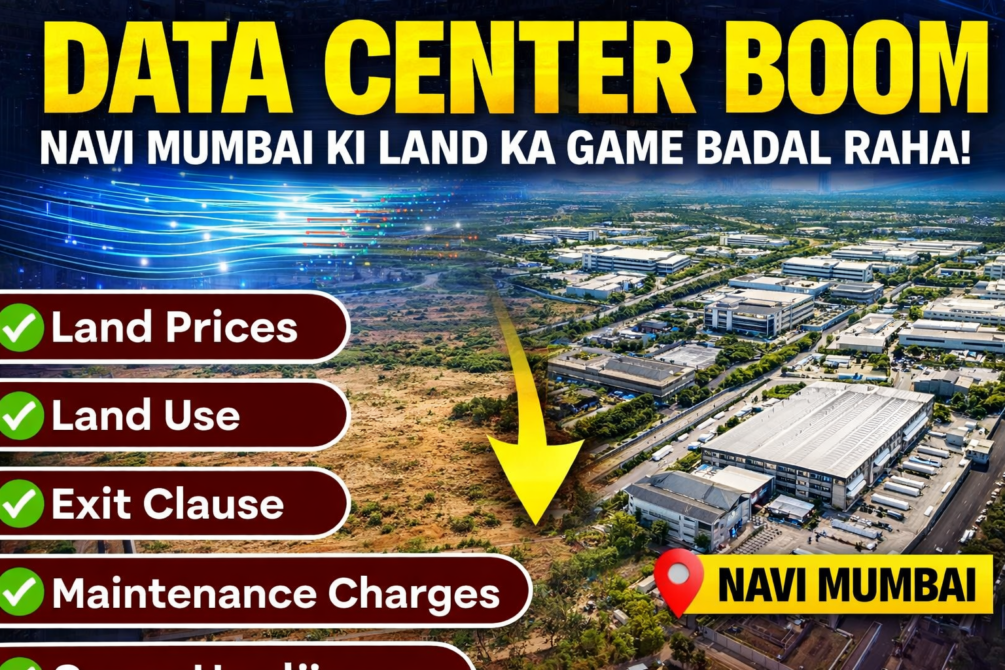
How Data Center Growth Is Changing Industrial Land in Navi Mumbai

Data center growth is changing industrial land in Navi Mumbai, but not in a simple “all prices are rising” way. The real impact is concentrated in a few infrastructure-ready belts where power depth, fiber connectivity, parcel scale, and approval practicality actually support this use. That is why some land parcels in Airoli, Rabale, Mahape, Ghansoli, and parts of the Panvel-side story are becoming more strategic, while many ordinary industrial plots are only riding borrowed hype. What data center growth is actually doing to industrial land in Navi Mumbai The first thing to understand is that this is not a normal industrial upswing. Data centers do not choose land the way a warehouse, workshop, or small factory does. They need unusually deep power access, reliable network paths, stronger resilience, and larger planning logic. Because of that, the boom is creating two industrial land markets inside the same city-region. One market is for operator-grade strategic land. This is the land that can realistically support a serious digital infrastructure play. The other market is ordinary industrial land that now gets marketed using data center language even when the actual parcel is too small, too weak on infrastructure, too restricted in title, or too impractical to support such a project. Quick summary The Structural Change Navi Mumbai Ground Reality Selective Demand Not every MIDC plot benefits; the shift is surgical, not a blanket boom. TTC Strategy Shift Airoli, Mahape & Ghansoli win due to infra depth, not just branding. Parcel Value Growth Contiguous land with power/network relevance beats fragmented plots. The “Premium” Hype Sellers quoting “Data Center Premiums” on ordinary plots without real basis. Occupier Pressure Traditional manufacturing gets priced out of prime TTC corridors. Built-Stock Paradox Old sheds only gain value if the underlying land is redevelopment-worthy. Which parts of Navi Mumbai are truly benefiting, and which parts are mostly riding the data-center halo? The biggest mistake in this topic is treating Navi Mumbai like one uniform industrial geography. It is not. Each belt has a different logic. Airoli–Rabale–Ghansoli: where the cluster story is strongest This is where the strongest cluster narrative sits. The reason is not commuter buzz, not station branding, and not general “tech area” perception. The reason is corridor depth. These belts already have stronger digital infrastructure presence, serious operator interest, and a market memory that matters. When large operators, hyperscale campuses, or AI-ready facilities choose a belt, that location starts behaving differently. Sellers become more aggressive. Assemblies become harder. Small industrial users start feeling cost pressure. Brokers start stretching the story to nearby stock. Rabale in particular now has a much stronger credibility than a normal industrial node because real operators are already present there. That matters far more than brochure language. A land parcel near such a corridor may deserve closer attention, but only if the parcel itself can pass the actual operator test. Mahape: why campus-scale supply and infrastructure depth matter Mahape is important for a slightly different reason. It supports a campus-style reading of the market. This is where the conversation is less about one isolated industrial plot and more about whether the micro-market can sustain multi-building, high-load, long-horizon infrastructure. That changes land behavior. A seller in a campus-worthy belt starts thinking less like a normal industrial owner and more like a strategic landowner. But again, this only works for the right land. Mahape does not magically turn every old industrial property into a data center candidate. Panvel-side large-campus logic: where the story changes Panvel-side and the wider southern growth story should not be mixed blindly with TTC logic. The appeal here is not identical. The Panvel-side narrative is more about scale, larger campus possibility, and future-oriented land assembly rather than the dense vertical cluster logic seen in TTC belts. This makes the Panvel story interesting, but also more vulnerable to over-marketing. Many locations get sold using airport, future growth, and hyperscale language. Some of that is valid. Some of it is halo. A large parcel with clean land logic and execution feasibility is one thing. A random industrial plot being called “next data center zone” is another. Belts that may sound industrial but do not automatically become data-center plays This is where buyers lose money. An area can be industrial on paper, industrial in appearance, and industrial in local conversation, yet still fail the real operator-grade test. A small fragmented plot. A parcel with weak power practicality. A low-lying site with resilience problems. A leasehold structure with difficult transfer conditions. A belt too far from meaningful network depth. Any of these can break the premium story. So the correct question is not, “Is this in an industrial belt?” The correct question is, “Is this actually infrastructure-ready for a serious data-center-grade use?” Why some industrial plots become strategic in a data-center cycle while others do not This is the heart of the topic. A parcel becomes strategic not because the owner says “data center potential,” but because the land can support the real requirements behind that use. Power depth and upgrade practicality Power is the first filter. If the site does not have serious high-capacity power logic around it, the rest of the conversation becomes weak very quickly. This is why ordinary industrial economics and data center economics are not the same. A plot that works for a workshop, storage unit, or small manufacturing use may still be useless for a data center story. Buyers must think in terms of actual upgrade practicality, not theoretical possibility. Fiber density and network relevance The second filter is connectivity depth. Data centers need robust network logic, not just one cable story and not just “good internet in the area.” The market premium becomes more believable when the corridor has real network relevance. That is why cluster belts matter. Once multiple serious operators enter a belt, the location gains institutional credibility. Nearby landowners then try to price off that credibility. But unless the parcel itself can tap into that ecosystem meaningfully, the premium remains borrowed. Parcel size, shape, frontage,

Read More

Taloja vs Panvel for Industrial Land and Growth Potential: Which Is Better?

Taloja usually makes more sense for buyers who need an already working industrial ecosystem and land tied to real manufacturing demand. Panvel usually makes more sense for buyers betting on longer-term corridor growth, logistics expansion, and infrastructure-led appreciation. That is the practical answer. But it is not one-size-fits-all. The right choice depends on your use case, holding period, title comfort, and whether you want operational readiness now or future upside with more variation. If you compare Taloja vs Panvel for Industrial Land only on map distance or quoted land rates, you will almost certainly read the market wrong. These are not twin industrial markets. Taloja is a more structured industrial environment with MIDC discipline, industrial history, and operational relevance. Panvel is broader, looser, and more fragmented. It carries bigger corridor logic, but also bigger pocket-level variation. Taloja or Panvel: which is the better bet for industrial land today? For most actual industrial users, Taloja is the better bet today. For many patient investors and logistics-led buyers, Panvel can be the better long-horizon bet. Here is the fast comparison: Factor Taloja Panvel Best fit Manufacturing, engineering, chemical, pharma, industrial users Logistics, cold chain, distribution, patient land investors Current industrial ecosystem Strong and already established Uneven, depends heavily on pocket Growth style Ecosystem-led Infrastructure-led and corridor-led Operational readiness Better for real industry, but with utility stress Better for freight movement in the right belts, but not uniformly ready Title and zoning clarity Usually easier to understand under MIDC structure Requires much deeper plot-level verification Risk type Utility deficits, traffic, MIDC transfer rules Title risk, zoning confusion, wrong-pocket buying Better for short-term passive land banking Usually no More possible, but only with careful legal filtering Better for immediate factory setup Yes, in most cases Only selectively That table alone settles most confusion. Taloja is stronger when you want land that already behaves like industrial land. Panvel is stronger when you are reading the future of the corridor and are willing to accept slower, more complex, more selective upside. Why this is not really a simple location comparison This comparison is not just Taloja versus Panvel. It is also MIDC-regulated industrial land versus a wider mix of CIDCO-side, NAINA-side, and private land situations. That changes everything. In Taloja, the land logic is stricter. MIDC leasehold land comes with clearer industrial intent, clearer regulatory structure, and clearer use expectations. But it also comes with lock-ins, transfer premiums, and a basic message from the authority: use the plot for industry, do not simply sit on it forever. In Panvel, the upside looks wider because the geography is wider. NMIA is operational from December 25, 2025. The Kalamboli junction upgrade is reshaping freight movement. NAINA planning has changed how people think about land. But wider upside does not mean every Panvel-side plot is equally useful for industry. It absolutely is not. So the real question is not, “Which area is better?” The real question is, “Do you want structured industrial land with existing relevance, or flexible corridor-led opportunity with more verification work?” What kind of buyer usually fits Taloja better, and who usually fits Panvel better? Different buyers should not read these two markets in the same way. Buyer type Better fit Why Main caution SME manufacturer Taloja Industrial zoning, existing ecosystem, practical manufacturing relevance Water, power, traffic stress Chemical or pharma unit Taloja CETP-backed industrial ecosystem and red-category relevance Effluent capacity and compliance limits matter Engineering or fabrication user Taloja Easier industrial fit and supplier ecosystem Some older stock may need heavy capex 3PL or e-commerce logistics player Panvel Highway logic, airport-region freight relevance, expansion corridors Entry cost and pocket selection matter Cold chain operator Panvel Broader logistics alignment and future corridor logic Must verify actual land use permissions Patient land investor Panvel No MIDC build-pressure in the same way, more corridor-led appreciation angle Title, zoning, and gestation risk Passive short-term speculator Neither, usually Taloja punishes passive holding; Panvel punishes lazy due diligence Wrong strategy can destroy returns Buyers who usually fit Taloja Taloja fits businesses that need to actually run industry. Manufacturing units, engineering workshops, process industries, chemical users, and pharma-linked occupiers usually understand the value of an ecosystem where industrial activity is normal, approvals are industrial in character, and surrounding land use supports operations. This matters more than many buyers admit. A cheap plot with a big future story is not useful if your business needs to start real industrial activity in a reasonable timeline. Buyers who usually fit Panvel Panvel fits people who are reading freight, corridor growth, and land optionality. That includes logistics operators, distribution-led businesses, land bankers, and investors who are comfortable waiting through infrastructure gestation and doing deep legal checks before buying. Panvel also fits those who do not need a heavy industrial setup from day one. Clean assembly, packaging, storage, and network-led business models can align better here than chemical or effluent-heavy industry. Buyers who should slow down before choosing either If you are not prepared for plot-level due diligence, both markets can punish you for different reasons. In Taloja, the mistake is assuming you can treat MIDC land like passive land banking. In Panvel, the mistake is assuming all land near a big infrastructure story is industrially valuable. Neither assumption is safe. If the goal is actual industrial use, which side makes more sense? For actual industrial use, Taloja usually wins. Existing industrial ecosystem and surrounding use pattern Taloja already has the industrial identity many occupiers want. The ecosystem is not theoretical. It is built around working industrial plots, established plant activity, and a long industrial track record. That reduces one major uncertainty: whether the surrounding area truly supports industrial use. Panvel, by contrast, is much more mixed. Some pockets can work very well for logistics and light operational use. But Panvel as a whole should not be read as a ready-made industrial zone in the same way. Manufacturing, processing, warehouse, and yard suitability Taloja is stronger for manufacturing, chemical processing, pharma, fabrication, and engineering-linked users. It

Read More

Rabale vs Mahape vs Airoli for Industrial Users

Rabale, Mahape, and Airoli are not the same industrial market even though they sit in the same wider TTC belt. Rabale usually fits heavier, more rugged industrial operations. Mahape usually fits cleaner hybrid and tech-industrial users. Airoli usually fits office-linked, data-led, and staff-heavy business formats far better than traditional factory use. The right choice depends on truck movement, staff profile, power needs, building format, and whether you want to lease, buy, or invest. Quick summary table Factor Rabale Mahape Airoli Best fit Heavy engineering, fabrication, rugged industrial use Hybrid industrial, electronics, medical devices, clean assembly, tech-industrial Data centers, IT-linked operations, office-heavy technical businesses General environment Older, harder industrial belt Cleaner, more mixed, more modern More office-tech dominant Truck practicality Better for true industrial movement, but internal friction can exist Balanced, especially in better planned parks Weaker for heavy freight in commuter-heavy pockets Staff convenience Weaker for white-collar-heavy teams Better than Rabale, manageable with shuttle logic Strongest Power-sensitive use Can work, but occupiers may need stronger backup planning Stronger fit for power-sensitive operations Strong for digital and office-led infrastructure Cost logic Usually the more accessible industrial option Mid-to-premium Premium, often yield-driven and use-selective Best buyer profile Owner-occupier with operational priority Hybrid occupier or modern industrial investor Yield or tech-space investor, selective occupier Rabale vs Mahape vs Airoli for industrial users: what is the practical answer? The practical answer is simple: choose by business model, not by map distance. Rabale is the more functional choice when the operation is heavy, dusty, rugged, machinery-led, or floor-loading sensitive. Mahape is the strongest middle ground for businesses that need both industrial utility and a more modern working environment. Airoli is no longer the natural answer for most traditional industrial users. It works better for tech-infra, back-office, data-linked, and highly staff-dependent operations than for classic manufacturing. This difference becomes even more important because land pricing, transfer rules, civic dues, and development obligations in the TTC belt can materially affect real acquisition cost. Official 2025 MIDC base rates indicate a gap between general TTC industrial pricing and electronics or knowledge-park-oriented zones, but actual secondary-market values can move far above official base rates depending on building quality, road access, remaining lease conditions, and use profile. Which types of industrial users should shortlist Rabale, Mahape, and Airoli? A lot of wrong decisions happen because buyers compare all three belts as if they serve the same kind of business. They do not. Who usually fits Rabale better Rabale makes more sense for users who need physical industrial toughness more than image. Think heavy engineering, industrial automation hardware, fabrication, machinery handling, automotive component work, or operations that need ground-floor access, crane support, or tolerance for vibration and higher loading. Older industrial sheds and practical industrial stock matter here more than glossy frontage. The trade-off is that infrastructure quality and daily operating comfort can vary sharply by building and internal road condition. If the business is fundamentally blue-collar, machine-led, and less dependent on client-facing polish, Rabale can still be the sharper industrial answer. Who usually fits Mahape better Mahape usually works best for businesses sitting between factory and office. That includes electronics assembly, medical device work, testing labs, pharma-support functions, precision light manufacturing, clean packaging, and modern MSME industrial units. This is where a company may want backend operations plus a presentable front-end for clients, engineers, or auditors. Mahape’s positioning is strengthened by its stronger power ecosystem and its more modern multi-storey industrial format compared with legacy belts. Who usually fits Airoli better Airoli should be shortlisted only by selective industrial users. In practical terms, it now fits data infrastructure, software-heavy technical teams, IT/ITES support, banking and operations back offices, and businesses where white-collar staff density matters far more than forklift movement. Calling Airoli a general industrial answer would be misleading. In much of its stronger market, the economics and surrounding ecosystem now favour tech-led use more than classic manufacturing. Which belt works better for truck movement, loading practicality, and day-to-day industrial operations? For true industrial movement, Rabale and Mahape are the serious contenders. Airoli is usually the weakest fit if frequent heavy freight movement is core to the business. Rabale still has the practical DNA of an older industrial belt. That helps when the business genuinely depends on heavier movement, harder industrial use, and less polished stock. But that does not mean friction-free operations. Internal roads, parking pressure, monsoon waterlogging risk, and uneven upkeep can affect last-mile usability, especially in older stretches. Mahape is more balanced. In better planned industrial campuses, loading, internal circulation, and movement discipline are usually more manageable than in older rugged zones. Rabale may still win for raw industrial tolerance, but Mahape often wins for operational neatness. Airoli loses this comparison for most heavy users because commuter-led congestion and premium land use make regular freight movement less comfortable and less economical. If daily truck turning, loading-bay use, and raw-material handling are central to the business, Airoli usually falls out of the shortlist early. Where does staff access change the answer completely? This is where many industrial comparisons go wrong. Management looks at the industrial tag, the highway line on the map, maybe the rent, and stops there. But if the business depends on technicians, engineers, QA staff, client-facing teams, or back-office support, commute quality can change the entire decision. Airoli is the strongest answer when staff convenience is central. Mahape can also work well, especially for businesses that use shuttle systems or recruit from nearby residential and station-linked catchments. Rabale becomes harder for staff-heavy modern operations when the last-mile environment feels too industrial, too rough after dark, or too unpleasant during monsoon months. That does not matter much for every blue-collar operation. It matters a lot for businesses trying to retain engineers, designers, analysts, or client-facing employees. When employee commute matters more than freight logic If the business has 60 staff and only 2 loading vehicles a day, the decision logic is completely different from a fabrication unit with 15 workers and 12 heavy vehicle movements.

Read More

JNPA-Uran Road vs Kalamboli for Port-Linked Warehousing

JNPA-Uran Road usually makes more sense when the warehouse is tightly linked to container movement, customs activity, CFS operations, and export-import turnaround. Kalamboli usually makes more sense when the requirement is broader warehousing practicality, highway dispatch, truck staging, and flexible domestic distribution. That is the real answer. The better belt depends less on “near port” marketing and more on cargo type, dispatch pattern, truck movement, and whether the warehouse truly depends on maritime flow or only touches imported cargo once in a while. Quick summary Comparison factor JNPA-Uran Road Kalamboli Practical winner True port-linked warehousing Stronger Limited JNPA-Uran Road CFS and customs ecosystem Stronger Weaker JNPA-Uran Road Direct container staging Stronger Weaker JNPA-Uran Road Regional highway dispatch Weaker Stronger Kalamboli General dry warehousing Selective Stronger Kalamboli Truck staging and holding Moderate Stronger Kalamboli Broad tenant pool Narrower, more specialized Wider Kalamboli Risk from port-side congestion Higher Lower Kalamboli Best fit for EXIM operators Stronger Weaker JNPA-Uran Road Best fit for mixed domestic distribution Weaker Stronger Kalamboli JNPA-Uran Road or Kalamboli: which belt is usually better for port-linked warehousing? For true port-linked warehousing, JNPA-Uran Road is usually the better belt. For broader logistics warehousing, mixed cargo storage, and regional dispatch, Kalamboli usually works better. This difference matters because these are not just two nearby warehouse zones with slightly different access roads. They serve different logistics logics. JNPA-Uran Road is built around maritime cargo rhythm, container flows, customs-linked operations, empty container movement, and port-side support activity. Kalamboli is built around surface transport, highway dispatch, heavy goods handling, transporter ecosystems, and inland distribution practicality. A lot of people collapse both into one simple idea: “near JNPA.” That is where bad decisions begin. In reality, proximity to the port helps only when your business actually lives off the port. If your cargo is mostly moving onward by road across Mumbai Metropolitan Region, Pune side, Gujarat side, or deeper domestic routes, Kalamboli often becomes more practical than a warehouse marketed as port-adjacent. What changes the answer: are you buying for true port-linked cargo or for broader warehousing use? This is the question that changes the entire conclusion. What counts as true port-linked warehousing True port-linked warehousing is not just a warehouse that stores imported goods. It is warehousing whose economics depend on staying close to maritime operations. That usually includes: EXIM staging customs-bonded storage CFS-linked handling FTWZ or duty-deferred logic direct container de-stuffing close to terminal cycles frequent empty container returns cargo that moves according to vessel schedules and customs processes In such cases, being closer to the JNPA-side ecosystem is not a branding benefit. It is part of how the business functions. What is actually general logistics warehousing dressed up as port-linked Many warehouses are called port-linked simply because imported cargo passes through JNPA at some point. But once the container is cleared, de-stuffed, palletized, and shifted into domestic supply chains, the warehouse is no longer operating on port logic. It is now operating on storage, dispatch, and road logistics logic. That is where many occupiers overpay. If goods are meant for steady domestic distribution across western India, keeping the main warehouse near Uran Road or Dronagiri only because the container came through JNPA can be inefficient. You end up paying for port-side positioning while exposing domestic dispatch trucks to maritime congestion and unnecessary operational friction. Which location works better by warehouse use case? Warehouse use case Better fit Why EXIM staging JNPA-Uran Road Better customs and port-side handling relevance Customs-bonded storage JNPA-Uran Road Closer to maritime clearance ecosystem Container-linked transit warehouse JNPA-Uran Road Works better for direct container rhythm General dry warehousing Kalamboli Better highway dispatch and broader usability Regional distribution hub Kalamboli Faster outbound road logic Mixed SKU storage Kalamboli Flexible for domestic supply chains Heavy B2B and steel-linked storage Kalamboli Existing rugged logistics and transporter ecosystem Truck staging and holding Kalamboli Stronger for waiting, dispatch timing, and surface movement Agro-export reefer support JNPA-Uran Road Stronger when maritime timing matters Long-term broad leasing Kalamboli Wider tenant pool and easier reletting This is why a simple “which is better?” question is not enough. The correct question is: better for what? Why JNPA-Uran Road usually fits better for direct port-linked warehousing If the operation is truly container-dependent, JNPA-Uran Road has a real edge. First, it sits close to the customs and CFS ecosystem. That matters for operators who need frequent interaction with shipping lines, container yards, bonded handling systems, or quick cargo movement between terminal and warehouse. Second, it reduces distance in operations where drayage, port turnaround, and container cycles directly affect margins. In such businesses, every extra inland move adds cost, time, and coordination pressure. Third, the belt is naturally aligned to maritime logistics rather than broad domestic warehousing. That makes it stronger for operators whose entire model depends on ship-to-shed-to-clearance style movement. This is the kind of occupier who usually fits JNPA-Uran Road well: CFS operators EXIM transit handlers customs-bonded storage users port-adjacent reefer or agro-export support facilities operators who depend on quick empty return cycles businesses whose margins are affected by ship schedules and customs clearance timing For such users, Kalamboli can feel inland, indirect, and slower. Why Kalamboli often works better for broader warehousing and dispatch logic Kalamboli wins surprisingly often, especially when the warehouse is not living inside the port cycle. The biggest reason is simple: Kalamboli is a road logistics machine. It sits at a powerful surface transport junction connected to the Mumbai-Pune Expressway, NH-48, NH-66, and the Sion-Panvel side movement network. That gives it far more natural strength for highway-led dispatch than a belt designed mainly around port access. It is also not a theoretical advantage. In 2026, Mumbai heavy vehicle restrictions have made Kalamboli even more useful as a staging and waiting zone. Trucks cannot move into Mumbai freely through all hours. That means transporters often need practical holding areas, route flexibility, and better timing control. Kalamboli supports that pattern much better. Then there is the transporter ecosystem. Kalamboli has a rugged, active, ground-level freight

Read More

How JNPA, NMIA and Freight Corridors Affect Industrial Property Prices in Navi Mumbai

JNPA, NMIA and freight corridors do affect industrial property prices in and around Navi Mumbai, but not in one flat, city-wide way. JNPA creates the strongest premium where port-linked cargo movement is real. NMIA helps assets suited to air cargo, fast distribution and clean logistics. Freight corridors strengthen inland distribution belts that can move goods efficiently. The premium becomes real only when access, sanctioned use, truck movement, utilities and occupier demand actually support the property. In one answer, how do JNPA, NMIA and freight corridors affect industrial property prices in Navi Mumbai? Infrastructure Engine Core Impact Best-Fit Assets Priority Belts Pricing & Risks JNPA (Port) Heavy logistics & container movement CFS Land, Container-linked sheds Uran, Dronagiri, JNPT Road belts Land repricing firstRisk: No true drayage advantage NMIA (Airport) Time-sensitive & clean cargo Grade-A, Cold Chain, Pharma, E-com Ulwe influence, Airport logistics pockets Faster asking-rate riseRisk: “Airport Halo” hype vs quality Freight Corridors Multimodal inland distribution Large campuses, Road-Rail linked land Kalamboli, Panvel, Strategic truck nodes Institutional rent supportRisk: Last-mile bottlenecks JNPA raises prices fastest where port dependence is real, not where a seller just says “near port” JNPA remains the biggest hard logistics anchor in this entire story. If the occupier depends on heavy container movement, import-export handling, faster terminal access and lower drayage costs, port-linked land becomes strategically valuable. That is why the strongest JNPA effect is not emotional. It is operational. JNPA reported record throughput in FY 2025-26, crossing 102 MT and over 8.17 million TEUs. That matters because it confirms that the port story is not brochure language. Cargo is moving at scale. When that happens, the market starts rewarding land and built stock that reduce logistics friction. Which asset types usually feel JNPA-led demand first Port-driven pricing usually shows up first in assets that can genuinely support freight operations. This includes large open plots, container-linked logistics yards, heavy-duty warehouses, compliant storage facilities and land parcels where truck turning, approach roads and loading movement are practical. It does not automatically show up in every small industrial gala or random interior parcel in Raigad district. A buyer should be careful here. A cheap plot can sound attractive because it is “JNPA side,” but if trailer movement is weak, if the route adds costly drayage, or if the land use is not clean for logistics, the port premium becomes mostly narrative. Which belts are most logically port-linked in the Navi Mumbai-Raigad side market In practical market terms, Uran, Dronagiri and immediate JNPT-linked corridors are the clearest port-edge belts. These are the places where the JNPA logic is strongest because the occupier benefit is direct, not theoretical. This is also where the market can become dangerous for uninformed investors. In Uran and Dronagiri, pricing variation is extremely wide because sanctioned use, CRZ context, road approach, parcel quality and title clarity change the answer completely. A plot may be geographically close and still be commercially weak. A useful local test is simple: would a serious EXIM user save meaningful time and transport cost by operating here, or is the property merely using the JNPA name as a sales hook? If the answer is the second one, the premium should be discounted. One important clue is JNPA SEZ pricing itself. When compliance-ready, strategically located industrial land is reportedly commanding a major premium over reserve expectations, it shows that real infrastructure-linked value does exist. But it exists where zoning, access and institutional usability are already aligned. NMIA does not lift every industrial asset equally. Which properties gain the most from airport-led demand? NMIA became operational on 25 December 2025. That date matters because the airport story is no longer proposal-stage speculation. It has moved into an active market phase. But airport impact is the most misunderstood part of this subject. NMIA does not automatically make every nearby industrial parcel more valuable. It benefits assets that fit airport-linked logistics. That usually means clean, fast, high-value, time-sensitive movement, not heavy industry. Air-cargo, perishables, high-value distribution and time-sensitive logistics Air cargo works differently from port cargo. The goods are usually lighter, more valuable, more time-sensitive and more dependent on speed, reliability and handling quality. That is why the strongest NMIA-linked industrial demand is more likely in Grade-A warehousing, cold chain, pharmaceutical support, express distribution, e-commerce staging and value-dense cargo ecosystems. The FedEx automated cargo hub announcement is important because it turns airport-led cargo demand from a pure future story into an operationalizing one. Still, this does not mean every surrounding plot deserves a premium. Why being “near the airport” is not enough Straight-line distance to NMIA is one of the biggest traps in the market. A tired old gala with poor loading, low clear height, weak fire systems and bad access does not become premium industrial stock just because the airport is nearby. This is where many buyers confuse passenger halo with cargo halo. Passenger halo can support residential, retail, hospitality and office stories. Cargo halo supports specialized warehousing and logistics stock. Those are not the same market. In fact, heavy or polluting industrial uses are often the wrong fit near a modern international airport ecosystem. So when sellers push airport-led appreciation, ask a sharper question: which occupier exactly will lease this asset, at what rent, and why would they choose this property over a compliant modern facility with better access? What freight corridors change in pricing terms: speed, reach, distribution logic, and occupier confidence The Western Dedicated Freight Corridor changes pricing less through excitement and more through logistics mathematics. Once the final JNPT-connected leg became fully completed and commissioned in March 2026, the corridor shifted from a future promise to a live network advantage. This matters because freight speed, network reliability and rail-road integration directly influence where distribution activity wants to sit. How rail freight connectivity changes long-haul logistics economics A freight corridor improves the line-haul side of logistics. It helps cargo move faster and more predictably over long distances. In theory, that reduces pressure to keep everything extremely close to the port because

Read More

Taloja MIDC Industrial Property: Hidden Costs of Truck Movement, Utilities & Road Access

In Taloja MIDC, road access, CETP fit, utilities, and truck movement often matter more than the quoted rate. A cheaper plot, shed, or unit can become costlier to run if trucks cannot enter properly, water is unreliable, sanctioned power is weak, or the property is the wrong fit for CETP-linked operations. That is the real answer. In this market, industrial usability usually decides long-term value more than the headline price does. Many pages about industrial property stop at “good connectivity” or “MIDC infrastructure available.” That is not enough for Taloja. Here, the actual decision is more practical: can your business run smoothly from this exact location, under this exact infrastructure setup, without daily friction, avoidable delay, or compliance stress? That is why Taloja MIDC should be judged like an operating system, not just an industrial address. Road entry, CETP dependence, water and power readiness, and daily truck movement all directly affect dispatch speed, staff movement, production continuity, and even tenant retention. If any one of these is weak, the property can underperform badly even when the entry price looks attractive. Quick Summary: What Actually Matters Most in Taloja MIDC Factor What it changes in real life Who should care most First thing to verify Road access Entry speed, loading ease, shift timing, dispatch reliability Warehousing, fabrication, frequent-dispatch units Full approach route to the gate, not just map distance CETP fit Whether a process-heavy unit is practically and compliantly usable Chemical, pharma, wet-process industries Plot-level treatment space, pipeline linkage, old tank condition Utilities Daily continuity and hidden running cost Water-heavy and power-heavy occupiers Storage, supply pattern, sanctioned load, drainage Truck movement Safety, blockage risk, loading time, worker commute Logistics, manufacturing, deep internal plots Standing trucks, turning radius, queue pressure near the gate Taloja MIDC is not one uniform industrial market, and these four factors often matter more than the quoted rate One of the biggest mistakes in Taloja MIDC is assuming that all industrial stock behaves the same. It does not. Some pockets are operationally easier because roads are more usable, movement is cleaner, and utilities are less stressful. Other pockets may look cheaper only because everyday friction is higher. That is especially important in Taloja because the market is not just one flat industrial zone. It has older and newer pockets, chemical-heavy stretches, engineering-oriented stock, deeper internal roads, peripheral access advantages, and different levels of infrastructure strain. So the question is never only “What is the rate?” The better question is “What will this property cost me to operate after I take possession?” This is where many buyers, tenants, and even investors get trapped. A shed quoted at a lower rent can still be the weaker option if it depends on tanker water, has poor turning room, sits in a truck-pressure pocket, or is unsuitable for the level of treatment and compliance the business needs. In Taloja MIDC, true value is often decided by resilience, not by brochure price. Why road access in Taloja MIDC should be judged by entry friction, not map distance Map distance is a weak industrial metric. A unit may look close to a highway or a major road, but that does not automatically mean it is easy to operate from. In industrial use, road access should be judged by friction. How long does it take to move from the main corridor to the gate? What happens at the junctions? Can a loaded vehicle enter without blocking the road? Can employees reach on time during peak movement hours? These are the real questions. Taloja’s external access story is also still shaped by ongoing infrastructure work. The wider corridor has seen sanctioned and ongoing road projects meant to improve industrial movement. That itself tells you something important: access in and around this belt has long been operationally significant enough to need improvement. So you should not assume that every route performs equally well just because the area is marked as “connected.” Main approach road versus internal industrial road A property may have decent macro access but still fail on the last stretch. That last stretch matters more than most brochures admit. The industrial user does not operate on the highway. The user operates at the gate. If the internal road is narrow in practice, damaged, poorly drained, or routinely blocked by standing heavy vehicles, the actual advantage of the location falls quickly. This is why internal road quality matters so much in Taloja MIDC. There has been targeted focus on older blocks where deep internal road condition has affected industrial usability. For a factory, that means turnaround time, delivery discipline, vehicle wear, and operator frustration. For an investor, it means weaker tenant comfort and higher churn risk. Junction delay, truck turning, loading-gate entry, and reversing space This is where industrial reality becomes visible. A location can look strong on paper and still be awkward on ground. If a truck has to wait outside for too long, reverse in multiple moves, or partially block the lane during loading, the property is operationally weaker than the rate suggests. Even a small entry issue gets amplified in daily use. A simple example makes this clear. Suppose Unit A is slightly farther from the main access spine but has a wider gate, better turning clearance, and less standing truck pressure nearby. Unit B is marginally closer on the map but sits near a choke point where vehicles often line up. For most dispatch-heavy occupiers, Unit A is usually the better industrial decision even if the rent is higher. How CETP fit changes whether a Taloja MIDC unit is operationally workable or legally stressful In Taloja MIDC, CETP is not just an infrastructure line in a brochure. For the wrong business in the wrong unit, it can become the difference between stable operation and constant stress. Taloja’s CETP system has a designed capacity of 22.5 MLD, with Phase I and Phase II forming the main operating base, and expansion activity also forming part of the broader infrastructure story. That matters because

Read More

What to Check Before Buying an Old Factory or Industrial Shed in Navi Mumbai

Buying an old factory or industrial shed can make sense, but only if the file, structure, access, utilities, approvals, and transfer conditions are still workable. Age by itself is not the real problem. The real risk is buying a unit that looks cheap but later demands heavy repair money, carries old dues, has transfer restrictions, or simply does not suit modern industrial use. That is what you need to check before token, agreement, and final payment. In Navi Mumbai and nearby industrial belts, this matters even more because older stock is common in places like the TTC belt and Taloja. Many of these units were built for a very different era of trucks, machinery, pollution control, and building compliance. So the right question is not “Is the shed old?” The right question is “How much usable life, legal clarity, and operational value is still left in it?” Should you even consider buying an old factory or industrial shed? Yes, sometimes you should. An old industrial property is not automatically a bad deal. In fact, in established belts, an older unit can still be a smart buy if the location is strong, the file is clean, and the building can still support your use without massive hidden capex. The mistake is assuming that old means cheap value. Sometimes it means cheap trouble. A 25-year-old shed with intact structure, good truck movement, valid approvals trail, and clean transferability can be safer than a newer-looking property with unauthorized changes or weak paperwork. Quick summary Check area Good sign Bad sign Why it matters Title and transfer Clear ownership and transferable rights Past transfers done informally or without authority approval Registration alone does not always make the transfer clean Structure Repairable ageing, manageable leakage, usable floor Major corrosion, settlement, structural distress A cheap structure can become a rebuilding project Access and loading Trucks can enter, turn, load, and exit practically Blind reverse, narrow gate, weak loading geometry Poor movement kills daily operations Approvals and utility Valid or renewable compliance trail Expired consents, missing plans, unclear power/water status Old papers do not automatically protect present use Hidden costs Repair budget still lower than value gain Roof, fire, drainage, electrical, and regularisation costs too high Cheap purchase price is not the real entry cost A simple rule helps here: do not buy age; buy remaining utility. What should you check first before even visiting the site? Before you spend time on a physical visit, ask for the basic file first. Many industrial deals collapse on paper long before a site inspection becomes relevant. In practical terms, the seller should be able to share a preliminary document set: allotment-related papers if authority land is involved, ownership proof, latest tax receipt, current approval status, utility snapshot, and photographs that match the sanctioned structure. If the file already looks confused, the site visit is just a distraction. Start with the property file, not the building The first check is simple: who owns what, and under which rights? In industrial belts around Navi Mumbai, many buyers assume they are buying land ownership when they are actually buying leasehold rights subject to authority conditions. That difference changes valuation, transfer cost, and future control. Also confirm whether the seller is offering only the built structure, the leasehold interest, an occupied running setup, or some bundled business transfer story. These are not the same transaction. Confirm what exactly is being sold This is where many first-time buyers make a costly mistake. A broker may say “factory available” as if it is one simple asset. But you need to know whether you are buying: leasehold rights in authority-governed land an old structure sitting on that land a tenanted or occupied unit machinery and business setup along with premises a property that has been altered beyond approved plans If this is not clearly defined, stop and clarify it before moving forward. > Caution: If the sanctioned building record shows a smaller or different structure than what is standing on site, that is not a minor paperwork issue. It can affect transfer, compliance, finance, and even future demolition or regularisation options. Which documents matter most before you pay token? Token payment is the stage where many buyers lose leverage. Once money is paid, even a “small token” becomes a negotiating trap. So before token, document checking must be serious. Broadly, you should verify four pillars: ownership, transferability, building legality, and dues. Title chain and present ownership proof The seller must prove a clean title history and present authority to sell. In industrial property, this is not just about the latest name on paper. You need to understand the chain, past transfers, and whether any encumbrance, mortgage, or unresolved claim exists. A current encumbrance check and a properly reviewed title chain are basic. They do not guarantee perfection, but they are the minimum starting point before your legal team proceeds further. Transfer permission, authority conditions, and pending restrictions This becomes critical in Navi Mumbai because industrial assets may sit under MIDC or CIDCO-type authority frameworks, not a simple freehold setup. A transfer recorded with the sub-registrar does not automatically mean the lessor authority has approved it. That is a major distinction. Also check whether there are lock-in conditions, mortgage NOCs, transfer premiums, or usage-related restrictions. In some cases, authority charges and transfer economics can materially change the transaction math. Step 2 research also highlights that CIDCO transfer charges rose sharply in 2025, making authority identification a serious financial issue, not a minor clerical detail. Sanctioned plans, approvals, and completion-related records Ask for the sanctioned plan and compare it with the actual structure. This matters more than many buyers realize. An unauthorized mezzanine, extended shed portion, extra floor, or altered footprint can later block approvals, transfer, finance, or operational licensing. If BPAMS-style digital approval systems or formal occupancy/completion-related records apply, they should align with the physical structure. Old photocopies alone are not enough. Tax, utility, and authority dues Do not inherit old defaults by accident. In Navi

Read More